UPSC History Optional Mapping PYQs Solution
The map question is Question 1 of Paper I in the UPSC History Optional examination. Twenty places are marked on an outline map, you identify each one and write a note of about 30 words on it, and each is worth 2.5 marks — 50 marks in total. It is compulsory, it is the first thing in the paper, and it is the only section where no amount of reasoning will rescue you if you do not know the site.
It is also the most reliably under-prepared 50 marks in the whole optional. Candidates who treat it as a bonus round routinely give away 20 to 25 marks in the first forty-five minutes of Paper I — marks that are sitting inside the Ancient and Early Medieval syllabus they are already reading.
This page collects the solved map questions for every year from 2013 to 2025. Open any year below for the answer key, or follow the link inside it to the full solution with a located, dated and explained note on each site.
Want all thirteen years in one file?
Everything on this page, in one offline file — every marked site from 2013 to 2025, identified and explained, with the maps themselves, arranged so you can revise the whole section in a single sitting rather than clicking through thirteen pages.
- All years in one PDF — 2013 to 2025, no page-hopping
- Printable — the section is best practised on paper with a blank outline map beside it
- Site-wise notes — location, period, excavator or dynasty, distinguishing find, and why it matters
- Instant download — one-time purchase, yours permanently
Year-wise map solutions (2013–2025)
Select a year to see the identifications. Each panel links through to the detailed solution for that paper.
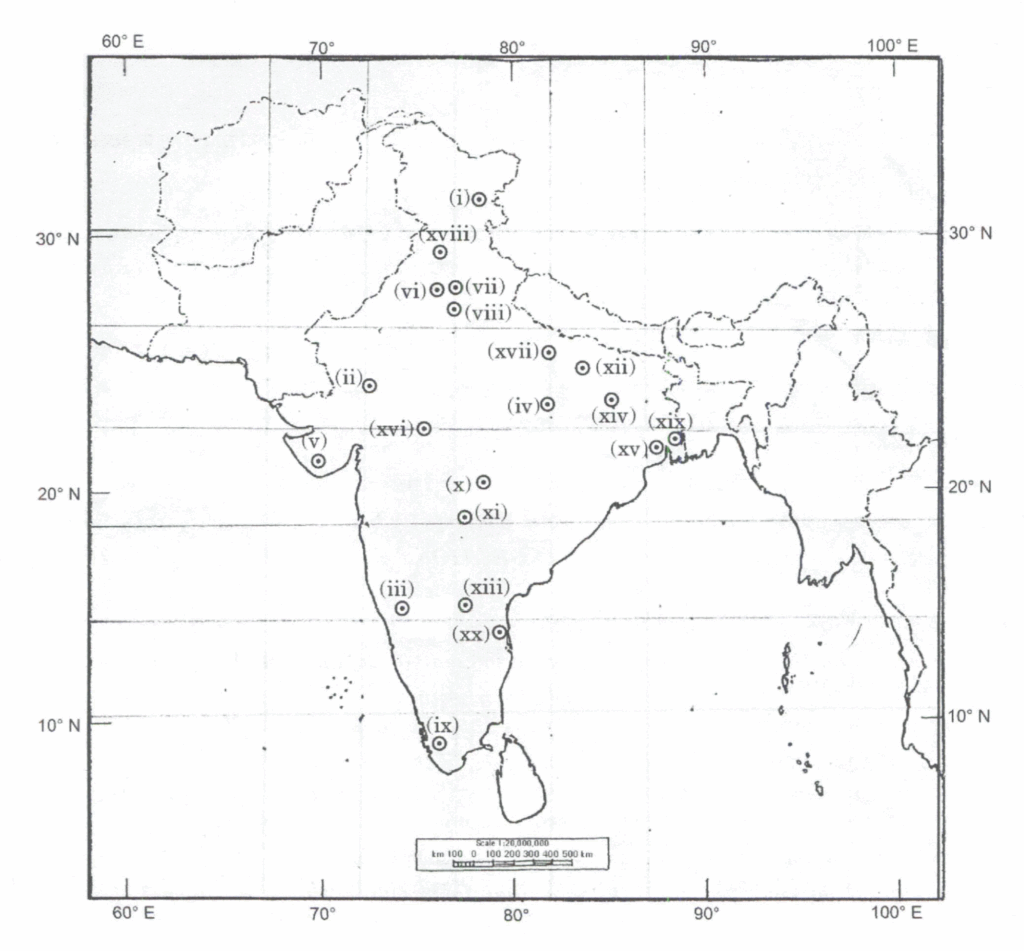
Map Solution 2025 — answer key
- Neolithic site: Kiari
- Mesolithic Site: Bagor
- Paleolithic Site: Hallur
- Neolithic site with stone artefacts: Koldihwa
- Site of Indus Valley Civilization: Rojdi
- Early Harappan site with a fire-pit: Rakhigarhi
- Late Harappan site: Alamgirpur
- The Ochre Coloured Pottery (OCP) site: Hastinapur / Lal Quila
- Mesolithic site: Tenmala
- Megalithic site: Junapani
- Mahajanapada of South India: Ashmaka
- Site of Buddha’s Mahaparinirvana: Kushinagar
- Major Rock Edict of Asoka: Erragudi
- Asokan Minor Rock Edict: Ratanpurwa Kaimur Hills
- Commercial centre of the Mauryas: Tamralipti
- Saka-Kushan coin hoard: Vidisha (Ancient Besnagar)
- An inscription mentioning the Ashvamedha Sacrifice: Ayodhya Inscription
- Site of Post-Mauryan period burnt brick house: Sanghol
- Terracotta craft centre of Post-Mauryan period: Chandraketugarh
- Important port of the Pallava period: Mamallapuram/Mahabalipuram
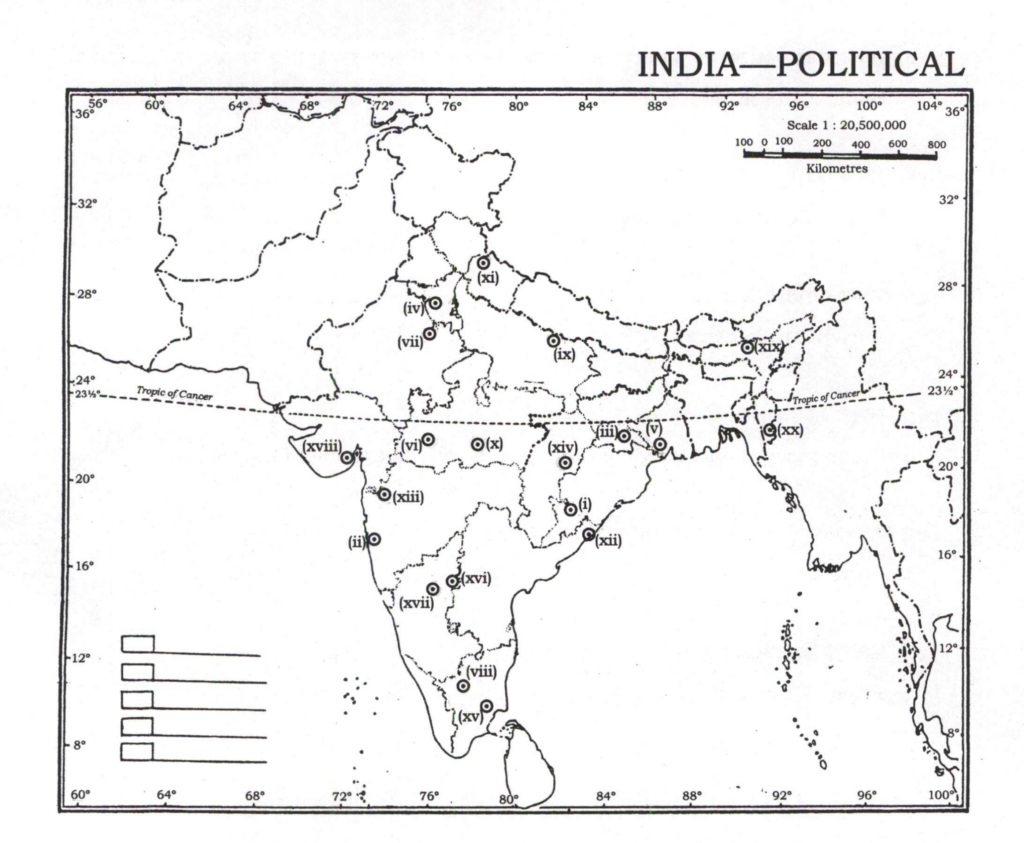
Map Solution 2024 — answer key
- Prehistoric site: Asurgarh / Kalahandi (Gudahandi cave)
- Area of Petroglyphs: Konkan Coast (Niveli/ Patharde/ Runde)
- Neolithic site: Barudih (Singhbhum district, Jharkhand)
- Harappan site: Rakhigarhi
- Buddhist monastery: Moghalmari Monastery
- Chalcolithic site: Navdatoli / Kayatha
- Neo-Chalcolithic: Jodhpura
- Megalithic site with rock art: Mallapadi / Chandrapuram (Tirupattur) /Kumittipathi (Coimbatore)
- One of the Mahajanapadas’ capital and associated with Buddha’s miracles: Shravasti
- Hominid fossil find site: Hathnora
- Major rock edict of Ashoka: Kalsi
- Ancient trade centre: Dantapuram (Srikakulam)
- Stone inscription recording land grants with tax exemptions: Nashik
- Shiva temples named after family relationships: Mama Bhanja temple, Sirpur Temple Complex
- Place of art related inscription: Sittanavasal
- Place of inscription of three languages: Maski
- Temple site where three styles of temple architecture are found: Pattadakal
- Jain pilgrimage site: Vallabhi / Palitana
- Shiva temple of Gupta period: Dah Parbatiya
- Megalithic monumental site: Vangchhia in Champhai

Map Solution 2023 — answer key
- Neolithic site: Burzahom
- Site of mother and child terracotta figure: Kanyakubja/ Kannauj
- Hoard of Gupta coin: Bayana
- Site of botanical remains: Lahuradeva
- Harappan site with mud-brick patform: Ahar / Ojiyana
- Mauryan reservoir site: Sudarshana Lake near Girnar Hill
- Capital of Maitraka dynasty: Vallabhi
- Dockyard: Lothal
- Rock shelter: Bhimbetka
- Stone axe factory: Nevasa
- Satavahana inscription site: Nashik
- Minor rock inscription of Ashoka: Erragudi
- Buddhist Stupa: Phanigiri / Nelakondapalli
- Mesolithic site: Renigunta
- Iron smelting workshop: Junapani
- Megalithic site: Paiyampalli
- Temple dedicated to Surya: Mandsaur
- Roman factory site: Arikamedu( Poduka)
- Site of Muvar Koil: Kodumbalur (Moovar Koil)
- Megalith stone site: Maski
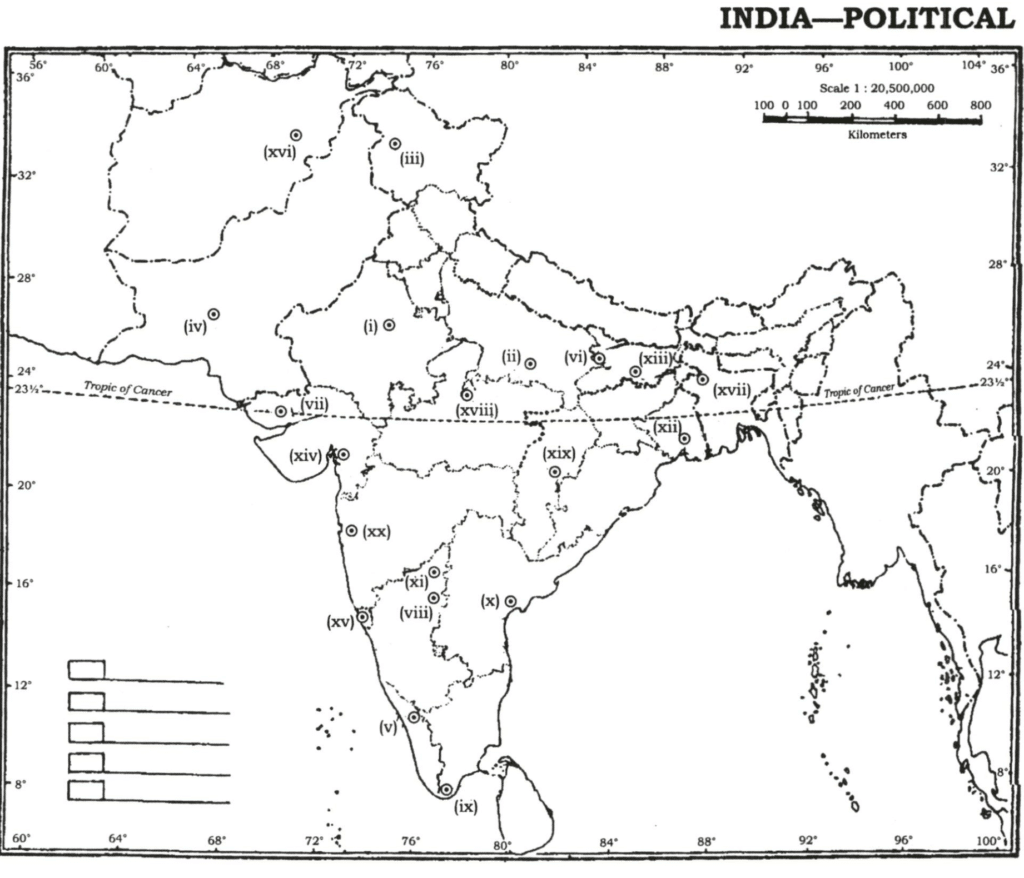
Map Solution 2022 — answer key
- Palaeolithic site: Didwana
- Mesolithic site with burials: Sarai Nahar Rai
- Neolithic pit dwelling: Burzahom
- Early village settlement: Mehrgarh
- Neolithic site: Edakkal caves
- Neolithic-Chalcolithic site: Chirand
- Harappan UNESCO site: Dholavira
- Megalithic burial site: Maski
- Place of second Sangam: Kapatapuram
- Earliest Satavahana capital: Dhanyakataka/Amaravati
- Place of inscribed statue of Ashoka: Kanaganahalli
- First Gupta hoard of coins: Kalighat, Kolkata
- Hoard of metal sculptures: Kurkihar hoard, Gaya
- Ancient port: Bhrigukachchha
- Oldest Jesuit church: Basilica of Bom Jesus
- Centre of Gandhara art: Bamyan
- Buddhist Monastery: Somapura
- Place of earliest Vishnu Temple: Dashavatara temple, Deogarh
- Shiva and Buddhist temple complex: Sirpur
- Earliest Chaitya Griha: Bhaja Cave

Map Solution 2021 — answer key
- Palaeolithic site: Attirampakkam
- Mesolithic site: Langhnaj
- Neolithic site: Daojali Hading
- Neolithic-Chalcolithic site: Mehrgarh
- Harappan site: Manda
- Proto-historic and historic site: Ropar or Kangra/ Masroor Rock Cut Temple
- Inscriptional site: Sohgaura
- Jain monastic site: Udayagiri-Khandagiri
- Coin hoard: Bayana
- Palaeolithic site: Hunsgi
- Terracotta site: Chandraketugarh
- Rock-cut caves: Udaigiri Caves
- Ancient learning centre: Vallabhi
- Political and Cultural centre: Sirpur
- Buddhist site: Sankissa
- Ancient port: Bhrigukachchha/Bharuch
- Early historic site: Sivakalai / Madurai
- Ivory hoard: Bagram
- Buddhist monastic centre: Somapura
- Temple complex: Kedarnath
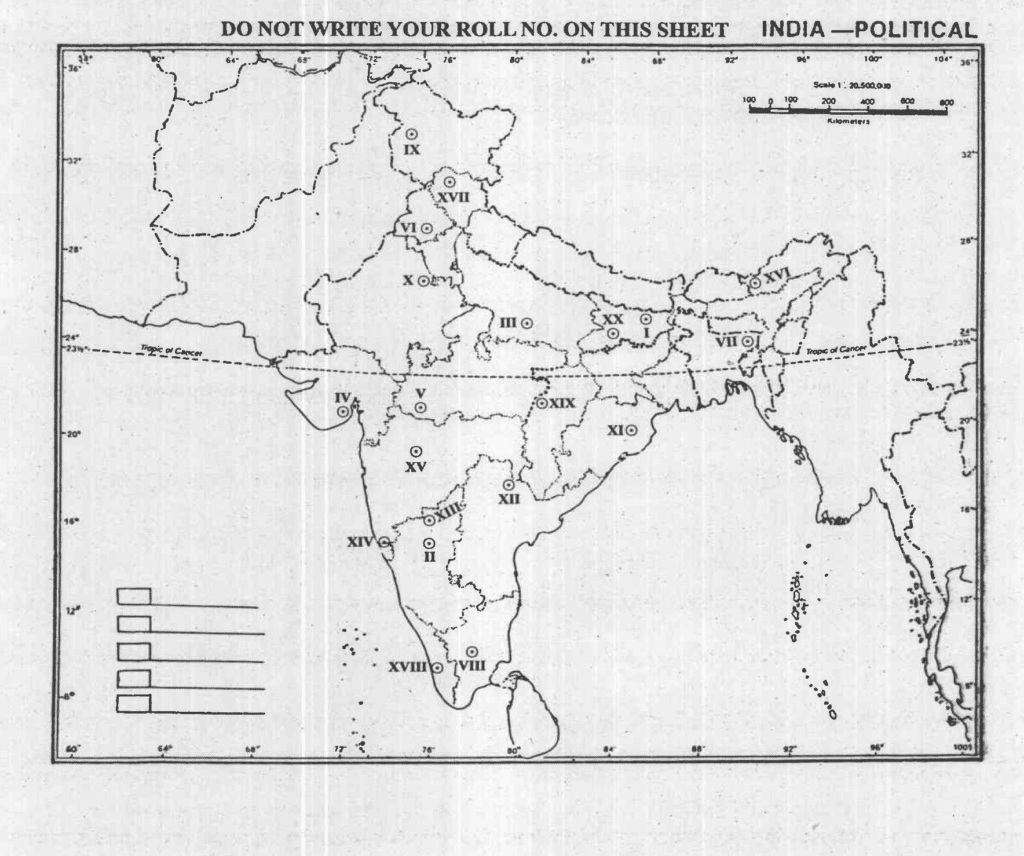
Map Solution 2020 — answer key
- Palaeolithic site: Paisra
- Palaeolithic factory site: Hunsagi
- Neolithic site: Koldihwa
- Early and mature Harappan site: Padri / Rangpur
- Chalcolithic site: Navdatoli
- Site of Coin and Seal Moulds: Sunet, Ludhiana
- Ancient Administration centre: Panam Nagar / Some site in Sylhet district
- Ancient Political Headquarter: Karur or Uraiyur
- Ancient Temple site: Martand / Srinagar (Shankaracharya temple)
- Pre and Proto Historic site: Ganeshwar
- Ancient capital city: Sisupalgarh
- Place of Shaiva Temple: Ramappa Temple / Kaleshwaram Mukteshwara Swamy Temple
- World Heritage Centre of Temple complex: Pattadakal
- An inscriptional site: Bicholim
- Place of Jain Temple: Ellora or Paithan
- Largest Buddhist Monastery: Tawang Monastery
- Ancient Temple Complex: Masroor
- Place of oldest Mosque: Methala (Cheramaan Juma Mosque)
- Temple complex dedicated to Shiva: Bhoramdeo Temple
- Ancient Education Centre: Nalanda
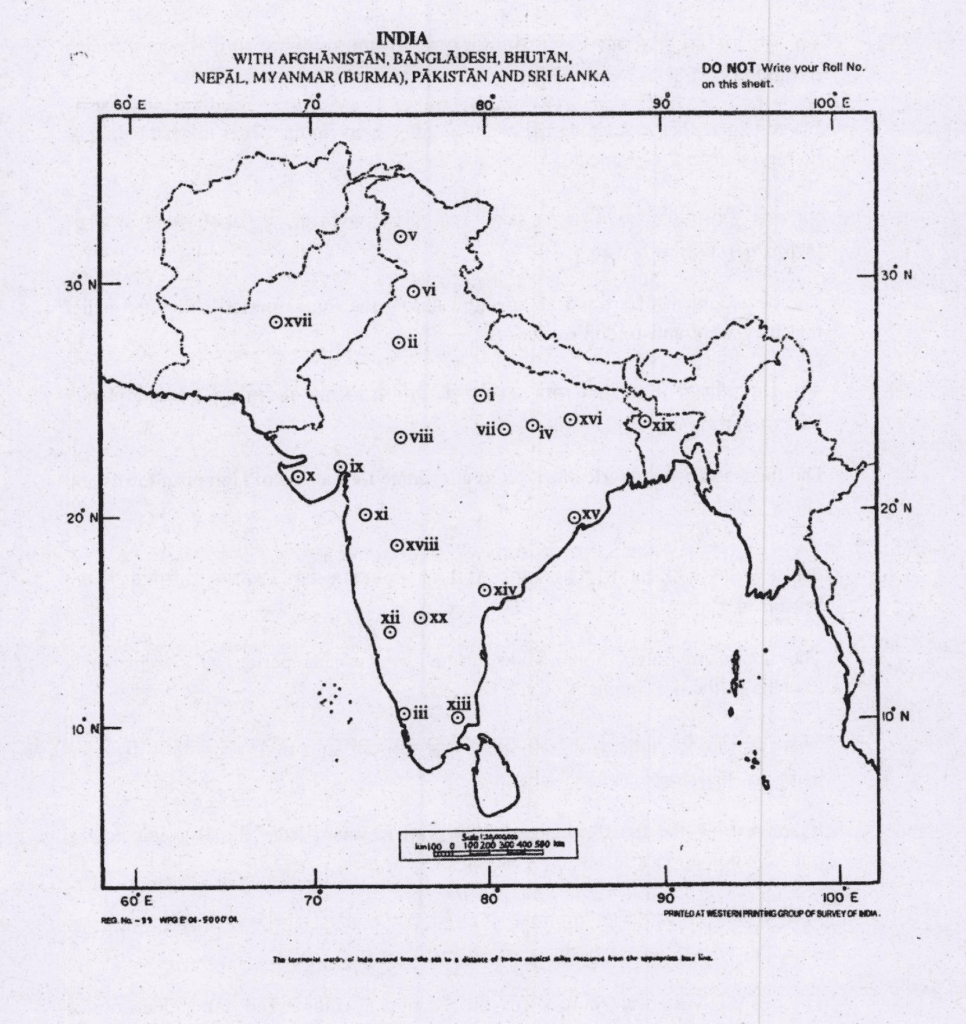
Map Solution 2019 — answer key
- Brick temple site: Bhitargaon
- Early Harappa site: Banawali
- Ancient seaport and trade centre: Muziris/Muchiris
- Stone Age site: Chopani Mando
- Neolithic site: Burzahom
- Archaeological site: Ropar or Sanghol
- Ancient capital city: Kaushambi
- Ancient capital: Ujjayini or Mandsaur
- Harappan site: Lothal
- Ancient inscriptional site: Junagarh/ Girnar
- A Rock-cut cave site: Pandavleni caves
- Ancient capital city: Banavasi/ Konkanpura
- Famous temple site: Thanjavur
- Centre of School of art: Amaravati
- Ancient inscriptional site: Hathigumpha inscription
- Ancient education centre: Nalanda
- Pre-Harappan site: Mehrgarh
- Chalcolithic-period site: Inamgaon
- Early inscriptional site: Mahasthangarh
- Ancient Petroglyphs site: Kandanati / Kupgal
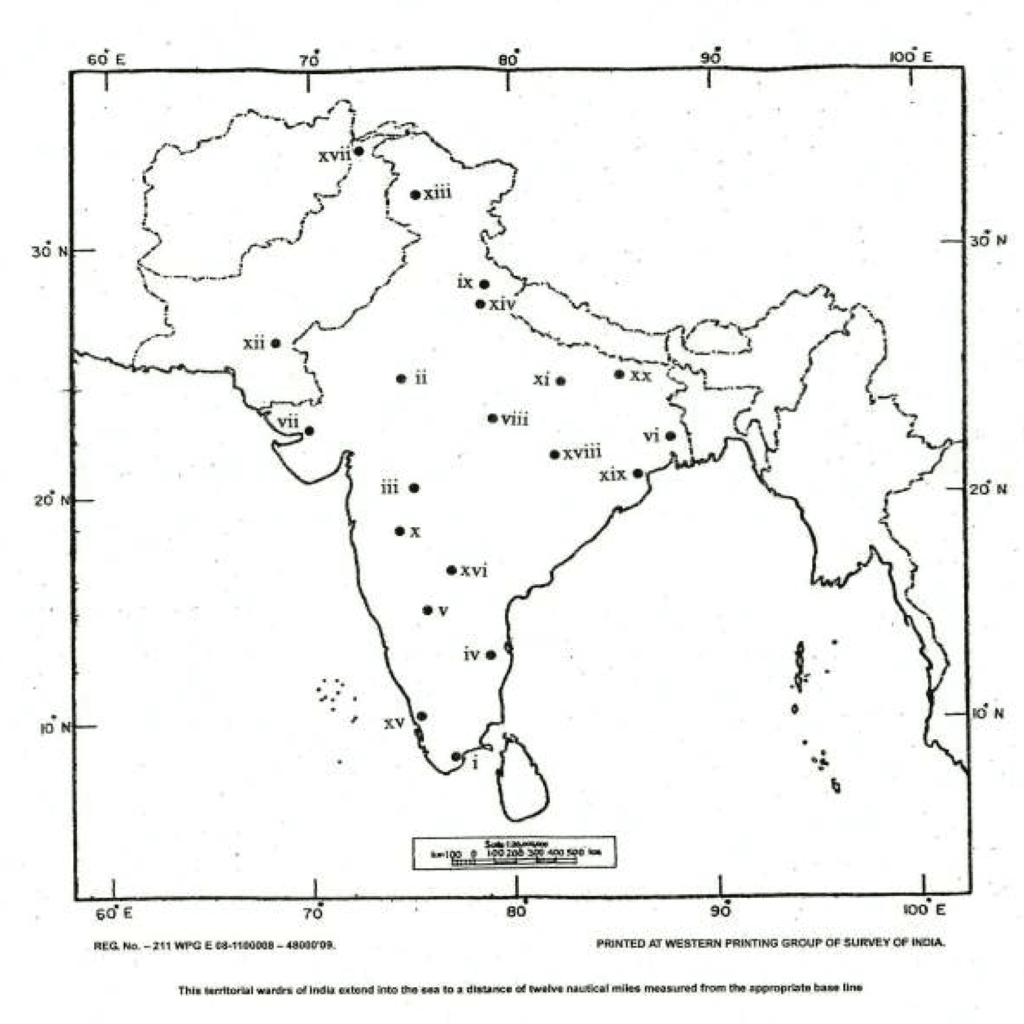
Map Solution 2018 — answer key
- Megalithic burial site: Adichanallur
- Chalcolithic site: Gilund / Ahar
- Cave Paintings: Ajanta
- Palaeolithic site: Attirampakkam
- Political and cultural centre: Hampi
- Terracotta centre: Chandraketugarh
- Harappan site: Kuntasi / Surkotda
- Vaishnav cultural site: Udaigiri/ Besnagar
- Painted Grey Ware site: Thapli
- Chalcolithic site: Inamgaon
- Early agricultural centre: Koldihwa
- Early Harappan site: Kot Diji
- An ancient temple: Shankaracharya temple / Martand Sun Temple
- Political and cultural centre: Hastinapur
- An ancient sea port: Muziris/Muchiris
- Buddhist centre: Kanaganahalli / Sannati
- Inscriptional site: Shahbazgarhi
- An ancient capital: Sirpur
- A Jaina centre: Udayagiri-Khandagiri Caves
- An ancient capital: Vaishali
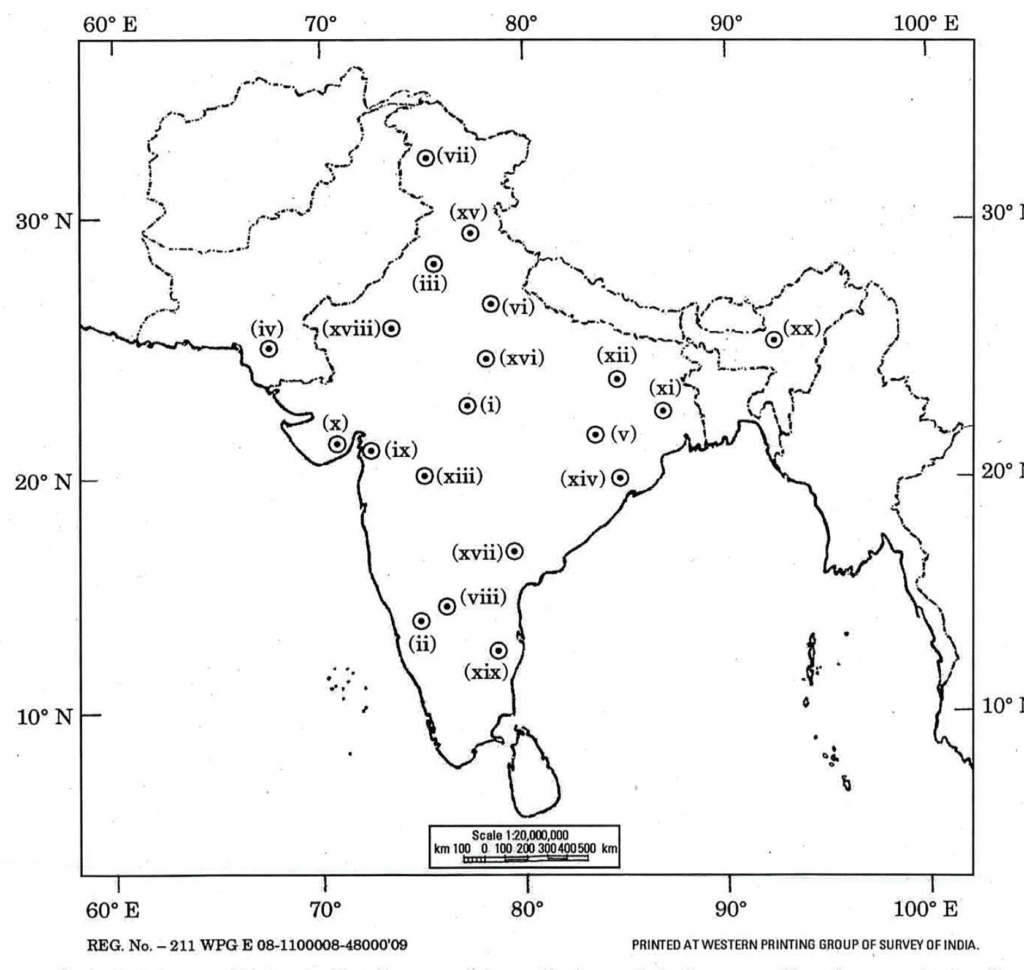
Map Solution 2017 — answer key
- A Prehistoric cave-paintings’ site: Bhimbetka
- A Neolithic-Chalcolithic site: Hallur
- An Early Harappan site: Banawali
- A Harappan site: Amri/ Chanhudaro
- An ancient capital city: Sirpur
- A Painted Grey Ware site: Ahichchhatra / Hastinapur
- A Neolithic site: Burzahom
- A site of Ashokan inscriptions: Maski
- An ancient port and trade centre: Bhrigukachchha/Bharuch
- A Harappan site: Padri / Rangpur
- A Chalcolithic site: Pandu Rajar Dhibi
- An ancient capital city: Rajgir/Rajagriha or Patliputra
- A Rock-cut cave site: Ellora / Ajanta Caves
- An early fortified city: Sisupalgarh
- A Rock-cut temple site: Masroor
- An ancient temple site: Deogarh
- An ancient capital city: Nagarjunakonda/Vijayapuri
- An ancient temple site: Pushkar / Nagari
- A Palaeolithic site: Attirampakkam
- An ancient capital city: Pragjyotishpura
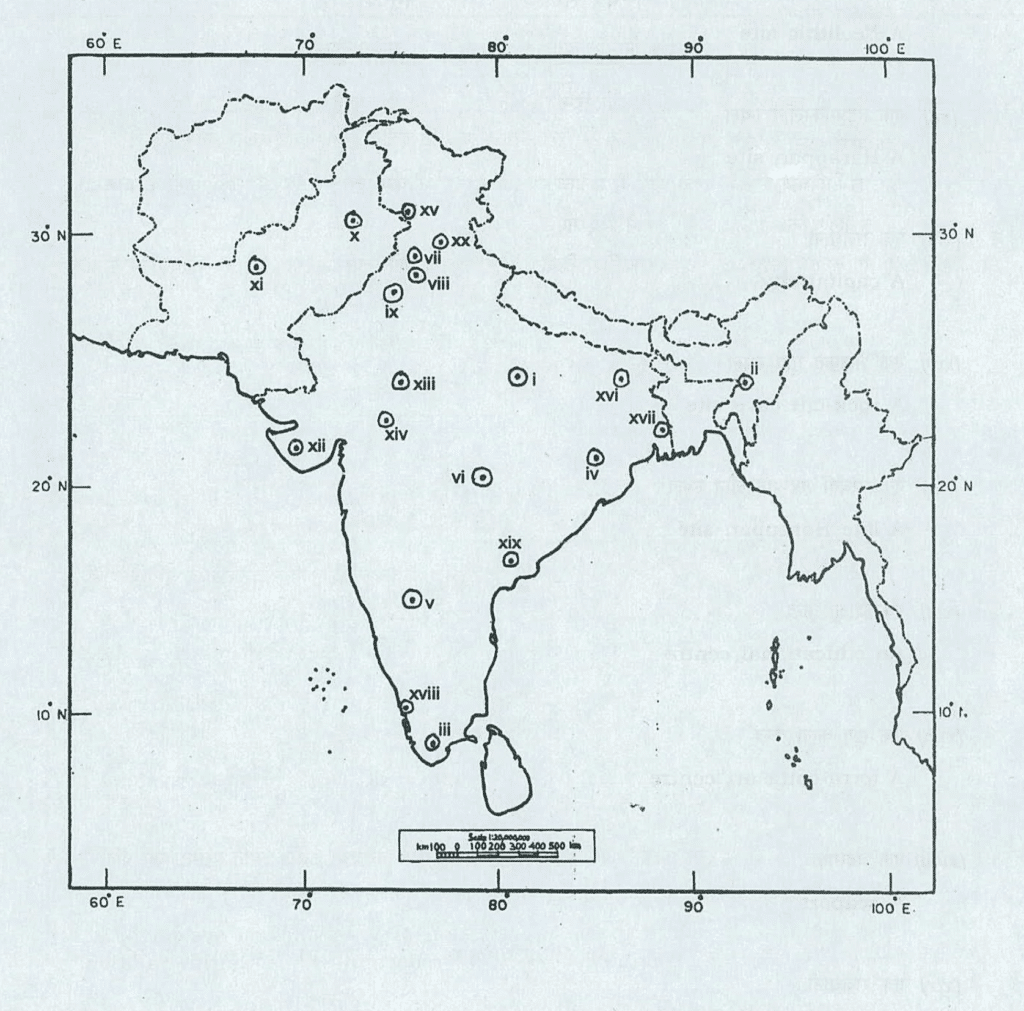
Map Solution 2016 — answer key
- A Mesolithic site: Sarai Nahar Rai / Mahadaha, Chopani Mando
- A Neolithic site: Daojali Hading
- A Megalithic-Chalcolithic site: Adichanallur
- A Neolithic site: Kuchai
- A Neolithic site: Maski / Brahmagiri
- A Megalithic site: Junapani
- A site known for Buddhist remains: Sanghol
- A Harappan site: Banawali
- A Harappan site: Kalibangan
- A Harappan site: Harappa (There is no major Harappan site here. The nearest major site is Harappa.)
- A Neolithic site: Mehrgarh
- A Harappan site: Rojdi
- A capital city: Chittor / Ujjain
- A rock-cut cave site: Bagh caves
- A Late Harappan site: Manda (Akhnoor)
- An educational centre: Vikramashila / Nalanda
- A terracotta art centre: Chandraketugarh
- A seaport: Muziris/Muchiris
- A capital city: Vengi / Amaravati/ Dhanyakataka
- A capital city: Probably Mandi
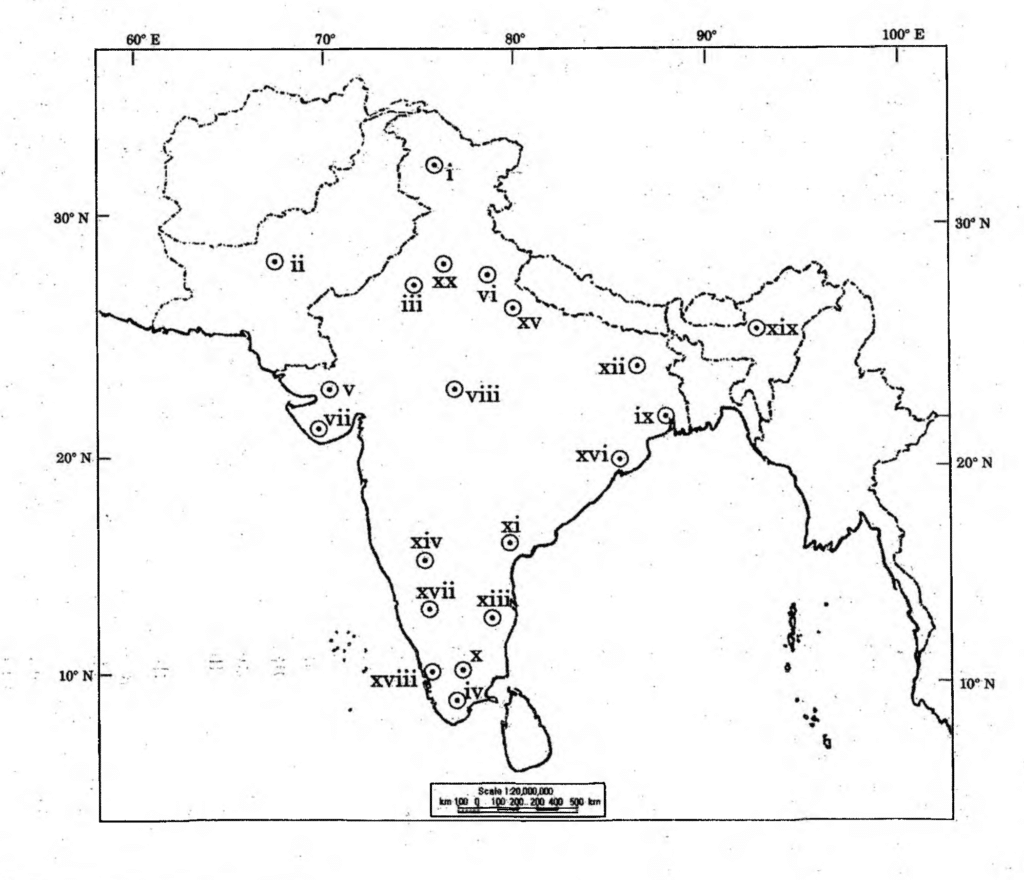
Map Solution 2015 — answer key
- A Neolithic site: Burzahom
- A Neolithic site: Mehrgarh
- A Harappan site: Kalibangan
- A Megalithic site: Adichanallur
- A Harappan site: Surkotada
- A Painted-Grey-ware site: Hastinapur
- An inscriptional site: Junagarh / Girnar
- An important ancient city: Vidisha or Besnagar
- An ancient port: Tamralipti
- A site of ancient cave-painting: Sittanavasal
- A Buddhist site: Amaravati
- An educational centre: Vikramashila / Nalanda
- Brahmadeya village: Uttaramerur
- An ancient capital: Badami or Aihole
- An ancient capital: Kampilya / Ahichhatra
- A temple site: Bhubaneshwar
- An ancient capital: Halebidu/ Dwarasamudra
- An ancient sea-port: Muchiris/Muziris
- An archaeological temple site: Dah Parbatiya
- A Harappan site: Rakhigarhi / Ropar or Banawali
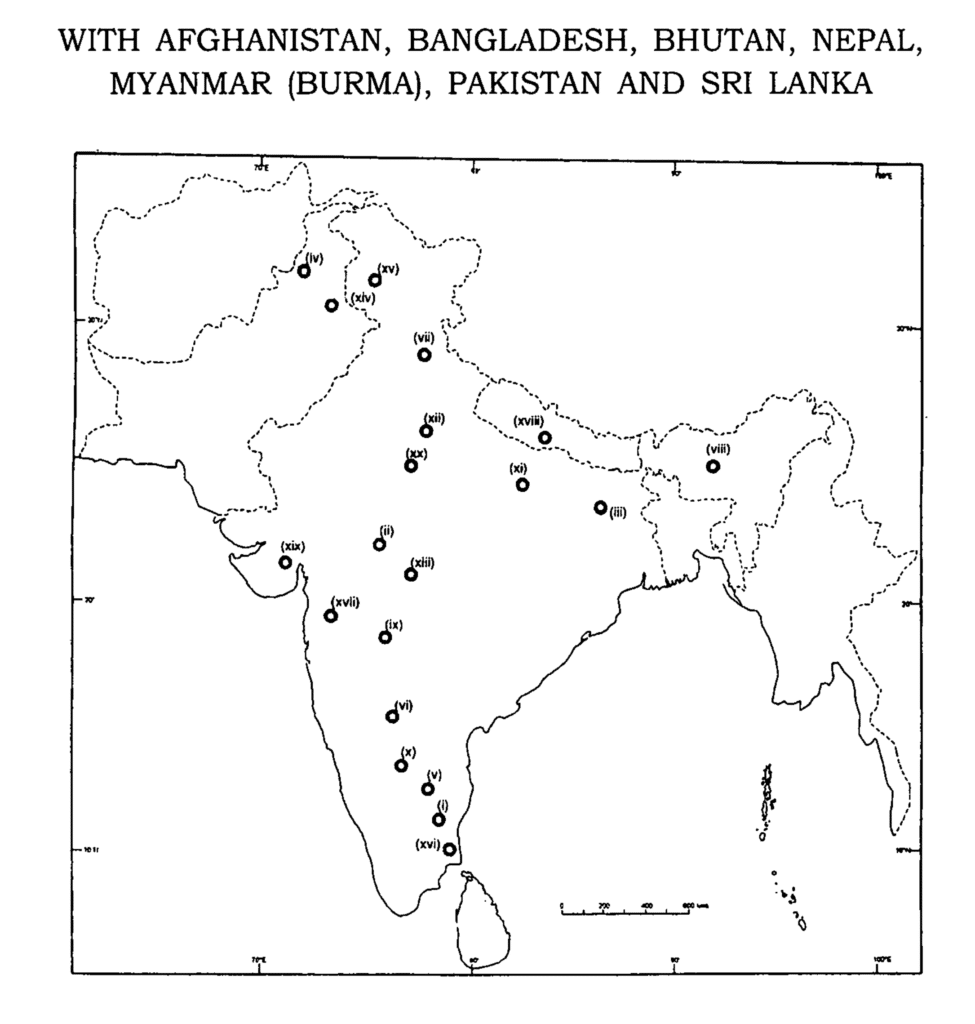
Map Solution 2014 — answer key
- An ancient capital: Uraiyur / Gangaikondacholapuram
- A Palaeolithic site: Bhimbetka
- A cultural centre: Nalanda
- An ancient capital: Purushpura
- A Palaeolithic site: Renigunta / Chittor
- A historical site: Manyakheta
- A Harappan Site: Ropar
- An ancient capital: Pragjyotishpura
- A political and cultural centre: Pratishthana/Paithan
- Megalithic site: Brahmagiri / Palavoy
- A Mesolithic site: Sarai Nahar Rai
- A Chalcolithic site: Lal Qila / Alamgirpur
- A prehistoric site: Adamgarh
- A political and cultural centre: Takshashila (Taxila)
- An ancient capital: Srinagar / Avantipura
- A lost port: Puhar/ Kaveripattanam
- Rock-cave art centre: Nashik caves/ Pandavleni caves
- An ancient capital: Kapilavastu
- A political and cultural centre: Vallabhi
- An ancient town: Mathura / Bairat (Viratnagar)
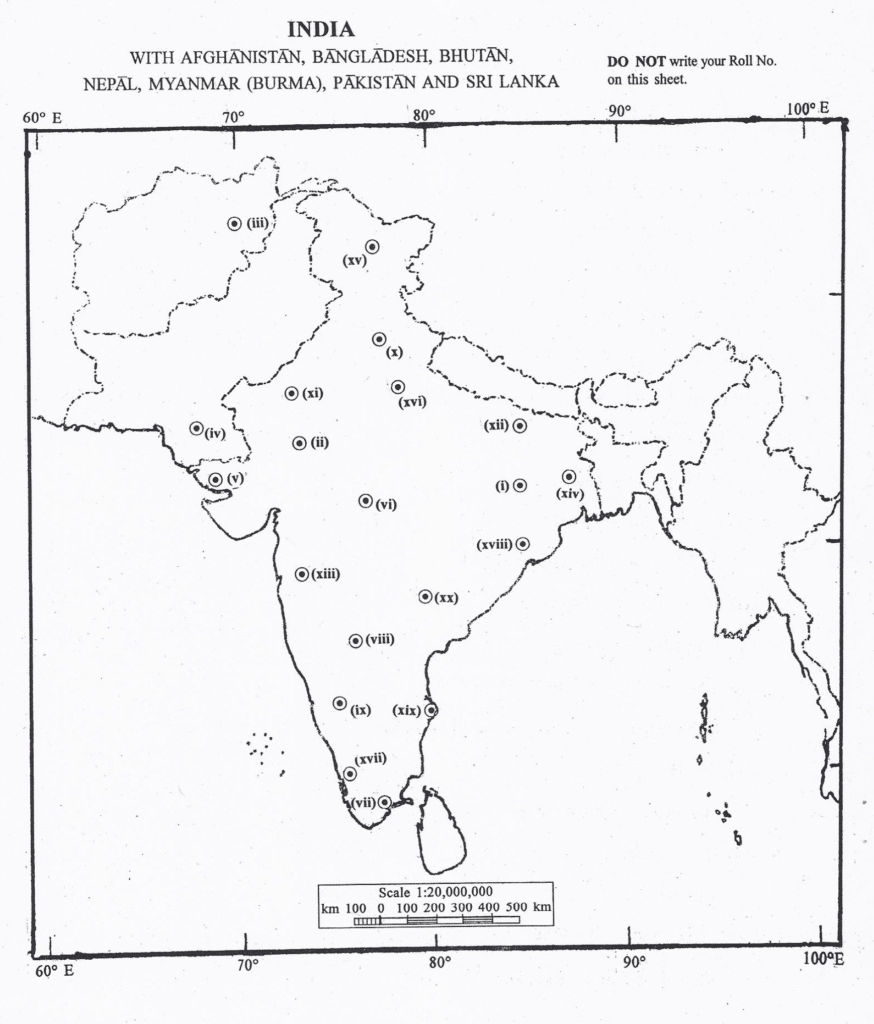
Map Solution 2013 — answer key
- A Palaeolithic and Mesolithic site: Barudih
- A Mesolithic site: Bagor
- An important halting place: Bamiyan
- A pre-Harappan site: Amri
- An important Harappan site: Desalpur
- Site of important fossils: Hathnora
- A Sea-port: Korkai
- A Palaeolithic site: Hunsgi
- A Neolithic, Megalithic and Chalcolithic site: Hallur
- A Harappan site: Alamgirpur
- A Palaeolithic site: Didwana / Nagaur
- A Neolithic site: Chirand
- A Chalcolithic site: Jorwe
- A Chalcolithic site: Pandu Rajar Dhibi
- A site of Buddhist Monastery: Alchi Monastery / Thikse Gumpha (Thikse Monastery)
- Painted Grey Ware site: Ahichchhatra
- Site related to a famous Indian Philosopher: Kaladi
- Historical Rock-cut caves: Udayagiri-Khandagiri
- Famous Fort: Fort St. George
- Capital of famous Kingdom: Nagarjunakonda or Amaravati
How to write the map answer in the exam hall
The answer keys above tell you what the sites are. They do not tell you what a full-mark note looks like under a clock. You have roughly 45 minutes for all 20 sites — about two minutes each, including the time it takes to find the number on the map.
The five-part note that earns the full 2.5 marks
- Locate it — present-day state, and the river or coast it sits on
- Date it — the period or culture it belongs to (Palaeolithic, Harappan, Satavahana, Mughal)
- Attribute it — the excavator, the founding dynasty, or the ruler associated with it
- Evidence it — one distinguishing find, structure or inscription
- Justify it — one line on why the site matters to the wider historical argument
Four habits that quietly cost marks
- Writing 60 words on the three sites you know well and one line on the rest — every site carries the same 2.5 marks
- Naming the site and stopping — identification alone is roughly half the mark
- Leaving the map question until the end — bank it first, it is pure recall
- Skipping a site entirely — even a location and a period is worth attempting
Read the locational hints printed with the question carefully. They are not decoration; they routinely narrow an ambiguous site to a single candidate.
The map is 50 marks. What about the other 450?
The map is 50 marks. The other 450 marks of the History Optional are written answers, and that is where most candidates lose the paper — not on content they did not know, but on answers that never stated a position.
The History Optional PYQ Master Pack carries a written model answer for every question the Commission has set since 1985, arranged topic-wise, with historians named inside the argument. ₹1,499 (regular ₹2,500), one-time.
Which site types repeat
Individual sites are rarely repeated. Site categories are repeated almost every year, which is why preparing by category rather than by name is what actually pays in this section.
| Category | How often since 2013 | Typical examples |
| Harappan settlements | Every year | Rakhigarhi, Dholavira, Kalibangan, Banawali |
| Palaeolithic, Mesolithic and rock-art sites | Almost every year | Bhimbetka, Attirampakkam, Bagor, Konkan petroglyphs |
| Neolithic and Chalcolithic cultures | Most years | Navdatoli, Kayatha, Inamgaon, Burzahom, Chirand |
| Megalithic sites | Most years | Brahmagiri, Adichanallur, Vangchhia, Mallapadi |
| Buddhist monastic and stupa sites | Most years | Sanchi, Nagarjunakonda, Moghalmari, Ratnagiri |
| Mahajanapada capitals and early cities | Frequent | Shravasti, Rajgir, Kaushambi, Ujjain |
| Ports and trade centres | Frequent | Arikamedu, Muziris, Bharuch, Tamralipti |
| Temple and architectural sites | Frequent | Pattadakal, Aihole, Khajuraho, Dah Parbatiya |
Work through the thirteen years above by category rather than chronologically. You will find the same handful of Harappan and Chalcolithic sites recurring, and the unfamiliar names clustering into two or three groups you can learn in an afternoon.
The full question papers
The map question is one part of Paper I. The complete History Optional papers — every question from both papers, with unit-wise analysis and the official PDFs — are here:
- History Optional Question Paper 2026
- History Optional Question Paper 2025
- History Optional Question Paper 2024
- History Optional Question Paper 2023
- History Optional Question Paper 2022
- History Optional Question Paper 2021
- History Optional Question Paper 2020
- History Optional Question Paper 2019
- History Optional Question Paper 2018
- History Optional Question Paper 2017
- History Optional Question Paper 2016
- History Optional Question Paper 2015
- History Optional Question Paper 2014
- History Optional Question Paper 2013
- History Optional Question Paper 2012
- History Optional Question Paper 2011
Frequently asked questions
Three ways to prepare, depending on the gap
Three different things, depending on what you are missing. The map solutions on this page stay free either way.
| Mapping PYQs Solution PDF | PYQ Master Pack | Mains Master Kit 2027 | |
| Best when | You want this section offline and printable | Your notes are done, answer-writing is the gap | You are still building the subject |
| Covers | Every marked site, 2013–2025 | Model answers to every question since 1985 | 4,500+ pages of notes plus mapping |
| Price | See the store | ₹1,499 (reg. ₹2,500) | ₹1,770 (reg. ₹5,000) |

History Optional PYQ Master Pack: Topic-wise Model Answers (1985–2025) by LotusArise IAS
Most History Optional aspirants study PYQs the hard way — reading the question, guessing the answer, checking a random source, moving on. No structure. No historian citations. No idea what UPSC actually rewards. History Optional PYQ Master Pack — 100% complete and ready to download today — changes this completely.
📚 1985–2025 PYQs (Topic-wise) — Ancient India, Medieval India, Modern India, Post-Independence, World History — every question, fully solved
✍️ Model answers for every important question — exact structure, historian citations, diagram suggestions
🗺️ Map section solutions included — the full 50-mark section most aspirants ignore, at no extra cost
📲 PDF Download + Online Access — both included — study offline on any device, forever, not just while a subscription lasts
💰 Priced at ₹1,499 — for everything. Similar History Optional PYQ solutions elsewhere are sold for ₹2,500–₹3,500, often charging separately for online access, hard copies, and the Map section. Here, one price gets you PYQs + Map + PDF + online access, combined.
✅ Fully complete, nothing pending — every section is live the moment you enroll
You will be charged ₹1,499 today. Access is provided instantly. One-time payment. No subscription.