Best Teacher for Geography Optional for UPSC: How to Choose the Right Mentor
Choosing the right teacher for Geography Optional is one of the most decisive factors in determining your UPSC Mains score and final rank. While Geography is often considered a popular and relatively scoring optional, the reality is:
Most aspirants remain stuck in the 230–260 range, while only a few cross 300+ — and the key differentiator is guidance and answer-writing approach.
👉 Therefore, selecting the best Geography Optional teacher is not just about lectures, but about:
- Conceptual clarity
- Answer-writing mastery
- Strategic mentorship
In memory: Himanshu Sharma Sir, whose teaching method is described on this page, passed away in September 2026. We have kept his approach here as a record of what effective Geography Optional teaching looks like. Read our tribute to Himanshu Sharma Sir.
🎯 What Actually Makes a Teacher “Best” in Geography Optional?
In the UPSC ecosystem, the term “best teacher” is often used loosely. However, from a serious aspirant’s perspective, a Geography Optional teacher must be evaluated on objective, performance-based parameters, not popularity or marketing.
👉 A truly effective teacher is one who can systematically convert an aspirant from a content reader into a high scorer (300+ marks category).
📊 1. Ability to Consistently Produce High Scores (Marks-Oriented Credibility)
- The most reliable indicator of a teacher’s effectiveness is not the number of students enrolled or general selections, but the marks scored by students in Geography Optional, particularly in the 280–320+ range, which reflects mastery of both content and answer writing.
- For instance, aspirants like Pratham Kaushik (UPSC Topper) have demonstrated that high scores in Geography Optional are achievable only when preparation is structured, answer-oriented, and guided properly, rather than left to fragmented self-study.
- A top teacher therefore builds a system where:
- Students understand what a 300+ answer looks like in practice, not just in theory
- Preparation is aligned with evaluation standards of UPSC examiners, not just syllabus coverage
- This shifts preparation from:
- “Completing topics” → “Maximizing marks per question”
✍️ 2. Capacity to Transform Content into High-Scoring Answers
- Geography Optional is unique in that most aspirants read similar sources (NCERTs, standard textbooks, coaching material), yet their marks differ drastically due to differences in answer presentation and structuring.
- A top teacher bridges this gap by ensuring that:
- Every topic is taught with a clear focus on:
- “How will UPSC frame a question from this?”
- “How should this be written in a 150/250-word answer?”
- Students are trained to:
- Develop structured answers (Introduction–Body–Conclusion)
- Use diagrams, maps, and flowcharts as scoring tools
- Incorporate thinkers, case studies, and examples for value addition
- Every topic is taught with a clear focus on:
- This transformation is critical because:
- Knowledge without presentation leads to average scores (230–250)
- Structured and enriched answers lead to top scores (280–320+)
🧠 3. Depth in Human Geography Along with Clarity in Physical Geography
- Geography Optional demands mastery over two very different domains:
- Human Geography, which is abstract, theoretical, and requires interpretation of thinkers and models
- Physical Geography, which is scientific, conceptual, and requires clarity in processes and mechanisms
- Many teachers tend to specialize in one area while remaining superficial in the other, leading to imbalanced preparation.
- A truly effective teacher ensures:
- Deep conceptual clarity in Physical Geography (e.g., geomorphic processes, climatological systems)
- Strong analytical grip over Human Geography (e.g., Hartshorne, Christaller, Vidal de la Blache)
- More importantly, the teacher must train aspirants to:
- Interlink both papers, for example:
- Applying climatology concepts in Indian monsoon answers
- Using human geography theories in urbanization or regional planning questions
- Interlink both papers, for example:
- This integrated understanding is essential for writing multi-dimensional answers, which are rewarded in UPSC evaluation.
🧩 4. Pedagogical Innovation Beyond Traditional Teaching Methods
- Traditional coaching often follows a linear model:
- Lecture → Notes → Completion of syllabus
- However, this approach is insufficient for UPSC, where success depends on application, recall, and answer-writing precision under time constraints.
- A top teacher adopts innovative methods such as:
- Case study-based teaching, enabling students to apply theory in real-world contexts
- Synopsis writing techniques, which help condense vast topics into structured, revision-friendly formats
- Regular integration of:
- PYQs (to align preparation with UPSC demand)
- Practice questions (to build writing habit)
- Such pedagogy ensures that students:
- Do not become passive learners
- Actively engage with content and convert it into usable answer material
📊 5. Alignment with UPSC Trends through PYQs and Current Affairs
- UPSC Geography Optional has evolved significantly:
- From static, descriptive questions → analytical and application-based questions
- A top teacher continuously aligns preparation with:
- Previous Year Questions (PYQs)
- Emerging trends such as:
- Climate change
- Urbanization
- Disaster management
- This involves:
- Identifying recurring themes
- Training students to:
- Anticipate question patterns
- Apply concepts dynamically
- As a result, aspirants avoid:
- Irrelevant study
- Outdated preparation strategies
👉 Instead, they focus on:
- Exam-relevant, high-scoring areas
🧑🏫 6. Mentorship and Continuous Performance Feedback
- UPSC preparation is not just about knowledge acquisition but about continuous improvement, which requires:
- Feedback
- Course correction
- Strategy refinement
- A top teacher provides:
- Regular evaluation of answers
- Detailed feedback on:
- Structure
- Content
- Presentation
- Guidance on:
- How to improve weak areas
- How to optimize strengths
- This mentorship is particularly crucial for:
- Aspirants stuck in the average score band (230–260)
- With proper guidance, they can:
- Identify mistakes
- Refine answers
- Move into the 300+ marks range

Remembering Himanshu Sharma Sir: The Teaching Method He Left Behind
For years, Himanshu Sharma Sir was the benchmark many aspirants used when judging Geography Optional teaching. The sections below record the method he built, because it still shows clearly what effective Geography Optional preparation looks like, whoever you learn from now.
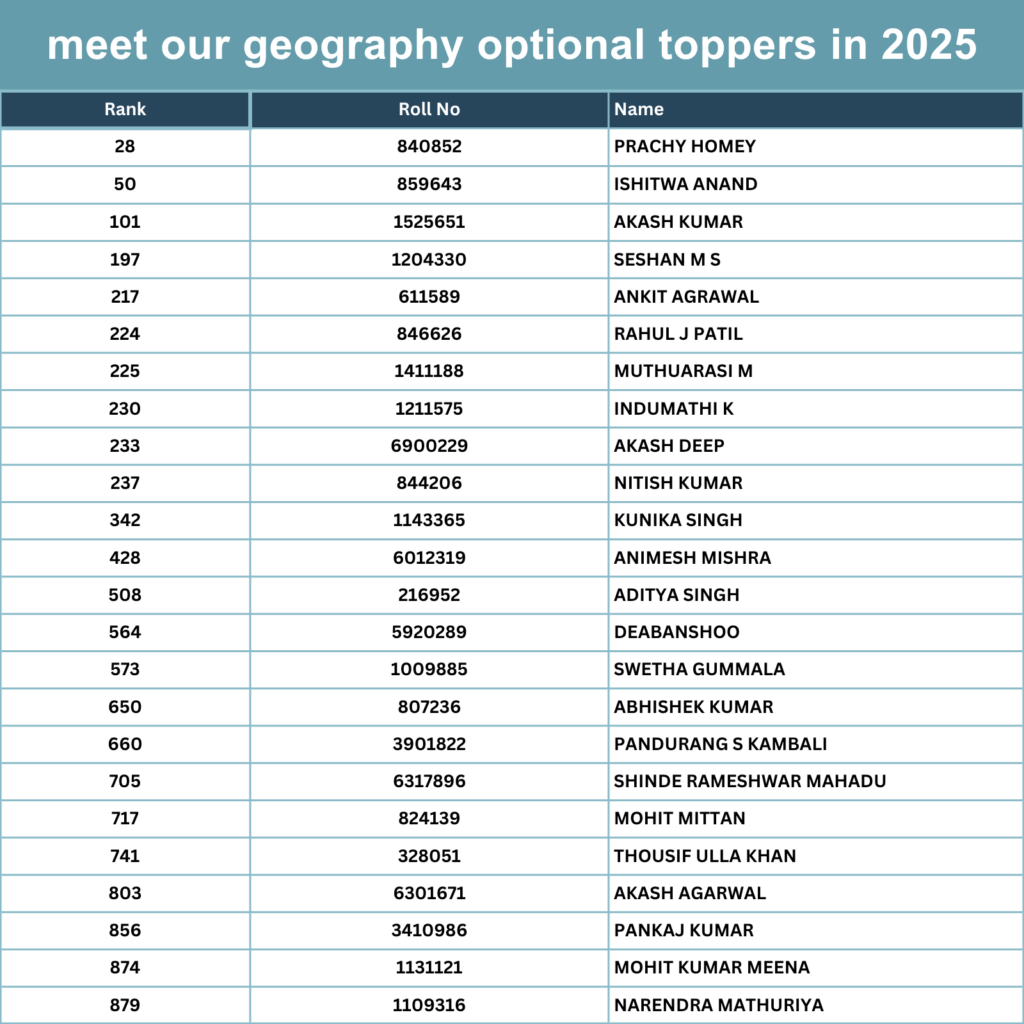
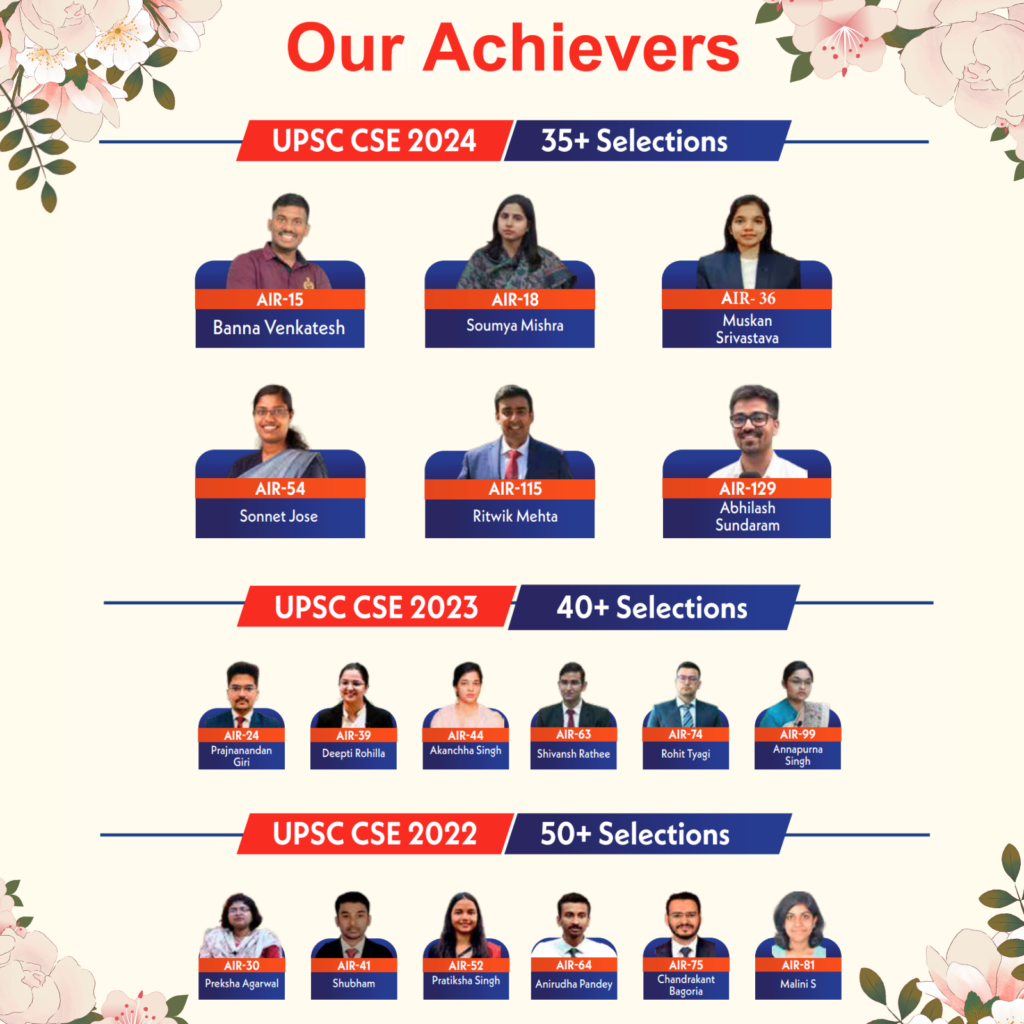
🏅 1. Proven Track Record of High Scores (Marks-Centric Credibility)
- The most reliable way to assess any Geography Optional teacher is through actual marks secured by students, especially in the 280–320+ range, which reflects true mastery over both content and answer writing.
- Under the guidance of Himanshu Sharma Sir, multiple aspirants consistently achieved:
- High scores in Geography Optional, including those crossing the 300+ mark threshold
- For example, aspirants like Pratham Kaushik (UPSC Topper) have demonstrated that such high performance is not accidental, but a result of:
- Structured preparation
- Answer-writing focused strategy
- Clear conceptual foundation under expert mentorship
- This establishes a critical point:
- His teaching was not theoretical or generic — it is replicable and result-oriented, enabling aspirants to systematically improve their scores.
🧠 2. Authority in Human Geography & Geographical Thought
- One of the most distinguishing strengths of Himanshu Sharma Sir was his deep command over Human Geography, particularly:
- Thinkers (Hartshorne, Vidal de la Blache, Christaller, etc.)
- Models and theories
- Evolution of geographical thought
- As highlighted in student reviews, he effectively systematized and simplified Geographical Thought, which is otherwise one of the most challenging portions of the syllabus.
- His teaching ensured that students:
- Do not merely memorize theories
- Learn how to apply thinkers in answers as value addition, which significantly enhances answer quality
- This leads to:
- Greater analytical depth
- Higher marks in Paper 1
🌍 3. Balanced Mastery of Physical + Human Geography (Rare Combination)
- Geography Optional requires equal competence in:
- Physical Geography (scientific, process-based)
- Human Geography (abstract, theory-driven)
- Many teachers tend to specialize in one domain, creating imbalance in preparation.
- Himanshu Sharma Sir, however:
- Personally taught both:
- Static and dynamic aspects of Physical Geography
- Conceptual and theoretical aspects of Human Geography
- Personally taught both:
- This ensures:
- Continuity in teaching
- No fragmentation across topics
- More importantly, students are trained to:
- Interlink both papers, for example:
- Applying climatology concepts to Indian monsoon
- Using human geography theories in urbanization answers
- Interlink both papers, for example:
👉 This integrated approach is crucial for writing multi-dimensional answers, which fetch higher marks.
📚 4. Book-Based Teaching Approach (Conceptual Depth Over Coaching Dependency)
- A key differentiator in his pedagogy was the emphasis on teaching through standard books, rather than relying solely on coaching notes.
- This approach ensures that students:
- Develop authentic conceptual clarity
- Understand topics in depth rather than memorizing summaries
- It also reduces:
- Over-dependence on coaching material
- Confusion arising from multiple sources
- As highlighted in student feedback: “He focuses on content and teaches through books, ensuring strong foundation.”
👉 This method builds:
- Long-term retention
- Strong conceptual base required for advanced answer writing
🧩 5. Case Study-Based Teaching (Bridging Theory with Application)
- One of the most powerful aspects of his teaching methodology was the case study-based approach, where:
- Students were given regular (often weekly) case studies
- This ensures that aspirants:
- Learn how to apply theoretical concepts to:
- Real-world geographical issues
- Contemporary developments
- Learn how to apply theoretical concepts to:
- As a result:
- Answers become:
- Dynamic
- Analytical
- Rich in examples
- Answers become:
- This aligns perfectly with:
- The evolving UPSC trend of application-based questions
👉 It transforms:
- Static knowledge → Scoring content in answers
✍️ 6. Unique “Synopsis Writing” Technique (Answer Structuring Mastery)
- A highly distinctive feature of his pedagogy was the focus on Synopsis Writing, which involves:
- Converting large topics into:
- Structured frameworks
- Condensed, revision-friendly formats
- Converting large topics into:
- This helps students:
- Quickly recall key points during the exam
- Maintain clarity and coherence in answers
- It also improves:
- Writing speed
- Precision in content delivery
- Over time, students develop the ability to:
- Write crisp, well-structured, and examiner-friendly answers, which are essential for scoring high marks
✍️ 7. Strong Orientation Towards Answer Writing Excellence
- His teaching consistently emphasized that: Geography Optional is not a reading subject — it is a writing and presentation subject
- Students were trained to:
- Structure answers effectively
- Use:
- Diagrams
- Maps
- Flowcharts
- Integrate:
- Thinkers
- Case studies
- This ensures that:
- Knowledge is converted into high-scoring answers, not left as theoretical understanding
- Aspirants learn:
- What differentiates a 5/10 answer from a 7/10 answer, which is crucial for crossing the 300+ mark threshold
8. Structured, Stage-Wise Preparation
- Preparation under Himanshu Sharma Sir was not random; it followed a multi-stage structured model:
Stage 1: Foundation (concept building)
- Builds:
- Conceptual clarity
- Syllabus understanding
Stage 2: 500+ Program with Test Series (answer writing)
- Focuses on:
- Advanced answer writing
- Score improvement (240 ➝ 320+)
- Continuous evaluation
👉 This layered approach ensures:
- End-to-end preparation
- Continuous progression from beginner to advanced level
📈 9. Focus on Score Transformation (Average ➝ Top Performer)
- A key strength of his mentorship was the focus on:
- Identifying gaps in average answers
- Systematically improving them
- Students were trained to:
- Add value through:
- Diagrams
- Case studies
- Analytical depth
- Add value through:
- This enables aspirants to:
- Break the 230–260 marks barrier
- Enter the 280–320+ marks range
Which Preparation Approach Fits Your Stage?
Choosing the right teacher for Geography Optional is not a generic decision — it depends on the stage of preparation, current score level, and target in UPSC Mains. The approach Himanshu Sharma Sir championed, built on structured preparation, answer-writing excellence and a 300+ marks target, still maps well to each stage below.
📚 1. Beginners Who Want a Strong Conceptual Foundation (Without Geography Background)
- Aspirants who are starting Geography Optional for the first time often struggle with:
- Understanding the vast syllabus
- Differentiating between important and non-important topics
- Grasping technical concepts in Physical Geography and abstract theories in Human Geography
- What works best at this stage:
- Learning through standard books, ensuring authentic conceptual clarity rather than superficial note-based understanding
- Concepts are explained with:
- Logical flow
- Real-world examples
- There is a strong emphasis on:
- Interlinking topics across Paper 1 and Paper 2
👉 This ensures that beginners:
- Do not develop fragmented understanding
- Build a solid, UPSC-oriented foundation from the start
📈 2. Aspirants Stuck in the 230–260 Marks Range (Average Score Barrier)
- A large number of Geography Optional aspirants remain stuck in the average score band (230–260 marks) despite covering the syllabus multiple times.
- The core issue is usually not lack of knowledge, but:
- Poor answer structuring
- Lack of value addition (case studies, thinkers, diagrams)
- Inability to meet UPSC’s analytical demand
- What breaks this plateau:
- An answer-improvement approach, focusing on:
- Converting average answers into rank-level answers
- Detailed understanding of:
- What differentiates a 5/10 answer from a 7/10 answer
- Continuous improvement through:
- Practice and evaluation
- An answer-improvement approach, focusing on:
👉 This matters most for aspirants aiming to:
- Break the plateau
- Enter the 280–320+ marks range
🎯 3. Serious Aspirants Targeting 300+ Marks and Top Ranks
- Aspirants aiming for:
- AIR under 100
- High optional marks (300+)
require preparation that goes beyond:
- Content coverage
They need:
- Advanced answer writing
- Multi-dimensional analysis
- Strong value addition
- Topper-level preparation therefore needs:
- Emphasis on:
- Case studies (provided regularly)
- Thinkers and models
- Analytical structuring of answers
- Training on:
- Writing answers that stand out in evaluation
- Emphasis on:
👉 This ensures aspirants:
- Develop examiner-friendly, high-scoring answer styles
- Compete effectively at the top level
✍️ 4. Aspirants Struggling with Answer Writing and Presentation
- Many candidates face a critical problem:
- They know content but cannot:
- Present it effectively in 150/250 words
- Use diagrams or structure answers properly
- They know content but cannot:
- What fixes this:
- Integrating answer writing from the beginning, rather than treating it as a separate activity
- Focuses on:
- Introduction–Body–Conclusion structure
- Use of diagrams, maps, and flowcharts
- Inclusion of:
- Case studies
- Thinkers
- A Synopsis Writing technique helps aspirants:
- Organize content mentally
- Recall structured points quickly during the exam
👉 This transforms:
- Content knowledge → High-scoring answers
🌍 5. Aspirants Looking for Application-Based Preparation (Not Rote Learning)
- UPSC Geography Optional has shifted towards:
- Analytical and application-based questions
- Many aspirants fail because they:
- Memorize content without understanding its application
- The answer is preparation built on:
- Case study-based teaching
- Integration of:
- Current affairs
- Real-world examples
👉 This ensures:
- Answers are:
- Dynamic
- Analytical
- Relevant
👉 Ideal for aspirants who want to:
- Move beyond rote learning
- Develop conceptual and applied understanding
📊 6. Aspirants Seeking Structured, End-to-End Preparation
- Geography Optional preparation often becomes:
- Unstructured
- Resource-heavy
- Confusing
- A clear, multi-stage preparation model solves this:
- Concept stage → Standard books, PYQ mapping and topic-wise notes
- Answer-writing stage → Model answers, self-evaluation and full-length tests
- This structured approach ensures:
- Logical progression
- No gaps in preparation
- Continuous improvement
👉 Ideal for aspirants who:
- Want a clear roadmap instead of random study
🧑💼 7. Working Professionals & Serious Aspirants Needing Efficient Preparation
- Aspirants with limited time need:
- Maximum output with minimum confusion
- What helps most:
- Focus on:
- High-yield topics
- Exam-relevant content
- Efficient preparation through:
- Structured, topic-wise notes
- Condensed synopsis
- Focus on:
👉 This helps aspirants:
- Optimize time
- Maintain consistency
🧭 Conclusion
In Geography Optional, the real differentiator is not how much you study, but how effectively you convert knowledge into marks.
Himanshu Sharma Sir showed what a result-oriented Geography Optional teacher looks like: proven high scorers (280–320+), command over both Physical and Human Geography, and a pedagogy built on answer writing, case studies and structured preparation. Use those same markers to judge any teacher or programme you consider now.
👉 If you are preparing on your own, the Geography Optional 300+ Score Pack (solved PYQs from 2013 onwards) and the Geography Optional Mains Master Kit give you model answers and topic-wise notes to practise these principles in self-study.