

Colonisation and Decolonisation of Indonesia

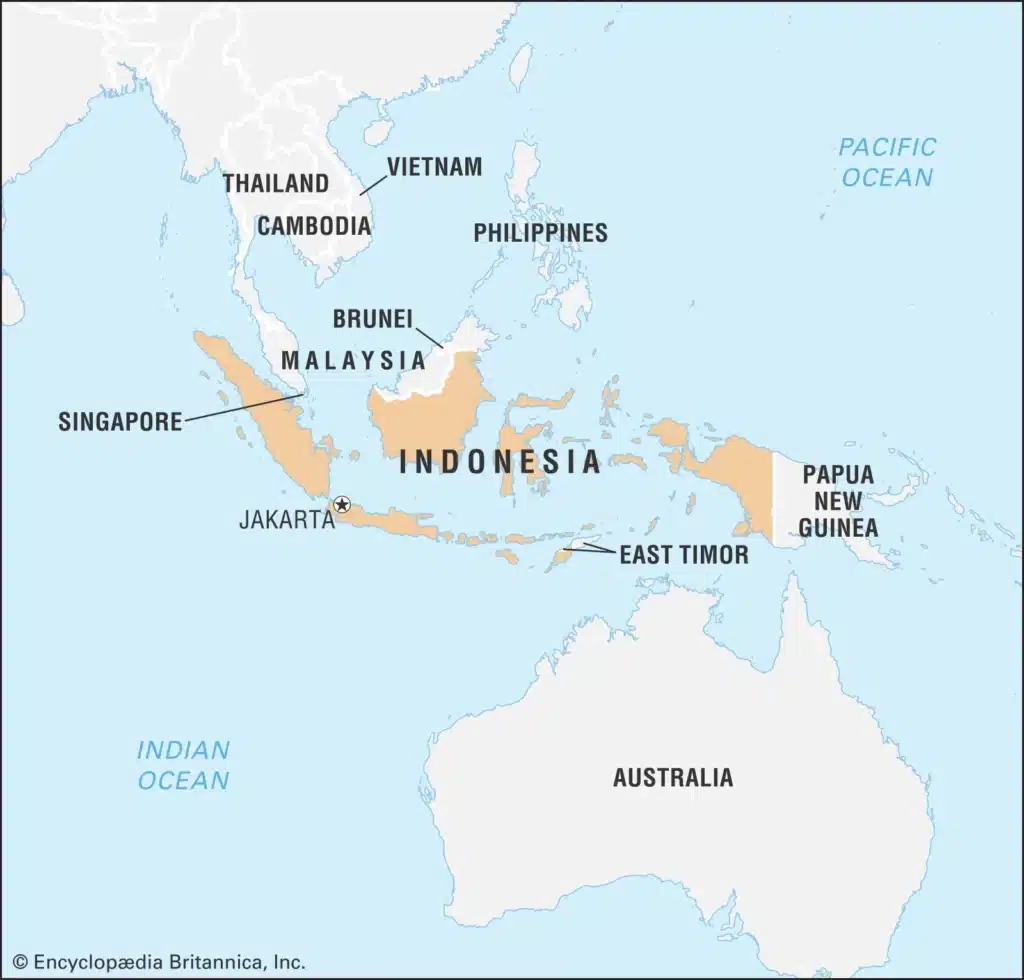
The region now called Indonesia — formerly the Nederlands Indies — is an archipelago comprising Sumatra, Java, Madura, Bali, Celebes and hundreds of smaller islands, extending a little over three thousand miles from Malaya in the west to Borneo in the east. Its history as a Dutch colony, running from the seventeenth-century spice trade through the exploitative Cultivation System, the Ethical Policy, the rise of Indonesian nationalism, and the disruptive Japanese occupation of the Second World War, offers one of the clearest case studies of both colonial economic extraction and the long, contested road to independence — one that, unusually, required a formal appeal to the newly formed United Nations before Indonesia finally emerged as a sovereign republic in 1949.
Part I: Dutch Colonisation of Indonesia
Early European Contact and the Rise of Dutch Control
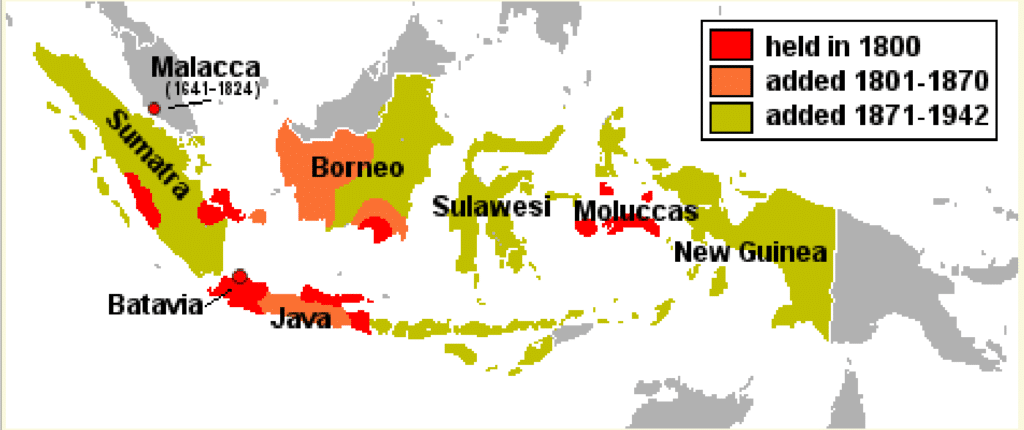
- It was the lucrative trade in spices that first attracted Europeans to Indonesia. The Portuguese arrived first, soon followed by the English — but by the close of the third quarter of the seventeenth century, the Dutch had ousted both, making the spice islands their exclusive preserve.
- During the eighteenth century, the Dutch East India Company established itself as the dominant economic and political power on Java, following the crumbling and collapse of the Mataram Empire.
- In 1796, the Company went bankrupt and was nationalised by the Dutch state. When the French occupied Holland between 1806 and 1815, however, these possessions passed temporarily to the British.
- After Napoleon’s defeat at Waterloo, it was decided that most of the archipelago would revert to Dutch control.
Architects of the Dutch Colonial State
- Two figures stand out as architects of the new Dutch colonial state in Indonesia.
- Herman Willem Daendels, Governor-General from 1808 to 1811 during the French occupation of Holland, reorganised the central and regional colonial administration.
- He divided Java into districts, each headed by a European civil servant — the resident — directly subordinate, and answerable, to the Governor-General in Batavia. These residents held wide-ranging responsibilities within their residency, from legal matters to the organisation of agriculture.
- Sir Stamford Raffles, the British Lieutenant-Governor from 1811 to 1816 during the British occupation of Java, continued and extended Daendels’s reorganisation.
- He reformed Java’s judicial, police and administrative systems, and introduced a land tax equivalent to roughly two-fifths of a peasant’s annual harvest, payable to the authorities.
- Raffles also took a genuine interest in Javanese culture and language, publishing The History of Java in 1817 — one of the first academic works on the subject.
- His administrative reorganisation, however, meant steadily increasing foreign intervention in Java’s society and economy, reflected in the growing number of middle-ranking European officials working in the residencies — rising from 73 in 1825 to 190 by 1890.
The Nature of Dutch Rule
- In governing their colony, the Dutch maintained existing local institutions, laws and customs. They settled in the country in considerable numbers, developed it, and frequently intermarried with the local population — their rule was, in some ways, benevolent, but essentially autocratic, offering Indonesians little opportunity to gain experience in self-governance.
- The Dutch system of colonial rule in Java was both direct and dualistic.
- Alongside the Dutch administrative hierarchy existed an indigenous hierarchy, functioning as an intermediary between Javanese peasants and the European civil service.
- At the top of this indigenous structure stood the Javanese aristocracy — formerly the officials who had run the Mataram administration, now compelled instead to execute Dutch will.
Resistance: The Java War (1825–1830)
- When Dutch colonial authorities decided to build a road across land belonging to Prince Diponegoro, he rebelled, backed by a majority of the Javanese population of Central Java, turning the revolt into a jihad war that resulted in the deaths of approximately 215,000 people, the overwhelming majority on the Javanese side.
- Once the Java War ended, and Prince Diponegoro was captured, the Dutch emerged more dominant over Java than ever before.
Part II: The Cultivation System (1830 Onwards)
Origins and Rationale
- Starting in 1830, the Dutch government followed a new revenue policy for the East Indies known as the Culture System, or Cultivation System, devised by Johannes van den Bosch, then Governor-General of the Dutch East Indies.
- Under this system, farmers were compelled to pay revenue to the Netherlands treasury in the form of export crops or compulsory labour — a policy applied mainly in Java.
- The Cultivation System emerged from several converging pressures.
- The need to let the government tap the resources of the East Indies and make the venture consistently profitable.
- Growing competition from British traders.
- A period of severely strained Dutch state finances.
- The heavy financial burden that the Napoleonic Wars in Europe and the Java War had placed on the Dutch kingdom’s budget.
Provisions of the Cultivation System
- The system established a Dutch monopoly over the cultivation of export crops on Java, with the Dutch themselves deciding which crops Javanese peasants were required to deliver.
- In general, Javanese peasants had to hand over one-fifth of their harvest to the Dutch, receiving in return an arbitrarily fixed compensation.
- A villager was required to give land rent to the government by setting aside 20 per cent of his rice field for the cultivation of export crops suited to the European market — sugar, coffee, tea, indigo, pepper and cotton.
- A villager without land instead had to work in a government field for 20 per cent of the year — some 66 days — without payment.
- Crop failure resulting from any cause other than the cultivator’s own fault was debited to the government’s account.
- Dutch and Javanese officials received a bonus whenever their residency delivered more crops than in previous years — a structural incentive that fuelled top-down intervention and oppression.
- On top of this compulsory cultivation and traditional corvée labour, Raffles’s land tax continued to apply as well.
Impact of the Cultivation System
- By the time the Cultivation System was finally abolished, it had generated significant returns for the government exchequer, promoted Dutch commerce and shipping, and quickly rendered the Dutch East Indies self-sufficient and profitable.
- A financial success.
- Between 1832 and 1852, around 19 per cent of total Dutch state income was generated from the Javanese colony.
- Between 1860 and 1866, this figure had risen to around 33 per cent.
- Burdensome and exploitative for farmers and labourers.
- In the event of crop failure, the people themselves were left responsible for the loss. Contrary to van den Bosch’s original intentions, production was also demanded of people who had already paid taxes under the system.
- Some indirect benefits despite its exploitative character. The Cultivation System’s intrusiveness broke apart a series of localised, introspective communities and turned them towards the wider world.
- In other words, the Cultivation System opened Javanese society to the influences and pressures of the contemporary world — a necessary precondition for modernisation.
Why Was the Cultivation System Dismantled?
- Humanitarian concerns. The exploitative system drew sharp criticism even within the Netherlands. Influential Dutch figures, such as former Governor-General Idenburg, began strongly calling for justice.
- The celebrated Dutch writer Multatuli condemned the system in his book Max Havelaar (1860).
- During the Liberal Period of colonial Indonesia (1870–1900), growing numbers of voices in the Netherlands rejected the Cultivation System in favour of a more liberal approach to foreign enterprise — a rejection driven by both humane and economic motives.
- New ideas of free trade and entrepreneurship. The system proved incompatible with the liberal era’s new emphasis on free trade and private enterprise.
- This period saw a huge influence of private capitalism on colonial policy in the Dutch Indies, with the colonial state increasingly playing the role of a mere supervisor over relations between Western enterprises and the rural Javanese population.
- Through the 1860s, the system faced criticism both from private business interests eager to invest in the East Indies and from independent merchants who preferred free trade.
- Constitutional reform. After the Constitutional Reform of 1848, the Cultivation System came under sustained attack.
- The reformed constitution gave the legislature a role in governing the East Indies, and six years later, legislation was introduced to reduce the system’s inequalities — though genuine reform proceeded slowly, resisted by the Dutch merchant community and Javanese landowners with vested interests in the status quo.
- By around 1870, Dutch liberals had won their battle in parliament, successfully eliminating some of the system’s most characteristic features, such as fixed cultivation percentages and the compulsory allocation of land and labour to export crops.
- The government gradually withdrew from forced crop cultivation, and from 1870 onward, private individuals could establish their own plantations in the East Indies.
- Even as the system was progressively liberalised after 1870 and its worst excesses eliminated, it remained in force for sugar until 1890 and for coffee until 1917.
- Although liberals claimed the benefits of economic growth would eventually trickle down to the local level, Javanese farmers continued to suffer from hunger, famine and epidemics just as commonly as they had under the Cultivation System itself.
Part III: New Imperialism and the Ethical Policy
Post-1870: New Imperialism and Territorial Expansion
- Driven by the mentality of New Imperialism, European nations competed for colonies outside Europe for both economic gain and international status.
- One important motive behind Dutch territorial expansion in the archipelago — beyond direct financial benefit — was to prevent other European powers from claiming parts of the region for themselves.
- The Aceh War (1873–1913) stands as the most famous and prolonged of these campaigns, beginning in 1873 and lasting until 1913, resulting in the deaths of more than 100,000 people — though the Dutch would never achieve full control over Aceh.
- By the start of the twentieth century, the political integration of Java and the Outer Islands into a single colonial polity had been largely achieved.
The Ethical Policy, 1901
- In her annual speech of 1901, Dutch Queen Wilhelmina announced the launch of a new policy — the Ethical Policy — aimed at raising the living standards of the native population.
- Its central mechanism was direct state intervention, promoted under the slogan “irrigation, education and emigration.” The policy, however, would not prove a significant success in actually raising Indonesian living standards.
The Ethical Policy and the Rise of Indonesian Nationalism
- Its educational component contributed significantly to the awakening of pan-Indonesian nationalism, equipping Indonesians with the intellectual tools needed to organise and articulate their objections to colonial rule.
- It provided a small Indonesian elite with Western political ideas of freedom and democracy. For the first time, the native peoples of the archipelago began to develop a shared national consciousness as “Indonesians.”
Part IV: The Beginning of the National Movement
The First Nationalist Organisations
- In 1908, students in Batavia founded Budi Utomo, the first native political society, drawing inspiration from Rabindranath Tagore.
- This event is often regarded as the birth of Indonesian nationalism, establishing a political tradition in which cooperation between the young Indonesian elite and the Dutch colonial authorities was expected to gradually secure some degree of independence.
- The first mass-based political party, Sarekat Islam (Islamic Union), was founded in 1911.
- Initially formed to support indigenous entrepreneurs against the dominant position of Chinese traders in the local economy, it soon expanded its scope, developing a popular political consciousness with genuinely subversive tendencies. It sought to base Indonesian nationalism on Islamic culture, and led the national movement up to 1926, coordinating its activities increasingly with trade unions.
- Other important movements of the period included Muhammadiyah, an Islamic reformist socio-religious movement founded in 1912, and the Indonesian Association of Social Democrats, a communist movement founded in 1914.
- Internal disunity within the latter would later lead to the formation of the Indonesian Communist Party (PKI) in 1920.
Dutch Repression and the Formation of the Indonesian Nationalist Party (1927)
- The Dutch colonial authorities initially permitted the establishment of indigenous political movements, but as Indonesian ideologies radicalised through the 1920s — marked by communist uprisings in West Java and West Sumatra in 1926 and 1927 — the authorities changed course sharply.
- A relatively tolerant regime gave way to a repressive one, in which every suspected act of subversive behaviour was suppressed. This repression, in fact, only worsened the situation, radicalising the entire Indonesian nationalist movement.
- Part of this nationalist current established the Indonesian Nationalist Party (PNI) in 1927, under the leadership of Dr Sukarno, as a direct reaction to the repressive regime.
- Its goal was full independence for Indonesia, and it sought to base the national movement on national and political principles rather than religious considerations.
The Youth Pledge (1928)
- A further landmark for Indonesian nationalism came with the Youth Pledge of 1928. At this congress of youth organisations, three ideals were proclaimed: one motherland, one nation and one language.
- The congress’s main aim was to stimulate a sense of unity among young Indonesians. It was here that the future national anthem, Indonesia Raya, was played, and the future national flag, the merah-putih, was shown, for the first time.
- The colonial authorities responded with a further act of suppression — young national leaders, including Dr Sukarno (Indonesia’s first President in 1945), Dr Hatta (Indonesia’s first Vice-President), and Sutan Sjahrir, were arrested and exiled.
Part V: The Second World War and the Japanese Invasion of the Dutch Indies
The War Transforms Indonesian Politics
- The Dutch were powerful enough to curb Indonesian nationalism — arresting its leaders and suppressing nationalist organisations — but never managed to eliminate nationalist sentiment altogether. Indonesians, in turn, lacked the power to compete directly with their colonial rulers and needed outside help to dislodge the colonial system.
- The Second World War completely transformed the landscape of Indonesian politics. When Holland was overrun by Germany in 1940, its effective link with the East Indies was broken.
- Indonesians declared themselves anti-fascist and offered to cooperate with the Dutch in defending their country against the threat of Japanese invasion — but the Dutch, suspicious of the nationalist leaders’ motives, turned down this proposal. From this rejection grew the idea that Indonesia’s liberation would begin with the expulsion of the Dutch by the Japanese.
- In March 1942, the Japanese — driven by their desire for oil — provided exactly this, occupying the Dutch Indies.
Political Freedom and Military Training Under Japanese Rule
- Under Japanese rule, a degree of political freedom was granted, and administration was handed over to Indonesians under Japanese supervision.
- When the Japanese took control, Dutch officials were interned in camps and replaced by Indonesians running government functions. The Japanese set up a collaborationist government under Sukarno, and, posing as liberators, allowed the nationalists to hold key posts and continue running the administration.
- Japan also provided Indonesians with military training.
- Peta (Pembela Tanah Air, “Defenders of the Homeland”), a voluntary youth garrison, was formed in 1943.
- Beyond this, political activity in the East Indies remained limited, apart from the Japanese-sponsored mass organisation Pergerakan Tiga A (the AAA Movement), which promoted the slogan “Asia for the Asiatics” and portrayed Japan as the region’s “guardian,” “light” and “leader.”
- During the Japanese occupation, Indonesian nationalism became more organised and reached new heights.
- The Japanese educated, trained and armed many young Indonesians, and gave nationalist leaders a genuine political voice — enabling the nationalists to prepare in earnest for a future independent Indonesian nation.
The Hardships of Japanese Rule
- Although initially welcomed as liberators, Indonesians soon experienced the hardships of Japanese rule.
- Scarcity of food, clothing and medicine, alongside forced labour under harsh conditions.
- Food scarcity, caused largely by administrative incompetence, turned Java into an island of hunger.
- Indonesians conscripted as forced labourers were assigned to labour-intensive construction projects across Java.
- Forced military service was also imposed.
- Indonesian nationalism, as stimulated by the war, was thus as much anti-Dutch as anti-Japanese.
Proclamation of Independence (17 August 1945)
- On the eve of the Japanese surrender, Indonesian nationalists — encouraged by the Japanese — proclaimed their country’s independence and established the Indonesian Republic on 17 August 1945.
- Within a short time, the new government had established its authority across Java, Madura and Sumatra.
Part VI: Post-War Developments and the Path to Independence
British Intervention
- Although Holland had been freed from Nazi occupation, the Dutch were still in no position to send military forces to reclaim control of the East Indies — the task of receiving the Japanese surrender was, instead, entrusted to the British.
- British troops restored law and order but soon discovered that the Indonesian nationalist authorities were determined to resist the return of the Dutch. With little alternative, the British recognised the de facto Indonesian Republic within the territories under its control.
The Linggadjati Agreement (1946)
- When the Dutch subsequently sought to resume control, the Indonesians put up a stiff fight. Fighting and negotiation proceeded simultaneously, eventually producing the Linggadjati Agreement of 1946.
- Under it, the Dutch recognised the Republic as holding de facto authority over Java, Sumatra and Madura.
- It was further agreed that a United States of Indonesia, composed of the three Republics of Indonesia, Borneo and the Great East, would be established as part of a still wider Netherlands-Indonesian Union.
- The Agreement was formally ratified in March 1947.
The Indonesian Question Goes to the United Nations
- The Linggadjati Agreement soon proved ineffective, as mutual distrust persisted between the two sides — proposals from one party were repeatedly met with unacceptable counter-proposals from the other, and the Dutch ultimately resorted to military action, euphemistically described as “a police measure of a strictly limited sort.”
- At this point, India and Australia brought the Indonesian question before the UN Security Council.
- The Council, responding urgently, promptly issued a cease-fire order. Although accepted by both sides, the fighting did not actually diminish.
- The Council then appointed a Consular Commission to report on the situation, and offered to establish a Committee of Good Offices, comprising three members chosen by the parties themselves, to help them reach an amicable settlement.
- In 1948, the two sides accepted an immediate truce — but the Dutch soon terminated it, resumed armed conflict, and imprisoned Sukarno and Hatta.
- The UN responded with a fresh resolution demanding a cease-fire, compelling the Dutch to appear before it and defend their conduct, and to accept the necessity of negotiating a settlement rather than imposing one.
- At the same time, Indian Prime Minister Jawaharlal Nehru convened an Asian Conference in Delhi in 1949 to help find a way out of the impasse. The conference demanded the release of the Republican leaders and the withdrawal of the Dutch economic blockade of the Republic.
Indonesia Becomes an Independent Republic
- Under heavy pressure from multiple quarters, the Dutch released the Republican leaders, entered into a truce arrangement, and agreed to a Round Table Conference at The Hague in Holland.
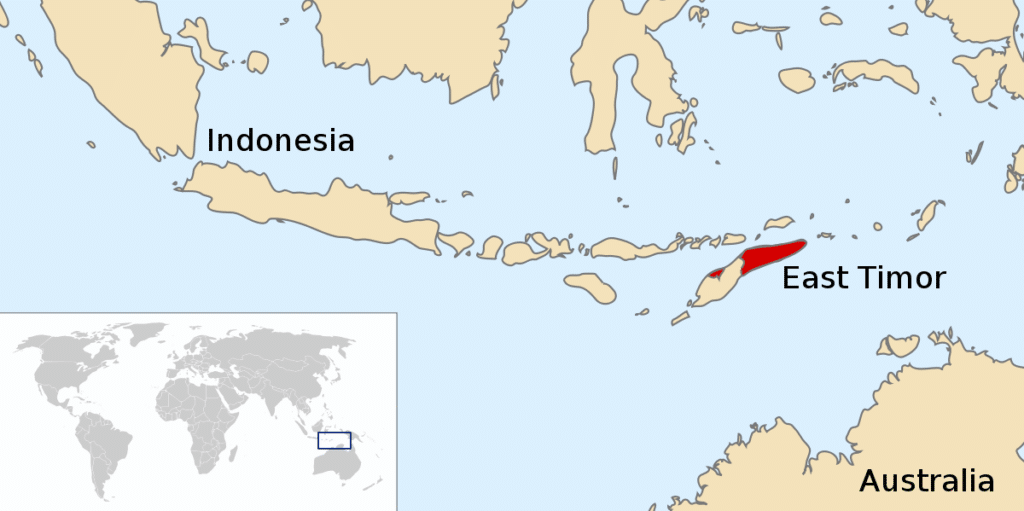
- The conference’s deliberations produced the Hague Statute of Union, establishing the United States of Indonesia as a sovereign republic, associated with the Netherlands “on the basis of voluntariness and equal status with equal rights” (1949).
- Thus emerged a new state in South-East Asia — the Indonesian Republic. Sukarno was elected President, and Dr Hatta became the country’s first Prime Minister.





 Sociology Optional PYQ Solutions: Topic-wise Solved PYQs (1985–2025) by LotusArise IAS