Provincial Painting: Patna Kalam Painting

- The Patna School of Painting — also known as Patna Qalam, Patna Kalam, or Company painting — is a style of Indian painting that flourished in Bihar during the 18th and 19th centuries.
- It holds the distinction of being the world’s first independent school of painting to deal exclusively with commoners and their everyday lifestyle, a feature that contributed significantly to its popularity.
- The principal centres of this school were Patna, Danapur, and Arrah.
- Studying Provincial Painting: Patna Kalam Painting offers UPSC History Optional aspirants an important example of how Mughal, British, and local influences converged to produce a genuinely original regional style.
Origin
- Patna Kalam developed as an offshoot of Mughal painting.
- Migration from Delhi:
- During the rule of Aurangzeb in the late 17th and early 18th century, artisans faced mass persecution and growing official aversion toward art and painting.
- Painters consequently migrated from Delhi in search of shelter, with one group moving eastward to settle in Murshidabad under the patronage of the Nawab of Bengal and other local aristocrats.
- Shift to Patna:
- In the mid-18th century, following the fall of the Nawab of Bengal and the subsequent decline of Murshidabad, these artisans began moving further east to Patna, then the next major city in the region.
- In Patna, they found patronage from the local aristocracy and often Indophile officials of the early East India Company, giving rise to a unique style of painting that came to be known as Company painting, or Patna Kalam.
- Establishment and peak:
- By 1770, the style was firmly established, and it went on to reach its peak between 1850 and 1880.
Salient Features
- Patna Kalam was built on the basic technical foundations of Mughal painting, though its subject matter differed considerably.
- It reflects a synthesis of three influences:
- Mughal painting.
- Company (British) style.
- Local Bihari specialty.
- Blending of styles:
- The colours and linings used in Patna Kalam portraits clearly derive from the Mughal style.
- The shading technique, however, was adopted from the British style.
- Departure from Mughal convention: Unlike the Mughal tradition of wide, exquisitely decorated borders, Patna Kalam primarily focused attention on the subject of the painting itself, largely dispensing with ornamental framing.
Miniature Painting
- Patna Kalam falls under the broader category of miniature painting.
- These works were most commonly executed on paper, glass, mica, and ivory sheets.
Technique
- Shading: Unlike Delhi artists, Patna Kalam painters employed the distinctive slanting dot system.
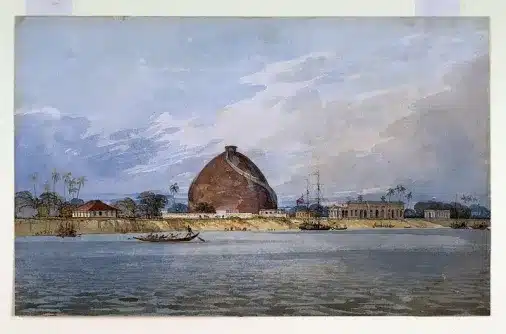
- Backgrounds: Though backgrounds were rarely used, when employed, they typically depicted:
- A door overlooking a river.
- A garden scene.
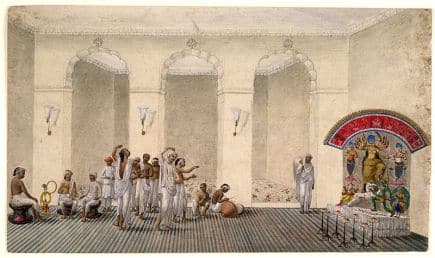
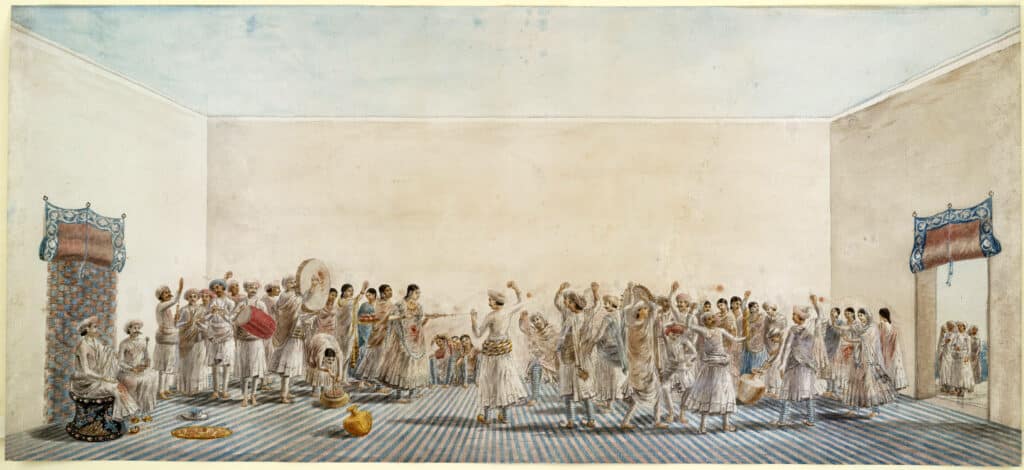
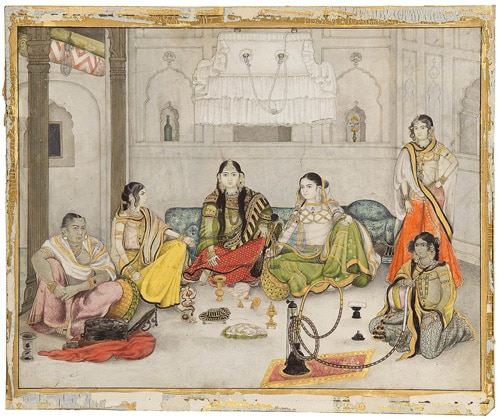
- A partition of a room with pillars and curtains.
- Ornamented draperies, among other motifs.
- Method of execution: Painters worked directly with the brush, without first sketching contours in pencil — a distinctive technique known as Kajli Seahi.
Themes
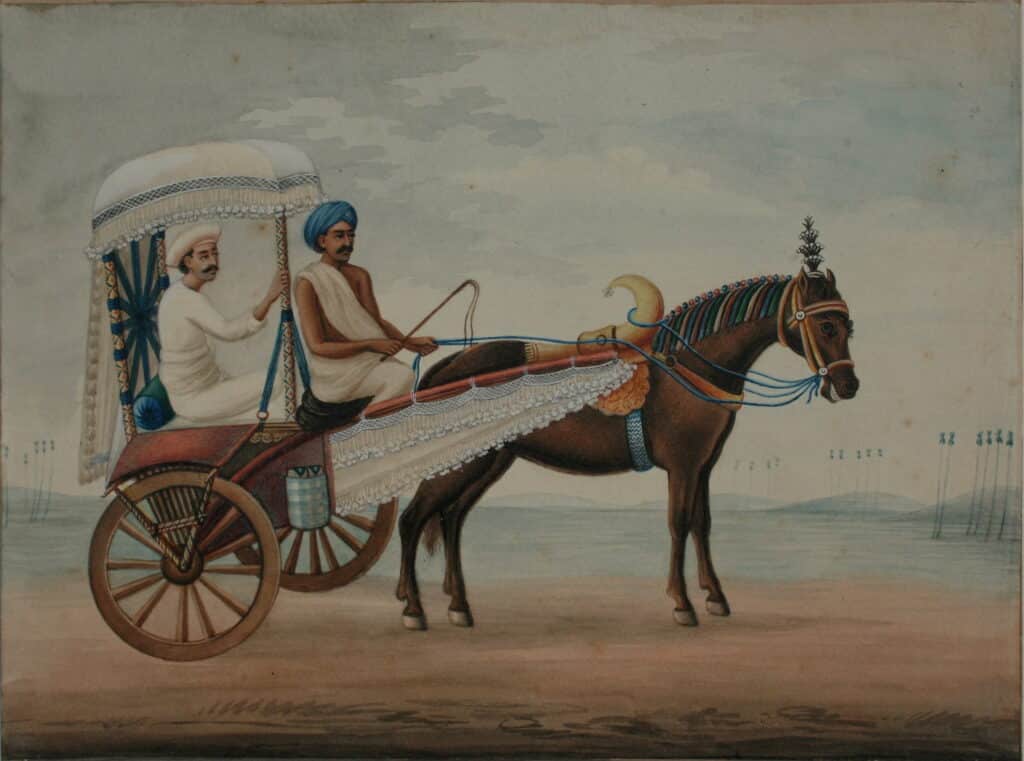
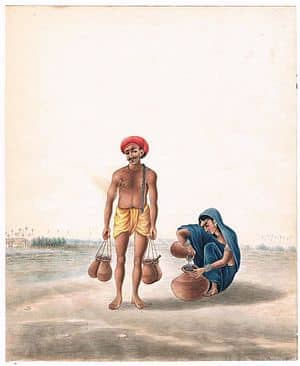
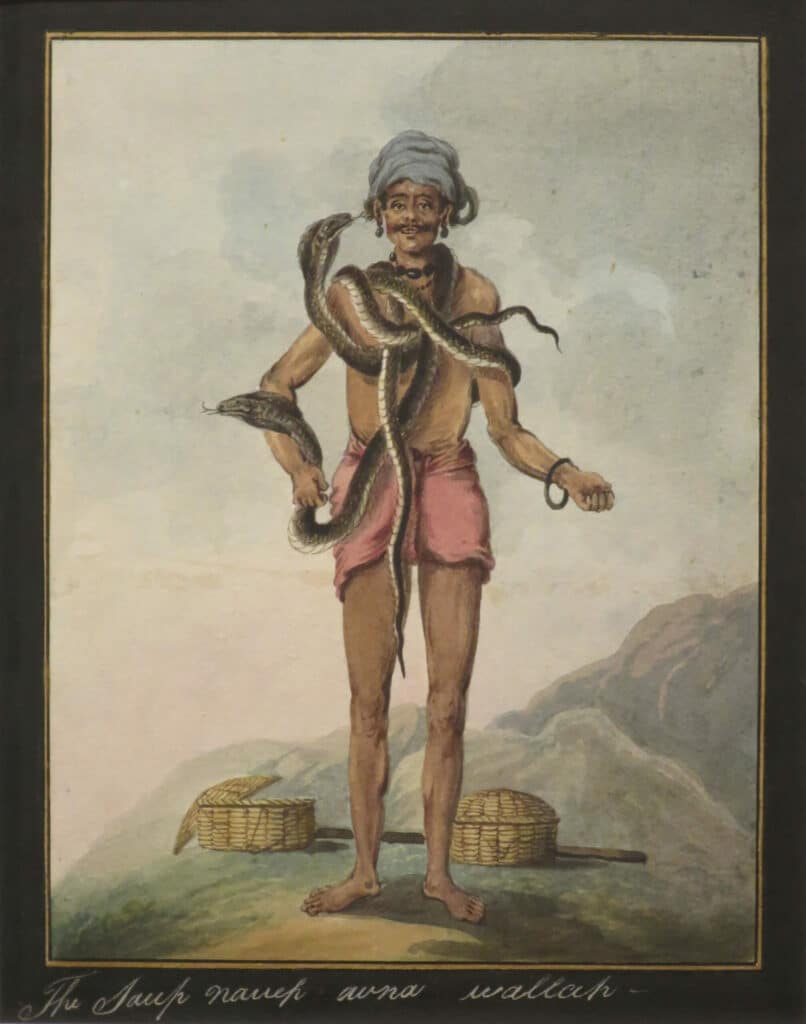
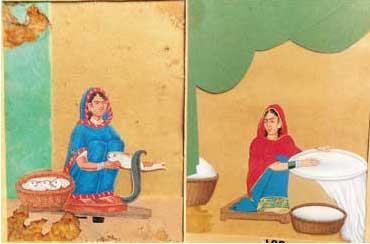
- The dominant themes were drawn from common daily life, making Patna Kalam the world’s first independent school to focus on such subjects.
- Figures depicted included a stone-cutter, barber, shoemaker, palanquin-bearer, peddler, butter-seller, along with scenes of a distillery, bakery, maid-servant, and various modes of transportation.
- Paintings of the various birds found at Patna were also a notable specialty of the school.
Less Use of Background and Landscape
- Patna Kalam paintings show minimal use of background and landscape.
- This was largely a matter of economy — elaborate backgrounds and landscapes would have raised production costs, so artists avoided them to keep their paintings less expensive.
Indigenous Style of Colouring
- Painters used extremely fine brushes, made from just one or two hairs, to achieve delicate detail.
- These brushes were fashioned from the hair of domestic animals such as squirrels, goats, pigs, and buffaloes.
- Colours were extracted from plants, barks, flowers, and metals.
- Notably, painters prepared their own canvas, colours, and brushes, giving the style a strongly indigenous and self-reliant character.
Distinction from the Mughal Style
- Patna Kalam lacks the splendour typically associated with Mughal painting.
- It does not feature the large-scale depictions of kings and courts that predominate in the Mughal tradition, reflecting its focus on ordinary life rather than royal grandeur.
Human Figures: Characteristic Features
- Heavy eyebrows.
- Pointed nose.
- Thin face.
- Deep-set, staring eyes.
- Prominent moustaches on male figures.
Main Painters
- Earliest recorded artists: Sewak Ram (1770–1830) and Hulash Lal (1795–1880), along with Jai Ram Das, Jhumak Lal, Fakirchand, and Tuni Lal.
- The Patna style reached its acme between 1850 and 1880.
- The two principal and most widely reputed artists who built the school’s great reputation were Shiv Lal and Shiv Dayalji, sons of Fakirchand Lal and Tuni Lal respectively.
- The last two representatives of the Patna style were:
- Babu Mahadeo Lal.
- Shri Ishwari Prasad Verma, former Vice-Principal of the Government School of Art, Calcutta.
Important Paintings
- Mahadeo Lal’s “Ragini Gandhari” and “Ragini Todi” — in the latter, the artist depicts a Virahini heroine holding a veena.
- The painting of a Muslim marriage, created by Shiv Lal.
- The “Bharat Mata” painting by Ishwari Prasad.
Collections
- Within Bihar, works of the Patna School are preserved at three principal locations:
- The Patna Museum.
- The Khuda Bakhsh Library, Patna.
- The collection of the State Art Gallery attached to the Government School of Arts and Crafts.
- Beyond Bihar, an additional collection exists at the National Museum, New Delhi.
Patna Kalam Today
- No practitioners currently carry forward the tradition — the style flourished only as long as its Western patrons continued to exist.
- Its most important characteristic remains its liveliness and its faithful depiction of common life scenes.
- Miniature ivory paintings of the Patna Kalam school are often considered superior to Mughal painting in terms of liveliness, precision, perfection, and beauty.
Conclusion
- Patna Kalam painting represents a remarkable synthesis of Mughal technique, British shading methods, and indigenous Bihari subject matter, culminating in the world’s first school of painting devoted to the depiction of common life.
- From its origins among displaced Delhi artisans under Aurangzeb, through its consolidation at Murshidabad and Patna, to its acme under Shiv Lal and Shiv Dayalji between 1850 and 1880, the school’s trajectory illustrates how regional patronage and colonial contact could together produce an art form of lasting originality.
- Though the tradition has no living practitioners today, its surviving works in the Patna Museum, Khuda Bakhsh Library, and National Museum continue to be valued for their liveliness and precision, making Patna Kalam one of the most glorious artistic legacies of Bihar and a distinctive theme within provincial Indian painting for UPSC History Optional.