Megalithic Culture

- The term “megalith” is derived from the Greek megas, meaning “great,” and lithos, meaning “stone” — so “megaliths” refer to monuments built of large stones.
- However, not all monuments constructed of big stones are megaliths. The term has a restricted usage, applied only to a particular class of monuments or structures built of large stones that have some sepulchral (grave-like), commemorative, or ritualistic association — with the exception of hero stones or memorial stones.
- Megaliths usually refer to burials made of large stones, in graveyards located away from the habitation area.
Chronology
- Based on archaeological evidence — first established through the Brahmagiri excavation, and dated using a characteristic ceramic (pottery) type, the Black and Red Ware (BRW), found in all types of megaliths in South India — these cultures were originally placed between the 3rd century BC and the 1st century AD.
- However, the Megalithic culture of South India actually had a much larger chronological span.
- The problem in ascertaining this chronological span lies in the fact that only a few radiocarbon dates are so far available from megalithic habitations.
- The habitation site at Hallur gave a date of 1000 BC for the earliest phase of these cultures; this phase is correlated with the graves at Tadakanahalli, 4 km away from this site.
- Two radiocarbon dates for the sites at Naikund and Takalghat place the Vidarbha megaliths at around 600 BC.
- In Tamil Nadu, Paiyampalli recorded a date of around the 4th century BC.
- On the basis of explorations and excavations, the date of the megaliths in the North Karnataka region has been pushed back to as early as 1200 BC.
- As the megalithic culture overlapped with the end phases of the Neolithic-Chalcolithic culture, it is found in association with Neolithic-Chalcolithic wares at the lower end, and with rouletted ware (of the first millennium AD) at the upper end.
- On this basis, the time bracket of the megalithic cultures in South India may be placed between 1000 BC and AD 100.
- However, the available archaeological data suggests that the period of their maximum popularity lies somewhere between 600 BC and AD 100.
Origin and Spread of Megalithic Cultures
- In the Indian context, this culture is understood to have arrived with Dravidian speakers, who came to South India from West Asia by sea.
- However, the typical West Asian megaliths yielded bronze objects, and this culture came to an end in the last phase of the Bronze Age, around 1500 BC.
- The Indian megaliths, by contrast, belong to the Iron Age, generally dated from 1000 BC onwards. It is not yet certain when, and how, iron technology developed and became an integral part of the megalithic culture.
- The material and chronological differences between the megalithic cultures of northern and southern India suggest that this culture’s arrival in the Indian subcontinent took place by two routes, via two different groups:
- One following the sea route, from the Gulf of Oman to the west coast of India.
- The other following the land route, from Iran.
- The complex pattern of widely different burial practices, all lumped together under the term “megaliths,” is the result of the mingling of various traditions and developments over a long period.
- Megaliths have been found in different chronological contexts practically all over India — from the plains of Punjab, the Indo-Gangetic basin, the desert of Rajasthan, and northern Gujarat, to especially all regions south of Nagpur in peninsular India.
- The tradition survives as a living practice in the north-eastern part of India, and in the Nilgiris.
- The main concentration of megalithic cultures in India was in the Deccan, especially south of the river Godavari.
- However, large-stone structures resembling some usual megalith types have also been reported from parts of North, Central, and Western India, including:
- Seraikala, in Bihar.
- Deodhoora, in Almora district, and Khera, near Fatehpur Sikri, in Uttar Pradesh.
- Nagpur, and the Chanda and Bhandara districts of Madhya Pradesh.
- Deosa, near Jaipur, in Rajasthan.
- Similar monuments have also been found near Karachi in Pakistan, near Leh in the Himalayas, and at Burzahom in Jammu and Kashmir.
- However, large-stone structures resembling some usual megalith types have also been reported from parts of North, Central, and Western India, including:
- However, given the wide distribution of these monuments in the southern region of India, it appears that megalithic culture was essentially a South Indian feature, which flourished there for at least a thousand years.
Sepulchral Megaliths
- Sepulchral megaliths — those containing the remains of the dead — could store these remains in a variety of forms.
- Primary burials were those in which the dead were interred soon after death, containing a complete skeleton, along with some additional material as homage, for the dead to use in the afterlife.
- In some cases, these primary burials were placed in a sarcophagus made of terracotta; the whole burial chamber is therefore a rich source of information.
- Secondary burials were also common — in these, the remains of the dead, essentially their bones, were placed in urns or pits.
- Primary burials were those in which the dead were interred soon after death, containing a complete skeleton, along with some additional material as homage, for the dead to use in the afterlife.
- The location of the dead is most often marked with stone circles, though cairns and slab circles are also found on the surface.
- A common feature of these megaliths is that they are generally of the dimensions of a typical human, or even smaller, and the area is on occasion isolated with stone circles.
Megalithic Culture: The Iron Age Culture of South India
- The megalithic culture of South India was a full-fledged Iron Age culture, when the great benefits of using this metal were fully realised by the people.
- Hence, stone largely dropped out of use as a material for weapons and tools — though the megalithic people found new uses for stone in their daily life.
- Most of the information about the Iron Age in South India comes from the excavation of megalithic burials.
- Iron objects have been found universally at all megalithic sites, right from Junapani, near Nagpur in the Vidarbha region of central India, down to Adichanallur in Tamil Nadu, in the far south.
- With the introduction of iron, there was a gradual change in almost everything — except, perhaps, house plans.
- But, of all these changes, the most remarkable was the elaborate method of disposing of the dead, which became a characteristic feature of the South Indian regions.
- Instead of laying the dead, accompanied by four or five pots, in a pit within the house, the dead were now buried in a separate place — a cemetery, or graveyard, away from the house.
- The remains of the dead were collected, perhaps after exposing the body for some time, and the bones were then placed underground in a specially prepared stone box called a cist.
- The cists were elaborate structures, necessitating a considerable amount of planning and cooperation among the community, and the existence of masons and other craftsmen capable of manufacturing stones of the required size, both large and small.
- It is probable that these megaliths were planned and kept ready even before the death of the individual for whom they were built.
Classification of the Megaliths
- Megalithic burials show a variety of methods for the disposal of the dead. Moreover, there are megaliths which are internally different but exhibit the same external features.
- The megaliths can be classified under the following categories:
- Rock Cut Caves
- Hood Stones and Hat Stones/Cap Stones
- Menhirs, Alignments, and Avenues
- Dolmenoid Cists
- Cairn Circles
- Stone Circles
- Pit Burials
- Barrows
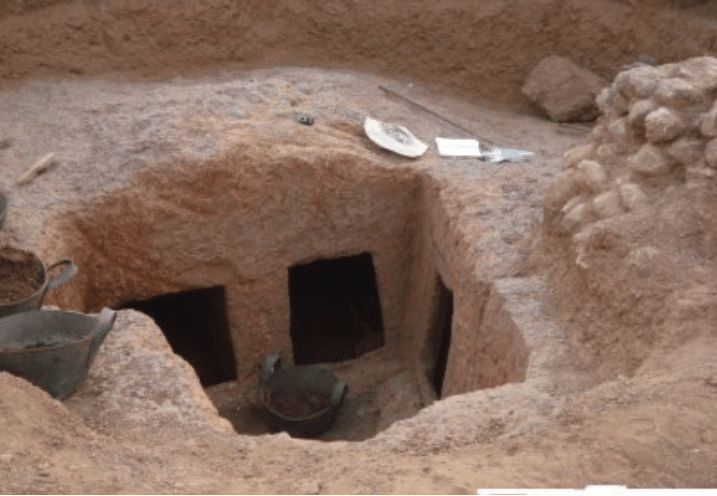
(1) Rock Cut Caves
- These are scooped out of soft laterite, as found in the southern part of the west coast.
- These rock-cut cave tombs are peculiar to this region, occurring in the Cochin and Malabar regions of Kerala.
- The laterite rock-cut caves of the burial site constitute three chambers.
- They also occur in other regions — on the east coast of South India, they are found at Mamallapuram, near Madras.
- These rock-cut burial caves in the Cochin region are of four types:
- Caves with a central pillar.
- Caves without a central pillar.
- Caves with a deep opening.
- Multi-chambered caves.
(2) Hood Stones (Kudaikallu) and Cap Stones (Toppikkals)
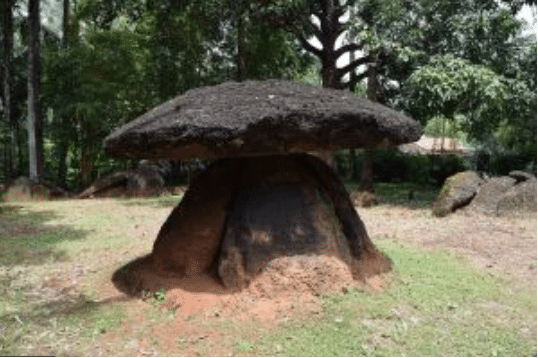
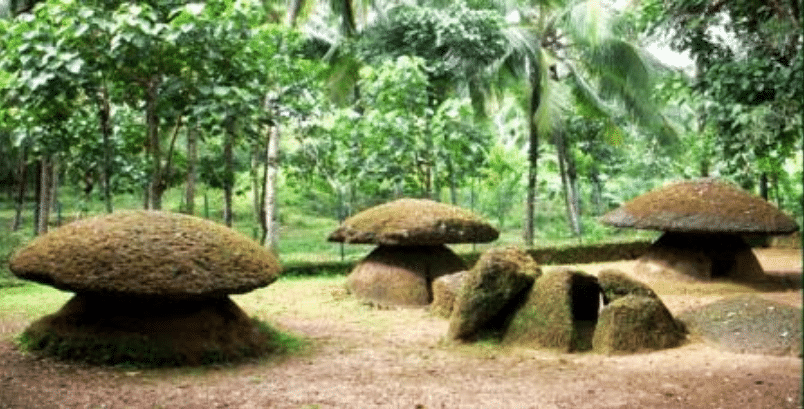
- Allied to the rock-cut caves, but of a simpler form, are the hood stones, or Kudaikallu, mostly found in Kerala.
- These consist of a dome-shaped, dressed laterite block, covering an underground circular pit cut into a natural rock, and provided with a stairway.
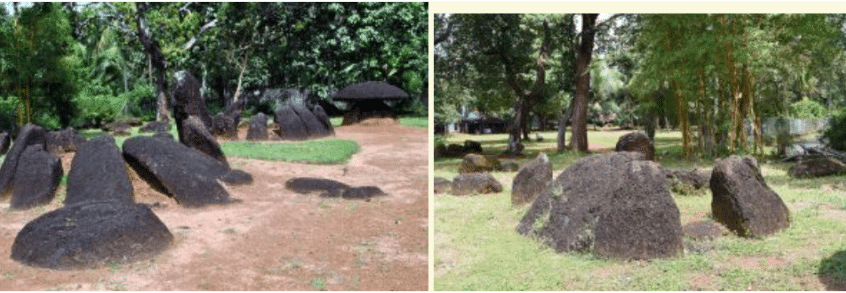
- In some cases, the hood stone gives way to a cap stone, or toppikkal, which is a plano-convex slab resting on three or four quadrilateral boulders.
- This too covers an underground burial pit, containing the funerary urn and other grave furnishings.
- Unlike in the rock-cut caves, there is no separate chamber here apart from this open pit, in which the burial itself is made.
- It usually contains a burial urn, covered with a convex or dome-shaped pottery lid or stone slab, and contains skeletal remains, small pots, and, sometimes, ashes.
- Similar monuments are commonly found in the Cochin and Malabar regions, extending along the Western Ghats into the Coimbatore region, up to the Noyyal river valley in Tamil Nadu.
(3) Menhirs, Alignments, and Avenues
- Menhirs are monolithic pillars planted vertically into the ground — these may be small, or gigantic in height, and may be dressed or left entirely undressed.
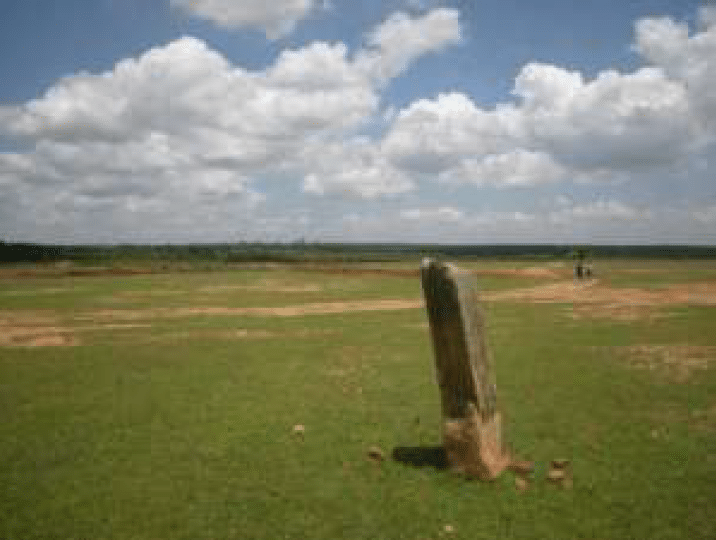
Menhir Megalith in Hazaribagh, Jharkhand
- These are essentially commemorative stone pillars, set up at or near a burial spot.
- They are mentioned in ancient Tamil literature as nadukal, and are often called Pandukkal, or Pandil.
- In some cases, the menhirs are not planted in the ground at all, but rest on the original ground, propped up with a mass of rubble, as at Maski.
- These occur at a number of sites in close vicinity to other types of megalithic burials — mostly in different regions of Kerala, and in the Bellary, Raichur, and Gulbarga regions of Karnataka, in large numbers, and less frequently elsewhere in South India.
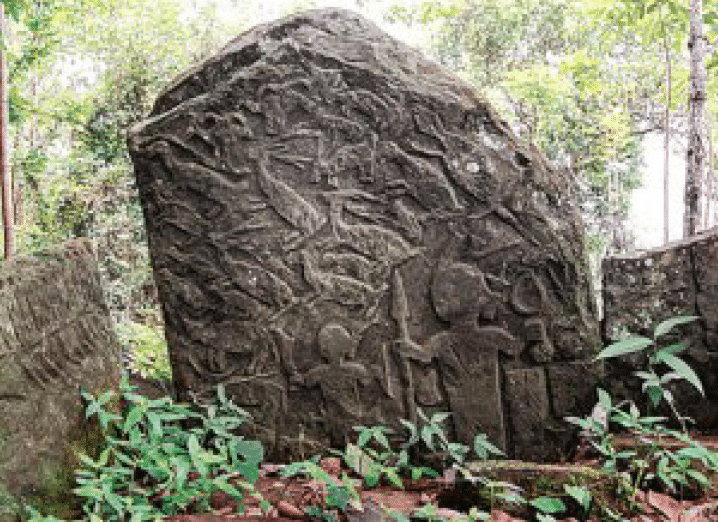
- Mizoram’s first “monument” — the menhirs of Vangchhia village, Champhai district — represent an important non-southern example: the actual site, where 171 menhirs stand, is known as Kawtchhuah Ropui, meaning “the Great Entranceway.” Menhirs or monoliths are also found in Meghalaya, Nagaland, and Andhra Pradesh, though they are not common in the rest of India.
- Alignments are closely associated with menhirs.
- These consist of a series of standing stones, sometimes dressed.
- Alignments are found at Komalaparathala in Kerala, and at a number of sites in the Gulbarga, Raichur, Nalgonda, and Mahbubnagar districts of Karnataka and Telangana.
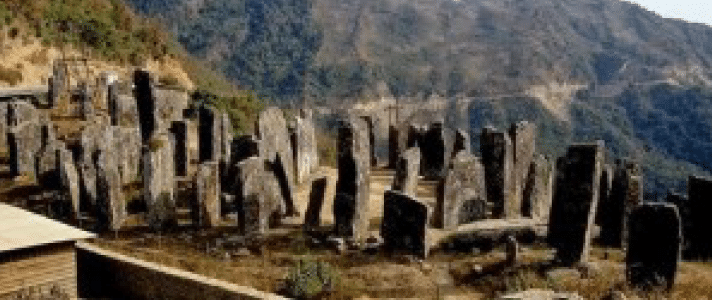
Menhir in Manipur
- Avenues consist of two or more parallel rows of alignments — many alignment sites may be considered examples of this category when their standing stones occur in parallel lines.
(4) Dolmenoid Cists
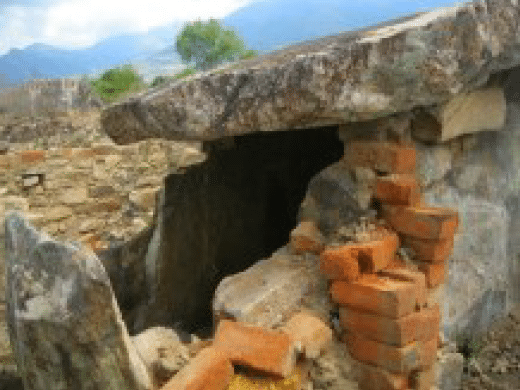
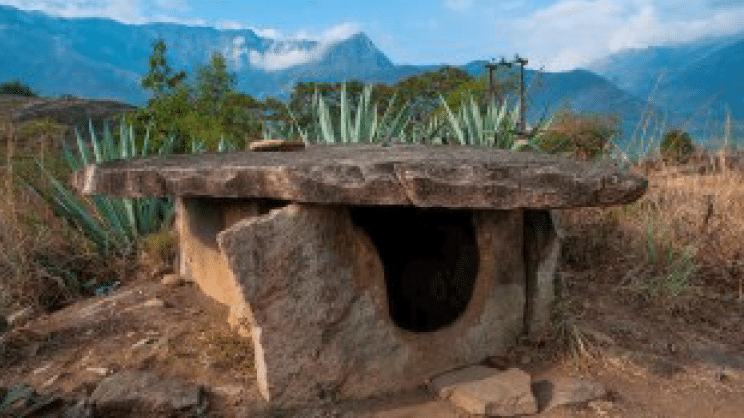
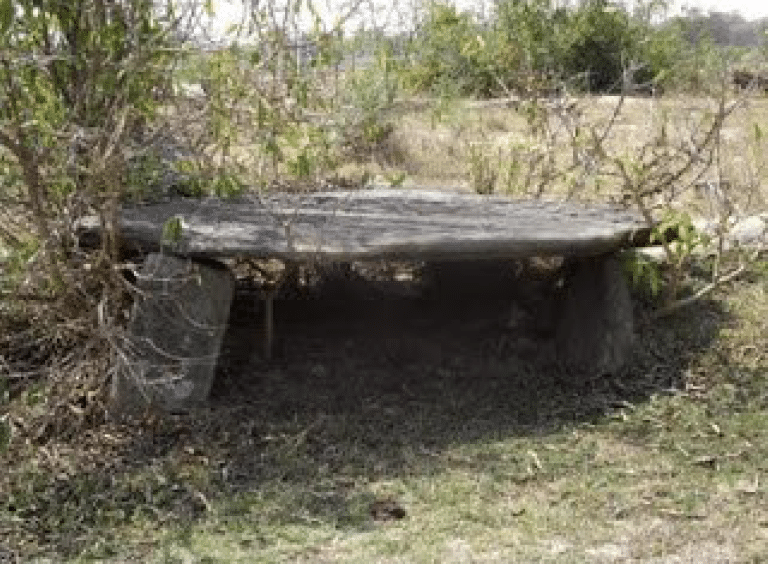
- Dolmenoid cists consist of square or rectangular, box-like graves, built of several orthostats (upright stones or slabs) — one or more for each side — supporting a large capstone, consisting of one or more stones, often with the floor also paved with stone slabs.
- The orthostats and capstones might be formed either of undressed, rough blocks of stone, or of partly dressed stones.
- Dolmenoid cists occur in large numbers at Sanur, near Chingleput (Tamil Nadu), and at many other sites in this region.
- The cists built of dressed slabs, or “slab cists,” are the normal type of cists, occurring all over South India, as well as in some parts of the north.
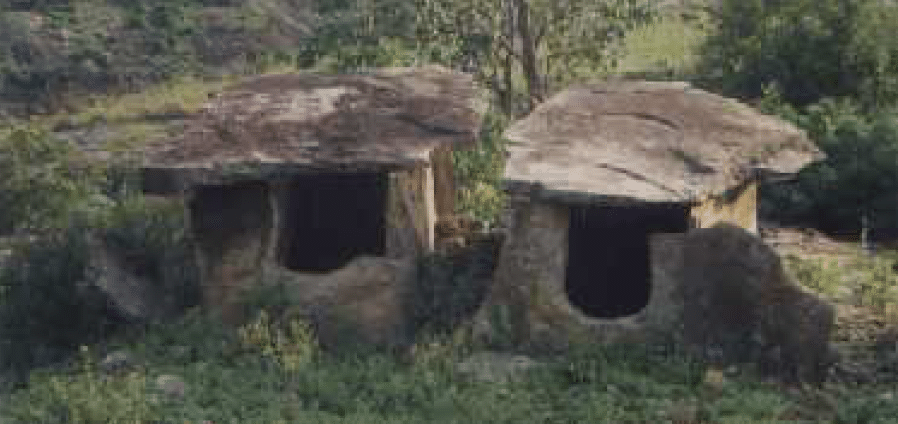
Dolmens of Marayur. Marayur in Kerala is also famous for Ancient rock paintings.
- There are many sub-types of the dolmenoid cist in Tamil Nadu:
- Dolmenoid cist with multiple orthostats.
- Dolmenoid cist with four orthostats, with a U-shaped port-hole in the east or west orthostat.
- Dolmenoid cist with four orthostats, with a U-shaped port-hole at the top corner of the eastern orthostat.
- Dolmenoid cist with four orthostats, with slab-circles.
(5) Cairn Circles
- Cairn circles are one of the most popular types of megalithic monuments, occurring all over South India, often in association with other types.
- They consist of a heap of stone rubble, enclosed within a circle of boulders.
- Megalithic burial sites (cairn circles) discovered near Veeranam, in Tiruvannamalai district, can be dated to 1,000 BCE–300 CE.
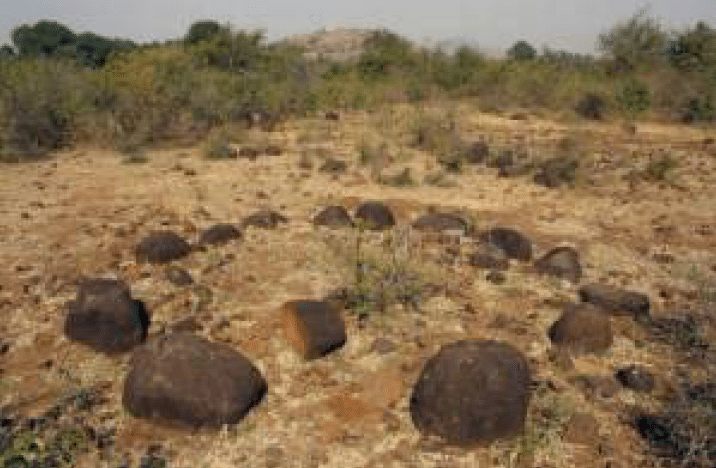
Megalithic burial sites (cairn-circles), discovered near Veeranam in Tiruvannamalai district, can be dated to 1,000 BCE-300 CE. The granite slabs of the dolmenoid cists are strewn around.
Pit burials under cairn circles:
- These consist of deep pits, dug into the soil, roughly circular, square, or oblong in plan.
- The skeletal remains and grave furniture were placed on the floors of these pits, which were then filled up with earth.
- Above this earth-filling was placed the cairn heap, which might be just a thin layer, or might rise up to 3 to 4 feet above ground level, bounded by a circle of stones.
- Such pit burials have been found at many sites in the Chingleput (Tamil Nadu), Chitradurg, and Gulbarga (Karnataka) districts.
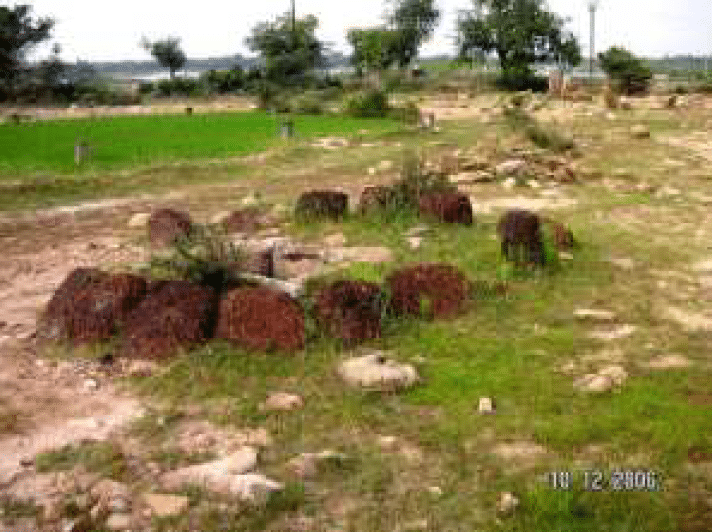
Sithannavasal, Pudukkottai district,Tamil Nadu burial ground, chamber tombs with stone circles
Sarcophagi burials under cairn circles:
- A sarcophagus is literally a legged coffin made of terracotta. Cairn circles containing sarcophagi entombments are comparatively more widespread than plain pit burials.
- They are similar to pit burials, but the skeletal remains and primary grave furniture are placed in an oblong terracotta sarcophagus.
- This sarcophagus is generally provided with a convex terracotta lid, rows of legs at the bottom, and often a capstone at a higher level.
- Such megalithic structures are found in the South Arcot, Chingleput, and North Arcot districts of Tamil Nadu, and in the Kolar district of Karnataka.
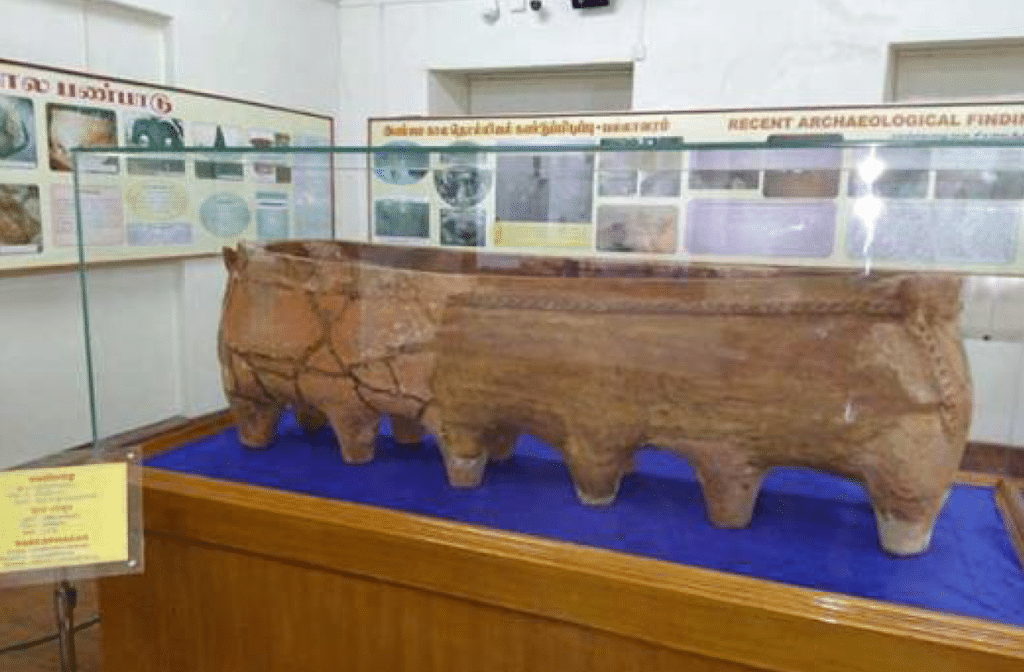
Sarcophagus unearthed from Pallavaram in Kancheepuram district
Urn burials under cairn circles:
- The urn burials under cairn circles are a variant form of the sarcophagi burials, and occur in large numbers across most of South India.
- The urns (pots) in which the burials are made are deposited in pits dug into the soil; the pits are filled up with soil to ground level, and are frequently provided with a capstone.
- The heap of cairns on the surface, marking the burial, is then surrounded by a circle of stones.
- Such urn burials are predominant in:
- Kerala.
- Madurai, Tiruchirapalli, Coimbatore, the Nilgiris, Salem, Chingleput, and South Arcot districts of Tamil Nadu.
- Kolar, Bangalore, Hassan, Chitradurg, Bellary, Raichur, and Gulbarga districts of Karnataka.
- Various districts of Andhra Pradesh.
- The region around Nagpur.
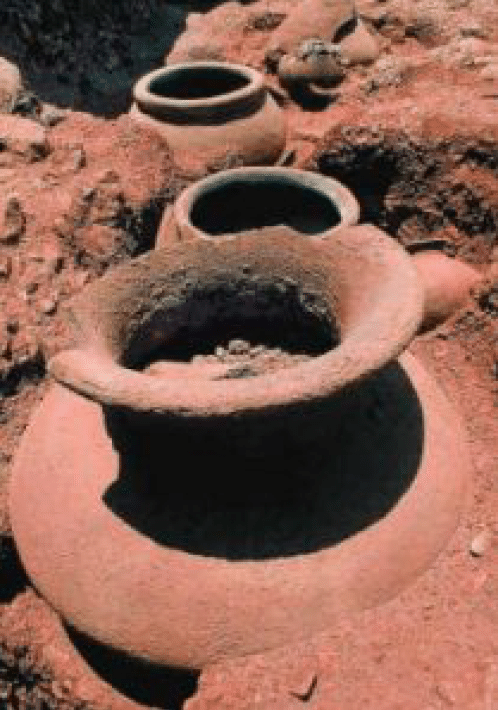
- Interestingly, an urn found at Adichanallur resembles burial urns found at Malwa in Madhya Pradesh, suggesting trade contacts between the two regions.
(6) Stone Circles
- Stone circles are the most commonly encountered megalithic monuments in India.
- They reflect features of various forms of megalithic monuments, such as the Kudaikallu, Toppikkal, different types of pit burials, menhirs, dolmenoid cists of different types, cairns, and so on.
- They occur from the southern tip of the peninsula up to the Nagpur region, and in different parts of North India.
- However, under this specific category, only stone circles without any considerable cairn filling within the circle — containing burial pits, with or without urns or sarcophagi — are included.
(7) Pit Burials
- These are burials in pyriform or fusiform urns — large, conical jars containing funerary deposits — buried in underground pits specially dug into hard, natural soil, and sometimes into the basal rock; the pits are then filled up.
- In these burials, we find no surface indication of the burial — no stone circle, cairn heap, hood stone, cap stone, or even menhir.
- Since these urn burials lack any megalithic appendage, this class of burial cannot, strictly speaking, be classified as a “megalithic burial monument” — no megalith is observed in relation to them.
- However, they exhibit the general traits of the megalithic culture of South India, characterised by the use of the typically megalithic Black-and-Red Ware (BRW) and associated wares, along with iron objects.
- Their grave goods are identical to those found in regular megalithic burials, and they occur in the same general areas where typical megalithic burials exist.
- In fact, these urn burials do not differ in any detail from urn burials under a stone or cairn circle, except in their surface features.
- These urn burials, without megalithic appendage, are found at many sites in Tamil Nadu, like Adichanallur and Gopalasamiparambu, among many others.
- They occur less abundantly in the Karnataka and Andhra regions.
- Even in North India, such urn burials are frequently observed at a number of Harappan and Later Chalcolithic sites in western, central, and north-western India, though their context there is completely different from that of the South Indian urn burials.
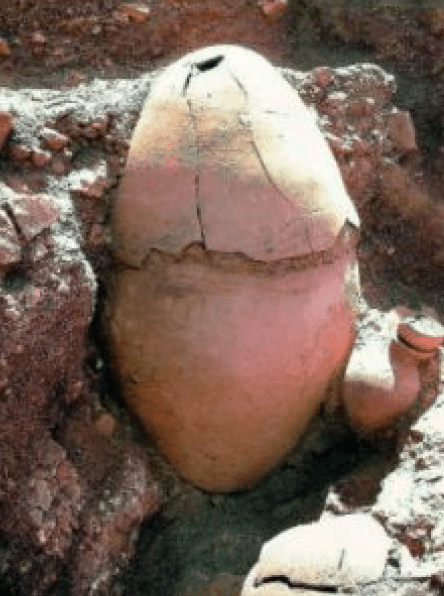
(8) Barrows
- Barrows, or earthen mounds, mark off underground burials. They may be circular, or oblong in plan (a “long barrow”), and may or may not have surrounding stone circles or ditches.
- Monuments of this kind have not been found in large numbers in India, though such monuments have been observed in the Hassan district of Karnataka.
Grave Goods in Megalithic Burials
- Megalithic burials have yielded a wide variety of objects, which prove to be very important in the study of megalithic culture.
- It is observed that, right from the Later Palaeolithic period, an intentional burial was accorded to the dead for manifold motives. The megalithic people were no exception to this age-old custom, and took pains to construct elaborate and labour-consuming tombs.
- They furnished these tombs with as many essential objects as they could afford, believing this necessary because of their belief in an afterlife for the dead — the dead were thus suitably provided for, with a place to live in and goods for their essential needs.
- In the Indian megaliths, especially those of South India, the grave furniture consisted of:
- A large variety of pottery.
- Weapons and implements, mostly of iron, but often also of stone or copper.
- Ornaments — beads of terracotta, semi-precious stones, gold or copper, and shell, strung into necklaces, or, more rarely, worn as ear or nose ornaments, armlets, bracelets, and diadems.
- Often, food, as indicated by the presence of paddy husk and chaff, and other cereals.
- Skeletal remains of animals, sometimes complete, found within these graves.
Subsistence Pattern
- Megalithic sites were initially understood as settlements of nomadic pastoralists. However, the evidence clearly indicates that early Iron Age communities in the far south lived on a combination of agriculture, hunting, fishing, and animal husbandry.
- There is also evidence of well-developed craft traditions. These features, along with the megalithic monuments themselves, suggest a fundamentally sedentary way of life.
(1) Agriculture
- The basis of the megalithic economy was agriculture. In fact, the megalith builders were responsible for the introduction of advanced methods of agriculture on a large scale, based on irrigation.
- The megalithic builders introduced “tank irrigation” in South India, bringing about a revolutionary change in the agricultural system.
- People grew cereals, millets, and pulses.
- Charred grains of horse gram, green gram, and possibly ragi, were found at Paiyampalli.
- Rice, an essentially irrigational crop, served as their staple food; paddy husks, and more rarely paddy grains, are reported from a number of excavated graves across the region.
- Sangam literature attests that rice has been the staple food of the people of South India since very early times, and remains so today.
- Rice husk occurred at Coorg and Khapa (in Karnataka), and Hallur yielded charred grains of ragi. Rice grains were found in one of the tombs at Kunnatur (in Tamil Nadu).
- Naturally, there were some regional variations in the crops grown.
- Pestles and grinding stones have been found at some megalithic sites — for instance, a granite grinding stone was found in a cist at Machad (in Kerala).
- The location of megalithic sites close to irrigation tanks (mostly rain-fed, some fed by streams) was more than a coincidence — the location of sites near water sources, and the presence of agricultural implements, also suggest the existence of agriculture.
- These highly intelligent and pragmatic communities took care to ensure that fertile arable lands were not wasted through encroachment by their graves.
- Unproductive foothills, rocky, and gravelly lands were used for the location of graves, while the fertile plains below were reserved for agricultural purposes.
- At the same time, they seem to have believed that the spirit of their dead ancestors would not only guard, but also bestow prosperity on, their fields — hence, massive though empty dolmens were sometimes located in the midst of fields, as at Uttaramerur in Tamil Nadu.
(2) Pastoralism
- The frequent occurrence of animal bones — of both wild and domesticated species — indicates both domestication and hunting.
- Cattle, sheep, goat, dog, pig, horse, buffalo, fowl, and ass were among the domesticated animals.
- Cattle (including buffalo) were the most important domesticated animal. This brings out two important facts:
- First, the earlier Neolithic tradition of cattle-keeping was continued.
- Second, cattle pastoralism — and not sheep/goat pastoralism — formed a major preoccupation of megalithic society.
- The occurrence of remains of domesticated pig and fowl suggests pig rearing and poultry farming on a small scale at many sites.
(3) Hunting and Fishing
- Hunting naturally augmented the food supply, as indicated by the equipment used for it, such as arrowheads, spears, and javelins.
- The sling was probably another hunting tool used by megalithic people, as attested by the large-scale discovery of stone balls.
- The occurrence of skeletal remains of wild fauna — such as wild boar, hyena, barking deer, chousingha, sambar, chital, nilgai, peacock, leopard, tiger, cheetah, sloth bear, wild hog, peafowl, jungle fowl, and water fowl — from different sites indicates that these species were hunted, and formed part of the dietary system.
- Paintings and figurines provide some clues to the practice of hunting.
- Hunting scenes are depicted at Marayur and Attala (in Kerala).
- At Hire Benkal (in Karnataka), there are scenes of hunting, showing peahens, peacocks, stags, and antelopes, as well as scenes of people dancing in groups.
- Fishing is also attested by evidence such as terracotta net sinkers from Takalghat, and fish-hooks from Khapa and Tangal, besides actual skeletal remains of fish from Yelleshwaram.
- Fish-hooks have also been found in some megalithic graves in Tamil Nadu.
(4) Technology: Industries and Crafts
- The megalithic sites of South India give evidence of well-developed traditions of specialised crafts.
- Industrial activities such as smithery, carpentry, pottery-making, lapidary work (the art of working with precious stones), basketry, and stone-cutting formed other important economic activities of megalithic society.
(a) Metals:
- There are many megalithic sites that were production sites for metals like iron, copper, gold, and silver.
- Smelting: Archaeological evidence — in the form of crucibles, smelting furnaces, clay tuyeres, and the presence of material like iron-ore pieces, iron slag, copper slag, and traces of ancient copper or gold mines or mineral resources near these sites — is suggestive of smithery.
- There is evidence of local iron smelting at Paiyampalli (Karnataka).
- An efficient utilisation of metallic resources depended on the availability, and type, of fuel capable of producing the required temperature. The most common fuels used by these pre-industrial smelters were charcoal, wood, dung, and paddy husk.
- The available archaeological evidence indicates the use of metal implements such as axes, ploughshares, hoes, sickles, and spades.
- The axe was used either for cutting logs, or for clearing forests.
- The use of the hoe (or bladed harrow) for cultivation has been recorded at many sites, and the use of the ploughshare amply attests to the technological base of the megalithic people for carrying out agricultural operations.
- Iron: Iron objects generally outnumber those made of other metals at megalithic sites — the large volume and variety of iron artefacts indicate the metal’s widespread use in everyday life, including:
- Utensils.
- Weapons (arrowheads, spearheads, swords, knives, etc.).
- Carpentry tools (axes, chisels, adzes).
- Agricultural implements (sickles, hoes, coulters — the vertical blade fixed in front of a ploughshare).
- Other, more elaborate objects found in burials may have had ritualistic functions.
- The rich variety of iron objects helps us understand aspects of megalithic economy and way of life to a large extent — reflecting that agriculture was their primary occupation, since a large number of iron tools necessary for agricultural activities are found at different sites.
- Copper, bronze, gold, and silver:
- There are copper and bronze artefacts, such as utensils, bowls, and bangles; a few silver and gold ornaments also occur. Copper was used for the production of vessels and ornaments.
- Though the Adichanallur burials and the Nilgiris yielded bronze objects, the use of bronze at these two sites is an exception rather than the norm.
- Ornaments were also made of gold, while the use of silver was rather scarce.
- Different metallurgical techniques were used in manufacturing metal artefacts — some copper and bronze objects were evidently cast in moulds, others were hammered into shape; some communities also knew how to alloy metals.
(b) Woodcraft/Carpentry:
- The evidence shows that axes, chisels, wedges, adzes, anvils, borers, and hammer stones formed the main tool-kit for working on wood.
- Archaeo-botanical evidence shows that plant species like acacia, pine, brassica, stellaria, teak, and satinwood were already known to these communities.
- The use of a wooden plough for cultivation cannot be ruled out — even today, the tillage implement common in black cotton soil tracts is the wooden plough.
- Wood was also used for the posts of huts with thatched or reed roofs, supported on wooden posts.
- Post-holes are observed at Brahmagiri and Maski, indicating timber construction for domestic buildings.
- There was an advanced stage of wooden architecture, involving the dressing of wood and the creation of different types of mortice holes, either for interlocking or for tenons.
- The common occurrence of these items suggests ample use of wood for construction and many other purposes.
(c) Ceramics (Pottery):
The ceramic fabrics associated with the megalithic culture include:
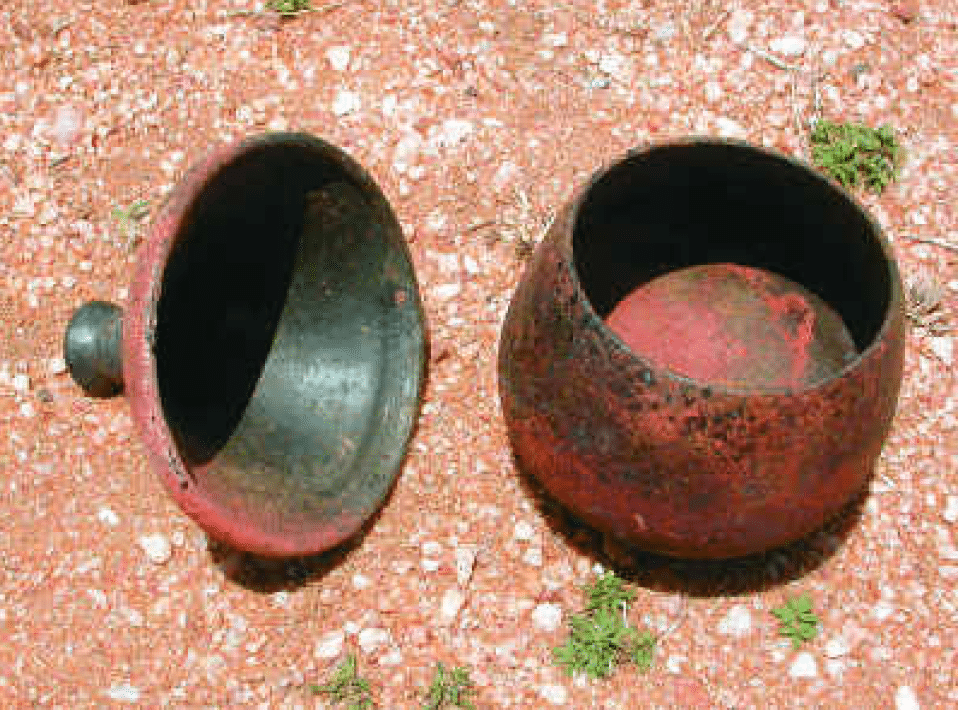
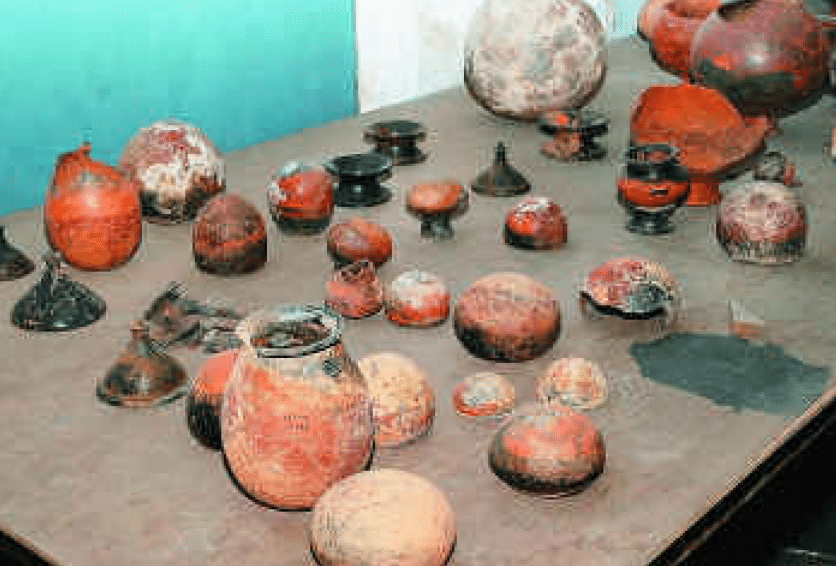
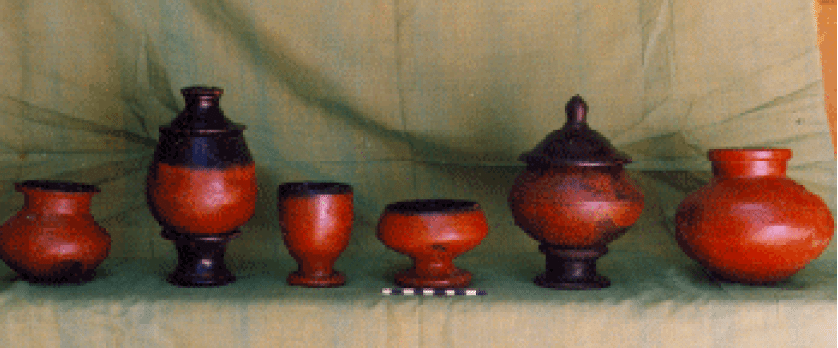
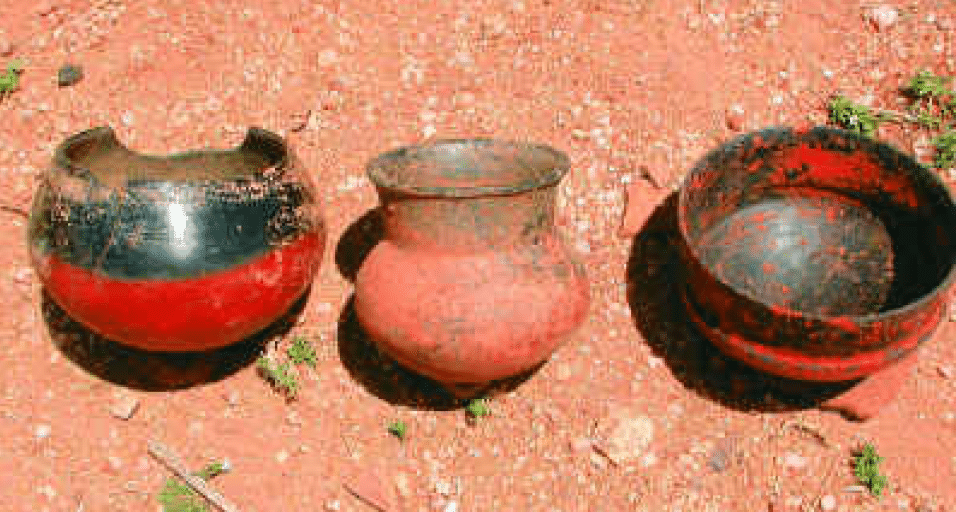
- Black-and-Red Ware (BRW): a wheel-turned pottery, consisting of utilitarian shapes, the majority of which probably served as tableware for megalithic society. Prominent shapes include varieties of bowls, dishes, lids or covers, vases, basins, legged jars, and channel-spouted vessels.
- Burnished black ware: also wheel-turned, comprising prominent shapes such as elongated vases, tulip-shaped lids, funnel-shaped lids, goblets, spouted vessels, circular ring-stands, and knobbed and rimmed lids with bird or animal finials.
- Red ware: with utilitarian shapes, including legged vessels, double-knobbed lids, ring-stands, dough plates, and vases.
- Micaceous red ware: exhibiting typical shapes like pots with a globular body and funnel-shaped mouth, dough plates, and basins — decoration in the form of cording, applique, and painted designs have also been noticed.
- Grey ware.
- Russet-coated painted ware (RCPW): of all the types, the most attractive, with wavy lines and other decorations, occasionally bearing post-firing graffiti. Russet-coated jars have been recovered from several sites.
- Some pots with lids decorated with finials in the shape of birds or animals appear to have been ceremonial wares.
- All these varieties of pottery are characterised by a fine fabric, produced from well-levigated clay, rarely with sand or gritty material, and were well fired in open kilns, at low temperature.
- The evidence of pottery kilns at sites such as Polakonda and Beltada Banahalli can be taken as supportive evidence for the practice of this craft.
- This wide variety of shapes, in different fabrics, served as tableware for eating and drinking, as well as cooking utensils.
- The technical efficiency evident in the preparation of these ceramics hints at a professional class of potters, and pottery-making as one of the important economic activities of the time.

An earthen pot and its lid. in Adichanallur Tamilnadur
A range of red ware, black ware, and black-and-red ware excavated

pottery wares excavated at the megalithic burial site of Iron Age excavated at Sengalur village in
Pudukottai district
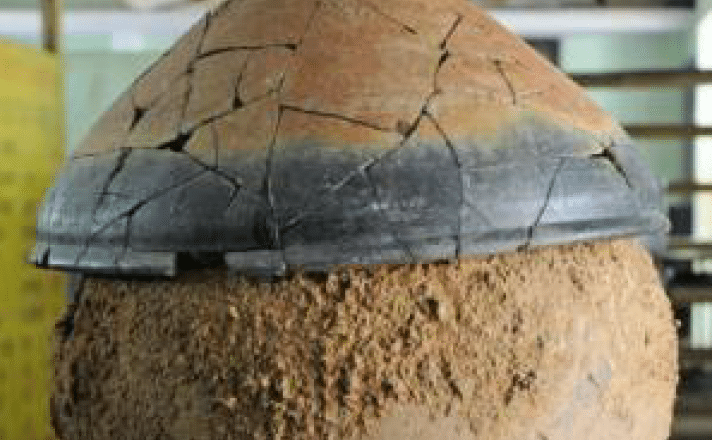
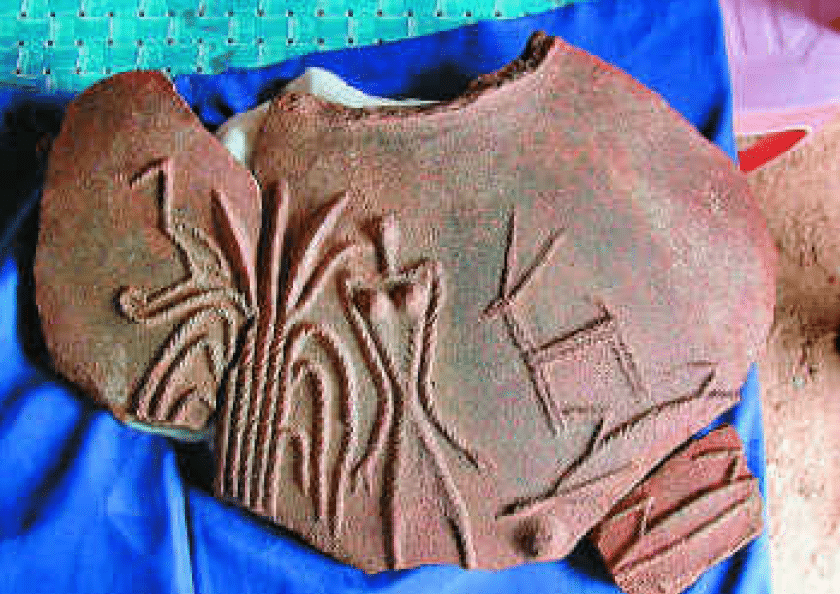
Potsherd with the motifs of a woman, a stalk of paddy, a crane, a deer and a crocodile in Adichanallur
(d) Miscellaneous Crafts (bead making, mat weaving, stone cutting, terracotta making, rock art, etc.):
- Bead making: A number of objects, ranging from single terracotta beads to very finely manufactured gold ornaments, were used by megalithic folk for personal decoration.
- Grave goods included etched carnelian beads, and beads of other materials.
- Evidence of a bead-making industry is attested at two megalithic sites — Mahurjhari and Kodumanal — suggestive of the practice of this craft.
- The availability of a large variety of beads shows that agate, carnelian, chalcedony, feldspar, coral, crystal, garnet, jasper, tremolite, magnesite, faience, quartz paste, serpentine, shell, steatite, amethyst, and terracotta were all utilised in the preparation of beads of different, exquisite shapes.
- Apart from semi-precious stones, some shapes were also worked in precious metals like gold, shell, horn, bone, and glass.
- Mat weaving: Mat impressions left on the base of jars at sites like Managondanahalli and Nagarjunakonda indicate that the art of mat-weaving was practised.
- Stone cutting: This activity is attested by:
- Chisel impressions noticed at Borgaon Khurd (Maharashtra), on a stone trough.
- Excellent laterite cutting evidenced in the rock-cut chamber tombs of the Kerala region, and chamber tombs in North Karnataka.
- The occurrence of domestic stone artefacts, such as pestles, mortars, and saddle querns, at many megalithic sites.
- Toys: Terracotta discs, figurines, gamesmen, and miniature pottery vessels, found in graves, attest to their use as toys for the entertainment of children — as suggested, for instance, by the discovery of a disc in the grave of a child.
- Painting: On the basis of the engravings and paintings on rock shelters in peninsular India, it appears that these megalith builders were themselves the authors of these paintings.
- There is also evidence in Sangam literature of the erection of burial stones with paintings, as well as writings.
- Thus, the megalithic people practised many other craft industries, alongside a highly specialised agro-pastoral economy. The divergent economic patterns that seem to have prevailed were not isolated, but had a symbiotic relationship with one another.
Trade and Exchange Network
- Some megalithic sites must have been centres of craft production, linked to networks of exchange — this is suggested by the location of several large megalithic settlements along the trade routes of the early historical period.
- Excavations have yielded various non-local items among the grave goods, reflecting the presence of exchange activities during the megalithic period.
- Carnelian beads reported from coastal sites, which were points of exchange in ancient times, and the availability of bronze (suggesting the arrival of copper and an alloy — either tin or arsenic — from elsewhere) both point to such exchange.
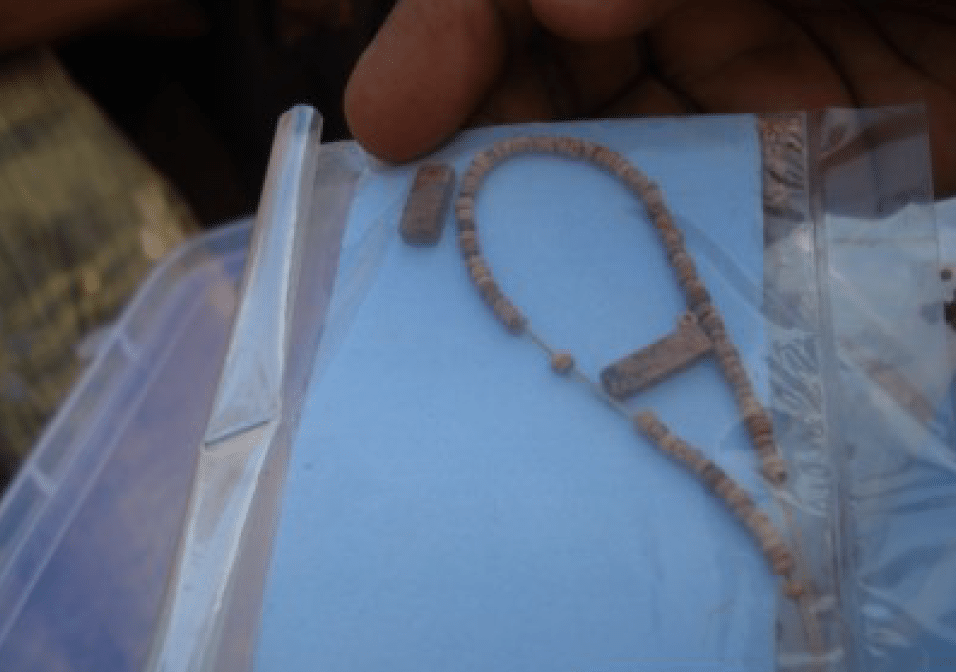
The carnelian beads suggests the circulation of non local goods through some forms of exchange
- From Graeco-Roman writings and Tamil texts, it is clear that at a slightly later period, maritime exchange was the major source for procuring such goods.
- Archaeological remains like rouletted ware, amphorae, and other ceramic materials found at sites like Arikamedu are evidence for this. Inter-regional and intra-regional exchange of goods was fairly well established in South India by the 3rd century BC.
- Regional variation in the production of commodities, and the non-availability of local raw materials or finished goods, set in motion long-distance transactions, under the initiative of long-distance traders from the Gangetic region, as well as the overseas world.
- The exchange network, which was in an incipient state during the early Iron Age, expanded over the centuries, as a result of internal dynamics and external impetus, involving demand for goods in other parts of the subcontinent, as well as the Mediterranean region.
- It was a network spanning land and sea, with long-distance traders in the middle, and unevenly developed peoples on either side.
- Thus, the megalithic people — as hunter-gatherers and shifting cultivators of the Iron Age — also had active participation in this exchange network.
Social Organisation and Settlement Pattern
- It is not archaeology, but anthropology, that provides us evidence to assume the possibility of production relations transcending clan ties and kinship, in such remote periods of tribal descent groups.
- These point to a material culture reflecting diverse forms of subsistence, such as hunting/gathering and shifting cultivation, besides the production of a few craft goods.
- The variations observed in the external and internal features of the burials reflect that the Iron Age society of the megalithic people was not a homogeneous entity.
- Some of the relatively huge burial types are suggestive of status differentiation and ranking of the buried individuals.
- Differences in the types and contents of burials suggest some sort of disparity in the attributes of the individuals buried.
- The number of more elaborate burials — like the multi-chambered rock-cut tombs at many sites — is limited, and these have yielded rare artefacts made of bronze or gold.
- On the other hand, many burials are simple urn burials, with very few artefacts.
- The variety, high quality, and fineness of the ceramic goods in huge burials, including elaborate urn burials, are also suggestive of a difference in social status.
- An individual’s treatment at death bears some predictable relationship to that individual’s status in life, and to the organisation of the society to which they belonged.
- The megalithic people lived in villages, consisting of a sizeable population.
- Though they had a bias towards urban life, they were slow in building huge cities like their contemporaries in the Gangetic Valley.
- The large size of the population is indicated by the organised mass of manual labour available for transporting and housing massive blocks of stone — in the construction of cists, dolmens, and other types of megaliths — or in erecting large rubble and earthen mounds across watercourses, for storing rainwater for irrigation purposes.
- The large size of the population is further attested by the fact that extensive burial grounds, with numerous graves — many containing the remains of more than one individual, and occasionally as many as 20 or more individuals — have been found.
Houses:
- The houses in which the megalithic people lived probably consisted of huts with thatched or reed roofs, supported on wooden posts, as indicated by the presence of post-holes at excavated sites.
- At Brahmagiri and Maski, post-holes were found, indicating the presence of timber construction for ordinary buildings.
Distribution of Settlements:
- The increase in the size and number of settlements during the megalithic period, compared to the preceding Neolithic/Chalcolithic phase, along with the growing use of different metallic resources, was certainly not an independent development.
- This can be seen in the effect of the spread of plough cultivation, which produced major alterations in the structure and distribution of settlements.
- An analysis of the locational context and distribution patterns of these sites strongly indicates a growing inclination towards intensive-field methods.
- The maximum concentration of sites in river valleys and basins, and the preference shown for occupying black soil and red sandy-loamy soil zones, also supports this contention.
- The distribution pattern of these sites in rainfall zones, where average annual precipitation is 600–1500 mm, hints at the same conclusion.
- Village transhumance was present, on the basis of the location of most settlement sites on the banks of rivers, and of most burial sites within a distance of 10–20 km from major water resources.
Religious Beliefs and Practices
- The elaborate architecture of megalithic graves, along with the grave goods and other metal and stone objects, throws light on the religious beliefs of the megalithic people.
Cult of the Dead:
- The megalithic people had great veneration for the dead, as reflected in the effort and devotion with which these monuments were constructed.
- They believed that the dead had a life after death, and that the living had to provide them with their necessities.
- The grave goods, which belonged to the dead person in life, were buried with them because they were believed to be required for use in the other world.
- All this certainly reflects that the “cult of the dead” had a strong hold on the people, and the grave goods represented the affection and respect of the living for their dead.
Animism:
- Belief in animism is reflected in animistic cults, evident from the occurrence of animal bones — of domestic animals like cattle and sheep/goats, and wild animals like the wolf — within the megaliths.
- It seems that these animals were either killed for a funeral feast, with the remains buried in the graves, or sacrificed and buried to supply food for the dead.
- Animism is also reflected in terracotta figurines of animals, decorated with garlands and ornaments.
- Sangam literature, which is contemporaneous with the end phase of the megalithic culture in South India, also throws light on the different methods of disposing of the dead prevalent among the megalithic people.
- Many of the earlier beliefs continued into the Sangam age, so we may assume that the religious practices referred to in Sangam literature reflect, to an extent, those that prevailed among the megalithic people.
- The tradition of associating stone with the dead has survived in South India to late times — the herostones, or Virakal or Mastikal, are examples of this continuity.
Polity
- The differences in the size of the monuments, and the nature of the grave valuables, reflecting differentiation in status and ranking, also suggest the nature of contemporary political power.
- The construction of a huge monument, involving the mobilisation of substantial collective labour, implies the power of the buried individual to command it.
- Given that contemporary people were organised as tribal descent groups, we may assume the prevalence of chiefly power — that is, of chiefdoms.
- The late phase of the megalithic culture coincides with the early historical period, as reflected in excavations at many sites — so Sangam literature also helps us understand this period.
- The chief of the tribal group is referred to as perumakan (“great son”) in the literary texts; he commanded the entire personal, material, and cultural resources of his clan.
- This attests that these elaborate burials probably belonged to chiefs or descent-group heads.
- The tribal pattern of the distribution of power was simple, and involved no rigid hierarchy, though chiefs, their heirs, and warriors held a privileged status.
- However, this differentiation in status was too flexible to be described as a full stratification. There is no plausible evidence showing the existence of a class-structured society anywhere in South India, even by the mid-first millennium AD — the upper date limit for the megaliths — making the existence of tribal descent groups as a stratified aristocratic society seem inconceivable.
- The period of these huge monuments hardly crosses the last two or three centuries before Christ.
- This period witnessed numerous small chiefdoms co-existing and contesting with one another, anticipating the emergence of bigger chiefdoms by the turn of the Christian era.
- The people under these bigger chiefdoms were also organised through clan kinship ties, and a complex system of redistribution.
- From references in Tamil heroic texts like the Purananuru, it is evident that even big chieftains, who enjoyed prestigious status among many other chieftains, were also given urn burials.
- So, in a way, all burials — including the commonly seen urn burials — represent individuals or groups with some status and ranking, as headmen or kinsfolk. Thus, it can be assumed that even urn burials were of a “chiefly” type.
- Sometimes, memorial stones (natukal) were erected over the urn burials of great chieftains and warriors.
- However, the huge multi-chambered rock-cut tombs are not mentioned anywhere in the literary texts — probably because the practice of erecting such elaborate burials had become uncommon by that time.
- Some chiefdoms must have been bigger, depending on their human strength, resource control, and exchange relations — testified by the prestige goods and varieties of ceramics and other artefacts found in their graves.
- The megalithic people had been interacting and exchanging material and cultural goods with one another — this interaction was need-oriented and use-value-based at the level of clans, but competitive, and hence combative, at the level of chiefs, involving plundering raids, both inter-clan and intra-clan, led by chiefs seeking predatory control.
- This led to the subjugation of one chief by another, which in turn helped the emergence of bigger chiefs and the formation of bigger chiefdoms.
- These armed conflicts among clans must have resulted in the death of many chiefs and warriors — probably the reason for the erection of numerous sepulchral monuments during the megalithic period, and also for the emergence of the cult of heroism and ancestral worship.
- Through armed confrontation and predatory subjugation, the cultural and political power of a few chiefdoms became more evolved over the years, allowing them to emerge as bigger chiefdoms.
- We can therefore infer that the last phase of the megalithic period, contemporaneous with the Sangam period, marked the march towards bigger chiefdoms, as mentioned in Tamil heroic texts.
Legacy of the Megalithic Culture
- Megalithism is still alive among different tribes in India today, for example:
- The Maria Gonds of Bastar, in Madhya Pradesh.
- The Bondos and Gadabas of Orissa.
- The Oraons and Mundas of the Chota Nagpur region of Jharkhand.
- The Khasis and Nagas of Assam.
- Their monuments, which are of a memorial nature, include dolmens, stone circles, and menhirs.
- The north-east Indian megalithic culture seems to have a South-east Asian affiliation, rather than a western influence.
- In the South Indian context, the remnants of megalithism among the Todas of the Nilgiris are very significant.
- This helps us understand the probable customs that existed among the now-extinct megalithic builders of South India.
- The existing burial practices of the Todas include many common features of megalithic burials — grave goods including food items, and the use of stone circles to mark the place of burial.
Limitations of the Sources for the Study of Megalithic Culture
- The major problem in studying megalithic culture lies in the very form in which sources are available to us.
- Since almost all our evidence is collected from burials, knowledge about the conditions and methods of everyday life is necessarily limited to what can be inferred from grave furniture and the architecture of the graves.
- Literary evidence, including the accounts of Graeco-Roman writers and ancient Tamil texts (Sangam literature), has its own limitations, since this period marks only the end phase of the megalithic culture.
- Vertical digging in the excavation of different habitation sites, aimed at unfolding the cultural sequence of these sites, provides evidence that is scanty and limited in nature.
- Moreover, the lack of settlement remains associated with burials is a frequently raised issue in the context of peninsular Indian megaliths.
- Due to the absence of habitation sites in regions like Kerala, the analysis of the settlement pattern of the megalithic culture has become a difficult task.
- Settlement sites could have provided a variety of additional evidence, alongside stratigraphic data, for separating out the periods of various cultural strands — making the reconstruction of megalithic cultural history more elusive without them.
- Some scholars have even questioned the authenticity of the megaliths purely as burials.
Megalithic Culture as a Foundational Phase of Peninsular Indian History
Megalithic culture can be considered a foundational phase of the history of peninsular India in the following ways:
- Beginning of sedentary life: Megalithic communities lived on a combination of agriculture, hunting, fishing, and animal husbandry. Evidence of craft traditions, along with the megalithic monuments themselves, suggests a sedentary way of life.
- Widespread use of iron: Iron objects generally outnumber those of other metals. The large volume and variety of iron artefacts includes utensils, weapons (arrowheads, spearheads, swords, knives), carpentry tools (axes, chisels, adzes), and agricultural implements (sickles, hoes, coulters).
- Well-developed traditions of specialised crafts: Different kinds of pottery have been found, including BRW; there is also evidence of bead making, with grave goods including etched carnelian beads and other materials, as well as copper and bronze artefacts such as utensils, bowls, and bangles, and a few silver and gold ornaments.
- Development of metallurgy: Different metallurgical techniques were used in the manufacture of metal artefacts — some copper and bronze objects were cast in moulds, others hammered into shape; some communities knew how to alloy metals, and there is evidence of local iron smelting at Paiyampalli (Karnataka).
- Beginning of trade: Some megalithic sites were centres of craft production linked to networks of exchange, suggested by the location of several large megalithic settlements on the trade routes of the early historical period. Interregional trade is also suggested by the distribution of non-local items of precious and semi-precious metals.
- Rock paintings: Paintings found at megalithic sites show fighting scenes, cattle raids, hunting scenes, scenes of people dancing in groups, horse riders, flora, birds, and sun motifs.
- Community work: The construction of megaliths must have involved considerable community endeavour. These monuments must have been sites of rituals that formed an important part of the social and cultural lives of the people — and the practice of building megaliths continues among certain tribal communities of India even today.
Conclusion
The megalithic culture of peninsular India represents far more than a distinctive burial tradition — it marks the emergence of a genuinely sedentary, agriculturally sophisticated, and technologically advanced Iron Age society, whose diverse tomb types (from rock-cut caves and dolmenoid cists to cairn circles and simple urn burials) encode information about social ranking, chiefly power, religious belief, and long-distance exchange that would otherwise be entirely lost to us. Though our knowledge remains constrained by an evidentiary record drawn overwhelmingly from graves rather than settlements, the megaliths nonetheless reveal a society transitioning from tribal clan organisation towards competing, and eventually consolidating, chiefdoms — a political and cultural trajectory that fed directly into the Sangam-age polities of early historical South India, and whose living echoes can still be traced today among communities like the Todas of the Nilgiris and the megalith-building tribes of central and north-eastern India.