The American Civil War and Abolition of Slavery

The American Civil War, fought from 1861 to 1865, was waged to determine the survival of the Union or the independence of the Confederacy. Among the 34 states as of January 1861, seven Southern slave states individually declared secession, forming the Confederate States of America — the “Confederacy” or “South” — a bloc that eventually grew to eleven states, and was never diplomatically recognised by any foreign power. The states that remained loyal became known as the “Union” or “North.” The war’s roots lay in the fractious issue of slavery, above all the question of its extension into the western territories. After four years of combat that left over 600,000 Union and Confederate soldiers dead and devastated much of the South’s infrastructure, the Confederacy collapsed and slavery was abolished — inaugurating the fraught era of Reconstruction. This article traces the long chain of events leading to the war, the Emancipation Proclamation and its significance, the reasons behind Union victory, and the war’s lasting impact on American society — essential material for UPSC World History aspirants.
Series of Events Leading to the Civil War
The Three-Fifths Compromise (1787)
- A compromise between Southern and Northern states that helped secure ratification of the Constitution: three-fifths of the enslaved population would be counted for purposes of both taxation and each state’s representation in the House of Representatives (meaning, in effect, one enslaved person counted as three-fifths of a person).
- Effect: Led to increasing sectionalism between North and South.
The Northwest Ordinance / The Ordinance of 1787
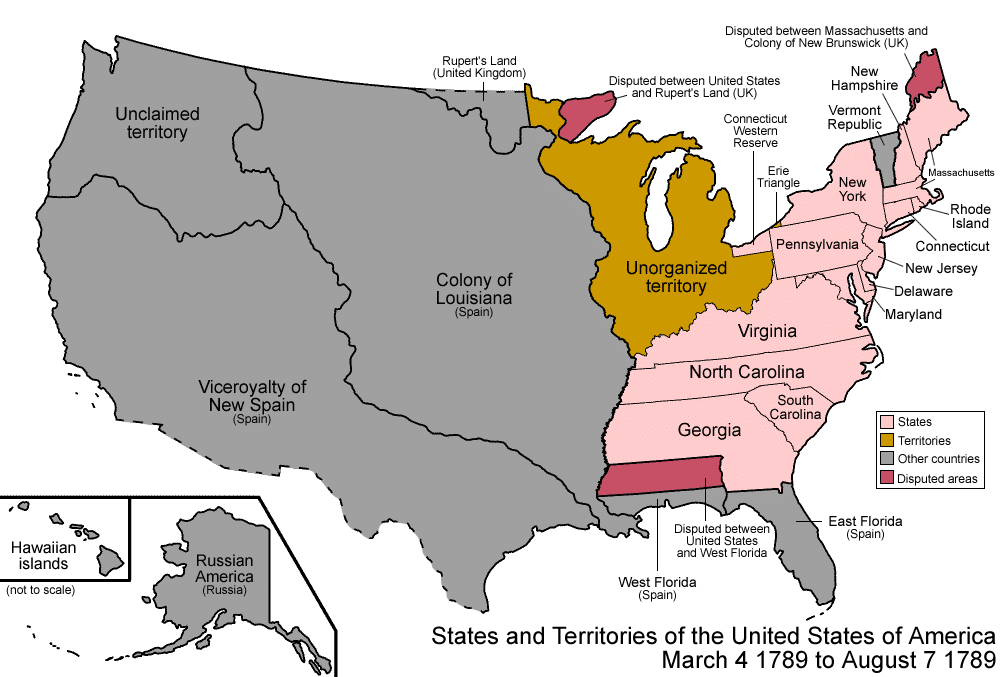
- This ordinance created the Northwest Territory, the first organised territory of the United States, out of lands beyond the Appalachian Mountains — bounded by British Canada and the Great Lakes to the north, and the Ohio River to the south, with the upper Mississippi River forming its western boundary.
- The ordinance ensured that the Northwest Territory would remain free territory, prohibiting slavery there.
- Effect: This prohibition had the practical effect of establishing the Ohio River as the boundary between free and slave territory in the region between the Appalachians and the Mississippi — a division that helped set the stage for the recurring national contest over admitting free versus slave states, a defining question in American politics through the 19th century, right up to the Civil War.
Eli Whitney’s Invention of the Cotton Gin (1793)
- Revolutionised the American cotton industry, making the removal of cotton seeds 50 times faster, and driving a sharp rise in demand for slave labour across the Deep South.
- Effect: A marked increase in the number of slaves — slavery expanded.
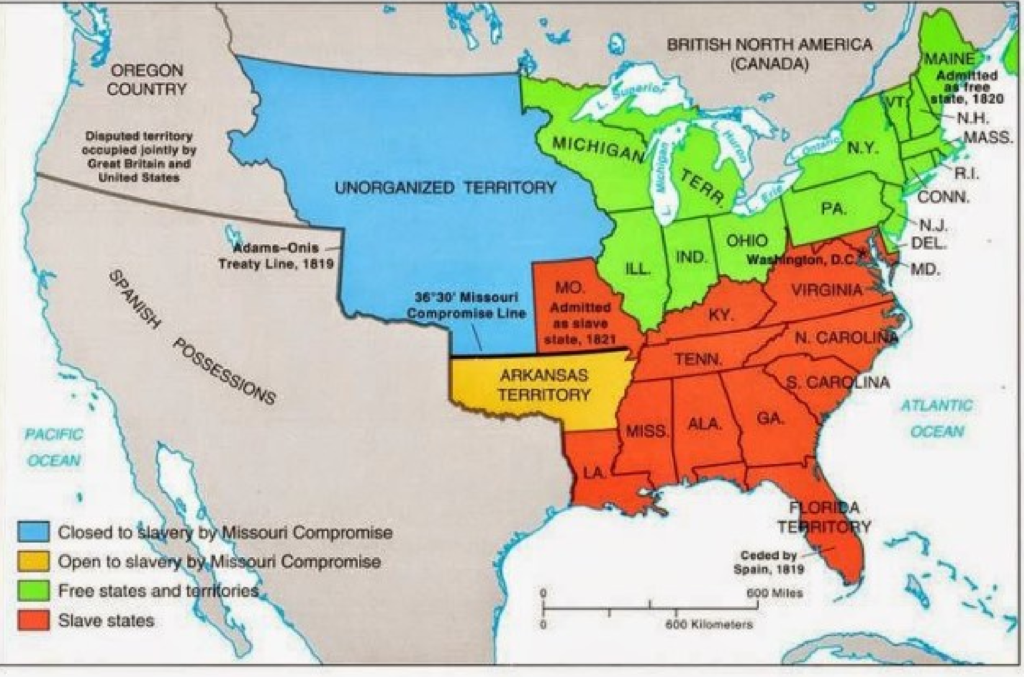
The Louisiana Purchase (1803)
- The purchase of Louisiana from France doubled the size of the United States, giving it control over the vast lands west of the Mississippi. The idea of “Manifest Destiny” spurred westward expansion — and, with it, renewed conflict over slavery.
- Effect: As Americans pushed westward, the question of slavery moved to the forefront of national politics: would the new western territories be slave or free?
The Missouri Compromise (1820)
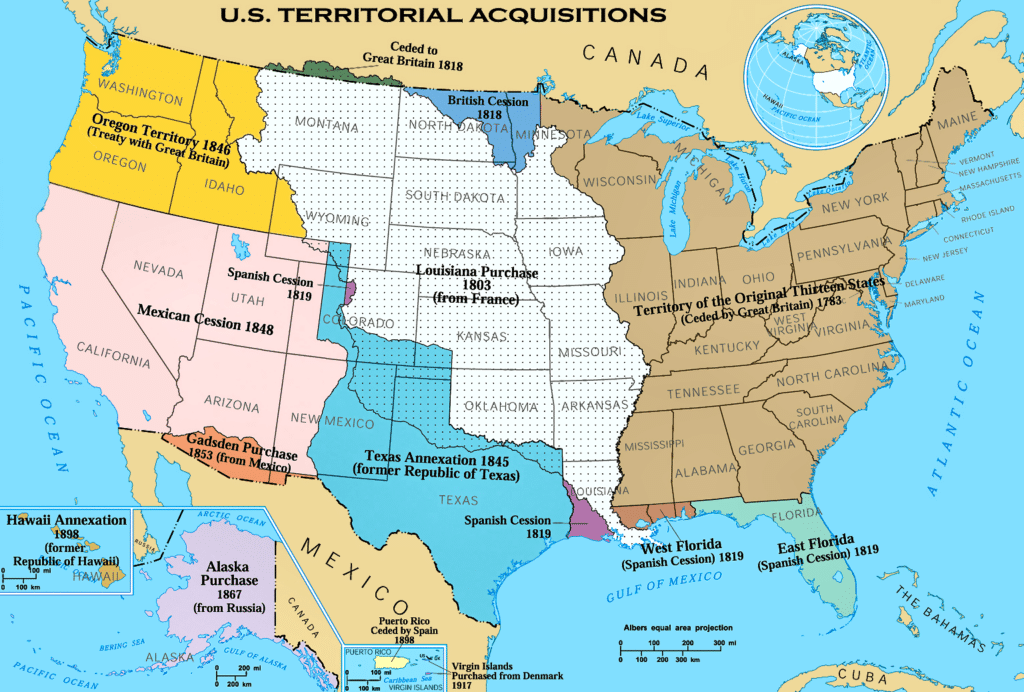
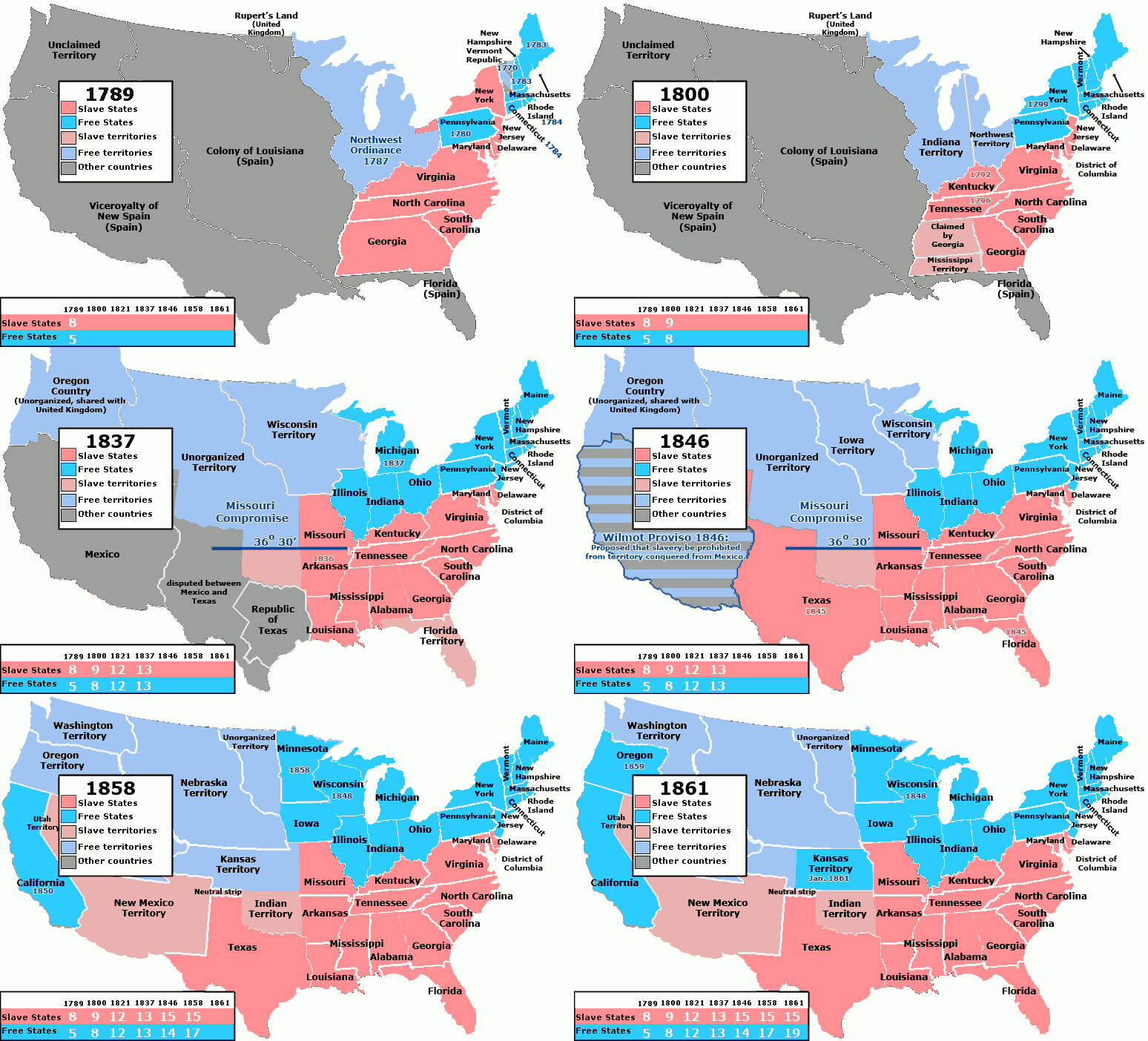
- The first major confrontation over slavery in the West. Missouri’s application to enter the Union as a slave state threatened to upset the Senate’s careful balance, then split evenly between 11 free states and 11 slave states.
- In 1820, it was proposed that Missouri enter as a slave state while Maine entered as a free state, preserving the balance of power. The Compromise further prohibited slavery throughout the rest of the Louisiana Territory, north of the 36°30′ latitude line (Missouri itself excepted).
- Effect: Cooled sectional tensions for a time, while revealing just how volatile the slavery question truly was. In 1854, the Missouri Compromise was repealed by the Kansas-Nebraska Act; three years later, it was declared unconstitutional by the Supreme Court in the Dred Scott decision, which ruled that Congress lacked the authority to prohibit slavery in the territories at all.
The Nullification Crisis (1832)
- South Carolina declared the federal tariffs of 1828 and 1832 null within its borders, threatening secession should the federal government attempt to collect them.
- President Jackson promptly declared such nullification tantamount to treason; the crisis was ultimately defused through a new tariff acceptable to South Carolina.
- Effect: The first open act of Southern defiance threatening secession over Northern-favoured policy.
The Compromise of 1850
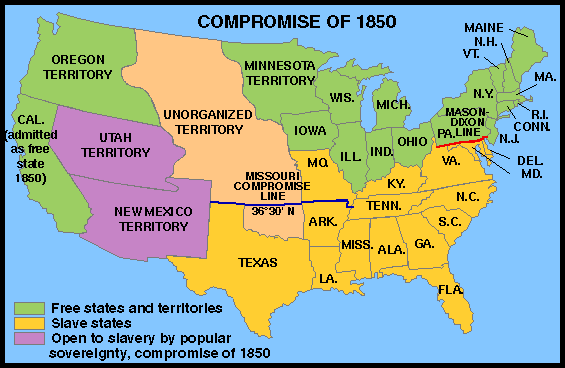
- A package of five laws, passed in September 1850, addressing the slavery question directly. It arose after California’s 1849 request to enter the Union as a free state, which threatened to upset the Senate’s free-slave balance.
- California entered as a free state.
- The remainder of the Mexican Cession was divided into the New Mexico and Utah territories, where voters would decide the slavery question themselves — a principle known as popular sovereignty.
- The Fugitive Slave Act was amended and strengthened.
- The slave trade (though not slavery itself) was abolished in Washington, D.C.
- Effect: Intensified the battle over slavery in new territories, by placing the decision in the hands of each territory’s own citizens. Though the Compromise achieved its immediate goal of keeping the nation united, the solution proved only temporary — over the following decade, the country grew steadily more divided, a rift that would ultimately split the nation itself.
The Fugitive Slave Act (1850)
- Required that all escaped slaves, upon capture, be returned to their masters, with officials and citizens of free states legally obliged to cooperate — and denied fugitives the right to a jury trial. Those who helped enslaved people escape faced jail and fines.
- Effect: One of the most controversial elements of the 1850 Compromise, the Act heightened Northern fears of a “slave power conspiracy.” For enslaved people attempting to build lives in the North, the law proved disastrous — many fled their homes for Canada. Its passage hardened abolitionist resolve, and brought the slavery question forcefully before the entire nation, pushing many previously ambivalent Americans toward a definitive anti-slavery stance.
Uncle Tom’s Cabin (1852)
- Harriet Beecher Stowe wrote Uncle Tom’s Cabin, a novel recounting the story of Uncle Tom, an enslaved African American, and his cruel master — depicting the evils and cruelty of slavery in vivid detail. It became the best-selling novel of the 19th century.
- The novel had an enormous influence in the North, reshaping how many Northerners felt about slavery, while igniting a firestorm of protest from slavery’s defenders (who produced counter-novels such as Aunt Phillis’s Cabin in response).
- Effect: Slavery was now unmistakably a moral issue, intensifying animosity and debate between North and South.
The Kansas-Nebraska Act (1854)
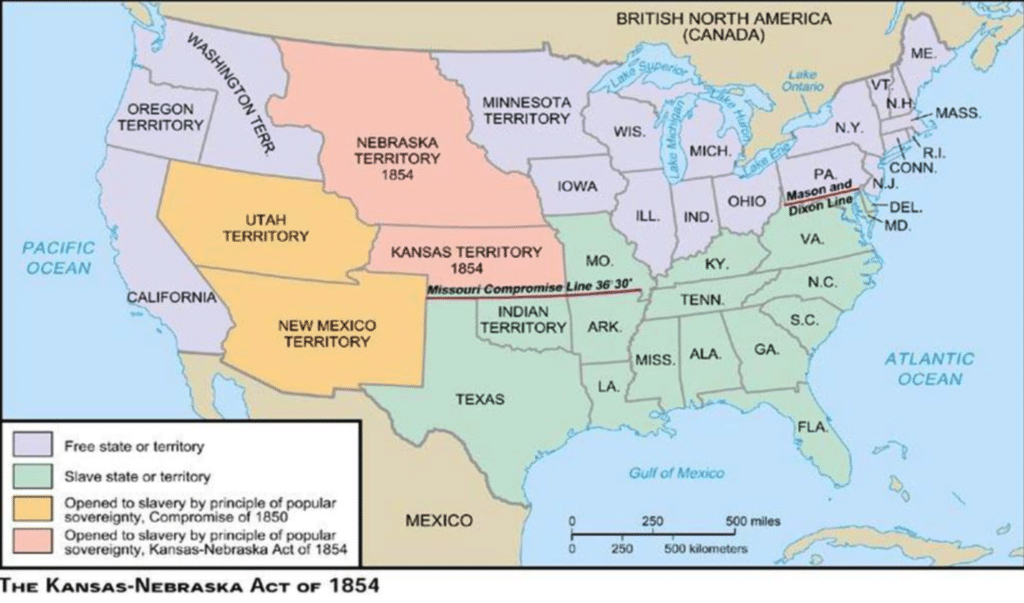
- Repealed the Missouri Compromise, permitting slavery in territory north of the 36°30′ line. Introduced by Senator Stephen Douglas of Illinois, it proposed dividing the Nebraska Territory into two separate territories — Kansas and Nebraska — with settlers themselves deciding, via popular sovereignty, whether each would be slave or free.
- Southerners supported the Act, while Northerners saw it as a betrayal. Thousands of pro- and anti-slavery settlers flooded into Kansas to vote and fight for their respective positions — pushing the nation to the very brink of civil war.
- Anti- and pro-slavery forces set up rival governments; President Franklin Pierce, favouring the pro-slavery settlers, sent federal troops to suppress the violence and disperse the anti-slavery legislature.
- Effect: Left little room left for compromise — both sides now willing to fight openly for their beliefs.
The Founding of the Republican Party (1854)
- Emerged specifically to combat the Kansas-Nebraska Act, which Free-Soil and Abolitionist Northerners viewed as an aggressive, expansionist manoeuvre by the slave-owning South. The party also aimed to promote vigorous economic modernisation.
- It had almost no presence in the South, but by 1858 had enlisted former Whigs and Free Soil Democrats to form majorities across nearly every Northern state.
- With the election of Abraham Lincoln in 1860, and its ultimate success in guiding the Union to victory and abolishing slavery, the Republican Party came to dominate the national political scene.
The Dred Scott Decision (1857)
- Dred Scott, an enslaved man, claimed that because his master had taken him into the free territories of Illinois and Wisconsin, he was legally entitled to freedom.
- The U.S. Supreme Court ruled otherwise: residence in free territory did not entitle a slave to freedom, and — more radically — that African Americans were not, and could never become, citizens of the United States. Since Scott was not a citizen but property in the Court’s eyes, he had no standing to sue.
- The Court further ruled that Congress had no power to prohibit slavery in the territories at all — rendering slavery legal everywhere, and declaring the Missouri Compromise itself unconstitutional.
- Effect: Added fuel to the sectional controversy, pushing the nation closer to civil war. Slavery had now become a moral issue in the North and a constitutional issue in the South — leaving virtually no room left for compromise.
Harpers Ferry and John Brown (1859)
- John Brown and a group of abolitionists raided the federal arsenal at Harpers Ferry, Virginia, hoping enslaved people would flock to the arsenal so he could lead a massive slave uprising.
- The raid failed, and Brown was captured, found guilty of murder and treason, and sentenced to death.
- Many Northerners regarded Brown as a hero; Southerners felt the North sought to destroy slavery — and the South along with it.
- Effect: Convinced many Southerners that war had become inevitable.
Lincoln Elected President (1860)
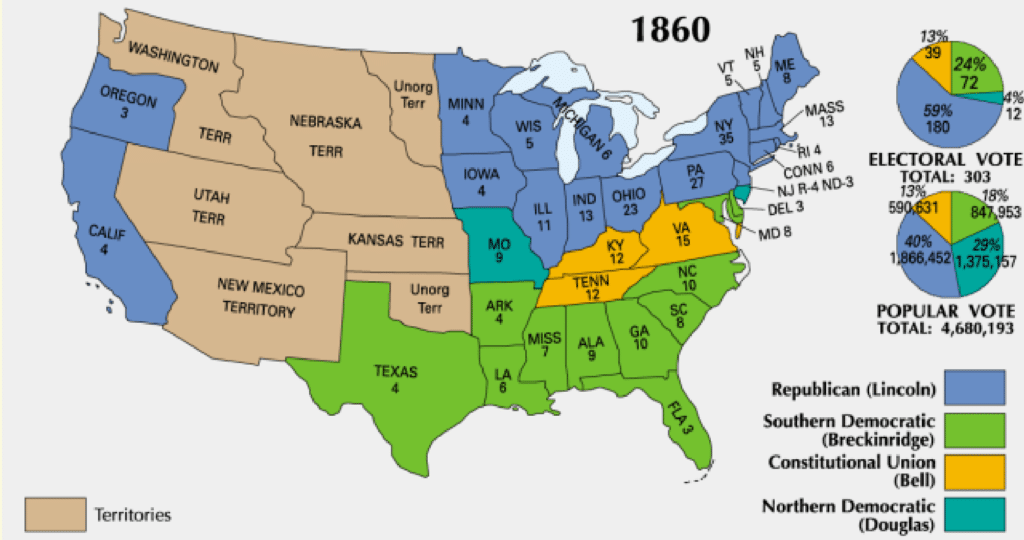
- Southern reaction to Lincoln’s election was fierce — Southerners believed the nation had installed an abolitionist in the White House, and felt secession was the only remaining option.
- The South viewed secession as its right, invoking the Declaration of Independence’s own assertion that “it is the right of the people to alter or to abolish” a government that denies its citizens’ rights — Lincoln, they believed, would deny them the right to own slaves.
- Effect: In 1860, South Carolina seceded from the Union; by February 1861, Alabama, Florida, Texas, Georgia, Louisiana, and Mississippi had followed.
Fort Sumter (1861)
- After taking the oath of office in 1861, Lincoln declared that no state could lawfully leave the Union — but that there would be no war unless the South started it.
- The South began seizing Federal buildings — forts and post offices — taking control of three forts in Florida, and moving to seize Fort Sumter in South Carolina.
- In April 1861, Confederate forces demanded the fort’s surrender; Major Robert Anderson of the Union refused. Confederate troops shelled the fort, and Anderson, exhausting his ammunition, was forced to surrender.
- Effect: America’s brutal, but by then inevitable, Civil War had begun.
The Emancipation Proclamation
President Abraham Lincoln issued the Emancipation Proclamation on 1 January 1863, declaring “that all persons held as slaves” within the rebellious areas “are, and henceforward shall be free.”
- Abolitionists had long urged Lincoln toward emancipation. In the summer of 1862, Republican editor Horace Greeley of the influential New York Tribune published a famous editorial, “The Prayer of Twenty Millions,” demanding faster emancipation of slaves in Union-held territory — arguing it was “preposterous and futile” to suppress the rebellion without destroying slavery itself.
- Lincoln responded in his Letter to Horace Greeley (22 August 1862), framing his position around the limits imposed by his presidential duty to preserve the Union: “If there be those who would not save the Union, unless they could at the same time save slavery, I do not agree with them. If there be those who would not save the Union unless they could at the same time destroy slavery, I do not agree with them. My paramount object in this struggle is to save the Union, and is not either to save or to destroy slavery. If I could save the Union without freeing any slave I would do it, and if I could save it by freeing all the slaves I would do it; and if I could save it by freeing some and leaving others alone I would also do that. What I do about slavery, and the colored race, I do because I believe it helps to save the Union; and what I forbear, I forbear because I do not believe it would help to save the Union…. I have here stated my purpose according to my view of official duty; and I intend no modification of my oft-expressed personal wish that all men everywhere could be free.”
Reasons Behind Lincoln’s Cautious Statement
- Lincoln viewed his primary presidential duty as saving the Union, with abolition treated as secondary — though he consistently, and increasingly, saw slavery as a crucial issue in itself.
- Most Southerners saw themselves as fighting to preserve slavery; most Northerners, by contrast, fought primarily to prevent Southern secession and preserve the Union, not to abolish slavery.
- Several factions in the North — including Northern Democrats — opposed both the war’s continuation without Union restoration and the abolition of slavery.
- Even ardently anti-slavery Republicans prioritised saving the Union first. Lincoln’s carefully balanced statement was designed to hold these disparate Northern factions together, ensuring the Confederacy could ultimately be defeated.
- Although sectional conflict over slavery had been a major cause of the war, ending slavery was, at the outset, not a stated war goal.
The Path to Full Emancipation
- This changed on 22 September 1862, when Lincoln issued his Preliminary Emancipation Proclamation, declaring that slaves in any state (or part of a state) still in rebellion as of 1 January 1863 would be freed.
- One hundred days later, with rebellion unabated, Lincoln issued the full Emancipation Proclamation, declaring “that all persons held as slaves” within rebellious areas “are, and henceforward shall be free.”
Limitations of the Emancipation Proclamation
- The Proclamation was limited in several important ways: it applied only to states that had actually seceded, leaving slavery untouched in the loyal border states, and expressly exempted parts of the Confederacy already under Union military control.
- Most crucially, the freedom it promised depended entirely on Union military victory — the Proclamation did not, in itself, end slavery across the nation.
- Lincoln was not an abolitionist or Radical Republican; he had not favoured immediate abolition before the war, and sometimes held racist views typical of his era. Yet he was also a man of deep conviction on the question of slavery, and displayed remarkable capacity for moral and political growth throughout the war.
- The decision angered Northern Democrats, who wanted to save the Union but opposed abolition, while energising most Republicans. Democrats also condemned the Proclamation as an unconstitutional abuse of presidential power, arguing it exposed as lies the earlier Republican promise that the war was solely about restoring the Union, not black rights.
- Lincoln further alienated some in the Union by suspending habeas corpus just two days after issuing the preliminary Proclamation — opponents linked the two moves as evidence he was becoming a despot.
Significance of the Emancipation Proclamation
- The Proclamation marked a genuine shift in Northern war aims — reuniting the nation was no longer the sole goal. It represented a major step toward slavery’s ultimate abolition and a “new birth of freedom,” energising Republicans nationwide.
- It was also, deliberately, a military measure: Lincoln hoped it would inspire enslaved people across the Confederacy to support the Union cause, while dissuading Britain and France from extending political recognition or military aid to the Confederacy.
- As Lincoln had hoped, the Proclamation shifted foreign public opinion in the Union’s favour, winning support from anti-slavery countries and those (chiefly in Europe) that had already abolished slavery — ending Confederate hopes of official foreign recognition.
- By making the eradication of slavery an explicit Union war goal, the Proclamation directly linked support for the South with support for slavery — a link British public opinion would not tolerate. As one American historian observed, “The Emancipation Proclamation has done more for us than all our former victories and all our diplomacy.” In Italy, Giuseppe Garibaldi hailed Lincoln as “the heir of the aspirations of John Brown.”
- Although the Proclamation did not itself end slavery nationwide, it fundamentally transformed the war’s character — after 1 January 1863, every advance of Federal troops expanded the domain of freedom.
- Enslaved people had long formed part of the Confederacy’s “engine of war” — producing food, sewing uniforms, repairing railways, working farms, factories, shipyards, and mines, building fortifications, and serving as hospital workers and labourers. News of the Proclamation spread rapidly, arousing hope, sowing confusion, and prompting thousands to flee to Union lines.
- The Proclamation also announced the acceptance of Black men into the Union Army and Navy, turning the liberated into liberators — by war’s end, almost 200,000 Black soldiers and sailors had fought for the Union and for freedom.
- From the war’s earliest days, enslaved people had themselves acted to secure their own liberty; the Proclamation confirmed their insistence that the war for the Union must become a war for freedom, adding moral force to the Union cause and strengthening it both militarily and politically. It remains among the great documents of human freedom.
- Lincoln recognised the Proclamation would need to be reinforced by constitutional amendment to guarantee slavery’s abolition permanently. After the North’s victory, the 13th Amendment — passed by Congress on 31 January 1865 and ratified on 6 December 1865 — formally abolished slavery throughout the United States.
Analysis of the Union’s Victory
Historians continue to debate whether the Confederacy could have won the war.
- Most scholars hold that Confederate victory was at least genuinely possible. The North’s advantage in population and resources made Northern victory likely, but never guaranteed.
- Had the Confederacy fought a more unconventional, defensive war, it might have more easily held out long enough to exhaust Union resolve — the Confederacy did not need to invade or hold enemy territory to win, only to convince the North that victory’s cost was too high. The North, by contrast, needed to conquer and hold vast stretches of enemy territory and defeat Confederate armies outright.
- Lincoln was no military dictator, and could only continue the war as long as the American public supported its continuation. The Confederacy sought to outlast Lincoln politically — but once Lincoln defeated McClellan in the election of 1864, all Southern hope of a political victory ended.
- By that point, Lincoln had secured the support of Republicans, War Democrats, the border states, emancipated slaves, and — crucially — the neutrality of Britain and France.
- The Union held an insurmountable long-term advantage in industrial strength and population; Confederate battlefield successes only delayed the inevitable. Even as the Confederacy visibly collapsed in 1864–65, most Confederate soldiers continued fighting hard.
- Also decisive were Lincoln’s eloquence in articulating national purpose, and his skill in keeping the border states loyal to the Union. Though Lincoln’s approach to emancipation was gradual, the Emancipation Proclamation itself proved an effective exercise of presidential war powers.
- The Confederate government failed decisively in its effort to draw European powers — chiefly Britain and France — into the war militarily, an effort Southern leaders needed to break the Union’s naval blockade of Southern ports.
- Lincoln’s blockade was 95% effective at stopping trade goods, sharply reducing Southern imports and exports. The abundance of alternative European cotton sources, combined with Britain’s hostility toward slavery and Lincoln’s Atlantic and Gulf of Mexico blockades, drastically reduced any real chance of British or French intervention.
- The Union’s victory carried major implications for world history, energising popular democratic movements globally — a Confederate victory, by contrast, would have meant a new birth of slavery, not freedom.
Impact of the Civil War
The Civil War was, in essence, a surgical operation — severe indeed, but necessary to restore the nation’s health, and one that, despite its enormous cost, brought untold long-term benefits to the United States.
The War’s Severity and Cost
The war, which ended with the Confederacy’s surrender in 1865, proved extraordinarily severe and costly:
- It remains the costliest and deadliest war ever fought on American soil, producing roughly 1,030,000 casualties (3% of the population), including about 620,000 of 2.4 million soldiers’ deaths — two-thirds of them from disease. The war accounted for roughly as many American deaths as all other American wars combined.
- Four years of war drained the American economy on both sides. The Union’s official 1879 estimate of wartime expenses exceeded $6 billion — equivalent to over $71 billion in today’s money — with veterans’ pensions continuing to accumulate well into the twentieth century.
- The war destroyed much of the South’s accumulated wealth: Confederate bonds became worthless, and most banks and railroads went bankrupt. Southern inflation soared past 9,000% by war’s end, leaving Confederate currency nearly worthless and gold, silver, and U.S. currency in desperately short supply.
- The physical devastation — nearly all of it in the South — was immense: burned or plundered homes, a pillaged countryside, untold losses of crops and livestock, ruined buildings and bridges, devastated college campuses, and neglected roads left the South in ruins.
The Benefits Amid the Cost
End of Slavery
- The South’s culture had been built on slavery, and the war brought that institution to an abrupt end. In 1860, nearly four million enslaved people lived in the U.S., mostly in the South; by the end of 1865, there were no slaves left anywhere in the country, North or South.
The Reconstruction Amendments
- The 13th, 14th, and 15th Amendments to the U.S. Constitution are collectively called the Reconstruction Amendments, addressing the legal and political status of African Americans.
- The 13th Amendment abolished “slavery and involuntary servitude.”
- The 14th Amendment guaranteed citizenship to “all persons born or naturalized” in the United States, including African Americans, and required every state to provide equal protection to all people within its jurisdiction.
- The 15th Amendment guaranteed all male citizens the right to vote, regardless of “race, color or previous conditions of servitude.”
Union Saved and Reconstruction
- The Civil War allowed the country to reunite and strengthened its people as a whole. Though popularly simplified as a war purely over slavery’s legality, the conflict was, at bottom, also about whether states had the right to secede, and how far state rights truly extended.
- The war helped settle the fundamental question of which powers belonged to the states and which to the federal government — an agreement that helped forge a more powerful, unified country.
- The South was placed under military rule, divided into military districts; the full restoration of the Union proceeded through the highly contentious postwar era known as Reconstruction.
- Central to Reconstruction was the effort of formerly enslaved people to give full meaning to their newly acquired freedom, and to claim their rights as citizens.
- Though Reconstruction ended in the 1870s, followed by significant reversals in Black Americans’ gains and the enactment of Jim Crow laws (mandating de jure racial segregation across Southern public facilities from 1890, under a “separate but equal” doctrine), the gains of Reconstruction were never entirely extinguished — remaining a source of continuing inspiration for the Black community. The legal recognition of African-American marriage and family, and the independence of Black churches from white denominations, provided sources of strength through the Jim Crow era; the sharecropping system, too, afforded Black Americans considerably more freedom than slavery had.
Medical Advances
- In June 1861, the U.S. Sanitary Commission was created to reduce disease in field hospitals, stressing well-ventilated hospital tents, clean water, and good food.
- Union General George McClellan authorised a trained ambulance corps, which both armies subsequently adopted.
- In many ways, the Civil War laid the groundwork for modern medicine, offering thousands of poorly trained physicians a vast practical training ground in: modern hospital organisation; embalming techniques; safer surgical techniques; improved anaesthesia; and organised ambulance and nursing corps.
New Military Technologies
- The Civil War is often called the “first modern war,” owing to its new military technology — it was the first conflict to deploy more rifles than smoothbore muskets, dramatically increasing reloading speed, range, and accuracy. The “minié ball” bullet, developed for these rifles, made them even more lethal.
- As a result, the full-on frontal assaults common in earlier warfare grew far more likely to fail, forcing generals to rethink offensive and defensive tactics — giving rise to concepts such as trench warfare.
- Other notable wartime technological advances included: 15,000 miles of new telegraph lines, extending to the West Coast; the mass production of canned food; and the Transcontinental Railroad. Industrialism itself began accelerating as a direct result of increased wartime production and new technology.
Impact on Women
- Women during the Civil War took on greater responsibility, a stronger sense of patriotic duty, and increased leadership roles both within the family and the public domain.
- Nearly 20,000 women worked directly for the Union war effort — working-class white women and both free and enslaved African-American women served as laundresses, cooks, and “matrons,” while some 3,000 middle-class white women worked as nurses.
- The war forced women to reassess their place in society, revealing that they could not always rely on husbands being present, and needed to become more self-reliant — a transformation that would shape women’s social role for generations to come.
Impact on American Culture
- The Civil War, its causes, and its legacies have left an enormous mark on American culture — in literature, music, painting, film, and sculpture.
- Baseball culture: Before the war, baseball was largely confined to the Middle Atlantic states; the National Association of Baseball, created in 1857, consisted of just 16 New York teams. Many soldiers passed the time playing baseball in camp — as did Union prisoners held in Confederate camps, exposing the game to the South in the process. By 1867, just two years after the war ended, the National Association of Baseball had grown to 400 teams spread across the entire United States.
Industrial Development and America’s Rise as a World Power
- The fifty years following the Civil War brought a period of sustained expansion and rapid growth in material prosperity.
- During the war itself, the operation of the wartime tariff and the incentive of war profits spurred every form of Northern industry. Following reunification, spurred by an unrivalled domestic market, the USA had, by the early 1890s, become the largest manufacturing country in the world.
- The industrial interests fostered by the war demanded adequate protection against foreign competition once the fighting ended, leading to a revival of high tariffs and further industrial development.
- Within a few decades of the Civil War, an American nation, consolidated by Union victory, had stepped decisively onto the world stage.
Conclusion
The American Civil War stands as the pivotal event of nineteenth-century American history — the violent culmination of decades of legislative compromise (from the Three-Fifths Compromise through the Missouri Compromise and the Compromise of 1850) that had repeatedly deferred, rather than resolved, the fundamental question of slavery’s place in an expanding republic. Lincoln’s careful, evolving path toward the Emancipation Proclamation reveals a war whose meaning transformed even as it was being fought — from a struggle to preserve the Union into a genuine war for human freedom. The war’s staggering costs in blood and treasure were matched by its equally transformative legacies: the abolition of slavery, the Reconstruction Amendments, and the eventual consolidation of federal authority that would allow the United States to emerge, within decades, as a genuine world power. For UPSC World History aspirants, the Civil War offers an essential case study in how unresolved constitutional and moral contradictions can ultimately demand resolution through conflict.