

9.8 Epidemiological Anthropology: Health and disease. Infectious and noninfectious diseases. Nutritional deficiency related diseases.
Official Syllabus: Paper I, Unit 9.8
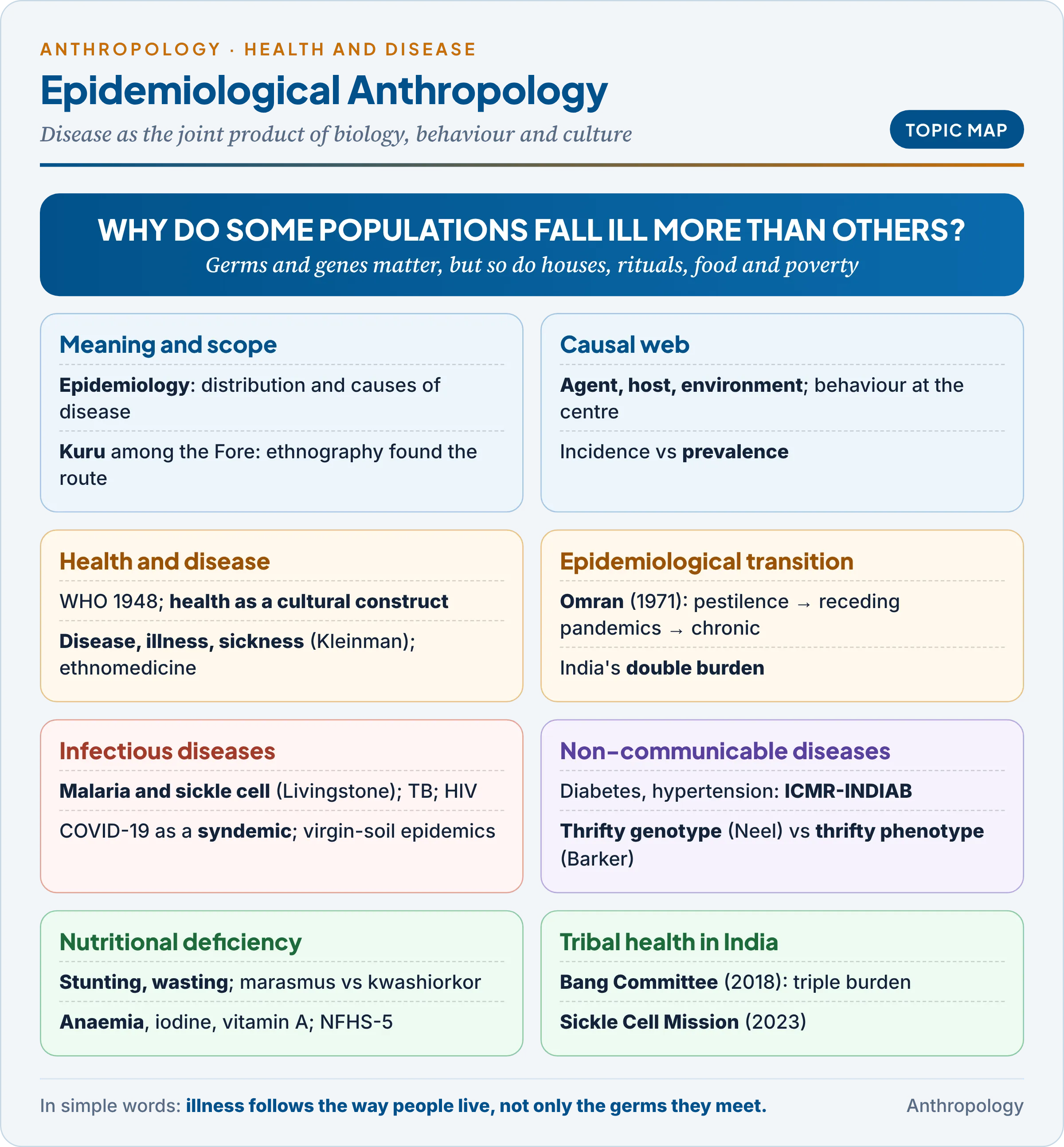
Units 9.3 to 9.7 showed how human populations differ in genes and how they adapt to heat, cold and altitude. This unit asks the same questions of disease: why some populations fall ill more often than others, why the pattern of disease changes as societies change, and why hunger still shapes the bodies of millions of children. The answer is always bio-cultural: germs, genes and diets matter, but so do houses, rituals, food habits, work and poverty.
1. Epidemiological Anthropology: Meaning and Scope
In simple words
Epidemiology counts who gets sick, where and when. Anthropology explains how people’s ways of living expose them to illness or protect them from it. Epidemiological anthropology joins the two, so that disease is studied as the product of both biology and culture.
In the 1950s a fatal trembling disease called kuru (from the local word for shivering) was killing the Fore of the Eastern Highlands of Papua New Guinea, mostly women and children. Medical teams suspected a gene. The anthropologists Robert Glasse and Shirley Lindenbaum mapped Fore kinship and mortuary customs and showed that kuru followed ritual practice: at funeral feasts, women and children ate the bodies of dead relatives as an act of mourning (endocannibalism), and so passed on the infectious agent, later identified as a prion (an abnormal, self-copying protein). When the feasts stopped in the late 1950s, new cases among children stopped too. The American physician Carleton Gajdusek received the Nobel Prize (1976) for showing that kuru was transmissible; Lindenbaum’s Kuru Sorcery (1979) told how the Fore themselves blamed sorcery. Biology identified the agent; ethnography found the route.
1.1 Definitions
- Epidemiology is the study of the distribution (who, where, when) and the determinants (causes) of health and disease in populations, so as to control it. Epidemiologists are “number hunters“, seeking broad statistical associations between ill-health and its causes.
- Epidemiological anthropology is a specialisation within medical anthropology (the study of health, illness and healing across cultures) and within biological anthropology. It weighs the factors in the “causal web” of a disease, especially behaviour, since almost every disease is caused partly by what people do.
- Branches: epidemiology, ethnomedicine (each culture’s way of explaining and treating illness), medical aspects of social systems, nutritional anthropology and folk medicine.
1.2 Why the two disciplines met
- Chronic disease (heart disease, cancer, diabetes) became the main killer in industrial societies, and it depends on lifestyle, which cannot be measured without understanding culture. Infection control too depends on behaviour: toilet habits, water use, pilgrimage, burial and sexual networks.
- Epidemiologists therefore had to measure acculturation (cultural change through contact), anomie (loss of shared norms), ethnicity and poverty, while anthropologists wanted fieldwork to solve practical health problems.
1.3 Basic measures
Epidemiology works with rates: the number of events divided by the population at risk, usually per 1,000 or per 1,00,000.
| Measure | Formula | What it tells |
|---|---|---|
| Incidence rate | New cases in a period ÷ population at risk × 1,000 | Speed of spread; risk of falling ill |
| Prevalence rate | All existing cases at a point in time ÷ total population × 1,000 | Burden at a moment |
| Crude death rate | Deaths in a year ÷ mid-year population × 1,000 | Overall mortality |
| Case fatality rate | Deaths from a disease ÷ cases of that disease × 100 | Severity of the disease |
A short disease (cholera) can have high incidence but low prevalence; a chronic one (diabetes) builds up high prevalence even when incidence is modest. Prevalence ≈ incidence × average duration, so better treatment that keeps patients alive longer can raise prevalence while incidence stays the same.
1.4 The epidemiological triangle and the causal web
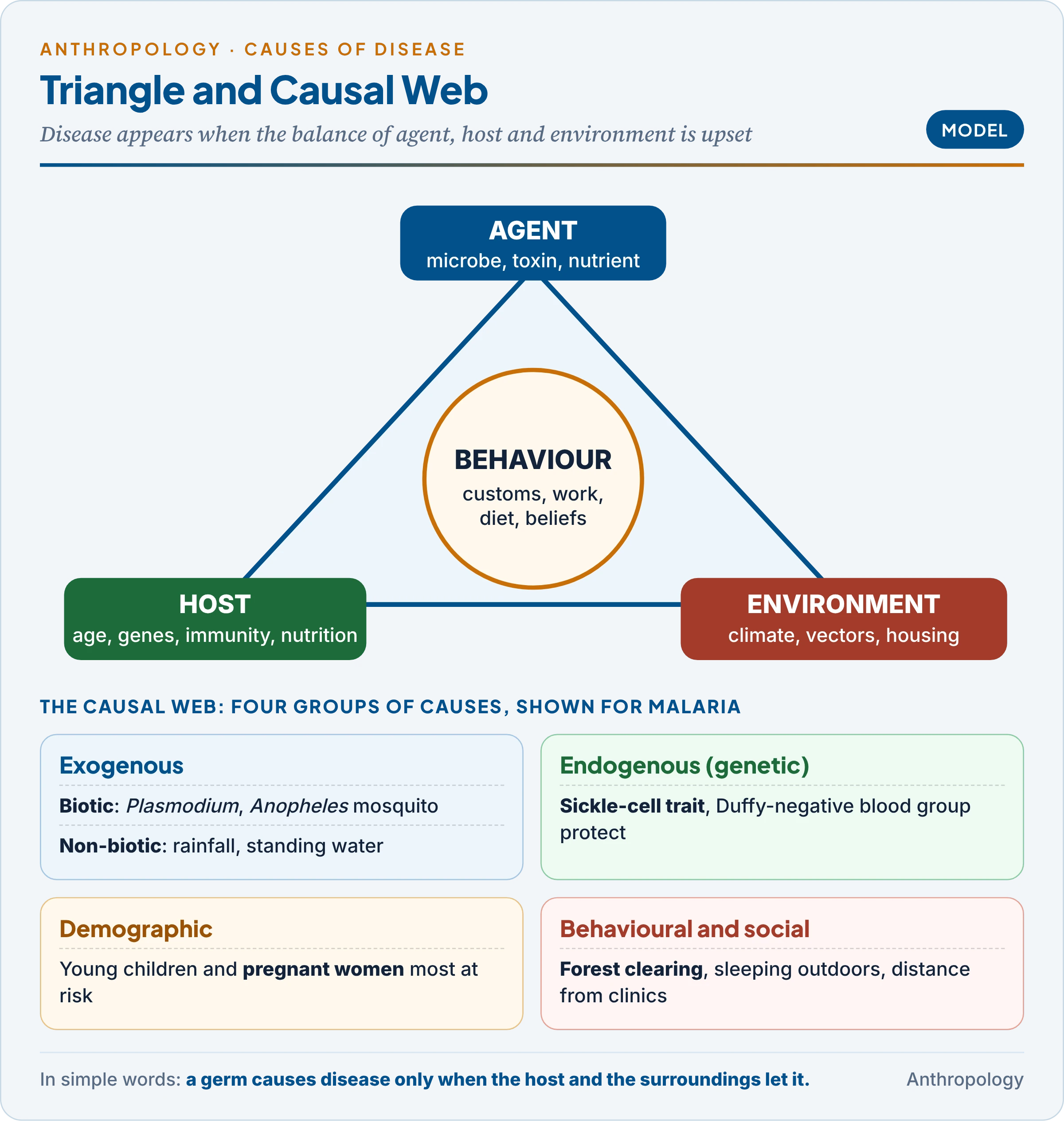
The classical model explains disease as an interaction of three elements.
- Agent: the necessary cause: a microbe, a toxin, a nutrient lacking or in excess.
- Host: the person, with their age, sex, genes, immunity, nutrition and behaviour.
- Environment: physical (climate, water, housing), biological (vectors, animal reservoirs) and socio-cultural (crowding, customs, income, health services).
Disease appears when the balance is upset: a more virulent agent, a weaker host or an environment that brings them together. Since chronic diseases have no single agent, the triangle gave way to the web of causation (MacMahon, Pugh and Ipsen, 1960). Epidemiological anthropology groups its strands as exogenous (biotic: microbes, vectors; non-biotic: climate, pollutants), endogenous (genetic), demographic (age, sex, density) and behavioural (governed by social, cultural and psychological factors).
1.5 What anthropology adds
- The insider’s view and fieldwork: how people name and explain illness decides whether they seek care or accept vaccines, and long fieldwork reveals behaviours a questionnaire misses, as with kuru.
- Migration as a natural experiment: Japanese in Japan have low rates of prostate and colon cancer; migrants to the United States have intermediate rates, and their California-born children approach white Californian rates. Genes did not change in one generation, so diet and lifestyle explain most of the difference.
- Structure and power: the American physician-anthropologist Paul Farmer (AIDS and Accusation, 1992, on Haiti) showed how poverty, racism and gender inequality, which he called structural violence, decide who is exposed to disease and who gets treated.
2. Health and Disease
In simple words
Health is more than not being sick: it means being able to live and work well in one’s surroundings. Doctors define disease by measurements, but people experience illness through their own beliefs. What counts as healthy, ill or abnormal differs from one culture to another.
2.1 Defining health
- WHO (1948): health is “a state of complete physical, mental and social well-being and not merely the absence of disease or infirmity”. It is broad and positive, but critics call it an unreachable ideal.
- Functional definition: health is the ability to function effectively in harmony with one’s environment, meeting the ordinary stresses of life. It ties health to the environment, which suits an ecological discipline.
- Health as a cultural construct: each society sets its own standards of normal and abnormal. The American anthropologist Ruth Benedict (“Anthropology and the Abnormal”, 1934) showed that behaviour treated as illness in one culture, such as trance and visions, can be honoured in another. The line moves with time too: in Europe mental illness was once read as witchcraft or possession; alcoholism became a “disease” only gradually (medicalisation: turning a life condition into a medical problem); and many Deaf people regard deafness as a cultural identity, not a disease.
2.2 Disease, illness and sickness
A person with diabetes controlled by insulin has a disease but does not feel ill. A person with an early cancer may feel nothing for years. A child infected with measles is not ill during the ten-day incubation period. These cases show that disease and illness are different things.
| Term | Meaning | Who defines it |
|---|---|---|
| Disease | A deviation from normal structure or function of the body, shown by signs (objective evidence a doctor can find, such as fever) | Biomedicine |
| Illness | The person’s experience of feeling unwell, shown by symptoms (what the patient reports, such as pain) | The sufferer and their culture |
| Sickness | The social role a society gives the sufferer: excused from work, cared for, or stigmatised | Society |
The American psychiatrist-anthropologist Arthur Kleinman (Patients and Healers in the Context of Culture, 1980, from work in Taiwan) made this distinction central and introduced explanatory models: each patient and healer holds a theory of what caused the illness, how serious it is and what will cure it. Treatment fails when the doctor’s and the patient’s models clash, as when tablets are prescribed for an illness the family blames on an angry deity.
Common confusion
If a test shows a disease, is the person necessarily ill? No. Disease is a biological abnormality that may be latent (present without symptoms), as in early cancer or controlled diabetes. Illness is the experience of being unwell. A person can have a disease without illness, and can feel ill (with distress or pain) when no disease is found.
2.3 Describing and classifying diseases
- By course and outcome: acute (sudden and brief: appendicitis) or chronic (gradual and lasting: diabetes); benign (good prognosis: a wart) or malignant (fatal if untreated: cancer).
- By basis of classification: topographic (body region: gastrointestinal), anatomic (organ: heart disease), physiological (function: metabolic diseases such as diabetes and gout), pathological (process: inflammatory, neoplastic), aetiological (cause: staphylococcal, nutritional), epidemiological (endemic, epidemic, pandemic) and statistical (WHO’s International Classification of Diseases). Classification is not clerical: sorting mid-twentieth-century death records by cause revealed lung cancer, once rare, rising sharply among men, and the search for a cause led to cigarette smoking.
- By origin: genetic (Units 9.2, 9.4); congenital (present at birth, genetic or from injury in the womb, as when rubella damages the fetal heart); immune (AIDS, allergy, autoimmune disease, graft rejection); neoplastic; endocrine; neuropsychiatric; nutritional; occupational; and infectious. Not every genetic disease is congenital (Huntington’s appears in mid-life), and not every congenital disease is genetic.
2.4 Medical systems and ethnomedicine
- Ethnomedicine is a culture’s own system of explaining and treating illness. The American anthropologists George Foster and Barbara Anderson (Medical Anthropology, 1978) contrasted two kinds of explanation.
| Personalistic system | Naturalistic system | |
|---|---|---|
| Cause of illness | Purposeful action of an agent: a deity, ghost, sorcerer or witch | Impersonal natural forces: imbalance of humours, heat and cold |
| Healer | Shaman, diviner, ojha, gunia (tribal ritual healers of central and eastern India) | Physician of a learned tradition, herbalist |
| Typical question | “Who did this to me, and why?” | “What went out of balance?” |
| Examples | Many tribal and peasant societies | Ayurveda (three doshas), Unani, Chinese medicine |
Most Indians live in medical pluralism: one family may consult a biomedical doctor, an Ayurvedic practitioner, a temple or dargah healer and a traditional birth attendant (dai); the Ministry of AYUSH (2014) recognises Ayurveda, Yoga and Naturopathy, Unani, Siddha, Sowa-Rigpa and Homoeopathy. Tribal plant knowledge has real value: the Kani of Kerala led scientists to the plant arogyapacha, source of the anti-fatigue drug Jeevani, with licence fees shared with a Kani trust, an early case of benefit-sharing.
- Stigma: the American sociologist Erving Goffman (Stigma, 1963) described conditions that spoil social identity. Leprosy is the classic case (Gussow and Tracy, 1968); people with epilepsy often find stigma harder to manage than seizures; HIV stigma keeps people from testing. Stigma spreads disease, because hidden cases go untreated.
3. The Evolution of Disease and the Epidemiological Transition
In simple words
The diseases that kill people have changed over human history. Hunters and gatherers suffered few epidemics, farmers and city dwellers suffered many, and modern societies die mostly of long-lasting illnesses such as heart disease. India today carries the old infectious burden and the new chronic burden together.
3.1 Disease across human history
- Foragers: small, mobile bands had few crowd infections, since diseases like measles need large populations to keep circulating; their burden was injuries, parasites and zoonoses (infections caught from animals).
- Food production and sedentism: farming brought permanent villages (refuse near water), domestic animals (tuberculosis, anthrax, influenza), stored grain (rodents and fleas) and monotonous cereal diets. Skeletons studied in Paleopathology at the Origins of Agriculture (Cohen and Armelagos, 1984) show that early farmers were often shorter and had more dental defects, anaemia (porous lesions of the skull) and infection than the foragers before them. Fertility rose with sedentism, so populations grew even though health worsened.
- Cities and trade created the great pandemics: the Black Death of the fourteenth century killed about a third of Europe’s population; cholera spread out of Bengal in seven pandemics from 1817.
- “Virgin soil” epidemics: populations with no previous exposure suffer extreme mortality (Alfred Crosby, 1976). Smallpox and measles from Europe killed a large part of the native Americans. On the Faroe Islands in 1846 measles struck about 6,000 of 8,000 people, sparing only those old enough to have met it 65 years earlier; in Fiji in 1875 it killed about a quarter of the population.
3.2 Omran’s theory
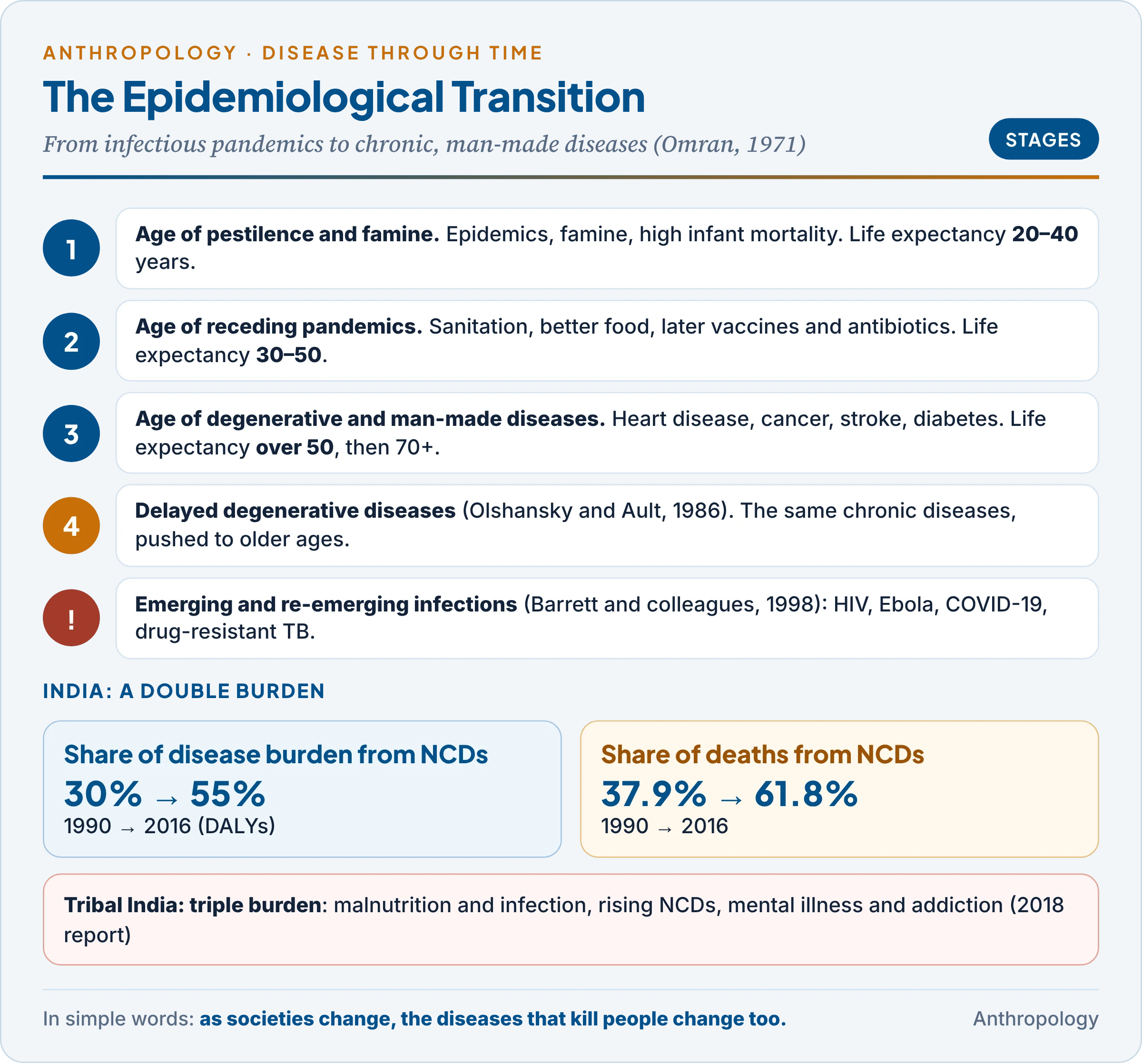
The Egyptian-American epidemiologist Abdel Omran (“The Epidemiologic Transition”, 1971) described how, as societies modernise, infectious pandemics are replaced by degenerative and man-made diseases as the main causes of death, alongside the demographic transition.
| Stage | Main causes of death | Life expectancy | What changed |
|---|---|---|---|
| 1. Age of pestilence and famine | Epidemics, famine, infections; high infant mortality | About 20–40 years | Pre-industrial societies |
| 2. Age of receding pandemics | Epidemics become rarer | About 30–50 years | Sanitation, better food, later vaccines and antibiotics |
| 3. Age of degenerative and man-made diseases | Heart disease, cancer, stroke, diabetes, accidents | Over 50, then above 70 | Lower fertility, ageing, lifestyle change |
| 4. Age of delayed degenerative diseases (Olshansky and Ault, 1986) | Same chronic diseases, but at older ages | Above 75–80 | Medical control of risk factors |
- Emerging and re-emerging infections: the American anthropologists Ronald Barrett, Christopher Kuzawa, Thomas McDade and George Armelagos (1998) argued that a third epidemiological transition is under way, with new zoonoses (HIV, Ebola, avian influenza, COVID-19) and drug-resistant tuberculosis and bacteria, driven by globalisation, deforestation and antibiotic misuse.
- Critique: the model assumed a single path, but many developing countries face both stages at once (a double burden), and the pace depends on public policy as much as on income.
3.3 India’s transition
- Burden shift: according to the India: Health of the Nation’s States report (ICMR and partners, 2017), non-communicable diseases rose from about 30 per cent of India’s disease burden (DALYs: years of healthy life lost) in 1990 to about 55 per cent in 2016, and caused about 62 per cent of deaths.
- Unevenness: Kerala and Goa are far into stage 3; Bihar, Jharkhand and Uttar Pradesh least.
- Tribal India faces a triple burden: malnutrition and infection, a rising wave of NCDs (about one in four tribal adults has hypertension), and mental illness and addiction (Expert Committee on Tribal Health, 2018; §7).
4. Infectious Diseases
In simple words
Infectious diseases are caused by germs and worms that pass from one person, animal or insect to another. Whether a germ spreads depends on how people live: how crowded their homes are, where they get water, what work they do and what customs they follow.
4.1 Agents and routes
- Agents, smallest to largest: viruses (which need living cells to multiply: measles, polio, dengue, HIV), rickettsias and chlamydiae (tiny bacteria living inside cells: typhus, trachoma), bacteria (TB, cholera, typhoid), fungi, protozoa (malaria, amoebiasis) and helminths or worms (roundworm, hookworm, filaria).
- Routes: direct (contact, droplets, faeco-oral, sexual, animal bite, transplacental) and indirect (vectors such as mosquitoes, flies and ticks; contaminated water and food; air).
- Survival strategies: measles multiplies fast and sheds massively before the rash, so it needs a constant supply of new susceptible children; tuberculosis persists for years in chronic lesions; tetanus and anthrax survive as spores; the malaria parasite needs two hosts. Harmless commensal microbes protect the body, and antibiotics that kill them can let harmful organisms take their place.
4.2 The social ecology of infection
Classic observations show that infection depends on social life as much as on germs.
| Factor | Example | What it shows |
|---|---|---|
| Family pattern and hygiene | In crowded homes, children meet the polio virus in infancy, when it rarely paralyses; with better hygiene, first infection comes later and paralysis becomes more common | Infection and disease differ; improving hygiene can shift disease to older ages |
| Density and contact | Infectious hepatitis in New York state was lowest in New York City and highest in rural areas | Contact patterns matter more than raw density |
| Social habits | Vampire bats spread paralytic rabies to cattle in Brazil but to herders in Trinidad, who slept in shacks beside their animals | The same agent; different behaviour, different disease |
| Food custom | Malta fever (brucellosis) was common while goats were milked at customers’ doors; it almost vanished with compulsory pasteurisation, except where people still drank raw milk | Culture of consumption shapes exposure |
| Isolation | Polar expedition members free of colds all winter caught them when the supply ship arrived | Viruses, not cold, cause colds |
| Migration and pilgrimage | Improvised feeding and sanitation bring cholera and typhoid | Mass movement spreads faeco-oral disease |
| Occupation | Farmers (leptospirosis), wool sorters (anthrax), slaughtermen (brucellosis) | Work places people in the path of microbes |
Why parasitic diseases vary between populations follows the same logic: ecology (warmth, rainfall, standing water, vectors), sanitation (open defecation spreads hookworm), footwear and occupation, food habits (undercooked pork and tapeworm; raw fish and flukes), genetic resistance (sickle-cell trait against malaria; the Duffy-negative blood group against vivax malaria, Unit 9.6), nutrition (malnourished hosts carry heavier worm loads) and health services.
4.3 Bio-cultural cases
The cases below show how biology and culture combine in infectious disease.
- Malaria and sickle cell: the American anthropologist Frank Livingstone (1958) showed that in West Africa the sickle-cell gene was common where slash-and-burn farming had cleared forest, creating sunlit pools in which the mosquito Anopheles gambiae bred. Farming changed the environment, the environment spread malaria, and malaria selected the gene that protects carriers (balanced polymorphism, Unit 9.3). In India both the sickle-cell gene and malaria concentrate in the central tribal belt, where tribal people carry a disproportionate share of malaria (§7). India’s malaria incidence has fallen about 93 per cent since 2000; it left WHO’s “High Burden to High Impact” group in 2024 and aims at elimination by 2030.
- Tuberculosis: a disease of crowding, undernutrition and poverty. Tribal prevalence (703 per 1,00,000) is nearly three times the general rate (256). Because hunger fuels TB, the Ni-kshay Poshan Yojana (2018) pays patients a nutrition allowance, raised to ₹1,000 a month in 2024. India’s incidence fell 21 per cent between 2015 and 2024 (WHO, 2025).
- HIV/AIDS: HIV-1 crossed into humans from chimpanzees in west-central Africa, most likely through the hunting and butchering of bushmeat, in the early twentieth century, and spread along colonial river and rail routes. Its spread follows sexual networks, migration for work, drug injection and gender inequality. India had about 25.4 lakh people living with HIV in 2023, an adult prevalence of 0.20 per cent, but prevalence is far higher in Mizoram (2.73 per cent) and Nagaland (1.37 per cent).
- COVID-19: a zoonotic virus spread by global travel, whose toll followed social fault lines: crowded housing, informal work, stranded migrant workers and existing diabetes and hypertension. The American medical anthropologist Merrill Singer coined syndemic for diseases that cluster and worsen each other under shared social conditions; in 2020 The Lancet‘s editor applied it to COVID-19. In the 2014–16 West African Ebola epidemic, funeral transmission fell only when communities helped design safe burials that respected mourning customs (Paul Richards, Ebola, 2016).
4.4 Infectious disease and indigenous peoples
- Contact brings epidemics: isolated groups lack immunity to common infections. The Great Andamanese, several thousand in the mid-nineteenth century, were reduced to a few dozen within a century, largely by syphilis, measles and influenza after colonial settlement. The Jarawa suffered measles outbreaks in 1999 and 2006 after increased contact. This is why India’s policy for the Sentinelese is to avoid contact.
5. Non-Infectious (Non-Communicable) Diseases
In simple words
Non-communicable diseases do not pass from person to person. They develop slowly, over years, from a mix of genes, ageing and lifestyle: what we eat, whether we smoke or drink, how active we are and how much stress we face. They are now the main killers in India.
5.1 Nature and risk factors
- Major groups (all chronic and not caused by germs): cardiovascular (heart disease, stroke, hypertension), diabetes, cancers, chronic respiratory disease, mental and neurological disorders (depression, schizophrenia, Alzheimer’s and Parkinson’s disease), injuries, occupational diseases (silicosis, asbestosis, byssinosis from cotton dust) and congenital disorders.
- Risk factors: non-modifiable (age, sex, genes) and modifiable (tobacco, alcohol, salty and sugary diets, inactivity, air pollution, stress).
- Indian tribal-specific factors (High Level Committee on tribal communities chaired by Virginius Xaxa, 2014): cheap unregulated liquor, smoke from open chulhas (stoves), tobacco, and poor access to doctors and health education.
5.2 Lifestyle diseases in India
The ICMR-INDIAB study (2023), a survey of over 1.1 lakh adults across 31 states and UTs, found that India has entered the age of metabolic disease.
| Condition | Prevalence among adults (ICMR-INDIAB, 2023) |
|---|---|
| Diabetes | 11.4% (about 10.1 crore people) |
| Prediabetes | 15.3% (about 13.6 crore) |
| Hypertension | 35.5% |
| Generalised obesity | 28.6% |
| Abdominal obesity | 39.5% |
All of these except prediabetes were more common in urban areas, but in many poorer states prediabetes outnumbered diabetes, a warning that the epidemic is moving into rural India. NFHS-5 (2019–21) found 24.0 per cent of women and 22.9 per cent of men aged 15–49 overweight or obese. The Global Adult Tobacco Survey (2016–17) found 28.6 per cent of adults using tobacco.
Why the label “lifestyle” can mislead: it sounds like free choice, but cheap processed food, long working hours, unsafe streets and poverty constrain choices. Smoking and drug abuse cluster in groups under stress, and their harms (cancer, heart disease, HIV through shared needles) fall most on the poor.
5.3 The thrifty gene hypothesis
The Pima (Akimel O’odham) of Arizona have one of the highest rates of type 2 diabetes recorded. Their relatives, the Pima of the Sierra Madre in Mexico, who share much of the same ancestry but still farm and work physically, have far lower rates of obesity and diabetes. The same genes in different environments give different outcomes, the core of the thrifty gene argument.
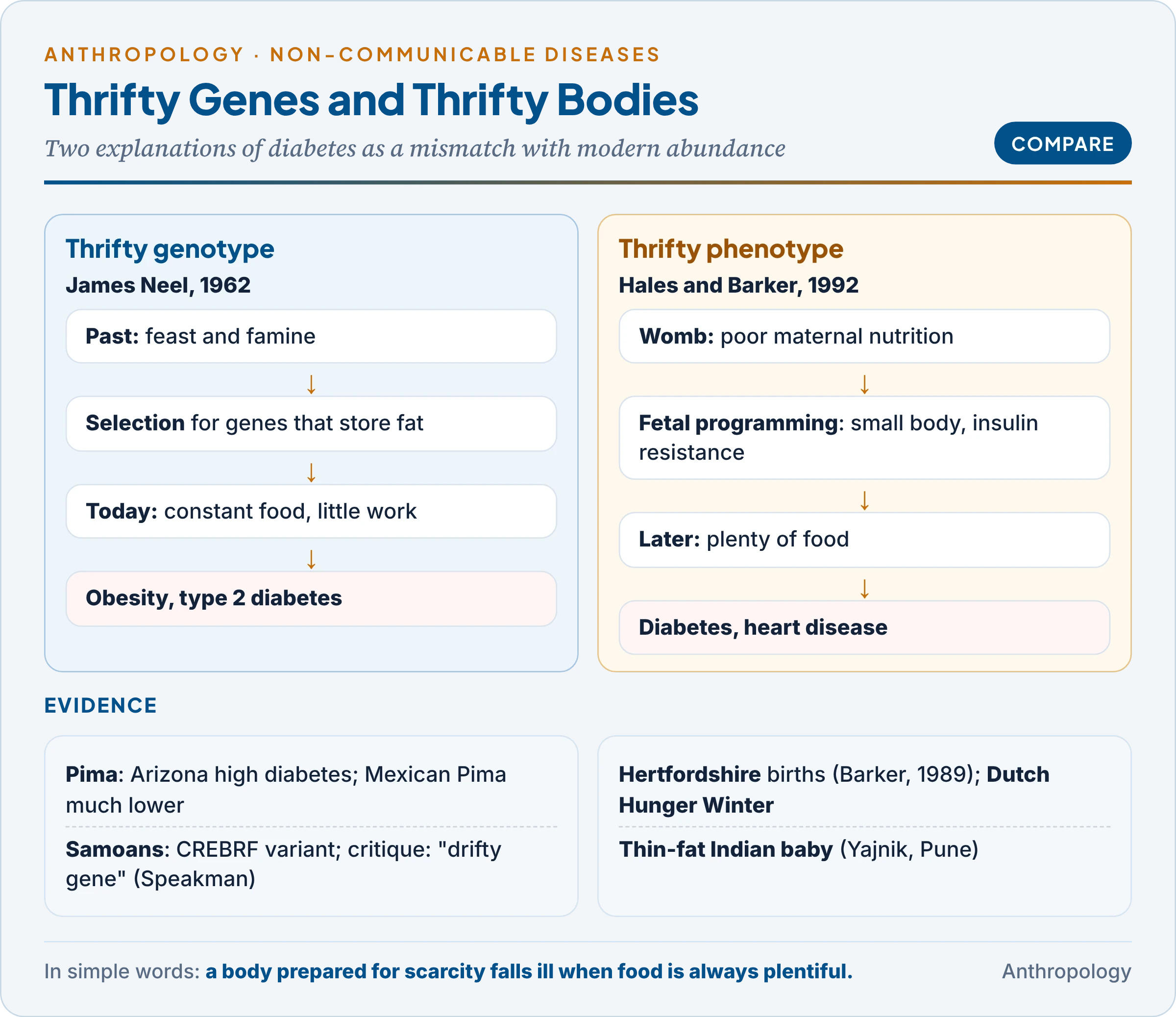
- The hypothesis: the American geneticist James V. Neel (1962) proposed that genes which make the body efficient at storing fat (“thrifty genes“) were favoured in the past, when foragers and early farmers lived through cycles of feast and famine: people who stored fat in good times survived the lean times. In a modern environment of constant food and little exercise, the same genes cause obesity and diabetes: a genotype “rendered detrimental by progress”.
- Expansion: late in life (1998–99) Neel widened it to a cluster (diabetes, obesity, hypertension) caused by physiology adapted to an older environment, implying a remedy: diet and activity closer to the ancestral pattern.
- Critique:
- Famines severe enough to drive strong selection may have been rarer in the Palaeolithic than Neel assumed; many foragers do not lay down large fat stores between lean periods.
- If thrifty genes were favoured for two million years, most humans should carry them; the British biologist John Speakman (2008) proposed instead that obesity genes drifted randomly once predation pressure fell (the “drifty gene” hypothesis).
- The search for specific thrifty genes found few. One strong candidate is a variant of the CREBRF gene, common among Samoans (about a quarter of their gene copies; Minster and colleagues, 2016), which raises body-mass index but, unexpectedly, lowers diabetes risk.
5.4 The thrifty phenotype and the foetal origins of adult disease
- The British epidemiologist David Barker, using birth records from Hertfordshire (1989), found that men small at birth and at one year had higher death rates from ischaemic heart disease decades later. With Nick Hales (1992) he proposed the thrifty phenotype: a poorly nourished fetus adapts its metabolism to scarcity (smaller organs, insulin resistance); if the child later meets plenty, the mismatch produces diabetes and heart disease. The field is now called Developmental Origins of Health and Disease (DOHaD).
- Evidence: people conceived during the Dutch Hunger Winter (1944–45) had more obesity and heart disease in adulthood.
- India: the Indian diabetologist Chittaranjan Yajnik (Pune Maternal Nutrition Study, 2003) described the “thin-fat Indian baby“: lighter at birth than a European baby but with relatively more body fat and less muscle, already primed for insulin resistance. Maternal undernutrition today can produce adult diabetes tomorrow, which links India’s two burdens.
| Thrifty genotype (Neel, 1962) | Thrifty phenotype (Hales and Barker, 1992) | |
|---|---|---|
| Level | Genes selected over many generations | Plastic response within one lifetime |
| When set | At conception, inherited | In the womb and infancy |
| Mechanism | Natural selection for fat storage | Fetal programming under undernutrition |
| Prediction | Populations with famine history at risk | Low-birth-weight individuals at risk when later well fed |
| Indian relevance | Unclear | Strong: thin-fat babies, rapid nutrition transition |
Common confusion
Is the thrifty phenotype just another name for the thrifty gene? No. The thrifty genotype (Neel) is about genes favoured by natural selection over many generations. The thrifty phenotype (Hales and Barker) is about how one individual’s body is programmed by poor nutrition in the womb, without any change in genes. Both explain diabetes as a mismatch between the conditions the body was prepared for and the conditions it meets.
6. Nutritional Deficiency Related Diseases
In simple words
When the body does not get enough food, or enough of particular nutrients such as iron, iodine or vitamins, specific diseases follow. Children, adolescent girls and pregnant women suffer most, because their bodies are growing or supporting growth. Poverty, food customs and infection all decide who goes short.
The word kwashiorkor comes from the Ga language of coastal Ghana. The British-Jamaican physician Cicely Williams brought it into medicine in the 1930s. It means roughly “the sickness the older child gets when the next baby is born”. The name holds a whole explanation: when a new baby arrives, the older child is weaned from protein-rich breast milk onto a starchy gruel, and falls ill. A local term, read anthropologically, identified both the cause and the cultural practice behind it.
6.1 Forms of malnutrition
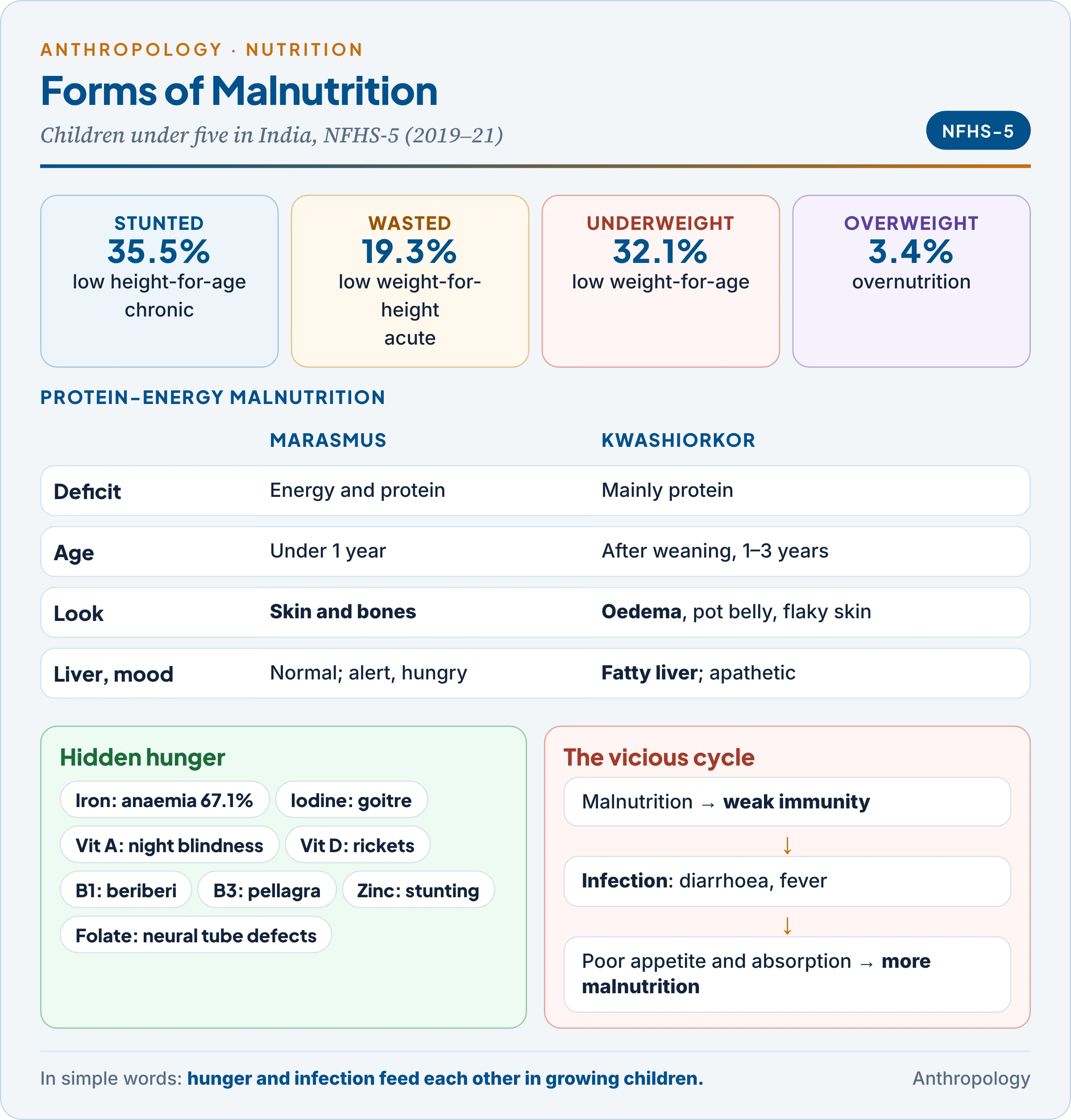
Malnutrition is impaired function from a prolonged deficiency or excess of energy or specific nutrients. It takes several forms.
| Form | Indicator | Meaning | NFHS-5 (2019–21), children under 5 |
|---|---|---|---|
| Stunting | Low height-for-age (below −2 SD of the WHO standard) | Chronic undernutrition and repeated infection | 35.5% |
| Wasting | Low weight-for-height | Acute recent weight loss | 19.3% (severe 7.7%) |
| Underweight | Low weight-for-age | A mix of both | 32.1% |
| Overweight | High weight-for-height | Overnutrition | 3.4% |
| Micronutrient deficiency (“hidden hunger“) | Blood tests, clinical signs | Lack of vitamins and minerals | Anaemia 67.1% (6–59 months) |
India’s double burden shows in one survey: 18.7 per cent of women are underweight and 24.0 per cent overweight or obese, sometimes in the same household.
6.2 Protein-energy malnutrition (PEM)
PEM is the most common form of malnutrition worldwide: a continuum from shortage of energy to shortage of protein, usually in young children.
| Feature | Marasmus | Kwashiorkor |
|---|---|---|
| Main deficit | Energy and protein both (near-starvation) | Mainly protein, with some energy; infections and oxidative stress contribute |
| Typical age | Infancy (under 1 year) | After weaning (1–3 years) |
| Appearance | “Skin and bones“, old man’s face, no fat | Oedema (swelling from fluid), pot belly, moon face |
| Weight | Severely reduced | Less reduced; oedema masks weight loss |
| Skin, hair, liver | Loose skin; liver normal | “Flaky paint” skin, discoloured hair, fatty liver |
| Mood | Alert, hungry | Apathetic, poor appetite |
| Typical cause | Early weaning to diluted bottle feeds made with unsafe water | Weaning onto starchy food when the next child arrives |
Children with features of both have marasmic kwashiorkor.
- Classification: Gómez (1956) graded malnutrition by weight-for-age; Waterlow (1972) separated stunting from wasting; WHO defines severe acute malnutrition (SAM) as weight-for-height below −3 SD, mid-upper-arm circumference below 115 mm, or oedema of both feet.
- Treatment: correct fluid, salt imbalance and infection; restore nutrition carefully; then long-term rehabilitation (in India, Nutrition Rehabilitation Centres). Starvation in the first year can permanently reduce brain growth.
- The cycle of malnutrition and infection: malnutrition weakens immunity, so children fall ill more often; diarrhoea and fever reduce appetite and absorption, so they become more malnourished. Breaking either half breaks the cycle, which is why clean water and toilets are nutrition interventions.
6.3 Micronutrient deficiencies
Fat-soluble vitamins (A, D, E, K) are stored in the body; water-soluble ones (B group, C) are not. In real diets several deficiencies occur together.
| Nutrient | Deficiency disease | Bio-cultural note |
|---|---|---|
| Vitamin A | Night blindness, then xerophthalmia (dry, scarred eye), low immunity | Leading preventable cause of child blindness; biannual doses for children |
| Vitamin D | Rickets (children), osteomalacia (adults) | Risk with purdah, indoor life, dark skin at high latitudes |
| Thiamine (B1) | Beriberi (dry: nerve damage; wet: heart failure) | Diets of polished white rice |
| Niacin (B3) | Pellagra: the “three Ds”, diarrhoea, dermatitis, dementia | Maize diets; Native Americans prevented it by soaking maize in lime water, which frees bound niacin (Katz, Hediger and Valleroy, 1974) |
| Folate (B9), B12 | Megaloblastic anaemia; folate lack causes neural tube defects in the fetus | B12 deficiency common among strict vegetarians |
| Vitamin C | Scurvy: bleeding gums, poor wound healing | Diets lacking fresh fruit and vegetables |
| Iron | Iron-deficiency anaemia (small, pale red cells), fatigue, poor learning | The most common deficiency in the world |
| Iodine | Goitre, cretinism (mental disability and short stature) | Leached Himalayan soils; goitrogens in cassava and millets |
| Zinc | Stunting, delayed puberty, poor immunity | First described in Egypt and Iran (1960s) in boys on unleavened-bread diets; clay eating blocks absorption |
| Calcium | Weak bones; later osteoporosis | Adolescent intake decides peak bone mass |
Why culture matters here: the same nutrient can be present or absent depending on processing (milling, lime-soaking), food taboos (avoiding papaya or eggs in pregnancy), who eats first (in many households women eat last and least) and dress and seclusion (sunlight and vitamin D).
6.4 Anaemia in India
| Group (NFHS-5, 2019–21) | Anaemic | Threshold (haemoglobin) |
|---|---|---|
| Children 6–59 months | 67.1% | Below 11.0 g/dl |
| Adolescent girls 15–19 | 59.1% | Below 12.0 g/dl |
| All women 15–49 | 57.0% | Below 12.0 (non-pregnant) |
| Pregnant women | 52.2% | Below 11.0 g/dl |
| Men 15–49 | 25.0% | Below 13.0 g/dl |
Anaemia rose in every group between NFHS-4 and NFHS-5 (children from 58.6 to 67.1 per cent). Its causes are bio-cultural: iron-poor diets with absorption inhibitors (tea with meals, phytates), hookworm and malaria, menstrual loss and closely spaced pregnancies, and inherited haemoglobin disorders in some communities. Anemia Mukt Bharat (2018) applies a 6 × 6 × 6 strategy: six age groups, six interventions (iron-folic acid, deworming, behaviour change, digital testing, fortified foods, non-nutritional causes) and six institutional mechanisms.
6.5 Assessing the nutritional status of a community
Anthropologists combine laboratory and field methods, often summarised as ABCDE.
- A, Anthropometry (weight, height, mid-upper-arm circumference, skinfolds, BMI, as z-scores against WHO standards); B, Biochemical (haemoglobin, ferritin, urinary iodine); C, Clinical (Bitot’s spots, goitre, pallor, oedema); D, Dietary (24-hour recall, food-frequency questionnaires, weighed food records); E, Ecological (crop cycles, seasonal hunger, water, sanitation, markets).
The anthropological addition is to read these numbers through ecology, culture and inequality together: a child’s diet depends on the harvest and forest foods (ecology), on “hot” and “cold” food beliefs and who eats first (culture), and on caste, tribe, gender and income (inequality). Seeing how these disadvantages intersect explains why a tribal girl in a drought-prone district is at far higher risk than averages suggest.
6.6 Programmes
- ICDS (1975), PM POSHAN (mid-day meals, renamed 2021), POSHAN Abhiyaan (8 March 2018) and Mission Poshan 2.0; the National Iodine Deficiency Disorders Control Programme (the National Goitre Control Programme of 1962, renamed 1992) with universal salt iodisation; vitamin A doses, Anemia Mukt Bharat, National Deworming Day and fortified rice in public food schemes.
7. Tribal Health in India
In simple words
Tribal communities in India have poorer health than the rest of the population, partly because of remoteness and poverty and partly because health services were not designed for them. Two national committees and a mission against sickle-cell disease have tried to close the gap.
The Expert Committee on Tribal Health, set up in 2013 by the health and tribal affairs ministries and chaired by the Indian public-health physician Abhay Bang, submitted Tribal Health in India: Bridging the Gap and a Roadmap for the Future in 2018, the first comprehensive review of tribal health.
| Finding | Evidence |
|---|---|
| Triple burden | Malnutrition and infection; rising NCDs; mental illness and addiction |
| Child survival gap | Tribal under-five mortality fell from 135 (1988) to 57 (2014), against about 39 for the rest of India |
| Malaria | About 30% of cases, over 60% of falciparum cases and about half of deaths, from 8.6% of the population |
| Tuberculosis | 703 per 1,00,000 against 256 |
| Addiction | About 72% of tribal men used tobacco and over half consumed alcohol |
- Recommendations: a National Tribal Health Action Plan to reach state averages within ten years; a Tribal Malaria Action Plan; Aarogya Mitras (trained tribal youth) with ASHAs; a Tribal Health Council; a Tribal Health Index; and health spending per tribal person at the level promised by the National Health Policy (2017).
- The cultural lesson: a cultural distance, not only a physical one, separates tribal people from clinics; services work better in local languages, with healers and dais and the gram sabha involved.
- Sickle-cell disease: the National Sickle Cell Anaemia Elimination Mission, launched on 1 July 2023 at Shahdol, Madhya Pradesh, aims to eliminate the disease as a public health problem by 2047. Its target was to screen 7 crore people aged 0–40 in 17 tribal-dominated states by 2025–26; the mission dashboard now shows over 7.3 crore screened, about 2.5 lakh diagnosed with the disease and about 20 lakh carriers. Carriers receive genetic counselling cards to guide marriage and pregnancy decisions.
Key Terms
| Term | Meaning in simple words |
|---|---|
| Epidemiology | The study of how diseases are distributed in populations and what causes them |
| Epidemiological anthropology | The study of disease as the joint product of biology, behaviour and culture |
| Incidence | New cases of a disease in a period |
| Prevalence | All cases present at one time |
| Epidemiological triangle | Disease as an interaction of agent, host and environment |
| Disease / illness / sickness | Biological abnormality / personal experience / social role |
| Ethnomedicine | A culture’s own system of explaining and treating illness |
| Epidemiological transition | The shift from infectious to chronic diseases as the main killers |
| Virgin soil epidemic | An epidemic in a population never before exposed to the disease |
| Syndemic | Diseases that cluster and worsen each other under shared social conditions |
| Thrifty genotype | Genes for efficient fat storage, harmful when food is always plentiful |
| Thrifty phenotype | Fetal metabolism programmed by poor nutrition in the womb |
| Stunting / wasting | Low height-for-age (chronic) / low weight-for-height (acute) |
| Kwashiorkor / marasmus | Protein-deficit malnutrition with swelling / severe wasting from overall starvation |
| Double burden | Undernutrition and overnutrition, or infectious and chronic disease, at the same time |
Contemporary Developments
- TB decline (WHO Global TB Report 2025): India’s incidence fell 21 per cent between 2015 and 2024 (237 to 187 per 1,00,000), and treatment coverage rose to 92 per cent, helped by the TB Mukt Bharat Abhiyaan launched in December 2024.
- Malaria: India left WHO’s High Burden to High Impact group in 2024, with case incidence about 93 per cent lower than in 2000.
- Sickle-cell mission (2023): over 7.3 crore people screened in tribal states, with counselling cards for carriers.
- Trachoma: WHO validated India in 2024 as having eliminated trachoma as a public health problem.
Diagrams to Master
- Topic map: scope → health and disease → transition → infectious → non-communicable → nutritional → tribal health.
- Triangle and causal web: agent, host, environment with behaviour at the centre; four groups of causes; malaria as the case.
- Epidemiological transition: Omran’s three stages plus the fourth (Olshansky and Ault) and emerging infections; India’s double burden.
- Thrifty genotype vs thrifty phenotype: feast-and-famine selection vs fetal programming; mismatch; Pima, Samoans, Dutch Hunger Winter, thin-fat Indian baby.
- Forms of malnutrition: stunting, wasting, underweight; marasmus vs kwashiorkor; hidden hunger; overnutrition; the malnutrition–infection cycle.
Revision Grid
| Scholar | Work (year) | Key idea |
|---|---|---|
| Ruth Benedict | “Anthropology and the Abnormal” (1934) | Normal and abnormal are culturally defined |
| Frank Livingstone | American Anthropologist (1958) | Farming, malaria and the sickle-cell gene |
| James V. Neel | American Journal of Human Genetics (1962) | Thrifty genotype |
| Abdel Omran | “The Epidemiologic Transition” (1971) | Three stages of disease change |
| George Foster and Barbara Anderson | Medical Anthropology (1978) | Personalistic vs naturalistic medical systems |
| Shirley Lindenbaum | Kuru Sorcery (1979) | Kuru spread by mortuary feasting among the Fore |
| Arthur Kleinman | Patients and Healers in the Context of Culture (1980) | Disease vs illness; explanatory models |
| Mark Cohen and George Armelagos | Paleopathology at the Origins of Agriculture (1984) | Health declined with early farming |
| David Barker; Hales and Barker | Hertfordshire study (1989); thrifty phenotype (1992) | Foetal origins of adult disease |
| Paul Farmer | AIDS and Accusation (1992) | Structural violence and disease |
| C. S. Yajnik | Pune Maternal Nutrition Study (2003) | The thin-fat Indian baby |
| Abhay Bang (chair) | Tribal Health in India (2018) | Triple burden; Tribal Health Action Plan |
Previous Year Questions
Unit 9.8: Epidemiological anthropology; health and disease; infectious and non-infectious diseases; nutritional deficiency diseases
- 2026Write notes on: Health as a cultural construct.
- 2025How anthropologists assess the nutritional status of a community? Discuss the significance of intersectionality of ecology, culture, and social inequality in the study of nutritional anthropology.
- 2025Write notes on: Foetal origin of adult diseases and contribution of David Barker.
- 2024Critically comment on the lifestyle diseases and their impact on human health.
- 2023Elucidate the different forms of malnutrition. Describe protein-calorie malnutrition with suitable examples.
- 2022What is meant by health? Is the burden of lifestyle diseases on the rise? Justify your answer with suitable examples.
- 2020Critically examine the demographic and epidemiological consequences with rise in food production and sedentism.
- 2020Describe the impact of infectious diseases on indigenous populations.
- 2018Narrate evolution of disease and major causes of ill health in human populations.
- 2016Describe the scope of Epidemiological Anthropology in the study of infectious and non-infectious diseases.
- 2014Discuss the role of anthropology in the understanding of health and disease. What specific understanding is available with respect to infectious and non-infectious diseases ?
- 2014Write a note in 150 words on Epidemiological Anthropology.
- 2013What is meant by epidemiological transition? Elaborate upon its causes and consequences highlighting major health problems of our adult population today. (250 words).
- 2012Write a note in 150 words on Epidemiological anthropology.
- 2012Briefly discuss the important causes for the variations in occurrence and intensity of parasitic diseases among different populations.
- 2010Write a note in 150 words on Social I concept of disease.
- 2009Write a note on non-communicable diseases.
- 2005Write a note on Drug Abuse.
- 2004Write a note on Impact of smoking on Health.
- 2000Write a note on Malnutrition.
- 1994Write a note on Malnutrition.
- 1993Write a note on Effects of malnutrition.
- 1981“Nutrition affects several physical features. ” Exemplify. (200 words).
Related questions from other units
- 2025Unit 9.1: What are genetic markers? Discuss their applications in understanding population variation, disease association and forensics.
- 2025Unit 9.4: ‘Genome-wide Disease Association Studies (GWAS) advanced our understanding of health and disease.’ Discuss.
- 2024Unit 9.6: Write notes on: Hemoglobin in health and disease.
- 2021Unit 12: What is Anthropometry ? Discuss its role in assessing the nutritional status and sports capability of a person.
- 2009Unit 1.7: Write a note on Thrifty genotype.
- 2008Unit 12: Write a note on Nutritional anthropology.
- 2005Unit 12: Write a note on Nutritional : Anthropology.
- 1996Unit 1.3: Write a note on Medical Anthropology.
- 1996Unit 9.3: Discuss the concepts of balanced polymorphism and relaxed selection with special reference to Malaria dependent polymorphisms in man.
- 1996Unit 12: Write a note on Nutritional ecology.