Imperialism and Free Trade: Rise of Neo-Imperialism

Imperialism
- Imperialism is defined as “a policy of extending a country’s power and influence through colonisation, use of military force, or other means.”
- Two major subtypes of imperialism are identified:
- Regressive imperialism — identified with pure conquest, unequivocal exploitation, extermination or reduction of undesired peoples, and the settlement of desired peoples into such territories.
- Progressive imperialism — founded on a cosmopolitan view of humanity that promotes the spread of civilisation to allegedly backward societies to elevate their living standards and culture, allowing colonised peoples to assimilate into the imperial society. The British Empire is an example, having claimed to confer certain advantages on its subjects.
- The term “imperialism” has primarily been applied to Western political and economic dominance in the 19th and 20th centuries.
- From a Marxist perspective, imperialism is a natural feature of a developed capitalist nation-state as it matures into monopoly capitalism — imperialism being described as the “highest stage of capitalism.”
- Competition between empires and the unfettered drive to maximise profit would lead to wars between the empires themselves, such as the World Wars, as well as continued military interventions and occupations in colonies to establish, expand, and exploit markets for monopolist corporations.
- Both colonisation and imperialism have been described by some scholars as early forms of globalisation.
Justification of Imperialism
- Imperialism was justified on multiple grounds, including the claim that “it is desirable that the earth should be peopled, governed, and developed, as far as possible, by the races which can do this work best, i.e., by the races of highest ‘social efficiency.'”
- Technology and economic efficiency were often improved in territories subjected to imperialism through the building of roads and other infrastructure, along with the introduction of new technologies.
- British imperialism often invoked the concept of terra nullius (“empty land”) — the settlement of Australia, for instance, was premised on this idea, with settlers considering the land unused by its sparse Aboriginal inhabitants.
Colonialism
- Colonialism is the establishment, exploitation, maintenance, acquisition, and expansion of a colony in one territory by a political power from another territory — a set of unequal relationships between the colonial power and the colony, and often between the colonists and the indigenous population.
- The European colonial period spanned from the 16th century to the mid-20th century, during which several European powers — particularly Portugal, Spain, Britain, the Netherlands, Russia, and France — established colonies across Asia, Africa, and the Americas.
- Initially, countries followed mercantilist policies designed to strengthen the home economy at the expense of rivals, restricting colonies to trading only with the mother country.
- By the mid-19th century, however, the powerful British Empire abandoned mercantilism and trade restrictions, introducing the principle of free trade with few restrictions or tariffs.
- Socio-cultural evolution: since colonialism often unfolded in pre-populated areas, it gave rise to ethnically hybrid populations — such as the mestizos of the Americas — as well as racially divided populations, as seen in French Algeria or Southern Rhodesia.
Colonialism vs. Imperialism
- Colonialism and imperialism are often used interchangeably, but the two terms carry distinct meanings.
- Both underline the suppression of another people, but colonialism refers to one nation assuming direct control over another, while imperialism refers to political or economic control, exercised either formally or informally.
- Colonialism can be thought of as a practice, while imperialism is the idea driving the practice.
- Colonialism describes a country conquering and ruling over other regions, exploiting the resources of the conquered territory for the conqueror’s benefit.
- It involves building and maintaining colonies in one territory by settlers from another, and can fundamentally alter the social structure, physical landscape, and economy of a region; in the long run, the traits of the conqueror are often inherited by the conquered.
- The term is typically used to describe the settlement of places such as India, Australia, North America, Algeria, New Zealand, and Brazil, all controlled by Europeans.
- Imperialism, by contrast, describes a foreign government governing a territory without significant settlement — as in the Scramble for Africa in the late 19th century, or American dominance over Puerto Rico and the Philippines.
- Colonialism involves large-scale movement of people to a new territory as permanent settlers, who nonetheless maintain allegiance to their mother country.
- Imperialism is simply the exercise of power over conquered regions, either through sovereignty or indirect mechanisms of control.
- Imperialism has a longer history than colonialism: while colonialism dates back to the 15th century, imperialism’s origins trace back to the Romans.
- Colonialism emerged when Europeans began looking outside their own countries in pursuit of trade with other nations.
- The word “colony” derives from the Latin colonus, meaning “farmer,” while “imperialism” derives from the Latin imperium, meaning “to command.”
- Imperialism operates from the centre as a state policy, developed for both ideological and financial reasons, whereas colonialism is essentially development driven by settlement or commercial intent.
- It can thus be said that imperialism includes some form of colonialism, but colonialism itself does not automatically imply imperialism, as it lacks a political focus.
Impact of Colonisation and Imperialism
Political Impact
- In the political sphere, imperialism proved, in some ways, to be a blessing in disguise for certain countries.
- For example, it provided political unity to India, which had been torn by dissension and strife before the arrival of the Western powers — a unity India had not achieved at any earlier stage in her history.
- This was made possible through the development of railways, modern transport and communication, the press, the introduction of English as a lingua franca, and a uniform system of administration throughout the country.
- This unity paved the way for growing political consciousness among the people, ultimately motivating them to overthrow the colonial and imperialist yoke.
- Western colonialism and imperialism were also responsible for introducing ideas like nationalism, democracy, and constitutionalism into Asia and Africa, as imperialist powers unconsciously let loose liberal forces by implanting their institutions in the colonies.
- The colonial powers also introduced an efficient system of administration.
- This machinery was evolved primarily to serve imperialist interests and paid little attention to native welfare; natives were rarely given adequate representation in the civil services and were generally excluded from higher positions.
- Despite these shortcomings, the system exposed colonial peoples to Western administrative practices.
Economic Impact
- In the economic sphere, Western imperialism had a mixed impact.
- On the positive side, it led to the development of industries in Asia and Africa.
- Imperialist powers set up industries in their colonies to generate profit, thereby paving the way for industrialisation.
- They also established long railway lines and banking houses to fully exploit colonial resources, contributing overall to the industrialisation of the colonies.
- On the negative side, imperialist powers exploited the colonies by importing raw materials at the cheapest possible rates and exporting finished products at high rates.
- They also crippled local industries, trade, and commerce through discriminatory industrial and taxation laws.
- This systematic exploitation drained colonial wealth and greatly contributed to poverty, starvation, and backwardness.
Social and Cultural Impact
- Colonial and imperialist rule produced several consequences in the social and cultural spheres.
- It adversely affected local religions, as Western missionaries encouraged the local population to embrace Christianity by offering material benefits — as a result, Christianity soon became a thriving religion across many Asian and African countries.
- At the same time, Christian missionaries played an important role in providing social services such as hospitals, dispensaries, schools, and colleges, contributing to the enlightenment of local populations.
- Colonial rule also led to racial segregation: European rulers considered their culture superior and believed white races superior to black races, often enacting discriminatory laws against local people — for example, in India, Indians could not travel in railway compartments reserved for Europeans. This policy of racial segregation greatly undermined the moral standing of the local population.
- Imperialist rule also led to the rise of slavery, with enslaved people bought and sold as personal belongings.
- The practice began when the Portuguese, in the 15th century, raided African villages and enslaved the local population, transporting them to America; a regular slave market existed in Lisbon, and the English too engaged in the slave trade.
- This trade uprooted millions of Africans from their homes, subjecting them to inhuman conditions and great cruelty.
- Imperialist rule further undermined moral principles, as colonial powers foreswore norms of morality to retain control, often dividing local populations against one another.
- The British policy of “divide and rule” in India best exemplifies this approach, and is widely understood to have ultimately contributed to the partition of India.
- Finally, colonialism and imperialism caused untold misery and suffering: the various imperialist powers were involved in numerous wars with local populations as well as among themselves, resulting in the loss of millions of lives.
- In sum, colonialism and imperialism left a deep and lasting impact on the political, economic, and social fabric of the colonies.
Decline of Old Colonial Movements
- The American Revolution and the collapse of the Spanish Empire in the early 19th century marked the end of the first era of European imperialism.
- Most colonies were suffering losses, and colonial masters were losing interest in them — empire-building was hardly worth the trouble and money expended on it.
- In the United Kingdom, these revolutions exposed the deficiencies of mercantilism — the doctrine of economic competition for finite wealth that had underpinned earlier imperial expansion.
- In 1846, the Corn Laws — regulations governing the import and export of grain — were repealed following considerable protest from the middle class.
- This repeal proved a tremendous benefit to manufacturers, whose businesses had been slowed by the earlier regulations; with the repeal in place, manufacturers could trade more freely, and the UK began to embrace the concept of free trade.
- The free trade movement was itself a further reason for waning British interest in colonies.
- (Note: Free trade is covered in greater depth in other topics of world history.)
Rise of New Imperialism (Neo-Imperialism)
- The New Imperialism was a period of colonial expansion — and its accompanying ideologies — pursued by the European powers, the United States, and the Empire of Japan during the late 19th and early 20th centuries.
- The qualifier “new” distinguishes it from the earlier wave of European colonisation spanning the 15th to early 19th centuries.
- From the 15th century, Europe had turned its attention to the non-European world, and over the following two centuries Spain, Portugal, Holland, England, and France laid the foundations of their colonial empires.
- By the early 19th century, however, the colonial movement had lost much of its vitality, as the empires built up by European nations were crumbling on all sides.
- Great Britain had lost its American colonies in 1783, and the Spanish colonies in America had subsequently revolted.
- The mercantile theory — that colonies were beneficial and necessary to the mother country — was also losing its appeal, sharply criticised by economists like Turgot and Adam Smith, who championed the new theory of laissez-faire. With the growth of the free trade movement, the very foundation of the old colonial policy was undermined.
- The 1870s and 1880s, however, witnessed a retreat from the free market and a return to state intervention in economic affairs — the foreign counterpart of which was the New Imperialism, largely a product of the new economic conditions produced by the Industrial Revolution.
- The Great Powers of Europe suddenly shook off almost a century of apathy toward overseas colonies and, within roughly 20 years, partitioned nearly the entire uncolonised portion of the globe.
- This period is distinguished by an unprecedented pursuit of overseas territorial acquisitions, with countries focused on building empire through new technological advances, expanding their territory through conquest, and exploiting colonial resources.
Causes of the New Imperialism
Entry of Germany and Italy, and Rising Competition
- Between the 1815 Congress of Vienna and the end of the Franco-Prussian War (1871), Britain reaped the benefits of being the world’s sole modern, industrial power.
- The erosion of British hegemony after the Franco-Prussian War was occasioned by changes in the European and world economies, and in the continental balance of power, following the breakdown of the Concert of Europe established by the Congress of Vienna.
- The establishment of nation-states in Germany and Italy resolved territorial issues that had previously kept potential rivals embroiled in internal affairs at the heart of Europe — to Britain’s earlier advantage.
- The years 1871 to 1914 were marked by an extremely unstable peace and fierce competition for colonies among European powers, including newly unified nations like Italy and Germany.
- Germany, in particular, was eager for colonies — considered a source of pride, as well as an economic and political need — since it was powerful after unification but, unlike Britain and France, lacked colonies of its own.
Economic Motives of New Imperialism
- The growth of European industry, increased production capacity, and a surplus of capital created the need to find new markets, new sources of raw materials, and new areas for capital investment.
- There was great demand for natural resources and products not found in Western countries, such as rubber, oil, and tin; rather than trading for these goods, European powers chose to establish direct control over the areas where these raw materials were found.
- Economic expansion also demanded cheap labour and access to or control of markets — leading Europeans at home to support colonial policies, with capitalism and imperialism growing hand in hand.
- Competition between the new nation-states was a major determinant in the growth of “new imperialism,” sharpened further by the Long Depression (1873–1896), which pressured governments to promote home industry, leading to the widespread abandonment of free trade in Germany (from 1879) and France (from 1881) — though Britain remained largely committed to free trade throughout the era.
- The protectionist creed rested on the ideal of national self-sufficiency, which was impossible for industrialised Europe without control over the underdeveloped tropical regions producing indispensable raw materials — hence the economic policy of protection gave a direct stimulus to imperialism.
Nationalistic Factors of New Imperialism
- National pride and a hunger for prestige supplied a strong incentive to colonial expansion, particularly in the two new states of Italy and Germany.
- Historian Carlton J. Hayes, in From Nationalism to Imperialism, described the New Imperialism as fundamentally a nationalistic phenomenon.
- New Imperialism followed closely on the heels of the national wars that created a powerful united Germany and Italy, carried Russia within sight of Constantinople, and left England fearful and France eclipsed — expressing a psychological reaction and an ardent desire to maintain or recover national prestige.
- France sought compensation for its European losses through overseas gains.
- England sought to offset its European isolation by enlarging and glorifying the British Empire.
- Russia, halted in the Balkans, turned anew toward Asia.
- Germany and Italy, buoyed by the achievement of national unity, sought to establish their status as world powers.
- Britain’s vast colonial empire set a standard, fostering the growing idea that possessing colonies was part of the proper equipment of a great power; with Germany and Italy entering the fray, competition for overseas possessions grew keener.
- Nationalism became increasingly aggressive everywhere, with patriotism “developing from love of country into love of more country.”
- Lesser powers, with no great prestige at stake, managed without new imperialism, though Portugal and Holland displayed renewed pride in the empires they already possessed.
- Public agitation for extending European political dominion overseas began with patriotic intellectuals.
- As early as 1868, explorer Otto Kersten founded a “Central Society for Commercial Geography and German Interests Abroad” in Berlin.
- Simultaneously, the “Royal Colonial Institute” was founded in London, and English gentleman Sir Charles Dilke, returning from a trip around the world, published his popular patriotic work Greater Britain.
- Writers and speakers in England, France, and Germany established institutions to promote imperialism, taking great pride in calling their territories “empires.”
Political Motives of New Imperialism
- Military and strategic value of colonies: as economic competition among European states intensified, they sought new markets and colonies abroad to serve as ports, naval bases, and coaling stations for their navies.
- Strategically significant locations were colonised for military purposes.
- Population pressure within European countries also contributed to colonisation, as colonies offered destinations for migration.
- Colonies as a source of pride: for European states, overseas colonies served as a source of international prestige, further fuelling the New Imperialism.
Role of Social Darwinism and Racism
- Charles Darwin published The Origin of Species in 1859; within a decade, popularisers had misapplied his theories of natural selection and “survival of the fittest” to contemporary sociology, politics, and economics, giving rise to Social Darwinism — a pseudoscientific theory that appealed to educated Europeans.
- Social Darwinists generally argued that the strong should see their wealth and power increase while the weak should see theirs decrease; these theories were used to justify European imperialism and colonialism.
- Imperialism was also closely tied to racism: the belief that “superior races” must dominate “inferior races” by military force to demonstrate their strength and competence.
- European countries readily embraced this theory, as it suited their interests worldwide — they believed themselves to be the strongest race, destined to bring “civilisation” to the unenlightened.
- For example, Anglo-Saxons were believed superior because they held political, economic, and cultural hegemony over non-Anglo-Saxon peoples.
Religious and Cultural Motives
- Europeans believed they held moral responsibilities toward non-European peoples, convinced they would bring “civilisation” to “ignorant” nations, and that humanitarianism should be extended to the “unenlightened.”
- Rudyard Kipling’s poem The White Man’s Burden became a symbol of this Eurocentric racism, framing white people as obligated to rule and culturally develop “ignorant” peoples until they reached the economic and social stage of European nations — a notion used to justify imperialism.
- Catholic missionaries had spread across Europe since the 16th century; by the 19th century, Protestant missionaries shared the duty of converting Asian and African peoples to Christianity.
- Many missionaries engaged in medical work and education, establishing hospitals and schools in the colonies.
- Thousands of Catholic and Protestant missionaries sought converts abroad, believing the superiority of their civilisation obligated them to impose modern industries and culture on “primitive” peoples.
Technological Advances
- A further necessary condition for the New Imperialism was technological.
- Prior to the 1870s, Europeans could overawe native peoples along the coasts of Africa and Asia but lacked the firepower, mobility, and communications needed to pacify the interior. (India was an exception, where the British East India Company exploited a fragmented political situation and allied itself with selected native rulers against others.)
- The tsetse fly and the Anopheles mosquito — carriers of sleeping sickness and malaria — served as the ultimate defenders of Africa’s and Asia’s interior jungles.
- The balance of power between Europe and the colonisable world shifted, however, with the invention of shallow-draft riverboats, the steamship and telegraph, the repeater rifle and Maxim gun, and the discovery of quinine as an effective prophylactic against malaria.
- By 1880, small groups of European regulars, armed with modern weapons and exercising fire discipline, could overwhelm native forces many times their number.
Scramble for Africa
- The “Scramble for Africa” refers to the invasion, occupation, colonisation, and annexation of African territory by European powers during the period of New Imperialism, between the 1880s and the start of World War I.
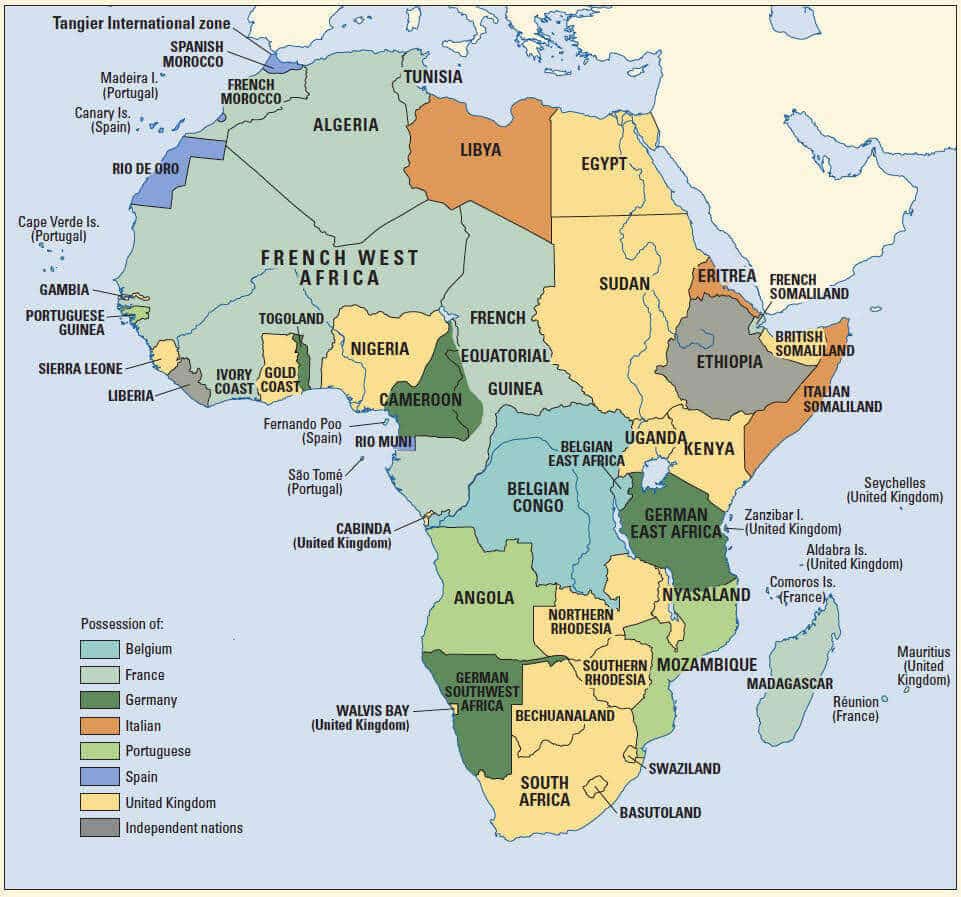
- In 1870, only 10% of Africa was under European control; by 1914, this figure had risen to 90% of the continent, with only Abyssinia (Ethiopia) and Liberia remaining independent.
Before the Scramble: Europeans in Africa up to the 1880s
- The Portuguese were the first post-Middle Ages Europeans to firmly establish settlements, trading posts, permanent fortifications, and ports of call along Africa’s coast, dating from the beginning of the Age of Discovery in the 15th century.
- For roughly two centuries thereafter, there was little interest in — and even less knowledge of — the African interior, leading to Africa being called the “Black/Dark Continent.”
- As late as the mid-19th century, Africa, despite its proximity to Europe, remained one of the least-known parts of the world.
- While its northern shores had been known to Europe since ancient times, the vast interior remained unexplored until well into the 19th century.
- Some European nations held a few coastal stations in the east and west, but these amounted to little more than “dots of civilisation upon the borders of undeveloped barbarism.”
- The reasons for Europe’s limited knowledge of, and interest in, Africa were largely physical:
- The African coastline is largely inhospitable, with the interior forming a plateau shut off by belts of desert or swampy, malarial regions along the coast.
- Even the rivers did not form convenient highways into the interior, being difficult to navigate near their mouths due to falls, rapids, and dense tropical forest.
- Additionally, since the inhabitants of Africa were seen by Europeans as having few wants, trade with them was not considered especially profitable, and the few existing coastal settlements sufficed for such trade as existed.
- Consequently, there was little noteworthy expansion of European influence in Africa until the last two decades of the 19th century.
- European exploration of the African interior began in earnest at the end of the 18th century; by 1835, Europeans had mapped most of north-western Africa.
- In the mid-19th century, the most famous European explorers were David Livingstone and H. M. Stanley, both of whom mapped vast areas of Southern and Central Africa.
- By the end of the 19th century, Europeans had charted the Nile from its source and traced the courses of the Niger, Congo, and Zambezi rivers, coming to realise the vast resources Africa held.
- Even as late as the 1870s, European states still controlled only about 10% of the African continent, with territories confined near the coast and a short distance inland along major rivers such as the Niger and Congo.
- During the first half of the 19th century, key European settlements included the French Empire in Algeria in the north, Angola and Mozambique held by Portugal, the Cape Colony held by the English in the extreme south, and the Boer territories to its north.
What Caused the Scramble to Happen?
- Most causal factors were rooted in events occurring in Europe rather than in Africa itself.
Africa and Global Markets
- Sub-Saharan Africa — one of the last regions of the world largely untouched by “informal imperialism” — was attractive to Europe’s ruling elites for economic reasons, particularly during a period when Britain’s balance of trade showed a growing deficit amid shrinking, increasingly protectionist continental markets caused by the Long Depression (1873–96).
- Africa offered Britain, Germany, France, and other countries an open market capable of generating a trade surplus — one that bought more from the colonial power than it sold overall.
- The companies involved in tropical African commerce were relatively small, apart from Rhodes’s Mining Company.
- Cecil Rhodes carved out Rhodesia for himself, while Leopold II of Belgium later exploited the Congo Free State with considerable brutality.
- These episodes complicate the pro-imperialist argument that sheltered overseas markets in Africa would solve the problems of low prices and overproduction caused by shrinking continental markets — a shrinkage that was itself a key factor of the wider “New Imperialism” period.
Capitalism
- The end of the European slave trade left a need for new commerce between Europe and Africa, and capitalists sought to exploit the continent so that “legitimate” trade could develop in its place.
- Explorers located vast reserves of raw materials on which European industry had grown dependent, plotting trade routes, navigating rivers, and identifying population centres that could serve as markets for European manufactured goods.
- This was a period of plantations and cash crops, dedicating colonial workforces to producing rubber, coffee, sugar, palm oil, and timber for Europe — made all the more attractive if a colony could secure a monopoly over such production.
- As Britain developed into the world’s first post-industrial nation, financial services became an increasingly important sector of its economy, with invisible financial exports — especially capital investment outside Europe, in markets such as Africa’s white settler colonies, the Middle East, South Asia, and South-east Asia — benefiting Britain considerably.
- Surplus capital was often more profitably invested overseas, where cheap materials, limited competition, and abundant raw materials allowed for greater returns.
- Britain additionally wanted the southern and eastern coasts of Africa to serve as stopover ports en route to Asia and its empire in India.
- Some scholars dispute the link drawn between capitalism and imperialism, arguing that colonialism was used mostly to promote state-led development rather than “corporate” development, given the historically closer link between colonialism/imperialism and state-driven approaches to development.
End of the Slave Trade
- The abolition of the slave trade by Britain in 1807, and its subsequent crusade for universal abolition, stimulated increased interest in Africa.
- Britain had achieved some success in halting the slave trade around Africa’s shores, but inland, the picture remained different — Muslim traders from north of the Sahara and along the East Coast continued to trade, and many local chiefs were reluctant to abandon the use of slaves.
- Reports of slaving expeditions and markets, brought back to Europe by explorers such as Livingstone, spurred British and European abolitionists to call for further action.
Exploration
- Around the mid-19th century, a remarkable series of scientific explorations opened up the heart of Africa and revealed to the world its resources and potential.
- Barely a year passed during the 19th century without a European expedition into Africa. This boom was triggered largely by the creation of the African Association by wealthy Englishmen in 1788, who sought explorers to “find” the fabled city of Timbuktu and trace the course of the Niger River.
- As the century progressed, explorers’ goals shifted from pure curiosity to systematically recording markets, goods, and resources for the wealthy philanthropists financing their expeditions.
- Men of various nationalities took part, though the British contributed most to the continent’s exploration.
- David Livingstone, the greatest name among British explorers, undertook a trans-continental journey through the upper Zambesi valley that first revealed to the world the main features of Central Africa.
- His work was continued by H. M. Stanley, who, through a series of famous journeys, discovered the course of the Congo River and explored the continent’s great central lakes; his book Through the Dark Continent aroused intense European interest in Africa’s commercial potential.
- French and German explorers were similarly active in the north and north-west, investigating the hinterlands and the great Sahara Desert; by 1880, the map of Africa was largely, if not completely, filled in.
- Henry Morton Stanley — a naturalised American born in Wales — is the explorer most closely connected to the start of the Scramble for Africa.
- Having crossed the continent and located the “missing” Livingstone, Stanley is best known for his explorations on behalf of King Leopold II of Belgium, who hired him to obtain treaties with local chieftains along the Congo River with an eye to creating his own colony (Belgium itself lacked the financial capacity to fund a colony at the time).
- Stanley’s work triggered a rush of European explorers, including Carl Peters; missionaries were similarly spurred to carry the campaign against the slave trade into the continent’s darkest recesses to “reclaim” Africans for Christianity.
Monroe Doctrine
- With European nations debarred from South America by the Monroe Doctrine, they turned their attention to Africa — no longer chiefly for human commodities, but for the tropical products for which the Industrial Revolution had created great demand.
Steam Engines and Iron-Hulled Boats
- In 1840, the gunboat Nemesis arrived at Macao in south China, transforming international relations between Europe and the rest of the world.
- With a shallow draft, an iron hull, and two powerful steam engines, the Nemesis could navigate the non-tidal sections of rivers, allowing access inland, and was heavily armed.
- Livingstone used a steamer to travel up the Zambezi in 1858, transporting its parts overland to Lake Nyasa; steamers similarly allowed Stanley and Brazza to explore the Congo.
Medical Advances
- Africa — particularly its western regions — was known as the “White Man’s Grave” due to the dangers of malaria and yellow fever; during the 18th century, only one in ten Europeans sent to the continent by the Royal African Company survived.
- In 1817, French scientists Pelletier and Caventou extracted quinine from the bark of the South American cinchona tree, providing an effective treatment for malaria and allowing Europeans to survive its ravages in Africa (yellow fever, unfortunately, remained a problem).
- Napoleon’s conquest of Egypt and the subsequent expulsion of the French by the British underscored the strategic importance of the country and drew renewed European attention to it.
Politics and Strategic Rivalries
- After the creation of a unified Germany and Italy in 1871, there was no room left for further expansion within Europe.
- Rivalry between Britain, France, Germany, and the other European powers accounts for a large part of the colonisation drive.
- France, having lost two provinces to Germany in 1870, looked to Africa to gain territory in compensation.
- Britain looked toward Egypt and control of the Suez Canal, while also pursuing territory in gold-rich southern Africa.
- Germany, under the expert management of Chancellor Bismarck, had come late to overseas colonies but was now fully convinced of their worth.
- The vast interior between gold- and diamond-rich Southern Africa and Egypt held strategic value in securing overseas trade routes.
- Britain was under political pressure to secure lucrative markets against encroaching rivals in China and its eastern colonies — notably India, Malaya, Australia, and New Zealand — making the Suez Canal, the key waterway between East and West, crucial to secure.
- There was also concern over acquiring military and naval bases for strategic purposes, as growing navies and new steam-powered ships required coaling stations and ports for maintenance, along with defence bases to protect sea routes and communication lines.
- Colonies were also seen as assets in “balance of power” negotiations, useful as bargaining chips in international disputes, and colonies with large native populations served as a source of military power.
- In the age of nationalism, acquiring an empire had become a status symbol nations felt pressured to pursue.
Military Innovation
- At the beginning of the 19th century, Europe held only a marginal weapons advantage over Africa, as traders had long supplied local chiefs with firearms.
- Two innovations, however, gave Europe a decisive edge: in the late 1860s, percussion caps began to be incorporated into cartridges — combining what had previously been a separate bullet, powder, and wadding into a single, easily transported and weatherproof unit.
- The second innovation was the breach-loading rifle. Older muskets, held by most Africans, were front-loaders — slow to use and requiring the user to stand while loading — whereas breach-loading guns had two to four times the rate of fire and could be loaded even from a prone position.
- Europeans restricted the sale of this new weaponry to Africa, thereby maintaining their military superiority.
Colonial Exhibitions
- Colonial empires gradually became popular across Europe, with public opinion increasingly convinced of the need for a colonial empire.
- Colonial exhibitions played an instrumental role in shifting popular mentalities, driven by colonial propaganda and supported by the colonial lobby and various scientists.
- The conquest of new territories was inevitably followed by public displays of indigenous people for scientific and leisure purposes.
- Karl Hagenbeck, a German merchant in wild animals and later a leading European zoo entrepreneur, exhibited Samoan and Sami people as “purely natural” populations in 1874.
- In 1876, he brought wild beasts and Nubian people from the newly conquered Egyptian Sudan; presented in Paris, London, and Berlin, these displays proved highly successful.
- Such “human zoos” could be found in many European and American cities; unaccustomed to the climatic conditions, some of the indigenous people on display died.
Colonial Lobby, Propaganda, and Jingoism
- In its earlier stages, imperialism was largely the act of individual explorers and adventurous merchants; colonial powers were far from unanimous in approving the expensive overseas adventures being carried out.
- Important political leaders such as Gladstone (British Liberal politician) initially opposed colonisation. Although personally opposed to imperialism, the social tensions caused by the Long Depression pushed him toward jingoism — patriotism expressed through aggressive foreign policy.
- In France, Radical politician Georges Clemenceau likewise adamantly opposed colonisation, viewing it as a diversion from the “blue line of the Vosges” mountains — that is, from revanchism, the desire to reclaim the Alsace-Lorraine region annexed by Germany under the 1871 Treaty of Frankfurt.
- The expansion of national sovereignty over overseas territories contradicted the unity of the nation-state, which was premised on providing citizenship to its population.
- This produced a tension between the universalist commitment to respecting the human rights of colonised peoples (as potential “citizens” of the nation-state) and the imperialist drive to cynically exploit populations deemed inferior.
- Some within the colonising countries opposed what they viewed as the unnecessary evils of colonial administration left to itself, as depicted in Joseph Conrad’s Heart of Darkness (1899) — a contemporary of Kipling’s The White Man’s Burden.
- Colonial lobbies emerged to legitimise the Scramble for Africa and other costly overseas ventures; in Germany, France, and Britain, the middle class often sought strong overseas policies to ensure market growth.
- No sooner had the exploration of Africa neared completion than a scramble for its partition among the European powers began.
- Two features of this partition deserve particular notice: first, it was accomplished without a European war — keen rivalries provoked international crises of varying severity, but these were consistently averted through diplomacy.
- Second, the partition was not a slow, gradual process as on other continents, but an extraordinarily rapid one, beginning in earnest in the 1880s and nearly complete before the outbreak of the Great War.
- This rapidity was largely due to the addition of Italy and Germany, in the last quarter of the 19th century, to the ranks of the Great Powers — their national prestige demanded “a place in the sun,” and Africa was the only continent left for their imperialistic ambitions, since Asia was largely occupied and America was closed to European exploitation by the Monroe Doctrine.
- The appearance of these newcomers stimulated the activity of established players like France and Britain, intensifying international rivalry and accelerating the process of partition.
The Course of Partition
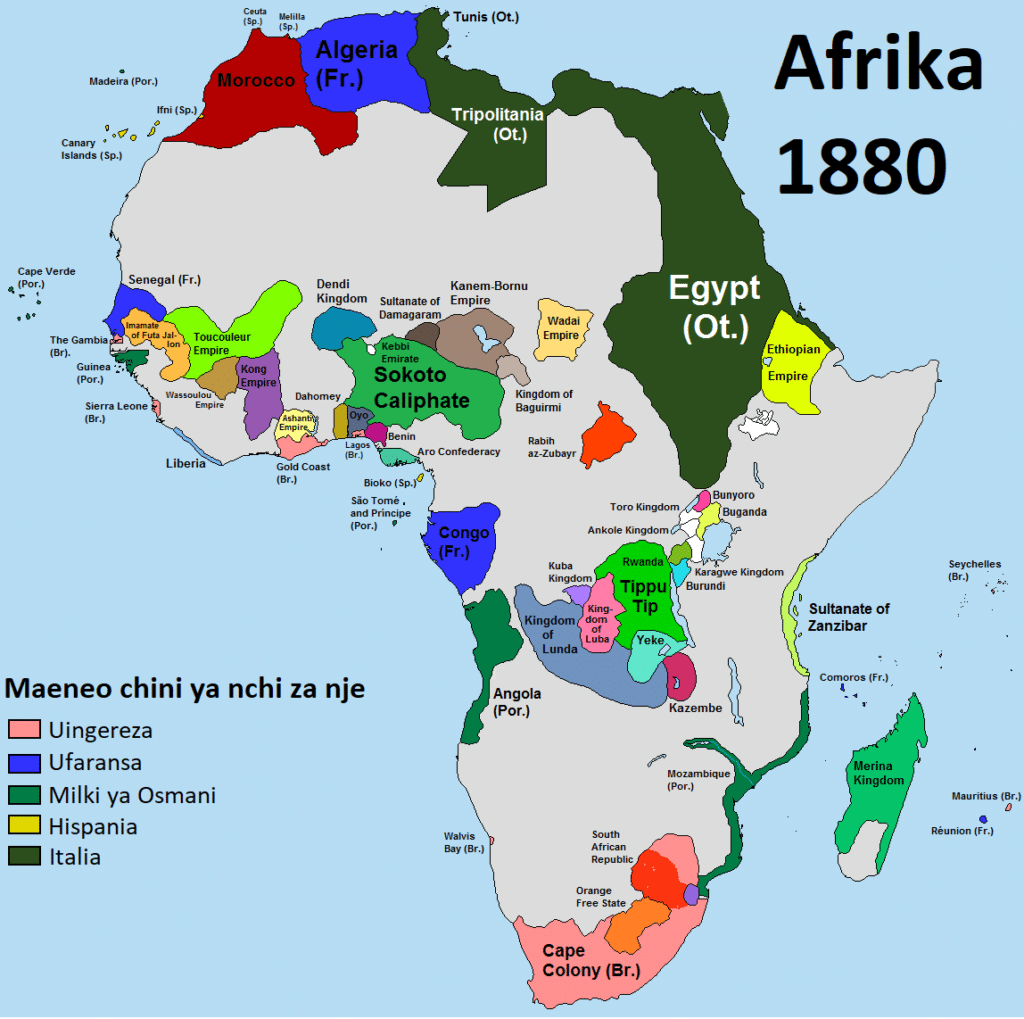
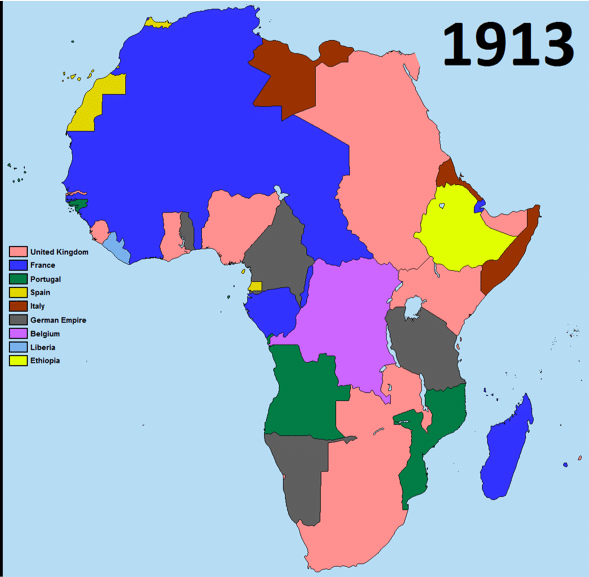
Colonization of the Congo
- It was the Belgian occupation of the Congo valley that immediately triggered the grab for Africa.
- David Livingstone’s explorations, carried forward by Stanley, excited European imaginations, but Stanley’s grandiose colonisation plans initially found little support given the scale of action required — except from King Leopold II of Belgium.
- From 1869 to 1874, Stanley was secretly sent by Leopold II to the Congo region, where he made treaties with several African chiefs along the Congo River; by 1882, he had secured sufficient territory to form the Congo Free State.
- Leopold II personally owned the colony as the Congo Free State from 1885, using it as a source of ivory and rubber.
- In 1876, Leopold II summoned an international conference in Brussels to consider opening up the African interior to trade and industry.
- Out of this conference arose an “International Association for the Exploration and Civilisation of Central Africa,” with the Belgian King as its president, intended to have national committees collecting funds for the common cause.
- In practice, however, these branch committees soon abandoned any serious pretence of international action, becoming national organisations pursuing purely selfish ends — namely, the acquisition of territory for their own states.
- While Stanley explored the Congo on Leopold II’s behalf, the Franco-Italian marine officer Brazza travelled into the western Congo basin and raised the French flag over the newly founded Brazzaville in 1881, thereby occupying what is today the Republic of the Congo.
- Portugal, which also claimed the area based on old treaties with the native Kongo Empire, signed a treaty with Britain on 26 February 1884 to block the Congo Society’s access to the Atlantic.
- By 1890, the Congo Free State had consolidated control over territory between Leopoldville and Stanleyville and was looking to expand southward.
- At the same time, the British South Africa Company of Cecil Rhodes was expanding north from the Limpopo River, starting a colony in Mashonaland.
- To the west, where their respective expansions would meet, lay Katanga, site of the Yeke Kingdom of Msiri, then the most militarily powerful ruler in the area, who traded large quantities of copper, ivory, and slaves — with rumours of gold reaching European ears.
- The scramble for Katanga became a prime example of the era’s brutality: Rhodes and Leopold both sent expeditions to the territory. Msiri was shot, and the expedition cut off his head and displayed it on a pole as a “barbaric lesson” to the local people.
- The half-million square kilometres of Katanga came into Leopold’s possession, making his African realm roughly 75 times larger than Belgium itself.
- The Congo Free State imposed a terror regime on the colonised population, including mass killings and forced labour, until Belgium — under pressure from the Congo Reform Association — ended Leopold II’s personal rule and annexed the territory as a colony in 1908, thereafter known as the Belgian Congo.
- Sleeping sickness and smallpox killed nearly half the population in the areas surrounding the lower Congo River.
- A similar situation unfolded in the neighbouring French Congo, where resource extraction was largely run by concession companies whose brutal methods, combined with the spread of disease, resulted in the loss of up to 50% of the indigenous population.
- The French government appointed a commission, headed by de Brazza, in 1905 to investigate rumoured abuses in the colony; however, Brazza died on the return trip, and his “searingly critical” report was neither acted upon nor released to the public.
The Berlin Conference (1884–85)
- The Berlin Conference created the Congo Free State and set the rules for dividing the continent (also known as the Berlin West Africa Conference).
- The Central Association had, in effect, become a Belgian body, working under Stanley’s guidance to create a neutral state in the Congo basin under the protection of the Belgian King.
- This led to disputes with France and Portugal, who put forward rival claims based on prior discovery, prompting Bismarck to convene an international conference in Berlin in 1884.
- The conference, proposed by Portugal in pursuit of its special claim to the Congo estuary, was necessitated by the jealousy and suspicion with which the great European powers viewed one another’s African expansion.
- The conference rejected Portugal’s claim to the Congo River estuary, thereby enabling the founding of the independent Congo Free State.
- It recognised the existence of the Congo Free State under Leopold’s personal sovereignty, but stipulated that trade and shipping within it be open to all nations, with navigation of the rivers free to all (navigation on the Niger and Congo rivers was likewise to remain free to all).
- These stipulations were, however, not observed in practice, and the new state effectively became a Belgian preserve.
- The diplomats maintained a humanitarian façade by condemning the slave trade — resolving to end slavery by African and Islamic powers, prohibiting the sale of alcoholic beverages and firearms in certain regions, and expressing concern for missionary activities.
- An international prohibition of the slave trade throughout the powers’ respective spheres was signed by the European members present.
- Because of this, writer Joseph Conrad sarcastically referred to the conference as “the International Society for the Suppression of Savage Customs” in Heart of Darkness.
- The Berlin Conference also laid down the rules for acquiring territory in Africa, declaring that any power annexing African territory must notify the other powers, and that no annexation could be made of territory not effectively occupied (the Principle of Effective Occupation).
- However, competitors ignored these rules when convenient, and on several occasions war was only narrowly avoided.
- Nonetheless, the conference succeeded in ensuring that the partition of Africa proceeded without war fought directly among European nations.
Congo Free State Becomes a Belgian Colony
- Belgium, one of the smallest countries in Europe, carved out an empire almost ten times its own size, embracing the choicest rubber-producing country in the Congo region.
- Belgian rule in the Congo Free State showcased European imperialism at its worst: the professed work of “civilising” the natives resolved itself into ruthless exploitation.
- A crushing tribute of rubber was imposed on the population, with mutilation among the penalties for non-payment; harrowing tales of these cruelties shocked the conscience of even imperialistic Europe.
- Criticism, both at home and abroad, became so insistent that Leopold was compelled in 1908 to hand over his personal estate to the Belgian Government in exchange for liberal compensation.
- Thus, what had purported to be an international state first became the personal property of the Belgian King, before being converted outright into a Belgian colony subject to the Belgian Parliament.
The Wider Scramble for Africa
- The success with which Leopold II carried out empire-building in the Congo valley aroused the ambitions of other European states, triggering a feverish rush for territory across Africa.
- France led the way by seizing Tunis in 1881; the following year, England began its “occupation” of Egypt.
- Italy, aggrieved by France’s seizure of Tunis (which she had earmarked for herself), secured a foothold on the western shores of the Red Sea, which developed into the future colony of Eritrea.
- Germany, a new aspirant to colonial empire, established herself in south-west Africa.
- Portugal began enlarging her ancient possessions in both the east and west.
- Thus, even before the Berlin Conference met, the scramble for Africa had already begun; after 1884, European activity in exploration and annexation grew more intense than ever.
- France extended her dominion from Algeria in the north to the Guinea Coast in the west, occupying the hinterland with ambitions of a French empire stretching across the Sahara from ocean to ocean.
- The rapid shrinkage of unclaimed African territory roused Great Britain to the danger of exclusion, prompting her to enlarge her possessions in the south and west, pushing steadily northward from the Cape Colony to acquire Rhodesia in pursuit of an empire stretching uninterrupted from the Cape to Cairo.
- Germany was likewise bent on carving out large slices of territory, active in both the east and west of the continent.
- This scramble often led to friction and diplomatic complications, but the powers generally settled their differences through treaties defining boundaries and respective “spheres of influence.”
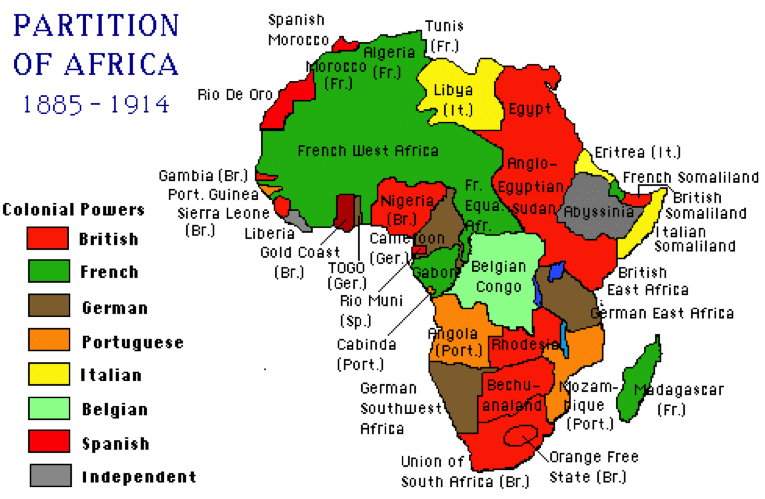
- By 1914, the whole of Africa had been parcelled out among the European powers, with the exception of Abyssinia and Liberia (a colony founded by ex-African-American slaves).
Brief Summary of European Possessions in Africa
France
- France already held Algeria and added Tunis in 1882, which became a French protectorate; that same year, the Transvaal regained its independence.
- France’s occupation of Tunisia convinced Italy to join the German-Austrian Dual Alliance in 1882, thereby forming the Triple Alliance.
- France occupied Guinea; Rio de Oro was claimed by Spain. French West Africa (AOF) was founded in 1895, and French Equatorial Africa in 1910.
- France subsequently turned her attention to Morocco, which by 1912 had become a French protectorate.
- From her northern possessions, France extended her sway over the entire Sahara region, while simultaneously pushing eastward from her ancient foothold at Senegal toward the upper waters of the Niger.
- Unwilling to see Belgium claim all of equatorial Africa, France in 1884 seized a large block of territory opened by explorer De Brazza on the west coast, along the right bank of the Congo — the French Congo — from which she pushed north to Lake Chad, opening an all-French route to the Mediterranean.
- France thus built a vast empire across the north-western shoulder of the continent, making her, by mileage, the greatest African power. Off the east coast, she also acquired the island of Madagascar in 1896, much to Britain’s annoyance.
Portugal
- Portugal also shared in the scramble, expanding her decaying coastal stations south of the Belgian Congo into the large province of Angola, and founding the colony of Mozambique (Portuguese East Africa) on the east coast.
- She attempted to connect her eastern and western possessions with a belt of Portuguese territory stretching across Africa, but British rivalry forced her to abandon the plan.
Italy
- Italy and Germany were newcomers to African colonisation. Italian imperialism in Africa began when Italy seized Eritrea on the Red Sea in 1883, followed by the acquisition of Italian Somaliland on the east coast.
- Italy next attempted to link these possessions through the conquest of Abyssinia (Ethiopia), but suffered a heavy defeat at Adowa in 1896.
First Italo-Ethiopian War and the Battle of Adowa
- The First Italo-Ethiopian War was fought between 1895 and 1896, originating from a disputed treaty that Italy claimed had turned Ethiopia into an Italian protectorate.
- To Italy’s surprise, Ethiopian ruler Menelik II, rather than being opposed by his traditional enemies, found himself supported by them, presenting a more united front than the invading Italian army — which advanced from Italian Eritrea in 1893 — had expected.
- Ethiopia was additionally supported by Russia, which provided military advisers and weapons sales.
- Full-scale war broke out in 1895; Italian defeat followed the Battle of Adwa, where the Ethiopian army inflicted a heavy loss and forced the Italians to retreat into Eritrea.
- As is often noted, “in an age of relentless European expansion, Ethiopia alone had successfully defended its independence.”
- Following this defeat, Italy nonetheless acquired Italian Somaliland (1889–90) and the whole of Eritrea (1899).
- Checked in Ethiopia, Italy turned to Tripoli in the north, seizing it from Turkey in 1912 along with Cyrenaica (modern Libya); these two provinces together formed the Italian colony of Libya.
- In 1919, Enrico Corradini — a supporter of the war who later merged his group into the early fascist party (PNF) — developed the concept of Proletarian Nationalism, intended to legitimise Italy’s imperialism through a blend of socialism and nationalism.
Second Italo-Ethiopian War (1935–36)
- The Second Italo-Ethiopian War (Second Italo-Abyssinian War) was an armed conflict resulting in Ethiopia’s subjection to Italian rule.
- Often viewed as one of the episodes preparing the way for World War II, the war demonstrated the ineffectiveness of the League of Nations when its decisions lacked the support of the Great Powers.
- The war would prove one of the last colonial wars, occupying Ethiopia — the last independent African territory apart from Liberia.
Germany
- Germany was the last European power to enter the field, hardly a colonial power before the New Imperialism period, having remained fragmented until unified under Prussia’s rule following the 1866 Battle of Sadowa and the 1870 Franco-Prussian War.
- A rising industrial power close on Britain’s heels, Germany began its world expansion in the 1880s. After isolating France through the Dual Alliance with Austria-Hungary and the 1882 Triple Alliance with Italy, Chancellor Bismarck proposed the 1884–85 Berlin Conference.
- Though Bismarck was personally averse to colonial enterprises, his hand was forced by a group of eager imperialists within Germany.
- In 1881, lawyer Schleiden published Deutsche Kolonisation, arguing that the “development of national consciousness demanded an independent overseas policy” — linking Pan-Germanism to the young nation’s imperialist drives.
- Within a short span of six years (1884–90), four important sections of Africa were secured for the German Empire.
- The first definite step was taken in South-West Africa, where German missionaries were already active and a Bremen merchant, Lüderitz, purchased a strip of territory and hoisted the German flag; this was followed by the formal annexation of a large area, which in 1884 became German South-West Africa.
- That same year, through treaties with native kings and chiefs along the Guinea Coast, Germany established Togoland and the Cameroons as protectorates; on the eastern coast, she similarly brought an extensive area under her control, forming German East Africa.
- Bismarck was generally opposed to widespread German colonialism, wishing to consolidate the newly unified nation, but was forced to resign at the insistence of the new Emperor Wilhelm II on 18 March 1890.
- Wilhelm II instead adopted an aggressive policy of colonisation and expansion, embodied in Weltpolitik (“world policy”) — the foreign policy adopted in 1890 aimed at transforming Germany into a global power through aggressive diplomacy, overseas colonial acquisition, and the development of a large navy, backed by a real imperialist policy and mercantilist thinking.
- Powerful yet, unlike Britain and France, without colonies, Germany could not sit idle; her expansionism led to the Tirpitz Plan, implemented by Admiral Tirpitz, who championed successive Fleet Acts beginning in 1898, engaging Germany in a naval arms race with Britain.
- By 1914, this policy had given Germany the world’s second-largest naval force, roughly 40% smaller than Britain’s Royal Navy; this aggressive naval policy was backed by the National Liberal Party rather than the conservatives, reflecting imperialism’s support among the rising middle classes.
- Germany became the third-largest colonial power in Africa by 1914, with possessions in South-West Africa, Togoland, the Cameroons, and Tanganyika.
- Following the 1904 Entente cordiale between France and Britain, Germany attempted to isolate France through the First Moroccan Crisis (1905), leading to the 1905 Algeciras Conference and later the Agadir Crisis (1911).
- Together with the 1898 Fashoda Incident between France and Britain, this succession of international crises reveals the bitterness of rivalry among the imperialist nations — a rivalry that ultimately contributed to World War I.
- After World War I, Germany’s colonial possessions were partitioned among Britain (which took a sliver of western Cameroon, Tanzania, western Togo, and Namibia), France (most of Cameroon and eastern Togo), and Belgium (Rwanda and Burundi).
Herero Wars and the Maji-Maji Rebellion
- During 1904–08, Germany’s colonies in German South-West Africa and German East Africa were rocked by revolts against colonial rule.
- In both territories, the threat to German rule was defeated once large-scale reinforcements arrived from Germany — the Herero rebels in German South-West Africa were crushed, while the Maji-Maji rebels in German East Africa, who had resorted to guerrilla warfare, were steadily suppressed as German forces advanced through the countryside.
- German efforts to clear the bush of civilians in German South-West Africa subsequently resulted in a genocide of the local population.
- This genocide was characterised by death through starvation and the poisoning of water wells while the population was trapped in the Namib Desert.
Great Britain
- In the partition of Africa, Britain secured the lion’s share, including many of the continent’s best regions.
- In the north, she controlled Egypt, from where she extended her sway over the Sudan; the acquisition of British East Africa, followed by a protectorate over Uganda, gave her a continuous stretch of territory from the Indian Ocean to the Mediterranean.
- At the southern end of the continent lay four colonies — the Cape of Good Hope, Natal, Transvaal, and the Orange River Colony — united since 1910 in the Union of South Africa. To the north lay the Protectorate of Bechuanaland, and beyond it Rhodesia, reaching the southern boundary of German East Africa.
- Pushing northward from the Cape Colony, Britain came to control an unbroken sweep of territory up to Lake Tanganyika, and but for German East Africa, her empire would have extended continuously from the Cape to Cairo.
- Her other African holdings included Gambia, the Gold Coast, Sierra Leone, and Nigeria on the west, and part of Somaliland on the east coast.
Growth of British Influence in Egypt
- Egypt had long been earmarked by France as her preserve, but she eventually lost the prize to Britain.
- French interest in Egypt persisted after Napoleon’s withdrawal: when Mehemet Ali, the Turkish Sultan’s Viceroy in Egypt, made himself practically independent, France patronised him and secured considerable political influence, along with significant trading and financial interests — later designing and executing the Suez Canal.
- Ferdinand de Lesseps, the French diplomat and developer of the Suez Canal, obtained concessions from Ismail Pasha, the Khedive of Egypt and Sudan, in 1854–56, to build the canal; many workers died over the ten years of construction from malnutrition, fatigue, and disease.
- Egypt’s position on the road to the East, combined with the Suez Canal — which offered the shortest all-sea route to India — made the country of vital strategic importance to Britain.
- Shortly before its completion in 1869, Khedive Isma’il borrowed enormous sums from British and French bankers at high interest rates; by 1875, facing financial difficulties, he was forced to sell his shares in the Suez Canal.
- British minister Disraeli purchased this large block of shares in 1875 on behalf of the British Government, seeking practical control over the management of this strategic waterway.
Joint Control of Egypt by Britain and France
- The Egyptian Government soon became nearly bankrupt, prompting Britain and France to establish a joint condominium over its finances in 1876, to ensure payment of interest on Egyptian debt held by their citizens.
- This dual control lasted about six years. Ismail, resenting this foreign tutelage, was deposed by the Powers through his overlord the Turkish Sultan, with his eldest son Tewfik Pasha installed as Khedive in his place.
- Neither the Egyptian nor Sudanese ruling classes welcomed this foreign intervention; as hundreds of foreigners were appointed to high posts under the dual control, strong anti-foreign sentiment grew, flaring up in 1882 into a nationalist uprising led by Arabi Pasha, who raised the cry of “Egypt for the Egyptians.”
Abolition of Dual Control
- Armed intervention by the Powers became necessary, and France and Britain initially proposed joint action, but France ultimately withdrew, fearful of the international complications that might follow.
- Britain proceeded alone and crushed the insurrection, marking the beginning of British political control over Egypt.
- Though the British Government originally intended to evacuate Egypt once order was restored, the task of restoring order and re-establishing the country’s finances — together with the outbreak of troubles in Sudan — indefinitely postponed withdrawal.
- Britain thus remained in Egypt in an anomalous position, exercising real control under the nominal authority of the Khedive; during World War I, Britain regularised her position by establishing a formal protectorate, made necessary once Turkey — Egypt’s nominal suzerain — joined the Central Powers against Britain and her Allies.
Anglo-French Rivalry over Egypt
- The British occupation of Egypt remained a continuous source of friction between France and Britain, who could not forget the loss of what she considered a great prize, and much acrimonious dispute followed.
- The Egyptian question intensified rivalry between the two countries in other spheres — in the Niger region, and over Siam and Madagascar — and was not healed until the Entente of 1904.
Extension of British Control over Sudan
- Through Egypt, Britain was drawn into the Sudan, which formed Egypt’s hinterland and dependency.
- During the 1870s, European initiatives against the slave trade caused an economic crisis in northern Sudan, precipitating the Mahdist revolt in 1881 under Muhammad Ahmad, which severed Tewfik’s authority in the region; that same year, Tewfik faced rebellion within his own Egyptian army, and the forces sent against him were defeated.
- In 1882, Tewfik appealed for direct British military assistance, commencing Britain’s administration of Egypt (as France withdrew from joint occupation) — which subsequently ruled over Sudan and parts of Chad, Eritrea, and Somalia.
- British intervention initially proved disastrous, with General Gordon killed at Khartoum in 1885 while attempting to withdraw Egyptian garrisons.
- For about a decade, Sudan remained effectively abandoned, until England resolved to recover the territory, achieving victory at Omdurman in 1898, where General Kitchener crushed the power of the Dervishes.
- Sudan was then placed under joint Anglo-Egyptian control, though Britain — rather than Egypt — held effective control.
The Fashoda Incident
- The Fashoda Incident (18 September 1898) marked the climax, at Fashoda in Egyptian Sudan, of a series of territorial disputes in Africa between Britain and France, arising from each country’s desire to link up its disparate African colonial possessions.
- Britain aimed to link Uganda to Egypt via a railway from the Cape of Good Hope to Cairo, while France, pushing eastward from the west coast, hoped to extend her dominion across Central Africa and the Sudan.
- Anglo-French rivalry over Egypt reached a critical stage as France sought control of the Upper Nile valley: having conceived the idea of connecting French Sudan with the Red Sea to span the continent from west to east, France sent a mission under Captain Marchand to explore the upper Nile.
- Equally determined to reconquer Sudan, Britain simultaneously ordered a force under Sir Herbert Kitchener to advance southward from Egypt up the Nile.
- Marchand reached Fashoda on 10 July 1898 and occupied an abandoned Egyptian fort; Kitchener arrived on 18 September.
- Marchand raised the French flag at Fashoda but was promptly warned by the British Government to withdraw, leading to severe tension and the near-outbreak of war — though the dispute was ultimately settled by agreement, with France renouncing her claim to Fashoda.
- The new French foreign minister, Delcassé, mindful of the incident’s international implications and anxious to secure British support against Germany, chose to ignore the outraged public reaction at home.
- On 21 March 1899, the French and British governments agreed that the watershed of the Nile and Congo rivers should mark the frontier between their respective spheres of influence.
- France subsequently consolidated her gains west of the watershed, while Britain’s position in Egypt was confirmed; the resolution of this crisis paved the way for the Anglo-French Entente of 1904.
British and French Imperial Dreams
- The French thrust into the African interior proceeded mainly from the coasts of West Africa (modern Senegal) eastward, through the Sahel along the southern border of the Sahara — a vast desert covering present-day Senegal, Mali, Niger, and Chad.
- France’s ultimate aim was an uninterrupted colonial empire stretching from the Niger River to the Nile, controlling all Sahel trade by virtue of her existing command over the trans-Saharan caravan routes.
- Britain, meanwhile, sought to link her possessions in Southern Africa with her territories in East Africa (modern Kenya), and to connect both regions with the Nile basin. Sudan — which then included most of present-day Uganda — was key to fulfilling these ambitions, particularly as Egypt already lay under British control.
- This “red line” through Africa is most closely associated with Cecil Rhodes, who advocated a “Cape to Cairo” empire linking the Suez Canal to the mineral-rich south by rail — an ambition hampered by German occupation of Tanganyika until the end of the First World War, though Rhodes lobbied for it successfully.
- If one draws a line from Cape Town to Cairo (Rhodes’s dream) and another from Dakar to the Horn of Africa (France’s ambition), the two lines intersect near Fashoda in eastern Sudan, explaining the location’s strategic importance.
- In short, Britain sought to extend her East African empire contiguously from Cairo to the Cape, while France sought to extend her holdings from Dakar to the Sudan, spanning the continent from the Atlantic to the Red Sea.
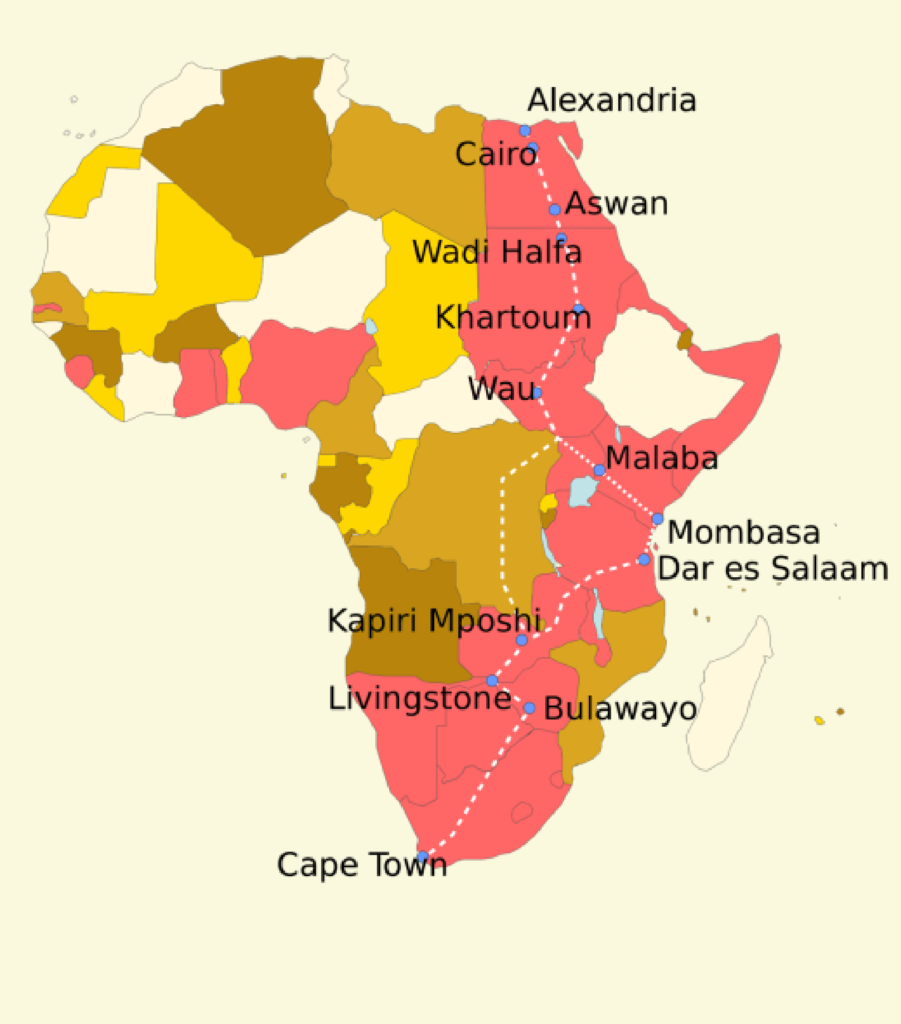
Britain’s Administration of Egypt and South Africa
- The British were primarily interested in maintaining secure communication lines to India, which drove their initial interest in Egypt and South Africa.
- Once these two areas were secure, colonialists such as Cecil Rhodes sought to establish a Cape–Cairo railway and exploit mineral and agricultural resources; Britain’s administration of Egypt and the Cape Colony reflected a broader preoccupation with securing the source of the Nile River, viewed as a strategic and commercial advantage.
- Egypt was overrun by British forces in 1882 (though not formally declared a protectorate until 1914, and never an actual colony); Sudan, Nigeria, Kenya, and Uganda were subjugated in the 1890s and early 20th century, while in the south, the Cape Colony (first acquired in 1795) provided a base for subjugating neighbouring African states and the Dutch Afrikaner settlers who had left the Cape to escape British rule and founded their own republics.
- In 1877, Shepstone annexed the South African Republic (Transvaal) — independent from 1857 to 1877 — for the British Empire; in 1879, following the Anglo-Zulu War, Britain consolidated control over most South African territories.
- The Boers protested and revolted in December 1880, leading to the First Boer War (1880–81); British Prime Minister Gladstone signed a peace treaty on 23 March 1881, restoring self-government to the Boers in the Transvaal.
- The Second Boer War (1899–1902), fought over control of the gold and diamond industries, saw the independent Boer republics of the Orange Free State and the South African Republic (Transvaal) defeated this time and absorbed into the British Empire.
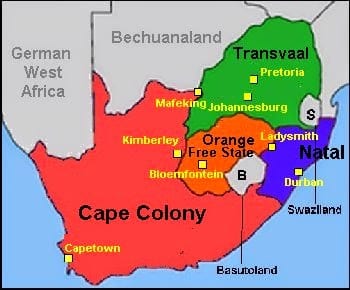
The First Moroccan Crisis
- Although the 1884–85 Berlin Conference had set the rules for the Scramble for Africa, it had not weakened rival imperialisms.
- The 1898 Fashoda Incident, which had brought France and Britain to the brink of war, ultimately led to the Entente cordiale of 1904, which countered the influence of the Triple Alliance powers.
- As a result, the new German Empire decided to test the solidity of this influence, using the contested territory of Morocco as a battlefield.
- In 1904, France had concluded a secret treaty with Spain partitioning Morocco, and had agreed not to oppose Britain’s moves in Egypt in exchange for a free hand in Morocco — France’s influence there being reaffirmed by both Britain and Spain that year.
- Germany, however, insisted on an open-door policy in the region; in a dramatic show of imperial power, Kaiser Wilhelm II visited Tangier and, from his yacht on 31 March 1905, declared for Morocco’s independence and integrity, directly challenging French influence.
- The Kaiser’s speech bolstered French nationalism, and with British support, French foreign minister Delcassé took a defiant line.
- The crisis peaked in mid-June 1905, when Delcassé was forced out of the ministry by the more conciliatory premier Rouvier.
- By July 1905, Germany found herself increasingly isolated, and France agreed to a conference to resolve the crisis; U.S. President Theodore Roosevelt was prevailed upon by the German Emperor to help bring about the 1906 conference at Algeciras.
The Algeciras Conference
- The 1906 Algeciras Conference was convened to settle the dispute. Of the thirteen nations present, Germany’s representatives found their only supporter in Austria-Hungary, while France had firm backing from Britain, Russia, Italy, Spain, and the United States.
- Germany eventually accepted a face-saving agreement, signed on 31 May 1906: France agreed to yield control of the Moroccan police but otherwise retained effective control of Moroccan political and financial affairs.
- Although the conference temporarily resolved the First Moroccan Crisis, it only worsened tensions between the Triple Alliance and Triple Entente — tensions that would ultimately contribute to the First World War.
- The crisis also demonstrated the strength of the Entente Cordiale, as Britain had firmly defended France throughout.
- The real significance of the Algeciras Conference thus lies in the substantial diplomatic support given to France by Britain and the United States — foreshadowing their roles in World War I, to which the Moroccan Crisis proved a prelude.
The Second Moroccan Crisis
- Five years later, the Second Moroccan Crisis (Agadir Crisis) was sparked by the deployment of the German gunboat Panther to the port of Agadir on 1 July 1911.
- Germany had begun attempting to surpass Britain’s naval supremacy — the British navy maintained a policy of remaining larger than the next two naval fleets in the world combined.
- When the British learned of the Panther’s arrival in Morocco, they mistakenly believed Germany intended to turn Agadir into an Atlantic naval base.
- The German move was in fact aimed at securing compensation for accepting effective French control of Morocco, a position upheld since the 1906 Algeciras Conference.
- This “Agadir Incident” sparked a flurry of war talk over the summer and fall — Britain even made preparations for eventual war — though international negotiations continued.
- Amid the crisis, Germany was struck by financial turmoil and a stock market plunge, forcing the Kaiser to back down.
- In November 1911, a convention was signed under which Germany accepted France’s position in Morocco in exchange for territory in the French Equatorial African colony of Middle Congo (now the Republic of the Congo).
- France and Spain subsequently established a full protectorate over Morocco on 30 March 1912, ending what remained of the country’s formal independence.
- British backing for France during both Moroccan crises reinforced the Entente between the two nations and deepened Anglo-German estrangement — divisions that would ultimately culminate in World War I.
Dervish Resistance
- Following the Berlin Conference, at the end of the 19th century, the British, Italians, and Ethiopians sought to claim lands belonging to the Somalis.
- The Dervish State was established by Abdullah Hassan, a Somali religious leader who gathered Muslim soldiers into a loyal army known as the Dervishes, enabling him to carve out a powerful state through conquest of lands also sought by the Ethiopians and European powers.
- The Dervish army successfully repulsed the British Empire four times, forcing it to retreat to the coastal region; due to these successful expeditions, the Dervish State was recognised as an ally by the Ottoman and German empires.
- After a quarter-century of holding the British at bay, the Dervishes were finally defeated in 1920, as a direct consequence of Britain’s use of aircraft.
Independent States
- Liberia, founded by the American Colonization Society of the United States in 1821, declared independence in 1847.
- The Ethiopian Empire (Abyssinia) had its borders redrawn with the establishment of Italian Eritrea; Ethiopia was occupied by Italy in 1936 during the Abyssinia Crisis.
Colonialism Leading to World War I
- During the New Imperialism period, by the end of the 19th century, Europe added almost one-fifth of the globe’s land area to its overseas colonial possessions.
- Between 1885 and 1914, of Africa’s population:
- Britain took nearly 30% under its control;
- France, 15%;
- Portugal, 11%;
- Germany, 9%;
- Belgium, 7%; and
- Italy, 1%.
- In terms of surface area occupied, the French were the marginal victors, though much of their territory consisted of the sparsely populated Sahara.
- Political imperialism followed close on the heels of economic expansion, with “colonial lobbies” bolstering chauvinism and jingoism at each crisis to legitimise the colonial enterprise.
- The resulting tensions between the imperial powers produced a succession of crises, which finally exploded in August 1914, when prior rivalries and alliances created a domino situation that drew the major European nations into the First World War.