

Dr Raju Narayana Swamy — India’s Anti-corruption Crusader IAS Officer
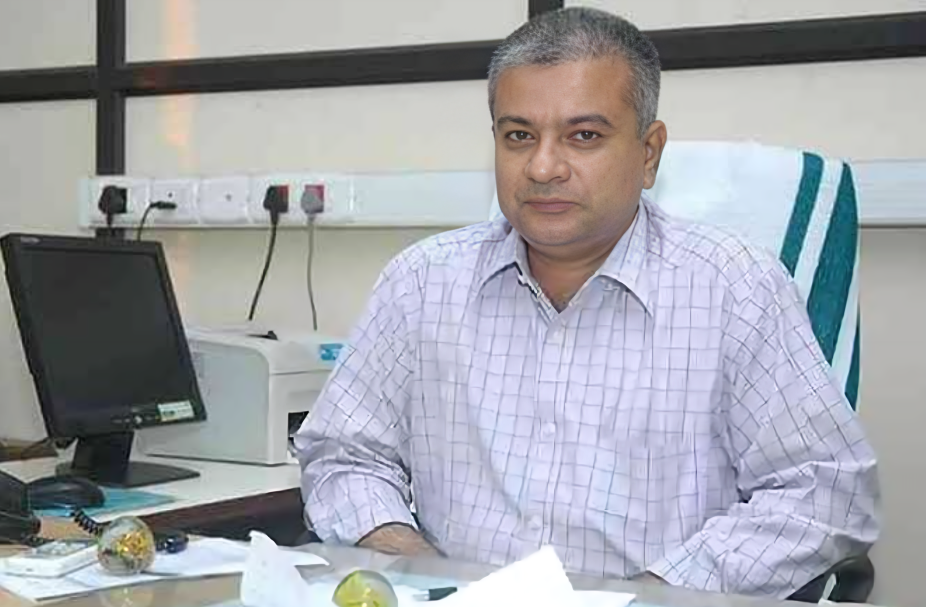
Some civil servants are remembered for the posts they held. Dr Raju Narayana Swamy is remembered for the posts he lost — more than thirty transfers in a career spanning over three decades, almost every one of them following a file he refused to sign, an encroachment he refused to regularise, or a report he refused to soften. Kerala calls him its “anti-corruption crusader.” Thrissur, more affectionately, calls him the Second Shakthan Thampuran.
For UPSC aspirants, his life is not merely an inspiring story. It is a working case study in administrative ethics, in the limits and the power of the District Collector’s office, and in what it actually costs to hold the line.
Quick Snapshot
| Particular | Detail |
|---|---|
| Full name | Dr Raju Narayana Swamy |
| Born | 24 May 1968, Kerala (schooling at Changanassery, Kottayam district) |
| Service & batch | IAS, 1991 batch, Kerala cadre |
| UPSC rank | All India Rank 1, Civil Services Examination 1991 |
| Academic base | B.Tech (Computer Science), IIT Madras — topped his batch |
| Doctorates | Ph.D. (Amrita Vishwa Vidyapeetham, 2011); Ph.D. in Law (Gujarat National Law University, 2022) |
| Best known as | District Collector, Thrissur (1998–99); District Collector, Idukki |
| Popular epithets | “Anti-corruption crusader”, “Second Shakthan Thampuran”, “Satyendra Dubey of the South” |
| Transfers | 30+ across his career |
| Writing | Author of more than 30 books and 300+ research papers |
Who is Dr Raju Narayana Swamy?
Dr Raju Narayana Swamy is a 1991-batch IAS officer of the Kerala cadre who topped the Civil Services Examination that year, and who has since become one of the most recognisable faces of administrative integrity in India. He has served as District Collector of five Kerala districts, as Director of Fisheries and of Collegiate Education, as Managing Director of the Kerala State Marketing Federation, as Chairman of the Coconut Development Board, and as Principal Secretary to the Government of Kerala across departments including Agriculture and Higher Education.
He is also, unusually for a serving administrator, a prolific scholar and author — a man who reads statutes for pleasure and writes popular science for children.
Early life and a record of firsts
Born on 24 May 1968 into a family where both parents were college teachers, Swamy’s academic record reads like an unbroken sequence of first ranks. He stood first in Kerala in the SSLC examination of 1983 at Sacred Heart High School, Changanacherry, and repeated the feat in his pre-degree examination at St Berchmans College, Changanassery.
He then joined IIT Madras for B.Tech in Computer Science, where he graduated at the top of his class with a CGPA of 9.41 — the same campus and roughly the same era that produced Zoho’s founder Sridhar Vembu. His undergraduate research earned international notice, including recognition at a mathematical gathering in Hamburg in 1990.
The turning point came when he declined a fully-funded offer from MIT. A computer science topper from IIT Madras in 1989 could have written his own cheque in Silicon Valley. He chose the Union Public Service Commission instead.
UPSC 1991: Rank 1, and then rank 1 again
Swamy secured All India Rank 1 in the Civil Services Examination 1991. He was allotted the Indian Administrative Service and his home state of Kerala. He then went on to top his batch at LBSNAA, Mussoorie, in 1993 as well — finishing first in the examination and first in the training academy, a rare double.
What followed was a career that would test whether topping the system also meant being able to survive it.
Thrissur, 1998–99: The Tenure That Made Him “The Second Shakthan Thampuran”
Dr Raju Narayana Swamy is widely celebrated as one of the most distinguished and visionary administrators to have served in Kerala, and nowhere is that reputation more concrete than in Thrissur, where he served as District Collector and District Magistrate between 1998 and 1999.
During that tenure he initiated and oversaw several key urban development projects that not only redefined the infrastructure of Thrissur but also earned him a permanent place in the affections of its residents. His commitment to public welfare, combined with his legal acumen and his ability to navigate complex bureaucratic obstacles, played a crucial role in transforming the city. Among his many contributions, the development of Pattalam Road stands out as the defining achievement of Thrissur’s modern urban evolution.
Pattalam Road: a project stalled since 1974
Pattalam Road is a crucial corridor linking Thrissur Town to Shakthan Nagar. The land for it had been acquired as far back as 1974 — and then nothing happened. For close to a quarter of a century, legal complications and steadily hardening encroachments kept the project frozen on paper.
Swamy’s approach was characteristic. Rather than treating the deadlock as a law-and-order problem, he treated it as a legal problem with an administrative solution. Working through the land records, the acquisition file and the encroachment claims, he established exactly where the state’s title stood, then used that clarity to negotiate. He brought the councillors, the police, the revenue machinery and the affected parties to the same table and ensured that every step of the process could withstand scrutiny.
The 48-hour demolition
The boldest and most memorable element of the operation was the removal of the market that had grown along Pattalam Road — largely a hub for the overhaul of old vehicles and the sale of spare parts, and by then the single largest physical obstacle to widening the corridor.
On a Saturday morning, with the backing of local councillors, the police and district officials, Swamy launched a full-scale demolition drive. It was met initially with resistance and open disbelief that a Collector would actually follow through. The task was completed within 48 hours.
The detail that matters most, however, is what did not happen afterwards: not a single market owner filed a legal objection. In a state where road-widening projects routinely disappear into years of injunctions and writ petitions, that silence was the strongest possible testimony to the meticulous planning, the legal transparency and the basic fairness with which the operation had been carried out.
The urban renewal that followed
The success of Pattalam Road set a precedent, and Swamy extended the model to other congested arteries of the town:
- Inner Ring Road
- Ragom Theatre Road
- Chemputti Lane
- Post Office Road
- Padinjarekotta
- Sankaraiya Road Junction
Each of these interventions contributed to a substantial overhaul of Thrissur’s infrastructure, improving accessibility, easing congestion, lifting the town’s appearance and strengthening its commercial viability. Together they raised the standard of living for residents and enhanced Thrissur’s potential as a genuine urban centre rather than a temple town choked by its own growth.
He also used the Collector’s authority protectively rather than only assertively. In one well-documented instance he blocked the filling of banned paddy land sought by a real-estate interest, after verifying complaints from dozens of poor families in the neighbourhood who would have faced water-logging as a direct result.
Why the “Second Shakthan Thampuran”
The epithet is not casual. Sakthan Thampuran (Rama Varma IX, 1751–1805), the Maharaja of Cochin, is the ruler who moved his capital to Thrissur, cleared the teak forest around the Vadakkunnathan Temple to create the Thekkinkadu Maidan, laid out the circular road now known as Swaraj Round, and founded the Thrissur Pooram. He is, in the popular imagination, the man who planned Thrissur.
To call a serving Collector the “Second Shakthan Thampuran” is to say that for the first time in two centuries, someone had again redrawn the town’s map — and made it stick.
The Anti-Corruption Record Beyond Thrissur
Thrissur showed what Swamy could build. His later postings showed what he was willing to lose.
Idukki: the report that cost a minister his ministry
As District Collector of Idukki, Swamy investigated large-scale encroachments in and around Munnar, one of the most contested land frontiers in Kerala. His inquiry examined a 2007 land transaction involving the children of a serving Public Works Minister, T.U. Kuruvilla, and a substantial payment from an NRI businessman.
Swamy submitted the report. The minister resigned. He is widely described as the first bureaucrat in the country to file a report that directly cost a sitting minister his position.
The pattern repeats
The Idukki episode was not an outlier. Across postings, the same sequence recurred:
- As District Collector, he raided the premises of a liquor baron and recovered forfeited assets against unpaid dues running into crores, drawing direct ministerial intervention against him.
- He exposed an approximately ₹8 crore embezzlement in a scheme where earthen bunds meant for poor farmers had been billed to the exchequer but never properly constructed — discovering the fraud through physical inspection, before the monsoon could wash the evidence away.
- As Civil Supplies Commissioner, he initiated an inquiry touching a serving minister and was removed from the post in 2013.
- As Chairman of the Coconut Development Board from August 2018, he surfaced corruption within the organisation that led to suspensions.
Even his personal life bent to the same rule. When his own father-in-law walled off a public road to enclose a plot of land, Swamy — after dialogue failed — had the obstruction removed with police assistance. The marriage did not survive it.
More than thirty transfers
The cumulative price is the statistic he is best known for: over thirty transfers in a career of more than three decades, several of them to posts with no meaningful executive content. At one low point he was asked to go on leave and then parked as State Coordinator of a school quality-improvement programme — an assignment with a designation but no authority.
He did not resign. He did not go to the private sector, though he was repeatedly advised to. He kept reporting to whichever chair he was given, and kept writing.
The Scholar-Administrator
What distinguishes Swamy from other officers with a reputation for integrity is that he answered the punishment of empty postings with study.
An extraordinary academic portfolio
Alongside his IIT Madras B.Tech, he holds:
- Ph.D. from Amrita Vishwa Vidyapeetham (2011)
- Ph.D. in Law from Gujarat National Law University (2022), on intellectual property
- LL.M. and a PG Diploma in IPR from national law universities — both with gold medals
- Post-graduate diplomas in Cyber Law, Environmental Law and Business Law
- Professional Diploma in Public Procurement from the World Bank
- The Homi Bhabha Fellowship for research in cyber law
- Completion of all ten courses offered by the National Institute of Disaster Management, New Delhi — reportedly the first civil servant to do so
- The Leonardo da Vinci Fellowship (December 2021), George Mason University, for research on corruption prevention in intellectual property offices
Books and papers
He has authored more than 30 books, largely in Malayalam, and over 300 research papers. His range runs from the travelogue Santhimantram Muzhangunna Thazvarayil to the popular-science title Nano Muthal Nakshatram Vare, along with children’s literature and socio-political commentary. His recent work on cybercrime policy gaps has drawn national attention.
A record as Election Commission observer
Swamy has served on close to forty Central Observer assignments for the Election Commission of India across seventeen states — believed to be a record — including duty in the Mandla parliamentary constituency in Madhya Pradesh and as roll observer in Uttar Pradesh in 2012. He also served as an international observer in the 2018 Zimbabwe elections.
There is a quiet logic to this. An officer the state government keeps sidelining is precisely the officer a constitutional authority can trust with a contested constituency.
Awards and Honours
| Award | Conferred by / Year |
|---|---|
| Kerala Sahitya Akademi Award (Travelogue) | Kerala Sahitya Akademi, 2003 |
| Satyendra K. Dubey Memorial Award | IIT Kanpur, 2018 — “for maintaining highest professional integrity and honesty” |
| IRDS Award | Institute for Research and Documentation in Social Sciences |
| Bhima Bala Sahitya Award & Kunhunni Award | For children’s literature |
| Homi Bhabha Fellowship | For cyber law research |
| Leonardo da Vinci Fellowship | George Mason University, 2021 |
| Lifetime Achievement Award | SIMATS, for his anti-corruption work |
The Satyendra K. Dubey Memorial Award carries a particular weight. Dubey was the young NHAI engineer murdered in 2003 after exposing corruption in the Golden Quadrilateral project. To be given an award in his name, while still in service, is an acknowledgement of a specific kind of courage — and a reason Swamy is sometimes called the “Satyendra Dubey of the South.”
What UPSC Aspirants Should Take From His Career
His life supplies unusually clean material for GS Paper IV (Ethics, Integrity and Aptitude) and for interview discussion. Four lessons stand out.
Legal competence is an ethical tool
The Pattalam Road demolition worked because it was legally unimpeachable — not because it was forceful. Swamy’s later decision to collect law degrees was not academic vanity; it was the same instinct professionalised. An officer who knows the law can act; an officer who does not can only wait for an opinion.
Procedural fairness prevents litigation better than force does
Zero legal objections from displaced market owners is the single most instructive fact in the Thrissur story. Consultation, documented notice and transparent process are not obstacles to speed. In practice, they are what makes speed survive.
Integrity has a career cost, and it is payable
Thirty-plus transfers, sidelined postings and a broken marriage are not footnotes to the story — they are the story. Aspirants who cite him in an ethics answer should cite the price as well as the principle. This is the concrete form of the conflict between conscience and conformity that GS-IV case studies keep posing in the abstract.
There is always a second sphere of contribution
When the executive sphere was closed to him, he moved into scholarship, election observation and writing. Integrity did not make him idle; it redirected him. That is a usable idea for anyone worried about what an honest officer actually does during a punishment posting.
Frequently Asked Questions
Read Also
If you found this profile useful, explore the wider LotusArise collection of administrators whose careers define what the Indian Administrative Service can be at its best:
Dr Raju Narayana Swamy’s visionary leadership and unwavering commitment left an enduring legacy in Thrissur, and his refusal to trade integrity for comfort has left a larger one across Kerala’s administration. His ability to blend legal expertise with decisive administrative action, his inclusiveness in engaging every stakeholder, and his dedication to public service continue to inspire the generations of officers who follow him.