

1. Consider the following types of vehicles:
I. Full battery electric vehicles
II. Hydrogen fuel cell vehicles
III. Fuel cell-electric hybrid vehicles
How many of the above are considered as alternative powertrain vehicles?
(a) Only one
(b) Only two
(c) All the three
(d) None
Answer: (c) All the three
Alternative Powertrain Vehicles
- A powertrain is the system in a vehicle that generates power and delivers it to the wheels, allowing the vehicle to move. It typically includes the engine, transmission, and drivetrain (including axles, differentials, and drive shafts). Cars and buses have powertrains.
- Alternative powertrain vehicles are those that do not rely solely on conventional internal combustion engines (ICEs) using petrol or diesel. Instead, they use alternative energy sources such as electricity, hydrogen, biofuels, or a combination of power sources. They are more environmentally friendly and often reduce or eliminate tailpipe emissions.
- Full Battery Electric Vehicles (BEVs)
- Full Battery Electric Vehicles operate entirely on electricity stored in high-capacity batteries. These batteries are charged using external power sources like home chargers or public charging stations.
- BEVs have no internal combustion engine, meaning they do not consume petrol or diesel at all. Instead, they use an electric motor to power the wheels. This results in zero tailpipe emissions, making them environmentally friendly.
- Common examples of BEVs include the Tesla Model 3 and Nissan Leaf.
- Since they completely replace the traditional fuel system with electric propulsion, BEVs are considered a key category of alternative powertrain vehicles.
- Hydrogen Fuel Cell Vehicles (FCEVs)
- Hydrogen Fuel Cell Vehicles generate electricity onboard by using a chemical process in a fuel cell, where hydrogen gas reacts with oxygen from the air. This process produces electricity that powers an electric motor, with only water vapor as the byproduct, making these vehicles emission-free at the tailpipe.
- FCEVs do not rely on fossil fuels or internal combustion engines, and unlike BEVs, they do not require external charging; instead, they are refueled with compressed hydrogen gas.
- Vehicles like the Toyota Mirai and Hyundai NEXO are prime examples of FCEVs.
- Because they use hydrogen fuel cells instead of conventional engines, they are classified as alternative powertrain vehicles.
- Fuel Cell Electric Hybrid Vehicles (FCHEVs):
- Fuel Cell Electric Hybrid Vehicles combine the technologies of fuel cell vehicles and battery-electric vehicles. In these vehicles, both a hydrogen fuel cell and a battery system work together to power an electric motor.
- The fuel cell generates electricity from hydrogen, while the battery can store energy from regenerative braking or from the fuel cell. This hybrid system provides flexibility in power delivery, better efficiency, and potentially extended driving range.
- An example of such a vehicle is the Mercedes-Benz GLC F-CELL.
- Since these vehicles do not depend on conventional internal combustion engines and operate primarily on hydrogen and electricity, they significantly reduce environmental impact and are therefore considered a form of alternative powertrain vehicle.
Types of Electric Vehicles
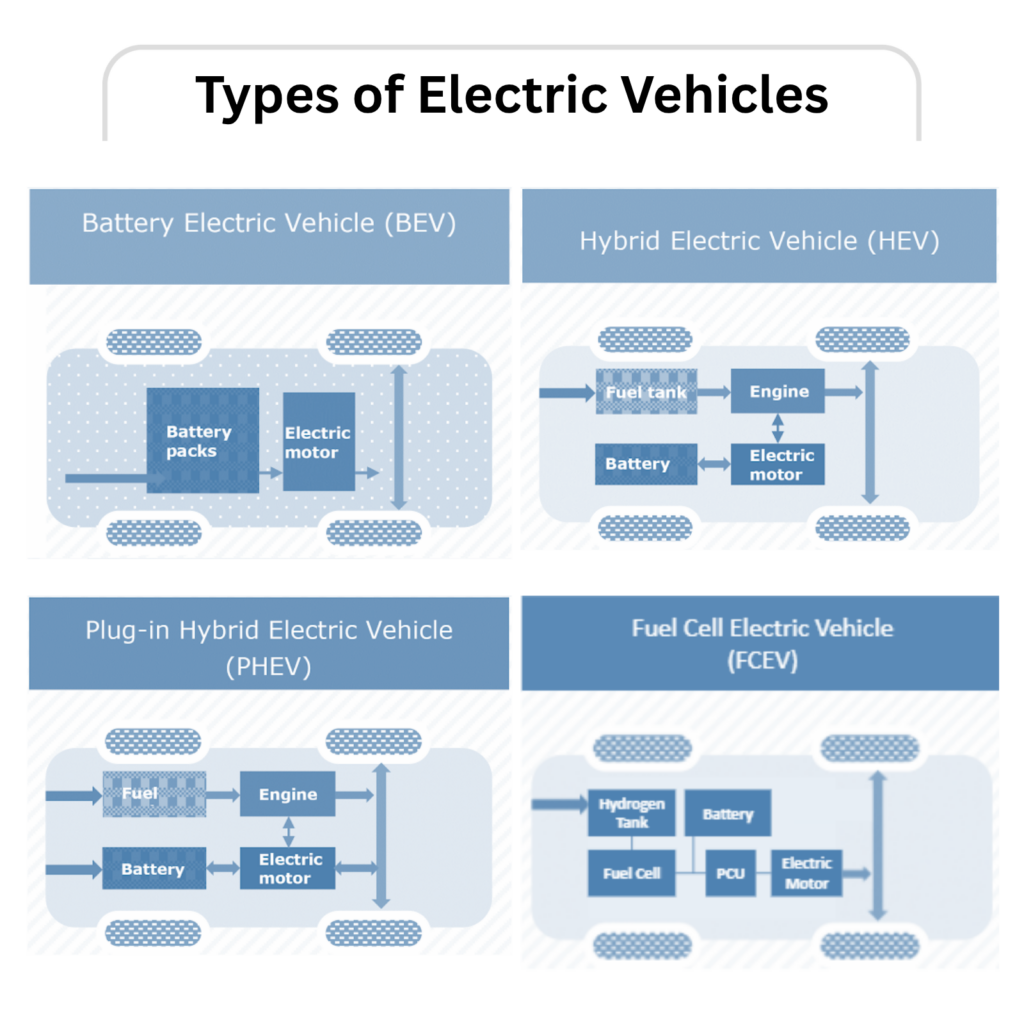
- There are four types of electric vehicles available:
- Battery Electric Vehicle (BEV): Fully powered by electricity. These are more efficient compared to hybrid and plug-in hybrids.
- Hybrid Electric Vehicle:
- Hybrid Electric Vehicle (HEV): The vehicle uses both the internal combustion (usually petrol) engine and the battery-powered motor powertrain. The petrol engine is used both to drive and charge when the battery is empty. These vehicles are not as efficient as fully electric or plug-in hybrid vehicles.
- Plug-in Hybrid Electric Vehicle (PHEV): Uses both an internal combustion engine and a battery charged from an external socket (they have a plug). This means the vehicle’s battery can be charged with electricity rather than the engine. PHEVs are more efficient than HEVs but less efficient than BEVs.
- Fuel Cell Electric Vehicle (FCEV): Electric energy is produced from chemical energy. For example, a hydrogen FCEV.
2. With reference to Unmanned Aerial Vehicles (UAVs), consider the following statements:
I. All types of UAVs can do vertical landing.
II. All types of UAVs can do automated hovering.
III.All types of UAVs can use battery only as a source of power supply.
How many of the statements given above are correct?
(a) Only one
(b) Only two
(c) All the three
(d) None
Answer: (d) None
Unmanned Aerial Vehicles (UAVs)
- Unmanned Aerial Vehicles (UAVs), commonly known as drones, are aircraft without onboard human pilots, operating remotely or autonomously via onboard computers.
- Ranging from small tactical devices to large, high-altitude systems, they provide cost-effective, agile solutions for military surveillance, agriculture, infrastructure inspection, and logistics.
- Key Aspects of UAV Technology:
- Types: UAVs are broadly classified into fixed-wing (for long-range, high-speed, or long-endurance missions) and rotary-wing (or multicopter, for vertical takeoff/landing and hovering).
- Operation: They operate via pre-programmed flight plans or direct remote control.
- Components: Modern UAVs are increasingly integrating AI for enhanced navigation and object detection.
- Military Use: They play a critical role in modern warfare for reconnaissance, surveillance, and target acquisition (e.g., RQ-4 Global Hawk, Heron).
- Civilian/Commercial Use: They are used for agricultural mapping, inspecting critical infrastructure, aerial photography, and last-mile delivery.
- Common Applications:
- Defense & Security: Border patrol, tactical battlefield intelligence.
- Agriculture: Crop monitoring, pesticide spraying.
- Logistics: Delivering goods, medical supplies.
- Disaster Management: Real-time damage assessment.
- Vertical Landing and Take-Off:
- A type of drone known as a fixed-wing drone is an aerial vehicle that utilises rigid wings, a fuselage, tails, a propeller, and a motor to cover long distances at high speeds. Unlike other drones, they cannot hover or land at specific points, requiring a runway or a net for landing. Thus, all drones (for example, fixed-wing drones) cannot do vertical landing.
- Automated Hovering:
- Again, unlike other drones, traditional fixed-wing drones cannot hover or land at specific points, requiring a runway or a net for landing.
- Battery Usage:
- UAVs come in many configurations, including: Multirotors (e.g., quadcopters), Fixed-wing UAVs, Hybrid VTOLs, High-endurance military UAVs (e.g., Predator drones).
- Many of these cannot rely solely on batteries due to power and endurance limitations. The energy density of batteries is lower than that of fuel. For long-range UAVs, especially fixed-wing or military UAVs, batteries cannot provide sufficient power or duration.
3. In the context of electric vehicle batteries, consider the following elements:
I. Cobalt
II. Graphite
III. Lithium
IV. Nickel
How many of the above usually make up battery cathodes?
(a) Only one
(b) Only two
(c) Only three
(d) All the four
Answer: (c) Only three
EV Batteries
- Most electric vehicles use lithium-ion batteries. These batteries have two key electrodes:
- Cathode (positive electrode): This is where lithium ions are stored when the battery is discharged.
- Anode (negative electrode): This is where lithium ions move during charging.
- The cathode material determines the battery’s energy capacity, lifespan, and safety.
- In the context of electric vehicle (EV) batteries, the elements Cobalt, Lithium, and Nickel are typically used to make up the cathode (positive electrode), while Graphite is primarily used for the anode (negative electrode).
- Cobalt, Lithium, and Nickel are essential in forming high-performance cathode chemistries such as NMC (Nickel-Manganese-Cobalt) and NCA (Nickel-Cobalt-Aluminium).
- Cobalt is commonly used in EV battery cathodes, particularly in chemistries like Nickel Manganese Cobalt Oxide (NMC) and Nickel Cobalt Aluminum Oxide (NCA). It enhances energy density and stability.
- Graphite is the most common material used for the anode (the negative electrode) in lithium-ion batteries, not the cathode.
- Lithium is a fundamental element in lithium-ion batteries, and it is present in the cathode material (e.g., lithium cobalt oxide, lithium iron phosphate, lithium nickel manganese cobalt oxide). The movement of lithium ions between the cathode and anode is how the battery stores and releases energy.
- Nickel is a key element in many high-energy density EV battery cathodes, such as NMC and NCA. It contributes to higher energy density and allows for longer driving ranges.
Primary EV Battery Types
- Lithium Iron Phosphate (LFP):
- Pros: High safety, thermal stability, longer cycle life, lower cost.
- Cons: Lower energy density (shorter range).
- Usage: Tesla Model 3/Y (standard range), many budget-friendly EVs.
- Nickel Manganese Cobalt (NMC):
- Pros: High energy density, strong performance, reliable range.
- Cons: More expensive, less thermal stability than LFP.
- Usage: Hyundai IONIQ 5, Kia EV6, VW ID.4, Chevy Bolt.
- Nickel Cobalt Aluminum (NCA):
- Pros: High energy density (long range), high performance.
- Cons: High cost, lower stability.
- Usage: Tesla Model S/X, Lucid Air.
- Other & Emerging Battery Types
- Solid-State Batteries (SSB): Replacing liquid electrolytes with solid, promising much higher energy density, faster charging, and improved safety.
- Lithium Titanate (LTO): Extremely safe with fast-charging capabilities, though they suffer from low energy density.
- Sodium-ion: An emerging, low-cost option utilizing readily available materials, currently in the development/early commercial phase.
- Nickel-Metal Hydride (NiMH): Largely superseded by lithium-ion, used in older hybrid vehicles.
4. Consider the following:
I. Cigarette butts
II. Eyeglass lenses
III. Car tyres
How many of them contain plastic?
(a) Only one
(b) Only two
(c) All the three
(d) None
Answer: (c) All the three
- Cigarette filters are predominantly made from cellulose acetate, a man–made plastic derived from cellulose.
- While it may resemble cotton, it’s actually a form of plastic that is slow to degrade. When discarded, these filters can leach toxic substances like nicotine and heavy metals into the environment, posing risks to wildlife and ecosystems
- Modern eyeglass lenses are commonly crafted from plastic materials such as CR-39 (Columbia Resin #39) and polycarbonate. CR-39 is a lightweight plastic offering good optical clarity, while polycarbonate is known for its impact resistance and UV protection
- Tyres contain both natural rubber and synthetic rubber, the latter being derived from plastic polymers like styrene-butadiene rubber (SBR) and polybutadiene rubber.
- These synthetic materials enhance durability, flexibility, and resistance to wear, making tyres a significant contributor to microplastic pollution over time.
5. Consider the following substances:
I. Ethanol
II. Nitroglycerine
III. Urea
Coal gasification technology can be used in the production of how many of them?
(a) Only one
(b) Only two
(c) All the three
(d) None
Answer: (b) Only two
Coal Gasification
- Coal gasification is a process that converts coal into syngas (synthesis gas), a mixture primarily consisting of carbon monoxide (CO), hydrogen (H₂), carbon dioxide (CO₂), and methane (CH₄).
- This is achieved by reacting coal at high temperatures (typically above 1000°C) with a controlled amount of oxygen and/or steam.
- Syngas is a valuable feedstock and can be further processed to produce various chemicals, fuels, and fertilisers.
- Ethanol can be produced indirectly from coal through the coal gasification route.
- In this method, coal is gasified to produce syngas, which is then converted into ethanol through a catalytic or microbial fermentation process.
- While ethanol is most commonly produced from sugar or starch-based biomass through fermentation (especially in countries like India and Brazil), coal-to-ethanol technology is used in countries with abundant coal resources but limited agricultural biomass.
- Nitroglycerine cannot be produced through coal gasification.
- It is a chemical compound synthesized by the nitration of glycerol (glycerin) using a mixture of concentrated nitric acid and sulfuric acid.
- Glycerol, the key raw material in this process, is typically a byproduct of the soap-making or biodiesel industries and has no direct connection with coal or syngas.
- Since neither glycerol nor the acids used in nitration are derived from coal or its gasification products, coal gasification plays no role in the production of nitroglycerine.
- Urea is one of the most important fertilizers and can indeed be produced using coal gasification technology.
- In this process, coal is gasified to produce syngas, which is further used to synthesise ammonia via the Haber-Bosch process.
- The ammonia thus obtained is then reacted with carbon dioxide to produce urea.
- This method offers an alternative to conventional natural gas-based urea production and has been adopted in coal-rich countries.
6. What is the common characteristic of the chemical substances generally known as CL-20, HMX and LLM-105, which are sometimes talked about in media?
(a) These are alternatives to hydrofluorocarbon refrigerants
(b) These are explosives in military weapons
(c) These are high-energy fuels for cruise missiles
(d) These are fuels for rocket propulsion
Answer: (b) These are explosives in military weapons
- CL-20, HMX, and LLM-105 are high-energy explosive compounds primarily used in advanced military applications, such as warheads, rocket propellants, and missiles.
- They are characterised as extremely powerful or “insensitive” high explosives with superior performance and stability compared to traditional explosives like TNT or RDX.
- CL-20 (Hexanitrohexaazaisowurtzitane):
- Developed in the 1980s at the U.S. Naval Air Weapons Station China Lake, CL-20 is among the most powerful non-nuclear explosives known.
- It offers superior performance compared to traditional explosives like HMX and RDX, with higher detonation velocity and energy density.
- However, it is also extremely sensitive to shock and friction, which limits its widespread deployment and demands highly controlled handling and storage.
- HMX (High Melting Explosive or Octogen):
- An acronym for “High Melting explosive,” HMX is a widely used and powerful nitroamine high explosive, chemically related to RDX.
- Chemically more stable than CL-20, HMX is frequently used in military-grade plastic explosives, rocket propellants, and shaped charges. It is more powerful than RDX but less energetic than CL-20.
- LLM-105 (2,6-diamino-3,5-dinitropyrazine-1-oxide):
- LLM-105 is a newer class of energetic material developed with the goal of enhancing safety without significantly compromising explosive power.
- Synthesized in the 1990s at Lawrence Livermore National Laboratory, LLM-105 is an insensitive high explosive.
- It is designed to withstand high temperatures and mechanical shocks, making it suitable for use in munitions where safety and stability are paramount.
- Unlike CL-20 and HMX, LLM-105 is classified as an “insensitive high explosive,” meaning it has low sensitivity to shock, heat, or friction, making it much safer for transport and handling.
7. Consider the following statements:
I. It is expected that Majorana 1 chip will enable quantum computing.
II. Majorana 1 chip has been introduced by Amazon Web Services (AWS).
III. Deep learning is a subset of machine learning.
Which of the statements given above are correct?
(a) I and II only
(b) II and III only
(c) I and III only
(d) I, II and III
Answer: (c) I and III only
Majorana 1 Chip
- Microsoft’s Majorana 1 is a pioneering quantum chip unveiled in February 2025, utilizing topological qubits to create more stable and scalable quantum computers.
- It uses a topoconductor (indium arsenide and aluminum) to create topological states, aiming to achieve industrial-scale quantum computing with lower error rates and smaller physical size.
- The Majorana 1 chip is developed by Microsoft, not Amazon Web Services (AWS). Amazon Web Services has introduced its own quantum chip named “Ocelot,” which focuses on improving quantum error correction.
- Deep learning is indeed a subset of machine learning. It involves algorithms inspired by the structure and function of the human brain, known as artificial neural networks, to process and analyse information. It is used in many AI tasks today, including image and speech recognition, object detection, and natural language processing.
Key details of the Majorana 1 chip include:
- Topological Core: Unlike conventional qubits, Majorana 1 uses topological qubits that protect quantum information from environmental noise, significantly reducing error rates.
- Structure: It uses a “topoconductor,” a hybrid material made of indium arsenide (semiconductor) and aluminum (superconductor) that creates a new topological state of matter.
- Scalability & Size: The chip is designed to scale to a million qubits while being small enough to fit in the palm of a hand, potentially reducing the need for massive, warehouse-sized quantum computers.
- Control Mechanism: The chip allows for digital control of qubits using simple voltage pulses, similar to a light switch, rather than requiring individual, complex calibrations.
- Development Path: Developed by Microsoft, it is considered a significant step toward making quantum computers useful for industrial-scale problems within years rather than decades.
8. With reference to monoclonal antibodies, often mentioned in news, consider the following statements:
I. They are man-made proteins.
I. They stimulate immunological function due to their ability to bind to specific antigens.
III. They are used in treating viral infections like that of Nipah virus.
Which of the statements given above are correct?
(a) I and II only
(b) II and III only
(c) I and III only
(d) I, II and III
Answer: (d) I, II and III
Monoclonal antibodies (mAbs)
- Monoclonal antibodies (mAbs) are lab-made, identical proteins designed to function like natural antibodies, targeting specific antigens on cells to treat diseases like cancer, autoimmune disorders, and infections.
- They work by binding to specific targets to block growth, tag cells for destruction by the immune system, or deliver treatments directly to cancer cells.
- Scientists produce them by cloning a single white blood cell (B-cell) that produces a desired antibody. Since all the antibodies are copies (clones) of one original cell, they are called monoclonal antibodies.
- These proteins are designed to mimic the immune system’s ability to fight off harmful pathogens such as viruses and bacteria.
- Monoclonal antibodies are highly specific – they are engineered to bind to a particular antigen (a molecule or protein found on the surface of pathogens or abnormal cells). This binding can:
- Neutralize the pathogen (by blocking its activity),
- Mark it for destruction by other immune cells,
- Or block receptors that the virus uses to enter human cells.
- By binding to these specific targets, mAbs enhance the immune response and help the body fight disease more effectively.
- Monoclonal antibodies have been developed as therapeutic options for several viral infections, including:
- COVID-19 (e.g., Casirivimab and Imdevimab)
- Ebola virus (e.g., Inmazeb, Ebanga)
- Nipah virus: A monoclonal antibody called m102.4 has shown potential against the Nipah virus. It was used under compassionate use protocols in a few cases and is under further clinical investigation.

How They Work
- Targeted Therapy: mAbs are designed to bind to a specific antigen (like a key fitting a lock), such as those on cancer cells.
- Immune System Support: They act as a marker for cancer cells, allowing the immune system to recognise and destroy them.
- Blocking Action: They can prevent viruses or bacteria from entering cells, a technique used in treatments for infections.
- Direct Delivery: Some carry radioactive substances or drugs directly to cancer cells.
Key Medical Applications
- Cancer Treatment: Common treatments include targeting HER2 in breast cancer (e.g., Trastuzumab) or CD20 in lymphomas (e.g., Rituximab).
- Autoimmune Diseases: Used to manage conditions like Rheumatoid Arthritis and Crohn’s Disease.
- Infections: Used for treatments against severe COVID-19 or RSV.
- Other Conditions: Including migraines, high cholesterol, and asthma.
9. Consider the following statements:
I. No virus can survive in ocean water.
II. No virus can infect bacteria.
III. No virus can change the cellular transcriptional activity in host cells.
How many of the statements given above are correct?
(a) Only one
(b) Only two
(c) All the three
(d) None
Answer: (d) None
- A virus is a submicroscopic infectious agent that replicates only inside the living cells of an organism. Viruses infect all life forms, from animals and plants to microorganisms, including bacteria and archaea. Viruses are found in almost every ecosystem on Earth and are the most numerous type of biological entity.
- Viruses are abundant in ocean waters. Oceans are estimated to contain more than 10³⁰ viruses, making them one of the most virus-rich environments on Earth.
- The vast majority of these are bacteriophages, which infect marine bacteria.
- These viruses play a key role in regulating microbial populations, nutrient cycling, and even in carbon cycling, by influencing the death and lysis (breaking down) of microbial cells.
- Marine viruses are an active area of research in marine biology, virology, and climate science.
- There is a well-known class of viruses called bacteriophages (or simply phages) that specifically infect bacteria.
- These are widely used in research and have even found therapeutic applications (called phage therapy) to combat antibiotic-resistant bacterial infections.
- Bacteriophages attach to bacterial cells, inject their genetic material, and hijack the bacterial machinery to replicate themselves.
- Viruses are obligate intracellular parasites, meaning they rely on host cell machinery to replicate.
- To achieve this, many viruses manipulate and alter the host cell’s transcriptional activity (and other cellular processes) to favour viral gene expression and replication.
- This can involve activating or repressing host genes, hijacking host transcription factors, or introducing their own transcriptional machinery.
10. Consider the following statements:
Statement I: Studies indicate that carbon dioxide emissions from cement industry account for more than 5% of global carbon emissions.
Statement II: Silica-bearing clay is mixed with limestone while manufacturing cement.
Statement III: Limestone is converted into lime during clinker production for cement manufacturing.
Which one of the following is correct with respect to the above statements?
(a) Both Statement II and Statement III are correct and both of them explain Statement I
(b) Both Statement II and Statement III are correct but only one of them explains Statement I
(c) Only one of the Statements II and Statement III is correct and that explain statement t I
(d) Neither Statement II nor Statement III is correct
Answer: (b) Both Statement II and Statement III are correct but only one of them explains Statement I
- The cement industry is a significant source of carbon dioxide emissions due to both the chemical reactions involved in producing clinker (the main ingredient of cement) and the burning of fossil fuels to power the production process. Specifically, calcining limestone (a primary ingredient) to produce lime (CaO) releases CO2, and burning fossil fuels to heat the kilns also contributes to emissions.
- The cement industry is a major global polluter, currently accounting for approximately 6.5% to 8% of total global CO2 emissions. If the sector were a country, it would be the third or fourth largest emitter in the world.
- Global cement manufacturing produced 1.6 billion metric tonnes of CO2 in 2022, the latest year for which there are figures – that’s about 8% of the world’s total CO2 emissions.
- Silica-bearing clay is mixed with limestone while manufacturing cement. Cement production involves mixing limestone with other materials like clay, which contains silica, along with other minerals. These materials are then processed into clinker, a key component of cement.
- In the process of making cement clinker, limestone, which is primarily calcium carbonate (CaCO3), is heated to high temperatures (1450°C or 2640°F) in a kiln. This process, called calcination, decomposes the limestone into calcium oxide (CaO), commonly known as lime, and carbon dioxide (CO2). The lime then reacts with other raw materials like clay and silica to form the clinker, which is the main ingredient in cement.
11. GPS-Aided Geo Augmented Navigation (GAGAN) uses a system of ground stations to provide necessary augmentation. Which of the following statements is/are correct in respect of GAGAN?
I. It is designed to provide additional accuracy and integrity.
II. It will allow more uniform and high quality air traffic management.
III. It will provide benefits only in aviation, but not in other modes of transportation.
Select the correct answer using the code given below.
(a) I, II and III
(b) I only
(c) II and III only
(d) I and II only
Answer: (d) I and II only
GPS-Aided Geo Augmented Navigation (GAGAN)
- GAGAN is the acronym for GPS Aided GEO Augmented Navigation. The GAGAN uses a system of ground stations to provide necessary augmentations to the GPS standard positioning service(SPS) navigation signal. GAGAN is jointly developed by the Indian Space Research Organisation (ISRO) and the Airports Authority of India (AAI).
- GAGAN is India’s satellite-based augmentation system (SBAS). The SBAS is a navigation system that builds on the Global Navigation Satellite Systems (GLONASS) and adds to the accuracy and integrity of these navigation tools. For aircraft operators, both civilian and military, it means that pilots can land aircraft at smaller airports and airstrips using navigation guidance without expensive instrument-based landing systems being installed on the ground.
- The GAGAN is designed to provide the additional accuracy, availability, and integrity necessary to enable users to rely on GPS for all phases of flight, from en route through approach for all qualified airports within the GAGAN service volume. GAGAN also provides the capability for increased accuracy in position reporting, allowing for more uniform and high-quality Air Traffic Management (ATM).
- GAGAN provides benefits beyond aviation to all modes of transportation, including maritime, highways, and railroads.
Coverage of GAGAN
- GAGAN provides coverage over a vast geographical area, extending from Africa to Australia.
- The system has expansion capabilities to offer seamless navigation services across the region.
- The coverage area includes 45 reference stations for potential expansion to neighbouring countries.

12. Consider the following statements regarding AI Action Summit held in Grand Palais, Paris in February 2025:
I. Co-chaired with India, the event builds on the advances made at the Bletchley Park Summit held in 2023 and the Seoul Summit held in 2024.
II. Along with other countries, the US and UK also signed the declaration on inclusive and sustainable AI.
Which of the statements given above is/are correct?
(a) I only
(b) II only
(c) Both I and I
(d) Neither I nor II
Answer: (a) I only
- The Paris Artificial Intelligence Action Summit was an initiative of French President Emmanuel Macron. It focused on the broader agenda of global AI governance, innovation, and on ways of serving the larger public interest. This third AI Summit explored how to leverage the power of Artificial Intelligence (AI) while mitigating its risks.
- The Prime Minister of India, Shri Narendra Modi, co-chaired the AI Action Summit along with the President of France, H.E. Mr Emmanuel Macron.
- The two-day summit builds on the AI Safety Summit held in Britain in Bletchley Park in 2023 and a smaller meeting in Seoul in 2024. The Bletchley summit was focused on the debate surrounding the ‘doomsday’ concerns posed by AI, and eventually resulted in all 25 states, including the US and China, signing the Bletchley Declaration on AI Safety. The Seoul summit saw 16 top AI companies making voluntary commitments to develop AI transparently.
- Fifty-eight countries, including India, China, Brazil, France and Australia, signed a joint statement on Inclusive and Sustainable Artificial Intelligence for People and the Planet at the AI Action Summit in Paris. The statement was not signed by the United States and the United Kingdom.
13. Consider the following statements:
Statement I: Some rare earth elements are used in the manufacture of flat television screens and computer monitors.
Statement II: Some rare earth elements have phosphorescent properties.
Which one of the following is correct?
(a) Both are correct, and II explains I
(b) Both are correct, but II does not explain I
(c) Only I is correct
(d) Only II is correct
Answer: (a) Both are correct, and II explains I
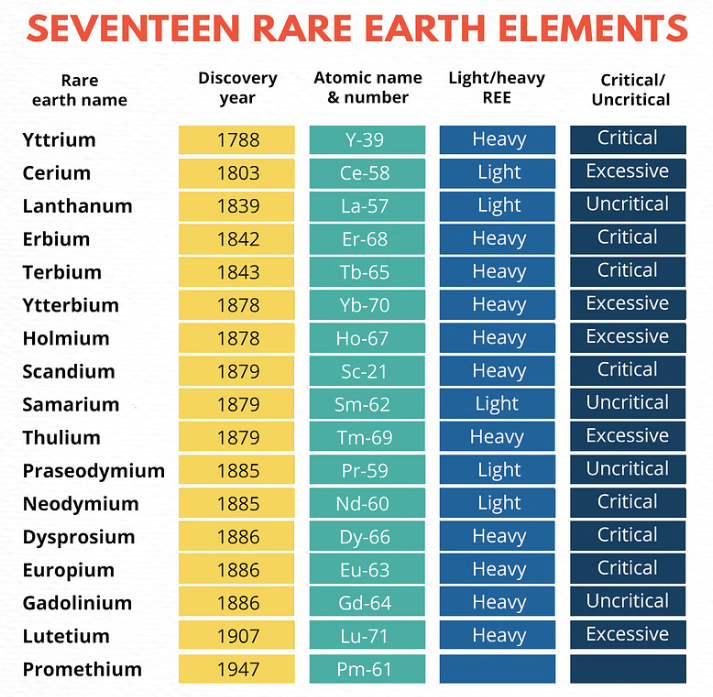
- Rare earth elements (REEs) are a group of 17 chemically similar elements, including the 15 lanthanides along with scandium and yttrium. These elements possess unique magnetic, luminescent, and electrochemical properties, making them essential in various high-tech applications, including electronics, renewable energy, and defense.
- Despite the name, they are not rare but are hard to extract due to low concentration.
- Properties & Uses: They possess unique magnetic, luminescent, and electrochemical properties. They are critical for permanent magnets (used in electric vehicles and wind turbines), catalysts, phosphors, and polishing compounds.
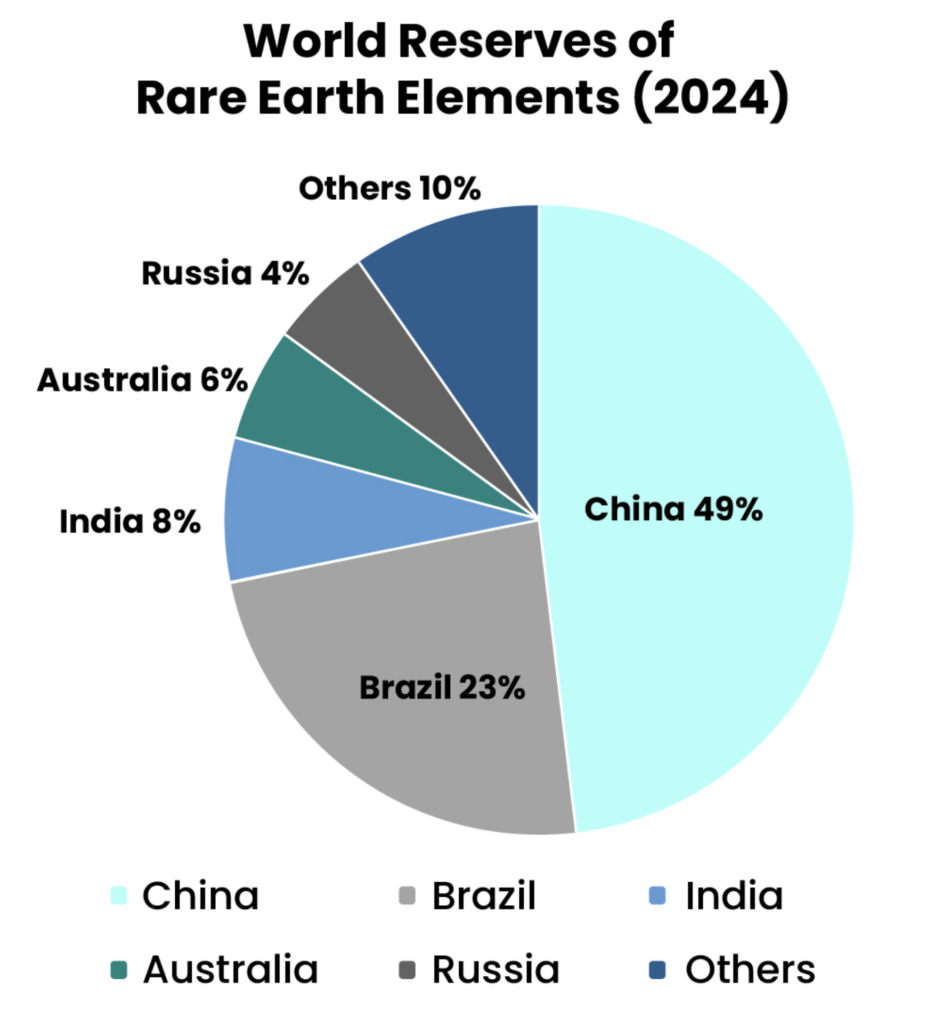
- Production & Supply: China dominates the global supply chain, controlling approximately 60% of mining and 90% of processing, although deposits exist worldwide.
- Sources: They are primarily mined from minerals such as bastnäsite, monazite, and ion-adsorption clays.
- Geopolitics: Due to their importance in defence and tech, they are considered critical minerals, with many nations seeking to diversify supply chains away from Chinese dominance.
- Rare earth elements such as europium, terbium, and yttrium are integral in the production of phosphors used in display technologies. These phosphors emit specific colours when excited by electrons, enabling the vivid displays in flat-screen televisions and computer monitors. For instance, europium is used for red phosphors, terbium for green, and yttrium serves as a host lattice for these phosphors.
- Certain rare earth elements exhibit phosphorescence, a type of photoluminescence where materials emit light after being energized. Elements like europium and terbium are known for their phosphorescent properties, which are harnessed in various applications, including lighting and display technologies.
- The phosphorescent properties of rare earth elements are the reason they are used in manufacturing display screens. The ability of these elements to emit light upon excitation is fundamental to the functioning of phosphors in screens, thereby directly linking their phosphorescent nature to their application in display technologies.
14. Consider the following space missions:
I. Axiom-4
II. SpaDeX
III. Gaganyaan
How many of the space missions given above encourage and support microgravity research?
(a) Only one
(b) Only two
(c) All three
(d) None
Answer: (c) All three
- Microgravity research involves studying the behavior of physical, chemical, and biological systems in environments where gravity is significantly weaker than on Earth. Such research is crucial for advancing our understanding in various fields, including human physiology, material science, and space agriculture.
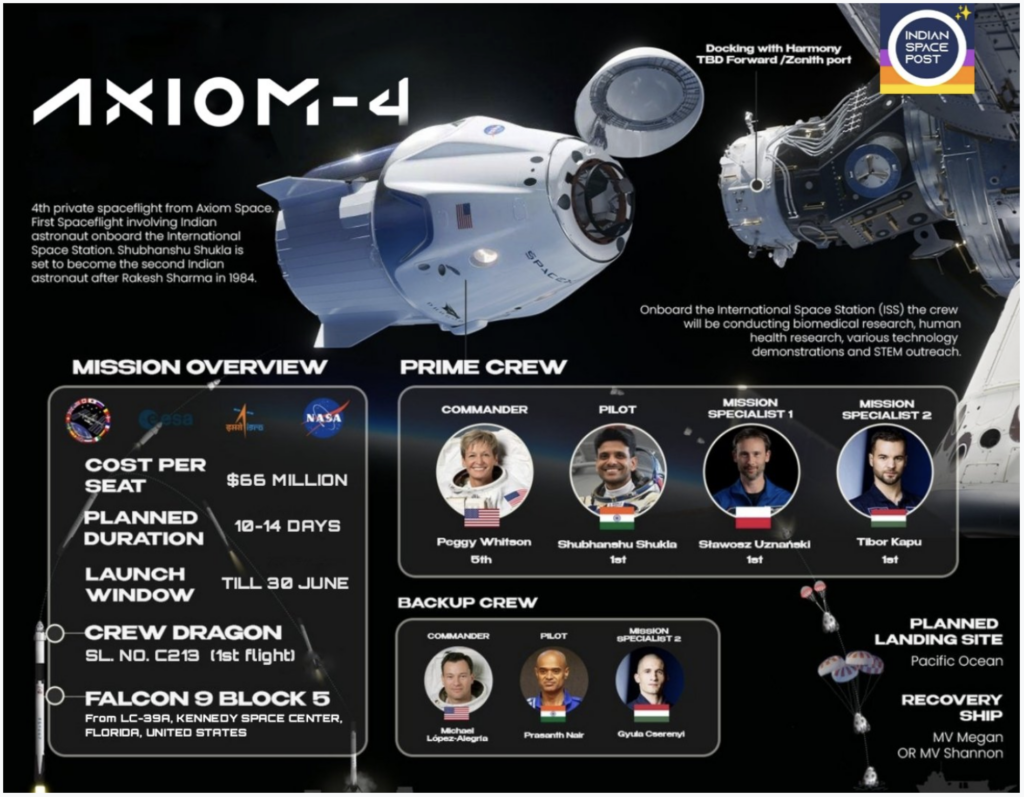
- The Axiom-4 (Ax-4) mission is a collaborative effort involving Axiom Space, NASA, ESA, and ISRO. Scheduled for launch in June 2025, this mission will send a crew to the International Space Station (ISS). Notably, Group Captain Shubhanshu Shukla, an Indian Air Force test pilot, will be part of this mission. During the mission, the crew will conduct over 25 experiments focusing on various aspects of microgravity, including:
- Human health: Studying the effects of microgravity on the human body, such as muscle atrophy and cognitive functions.
- Space agriculture: Investigating the growth of crops like green gram (moong) and fenugreek (methi) in microgravity conditions.
- Biotechnology: Examining microbial adaptation and other biological processes in space.
- These experiments aim to enhance our understanding of living systems in space and support future long-duration missions.
- The Space Docking Experiment (SpaDeX) is an initiative by ISRO to demonstrate autonomous docking capabilities between two satellites in orbit. While the primary objective is to validate docking technologies, the mission also supports microgravity research through the PSLV Orbital Experimental Module (POEM-4). This module utilises the spent fourth stage of the PSLV rocket as an orbital platform for conducting experiments in microgravity, including:
- Plant growth studies: Observing the germination and growth of seeds in microgravity to understand plant behavior in space.
- Radiation environment measurements: Monitoring space radiation levels to assess their impact on biological systems.
- These experiments provide valuable insights into conducting scientific research in microgravity environments.
- Gaganyaan is India’s ambitious human spaceflight program, aiming to send a crew of three astronauts into a 400 km orbit for a three-day mission. As part of this mission, ISRO plans to conduct several microgravity experiments, including:
- Biological experiments: Studying the effects of microgravity on living organisms, such as fruit flies, to understand physiological changes.
- Physical science experiments: Investigating material behavior and fluid dynamics in microgravity conditions.
- These experiments are designed to advance our knowledge of how microgravity affects various systems, which is essential for planning future long-duration space missions.
15. With reference to India’s defence, consider the following pairs:
| Aircraft Type | Description |
| I. Dornier-228 | Maritime patrol aircraft |
| II. IL-76 | Supersonic combat aircraft |
| III. C-17 Globemaster III | Military transport aircraft |
How many of the pairs are correctly matched?
(a) Only one
(b) Only two
(c) All three
(d) None
Answer: (b) Only two
- India’s defence forces operate a diverse fleet of aircraft, each serving specific roles such as surveillance, combat, and transportation.
- The Dornier 228 is a twin-engine turboprop aircraft utilized by the Indian Navy and Coast Guard for maritime patrol, surveillance, search and rescue, and pollution control missions. Manufactured under license by Hindustan Aeronautics Limited (HAL), it is equipped with advanced sensors and communication systems tailored for maritime operations.
- The Ilyushin Il-76 is a strategic airlifter, not a supersonic combat aircraft. Designed by the Soviet Union’s Ilyushin design bureau, it serves roles such as transporting heavy machinery, aerial refuelling, and emergency response. It is a four-engine turbofan aircraft capable of operating in rugged environments but lacks the speed and agility characteristic of supersonic combat aircraft.
- The C-17 Globemaster III is a large military transport aircraft developed by McDonnell Douglas (now Boeing) for the United States Air Force and also operated by the Indian Air Force. It is designed for rapid strategic airlift of troops and cargo to main operating bases or forward bases in the deployment area. The aircraft is capable of performing tactical airlift, medical evacuation, and airdrops, making it a versatile asset in military logistics.
