1. With reference to investments, consider the following:
- Bonds
- Hedge Funds
- Stocks
- Venture Capital
How many of the above are treated as Alternative Investment Funds?
(a) Only one
(b) Only two
(c) Only three
(d) All the four
Answer: (b) Only two
Alternative Investment Funds (AIFs)
- Alternative Investment Funds (AIFs) are privately pooled investment vehicles that collect funds from sophisticated investors (Indian or foreign) to invest in non-traditional assets like private equity, hedge funds, real estate, and startups.
- Regulated by SEBI, they target high-net-worth individuals, requiring a minimum investment of ₹1 crore, and aim for higher returns through specialised, diversified strategies beyond standard stocks or bonds.
- As per the SEBI (Alternative Investment Funds) Regulations, 2012, an AIF can be set up as a trust, a company, a limited liability partnership, or a corporate body. SEBI has many Alternative Funds registered in the form of trusts.
- There are three types of Alternative Asset Funds:-
- Category I: These funds invest in early-stage unlisted companies in the form of equity or debt (venture capital). These alternative asset funds can also invest in infrastructure-based projects or social ventures.
- Category II: These types of funds invest in equity or debt of unlisted companies that are in mid or late stage of growth and are known as private equity or pre-IPO respectively.
- Category III: This category of funds invests in the shares of listed companies. These alternative strategy funds can be for any period – long only or a combination of long and short.

| Category | Details |
|---|---|
| Category I AIFs | Invest in start-ups, SMEs, social ventures, infrastructure, and economically desirable sectors. Examples: Venture Capital Funds, Angel Funds, SME Funds, Social Venture Funds, etc. |
| Category II AIFs | Do not fall under Category I or III. Cannot undertake leverage, except for operational needs. Examples: Private Equity Funds, Debt Funds, Real Estate Funds, and Distressed Asset Funds. |
| Category III AIFs | Employ diverse or complex trading strategies and may use leverage (including derivatives). Examples: Hedge Funds, PIPE Funds. These can be open-ended or closed-ended, while Category I and II AIFs are closed-ended with a minimum 3-year tenure. |
2. Which of the following are the sources of income for the Reserve Bank of India?
- Buying and selling Government bonds
- Buying and selling foreign currency
- Pension fund management
- Lending to private companies
- Printing and distributing currency notes
Select the correct answer using the code given below.
(a) I and II only
(b) II, III and IV
(c) I, III, IV and V
(d), II and V
Answer: (a) I and II only
- The Reserve Bank of India was established under the RBI Act, 1934, to regulate the issuance of banknotes and maintain monetary stability in India. While its primary goal is public welfare, certain market operations undertaken to ensure financial stability also generate income. This surplus is transferred to the Government of India as per the Bimal Jalan Committee’s (2019) recommendations on the economic capital framework.
- Open market operations, through which the RBI buys or sells government bonds to regulate the money supply, serve as a key source of income. In addition to earning interest on these bonds, the RBI can also gain from favourable movements in bond prices.
- As per Foreign Exchange Management Act, 1999 (FEMA), the RBI is responsible for managing the country’s foreign exchange reserves and ensuring external stability. The RBI’s activities in the foreign exchange market also contribute to its profits.
- For example, it may purchase U.S. dollars at lower rates and sell them at higher rates later.
- The Reserve Bank of India (RBI) does not manage pension funds. Pension fund management in India is regulated and overseen by the Pension Fund Regulatory and Development Authority (PFRDA),
- The RBI does not directly lend to private companies in India. It lends money mainly to commercial banks and financial institutions who in turn lend to private companies and individuals.
- The RBI Act, 1934 designates the Reserve Bank of India as the sole authority to issue banknotes in India. While the RBI bears the printing costs, it earns seigniorage—the profit arising from the difference between the face value of the currency and its production cost which also acts as one of the sources of income of RBI.
Reserve Bank of India (RBI) balance sheet
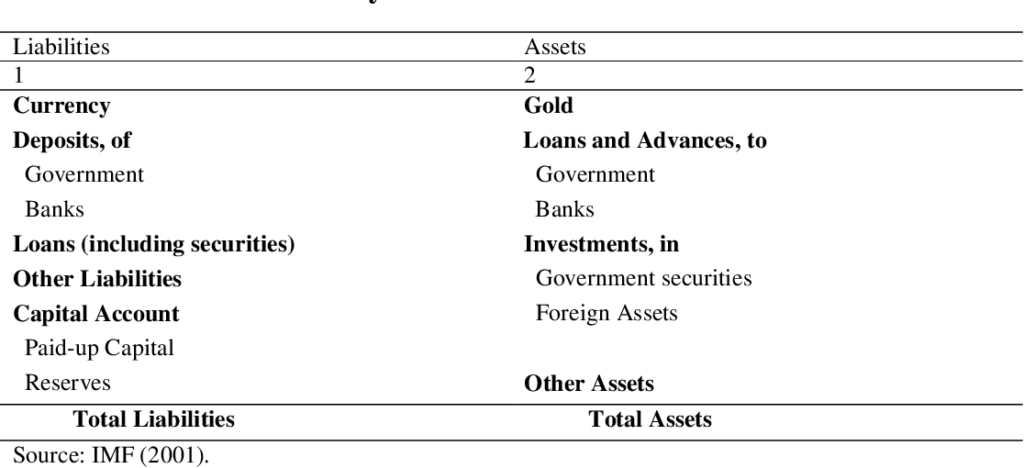
- The Reserve Bank of India (RBI) balance sheet lists assets like foreign currency, gold, and government securities, while liabilities comprise currency in circulation, bank deposits, and reserves.
- Key Assets of the RBI:
- Foreign Currency Assets (FCA): Foreign securities, bonds, and deposits held in foreign central banks.
- Gold Coin and Bullion: Held as part of foreign exchange reserves, valued close to international market rates.
- Government Securities: Investments in central and state government securities.
- Loans and Advances: Funds provided to banks and the central/state governments.
- Key Liabilities of the RBI:
- Currency in Circulation: Notes and coins issued, representing the highest liability.
- Deposits: Funds held on behalf of commercial banks (Cash Reserve Ratio – CRR) and the government.
- Revaluation Reserves: Unrealized gains from asset valuation, acting as a buffer against losses.
- Paid-up Capital & Reserves: Equity held by the government.

Sources of income for the Reserve Bank of India (RBI) are:
- Buying and selling Government bonds: Through Open Market Operations (OMO), the RBI earns interest on government securities and can profit from price changes.
- Buying and selling foreign currency: The RBI manages India’s foreign exchange reserves and earns income through currency trading, interest on foreign assets (such as US government bonds), and valuation gains.
- Printing and distributing currency notes (Seigniorage): The RBI earns a profit known as “seigniorage,” which is the difference between the face value of a currency note and its cost of production.
- Lending to banks (Repo lending): The RBI earns interest income by providing short-term liquidity to commercial banks at the repo rate.
- Commission as Debt Manager: The RBI charges a commission for acting as the debt manager for the Central and State Governments.
3. Consider the following statements:
- The Reserve Bank of India mandates all the listed companies in India to submit a Business Responsibility and Sustainability Report (BRSR).
- In India, a company submitting a BRSR makes disclosures in the report that are largely non-financial in nature.
Which of the statements given above is/are correct?
(a) I only
(b) II only
(c) Both I and II
(d) Neither I nor II
Answer: (b) II only
- The Business Responsibility and Sustainability Report (BRSR) is an Indian reporting framework aimed at improving the disclosure of environmental, social, and governance (ESG) performance by listed companies.
- It traces its origins to the ‘Voluntary Guidelines on Corporate Social Responsibility’ introduced by the Ministry of Corporate Affairs in 2009.
- As per SEBI (Listing Obligations and Disclosure Requirements) Regulations, 2015 (LODR Regulations), the Securities and Exchange Board of India (SEBI) (not RBI) requires the top 1,000 listed companies in India to submit a Business Responsibility and Sustainability Report (BRSR).
- This report includes disclosures on how these companies perform in relation to the nine principles outlined in the National Guidelines on Responsible Business Conduct.
- The BRSR is a non-financial reporting framework that requires companies to disclose their performance on environmental, social, and governance (ESG) parameters based on nine principles of the National Guidelines on Responsible Business Conduct (NGRBC).
Key Aspects of the BRSR Framework
- Mandate: Applicable to the top 1,000 listed entities, requiring integrated reporting on ESG metrics.
- Structure: BRSR reporting comprises three main sections: General Disclosures, Management and Process Disclosures, and Principle-wise Performance Disclosures.
- Core Principles: It is based on the nine principles of the National Guidelines for Responsible Business Conduct (NGRBC), focusing on ethics, transparency, employee well-being, environmental protection, and consumer value.
- Key Indicators: The format includes both essential indicators (mandatory) and leadership indicators (voluntary).
- Assurance: SEBI introduced the requirement of assurance on sustainability reporting, increasing accountability.
- Global Alignment: BRSR is designed to align with global sustainability standards such as GRI and TCFD.

4. Consider the following statements:
Statement I: In India, income from allied agricultural activities like poultry farming and wool rearing in rural areas is exempted from any tax.
Statement II: In India, rural agricultural land is not considered a capital asset under the provisions of the Income-tax Act, 1961.
Which one of the following is correct in respect of the above statements?
(a) Both Statement I and Statement II are correct and Statement II explains Statement I
(b) Both Statement I and Statement II are correct but Statement II does not explain Statement I
(c) Statement I is correct Statement II is not correct but
(d) Statement I is not correct but Statement II is correct
Answer: (d) Statement I is not correct but Statement II is correct
- Under Section 10(1) of the Income Tax Act, 1961, agricultural income is exempt from tax. This includes income from cultivating and selling agricultural produce, the sale of agricultural land, and compensation received from the government for the acquisition of agricultural land.
- However, income from allied agricultural activities — such as dairy farming, poultry, or fisheries—is not treated as agricultural income under the Act and is subject to tax by the central government.
- According to Section 2(1A) of the Income Tax Act, rural agricultural land is not classified as a capital asset. As a result, any rental income from such land or income earned from growing and selling produce on it is not taxable.
5. Consider the following statements:
Statement I: As regards returns from an investment in a company, generally, bondholders are considered to be relatively at lower risk than stockholders.
Statement II: Bondholders are lenders to a company, whereas stockholders are its owners.
Statement III: For repayment purposes, bondholders are prioritised over stockholders by a company.
Which one of the following is correct in respect of the above statements?
(a) Both Statement II and Statement III are correct and both of them explain Statement I
(b) Both Statement I and Statement II are correct and Statement I explains Statement II
(c) Only one of the Statements II and III is correct and that explains Statement I
(d) Neither Statement II nor Statement III is correct
Answer: (a) Both Statement II and Statement III are correct and both of them explain Statement I
- Companies raise long-term funds either by issuing bonds or by selling stocks.
- When a company issues bonds, it is essentially borrowing money from investors, who are known as bondholders.
- On the other hand, when a company issues stocks, it is selling ownership shares to investors called stockholders (or shareholders).
- Regarding returns from an investment in a company, generally, bondholders are considered to be relatively at lower risk than stockholders.
- A stockholder is considered as the owner of the company with equity rights, while a bondholder is a creditor who lends money and holds no ownership in the company.
- Bondholders are given repayment priority over stockholders because bonds are issued for a fixed term with a predetermined interest rate and are repayable at maturity. In contrast, capital from shares is not typically returned during the company’s lifetime, and returns to stockholders vary based on the company’s profits.
- Thus, bondholders are considered as the relatively lower risk than stockholders because bondholders have no ownership stake; they have a legal right to fixed repayments and are prioritised over stockholders, who are the owners of the company and receive returns based on the profit of the company. Hence, Option a is correct: Both Statement II and Statement III are correct, and both of them explain Statement I
6. Consider the following statements:
I. India accounts for a very large portion of all equity option contracts traded globally, thus exhibiting a great boom.
II. India’s stock market has grown rapidly in the recent past, even overtaking Hong Kong’s at some point in time.
III. There is no regulatory body either to warn the small investors about the risks of options trading or to act on unregistered financial advisors in this regard.
Which of the statements given above are correct?
(a) I and Il only
(b) II and III only
(c) I and III only
(d) I, II and III
Answer: (a) I and Il only
- As per NSE data and BIS reports, India has become a major hub for equity derivatives, especially options.In 2023, India accounted for a significant share of global equity option volumes — more than 80% of global equity index option trades happened on Indian exchanges like NSE.
- In January 2024, India’s stock market briefly overtook Hong Kong’s to become the fourth largest in the world in terms of market capitalization.
- The Securities and Exchange Board of India (SEBI) is the statutory regulatory authority responsible for overseeing the securities market in India.
- It plays a vital role in regulating stock market operations, safeguarding investor interests, taking action against unregistered financial advisors, and issuing guidelines related to derivatives trading.
- For instance, SEBI has actively cracked down on unregistered financial advisors and regularly releases circulars to caution small investors about the risks involved in trading
7. Consider the following statements:
Statement I: Circular economy reduces the emissions of greenhouse gases.
Statement II: Circular economy reduces the use of raw materials as inputs.
Statement III: Circular economy reduces wastage in the production process.
Which one of the following is correct in respect of the above statements?
(a) Both Statement II and Statement III are correct and both of them explain Statement I
(b) Both Statement II and Statement III are correct but only one of them explains Statement I
(c) Only one of the Statements II and III is correct and that explains Statement I
(d) Neither Statement II nor Statement III is correct
Answer: (a) Both Statement II and Statement III are correct and both of them explain Statement I
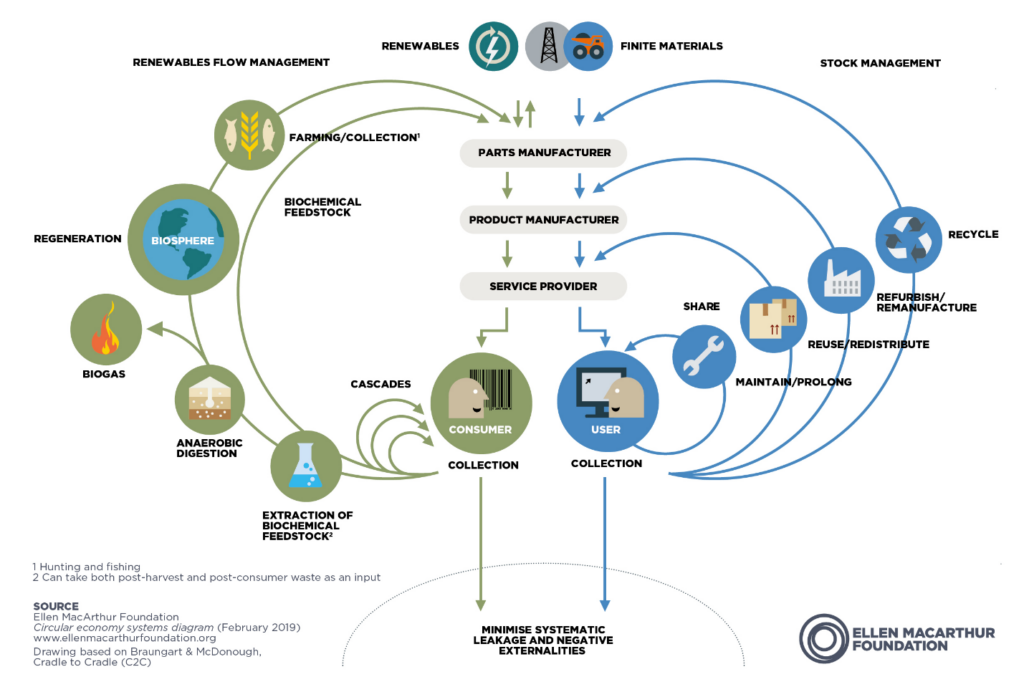
- The circular economy is a model of production and consumption that emphasises sharing, leasing, reusing, repairing, refurbishing, and recycling existing materials and products for as long as possible. This approach helps create a closed-loop system that minimises waste and reduces the need for new resource extraction.
- According to the Intergovernmental Panel on Climate Change (IPCC) Sixth Assessment Report (2023), human activities such as burning fossil fuels, deforestation, and intensive agriculture have contributed significantly to global warming, leading to an estimated 1.1°C increase in average temperature since the early 20th century. A circular economy mitigates these impacts by reducing waste, lowering resource consumption, and decreasing greenhouse gas emissions through sustainable practices.
- With the global population increasing, so does the demand for raw materials. However, many essential natural resources are finite. The circular economy reduces dependence on virgin materials by promoting the reuse and recycling of products, conserving resources, and protecting ecosystems, thereby supporting biodiversity.
- The circular economy also targets waste reduction during production by promoting efficient design and resource reuse. For example, agricultural waste like animal manure is repurposed into organic fertiliser and biogas, which supports sustainable farming and energy use.

8. Consider the following statements:
- Capital receipts create a liability or cause a reduction in the assets of the Government.
- Borrowings and disinvestment are capital receipts.
- Interest received on loans creates a liability of the Government.
Which of the statements given above are correct?
(a)I and II only
(b) II and III only
(c) I and III only
(d) I, II and III
Answer: (a)I and II only
Capital Receipts
- Capital receipts are defined as government receipts that either create a liability (e.g., borrowing) or reduce financial assets (e.g., disinvestment), as detailed in these results.
- They are non-recurring, long-term funds used for development or debt repayment, unlike revenue receipts, which do not impact the balance sheet.
- Common examples include borrowings, disinvestment proceeds, and the recovery of loans.
- Key Features and Examples:
- Create Liability: Borrowings from the public, foreign governments, or central banks are considered capital receipts because they must be repaid.
- Reduce Assets: Disinvestment (selling shares in Public Sector Units), selling land, or selling machinery falls under this category.
- Non-recurring: Unlike revenue receipts (e.g., taxes), capital receipts are not received on a regular, routine basis.
- Loan Recovery: When the government recovers loans previously granted to state governments or PSUs, it reduces its financial assets, making it a capital receipt.
- Difference from Revenue Receipts
- Capital Receipts: Do not directly affect the profit and loss statement; they appear on the balance sheet. They are typically not taxable, unless specific capital gains taxes apply.
- Revenue Receipts: Earned through regular business or government operations (e.g., taxes, fees, dividends) and are recurring.
- Interest received on loans given by the Central government to the states or other countries is classified as a revenue receipt since it represents income for the government and does not result in any liability.

9. Suppose the revenue expenditure is 80,000 crores and the revenue receipts of the Government are 60,000 crores. The Government budget also shows borrowings of 10,000 crores and interest payments of 6,000 crores. Which of the following statements are correct?
- Revenue deficit is 20,000 crores.
- Fiscal deficit is 10,000 crores.
- Primary deficit is 4,000 crores.
Select the correct answer using the code given below.
(a) I and II only
(b) II and III only
(c) I and III only
(d) I, II and III
Answer: (d) I, II and III
Explanation:
- Revenue Expenditure = ₹80,000 crores
- Revenue Receipts = ₹60,000 crores
- Borrowings (Fiscal Deficit) = ₹10,000 crores
- Interest Payments = ₹6,000 crores
Statement I is correct: Revenue Deficit
- Revenue Deficit = Revenue Expenditure – Revenue Receipts
- Calculation:
- Revenue Expenditure = ₹80,000 crores
- Revenue Receipts = ₹60,000 crores
- So, Revenue Deficit = ₹80,000 – ₹60,000 = ₹20,000 crores
Statement II is correct: Fiscal Deficit
- Fiscal Deficit = Total Expenditure – Total Receipts (excluding borrowings)
- In this question, total borrowings by the government are ₹10,000 crores, which means the gap between the government’s total expenditure and its non-borrowed receipts is being met by borrowing ₹10,000 crores.
- Fiscal Deficit is the total borrowing requirement of the government. In the given scenario, the borrowings directly represent the fiscal deficit.
- Fiscal Deficit = Borrowings = 10,000 crores
Statement III is correct: Primary Deficit
- Primary Deficit = Fiscal Deficit – Interest Payments
- Calculation:
- Fiscal Deficit = ₹10,000 crores
- Interest Payments = ₹6,000 crores
- Primary Deficit = ₹10,000 – ₹6,000 = ₹4,000 crores
Hence, All three statements are correct.
10. A country’s fiscal deficit stands at 50,000 crores. It is receiving 10,000 crores through non-debt-creating capital receipts. The country’s interest liabilities are 1,500 crores. What is the gross primary deficit?
(a) 48,500 crores
(b) 51,500 crores
(c) 58,500 crores
(d) None of the above
Answer: (a) 48,500 crores
- To find the Gross Primary Deficit, we need to use the following formula:
- Gross Primary Deficit = Fiscal Deficit−Interest Payments
- Given:
- Fiscal Deficit = ₹50,000 crores
- Interest Liabilities = ₹1,500 crores
- Non-debt-creating capital receipts are not needed to calculate the Primary Deficit directly. They are part of the financing of the fiscal deficit, but do not affect the primary deficit calculation.
- Gross Primary Deficit = 50,000 − 1,500 = 48,500 crores
11. Consider the following statements in respect of the International Bank for Reconstruction and Development (IBRD):
- It provides loans and guarantees to middle income countries.
- It works single-handedly to help developing countries to reduce poverty.
- It was established to help Europe rebuild after World War II.
Which of the statements given above are correct?
(a) I and II only
(b) II and III only
(c) I and III only
(d) I, II and III
Answer: (c) I and III only
International Bank for Reconstruction and Development (IBRD)
- The International Bank for Reconstruction and Development (IBRD) is the world’s largest development bank, operating as the lending arm of the World Bank Group to reduce poverty in middle-income and creditworthy low-income countries.
- Established in 1944 to rebuild Europe, it now provides loans, risk management, and strategic advisory services to foster sustainable economic growth.
- Key Features of the IBRD:
- Ownership: Owned by 189 member countries, which are shareholders.
- Financing: Funds its lending by issuing bonds in global capital markets rather than relying solely on taxpayer money.
- Services: Offers financial solutions (loans, guarantees), knowledge, and technical expertise to member nations.
- Goal: Aims to create a world free of poverty on a livable planet through sustainable development.
- Headquarters: Located in Washington, D.C., USA.
- IBRD works closely with the International Development Association (IDA) to form the World Bank, with IBRD focusing on middle-income nations and IDA providing grants and loans to the lowest-income countries.
- The IBRD is not the only institution working on poverty reduction. It is one of five institutions that make up the World Bank Group, which includes:
- IDA (International Development Association) – for the poorest countries
- IFC (International Finance Corporation) – for private sector development
- MIGA (Multilateral Investment Guarantee Agency) – for political risk insurance
- ICSID (International Centre for Settlement of Investment Disputes) – for arbitration
- Together, these institutions work collaboratively, not “single-handedly,” to reduce poverty and promote development.

12. Consider the following statements in respect of RTGS and NEFT:
- In RTGS, the settlement time is instantaneous while in case of NEFT, it takes some time to settle payments.
- In RTGS, the customer is charged for inward transactions, while that is not the case for NEFT.
- Operating hours for RTGS are restricted on certain days, while this is not true for NEFT.
Which of the statements given above is/are correct?
(a) I only
(b) I and II
(b) I and III
(d) III only
Answer: (a) I only
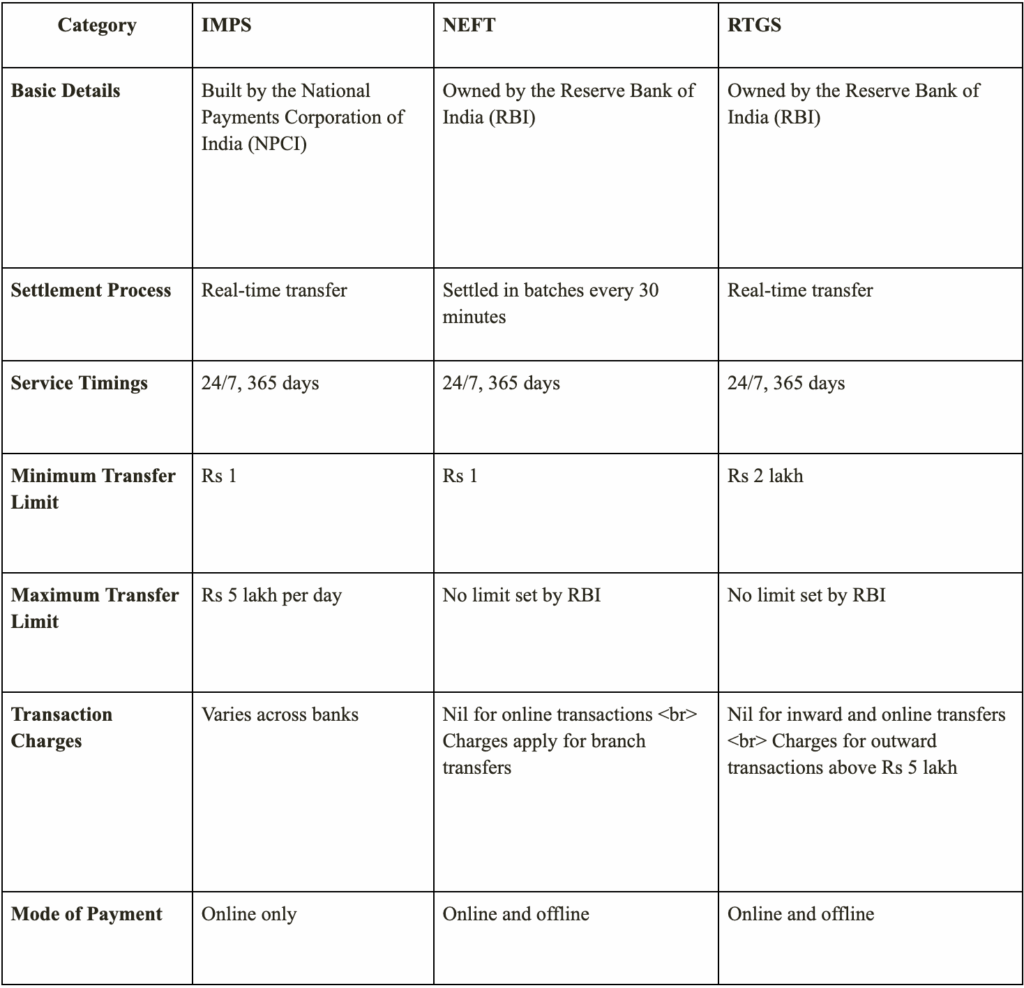
- RTGS (Real Time Gross Settlement): As the name suggests, RTGS transactions are processed in “real-time” and on a “gross” basis. This means each transaction is settled individually as it is received, with virtually no waiting period. The beneficiary bank typically receives the funds in real-time, and the beneficiary’s account is credited within a short time (usually within 30 minutes of receiving the transfer message).
- NEFT (National Electronic Funds Transfer): NEFT operates on a “Deferred Net Settlement” (DNS) basis. This means transactions are collected and processed in batches at specific intervals. While NEFT is now available 24×7, the actual settlement still happens in half-hourly batches. So, it takes some time for the payment to be settled.
- According to RBI guidelines, inward RTGS transactions (receiving money) are free of charge. Banks are not permitted to levy any charges on the beneficiary for receiving funds via RTGS. Similarly, inward NEFT transactions are also free of charge.
- Previously, both RTGS and NEFT operated only during specific hours on working days. However, major reforms by the Reserve Bank of India have now made both services available 24×7, 365 days a year.
- NEFT became a round-the-clock service in 2019, followed by RTGS in 2020. This means that customers can now transfer funds using either system at any time of the day, on any day of the year, including weekends and bank holidays.
13. Consider the following countries:
- United Arab Emirates
- France
- Germany
- Singapore
- Bangladesh
How many countries amongst the above are there other than India where international merchant payments are accepted under UPI?
(a) Only two
(b) Only three
(c) Only four
(d) All the five
Answer: (b) Only three
- Unified Payments Interface or UPI is a real-time payment system developed by the National Payments Corporation of India (NPCI) that enables instant money transfers between two bank accounts using a mobile platform.
- Launched in 2016, UPI revolutionised the digital payments landscape by allowing users to transfer funds instantly, 24/7, through mobile apps using just a Virtual Payment Address (VPA), which negates the need to share sensitive bank details.
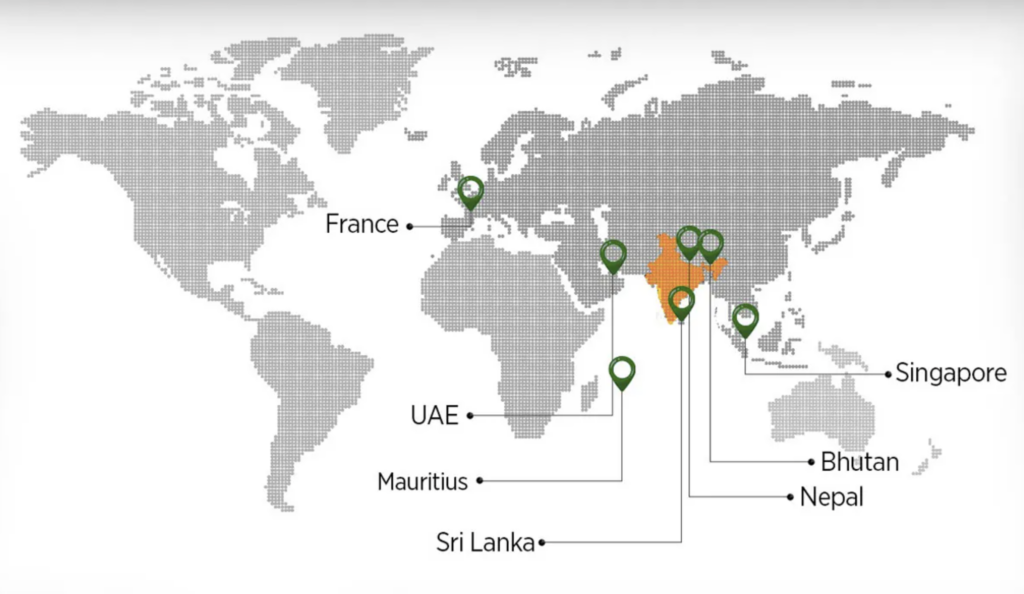
- As of now, UPI (Unified Payments Interface) is accepted for international merchant payments in the following countries other than India:
- United Arab Emirates (UAE)
- France
- Singapore
- Sri Lanka
- Mauritius
- Bhutan
- Nepal
- Hence, among the countries mentioned in the question, only three—the United Arab Emirates, France, and Singapore—officially support UPI for international merchant payments. Germany and Bangladesh do not currently have UPI integration.
- NRIs: Non-Resident Indians (NRIs) in countries like Australia, Canada, France, Hong Kong, Malaysia, Oman, Qatar, Saudi Arabia, Singapore, UAE, UK, and USA can use UPI to make INR transactions in India through their registered overseas mobile numbers.
- Foreign tourists: Tourists visiting India can use UPI through the “UPI One World” service, which requires full KYC verification with their passport and valid visa.