


Madurai

- Situated on the banks of river Vaigai, Madurai has a rich cultural heritage passed on from the great Tamil era more than 2500 years old.
- It was the capital city for the great Pandya kings.
- Third Sangam was held here.
- Maduraikkanchi, part of the Pattuppattu describes Madura city, its palace, temples, houses, and markets.
- Centre of crafts:
- making of gold ornaments,
- ivory work,
- inlay work,
- bangle making,
- The Arthashastra mentions Madurai as a centre of fine cotton textiles.
- References to its traders selling pearls and precious stones.
- Historical monuments:
- Meenakshi Amman Temple
- Dedicated to Parvati (Meenakshi) and her consort Shiva (Sundareswara) was rebuilt by Madurai Nayakas,
- Dravida Style
- surrounded by gopurams
- Each gopuram is a multi-storeyed structure, covered with thousands of stone figures of animals, gods and demons.
- 17 and 18 century paintings of Nayaka period.
- Tirumalai Nayak Palace.
- Meenakshi Amman Temple
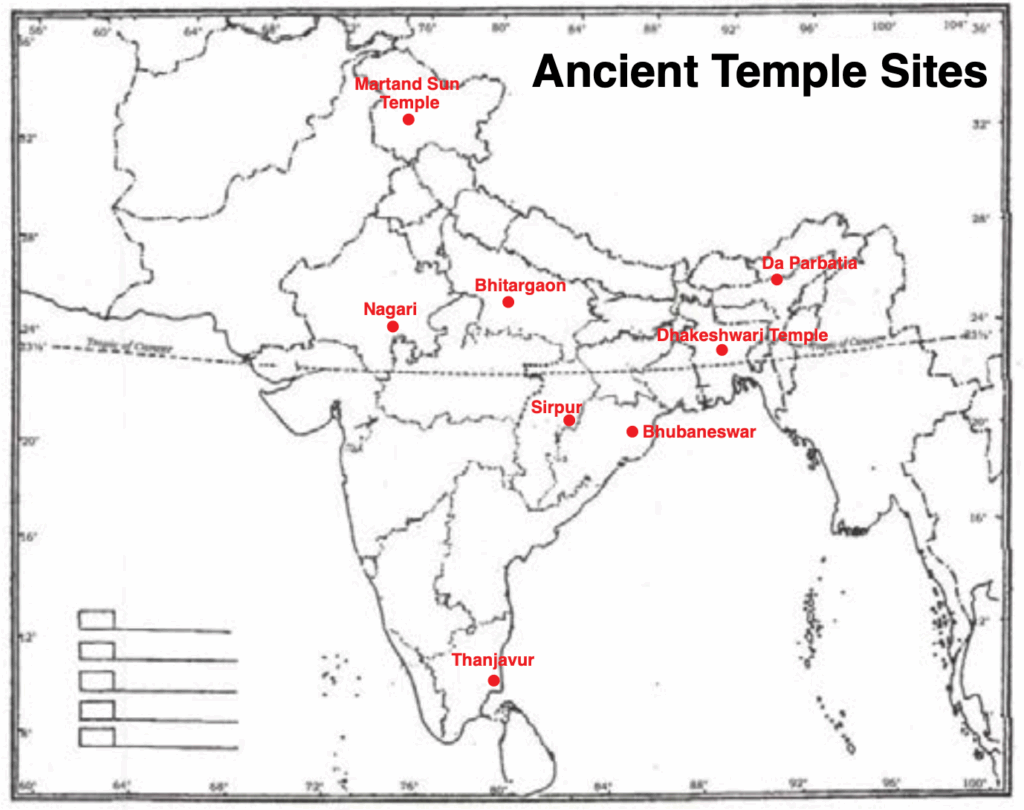
Thanjavur (Brihadeeswara Temple)
- Location:
- Situated in Thanjavur district, Tamil Nadu, on the southern banks of the Kaveri River
- Part of the historic Chola capital, Thanjavur
- Historical Importance:
- Served as the capital of the Chola Empire
- Known as a major center of religion, art, and architecture
- Home to UNESCO World Heritage Monuments under the label “Great Living Chola Temples”
- Brihadeeswara Temple (Rajarajeswaram):
- Built in the 11th century CE by Rajaraja Chola I
- Dedicated to Lord Shiva
- Also called Dakshina Meru (Meru of the South)
- Architectural Grandeur:
- Constructed in Dravida style
- Towering vimana (shikhara) rises to over 60 meters, capped with a single granite block weighing nearly 80 tonnes
- Nandi (second largest in India), carved from a single granite block, guards the sanctum
- Walls of the sanctum feature Chola and Nayaka period wall paintings
- Iconography and Inscriptions:
- Over 600 inscriptions on temple walls
- Include details on temple administration, donations, festivals, land grants, and military campaigns
- Sculptures depict:
- Shaiva themes (e.g., Nataraja, Ardhanarishvara)
- Chola royalty and various deities
- Over 600 inscriptions on temple walls
- Cultural and Administrative Role:
- Functioned as a ritual, administrative, and cultural hub
- Mentions of:
- Devadasis (temple dancers)
- Musicians
- Temple staff
- Reflects Chola land grants and taxation systems
- Artistic Significance:
- Inner ambulatory murals represent Chola painting traditions
- Associated bronze sculptures display the refined lost-wax casting technique
- Replicated in the Gangaikonda Cholapuram temple built by Rajendra Chola I
- Tanjore Painting Tradition:
- Originated during the Nayaka period (early 17th century)
- Depicts episodes from religious texts and even secular themes
- Characterized by rich colors, gold foil, and gilded relief work
- Additional Archaeological Finds:
- Many epigraphs, inscriptions, and coins belonging to various kings have been discovered at the site.
Sri Rangnathswamy temple
- Located in Srirangam, Tiruchirapalli, Tamil Nadu.
- Situated in an ethereal setting on the island of Srirangam that is bounded by the two rivers of Cauvery and Kollidam (a tributary of Cauvery)
- Sri Ranganathaswamy temple, also known as Thiruvaranga Tirupati, is one of the most illustrious Vaishnav temples in the country, dedicated to Ranganatha, a reclining form of God Vishnu.
- This living temple and sacred centre of pilgrimage is counted as the first and foremost among the 108 Divya Desams dedicated to Bhagwan Vishnu.
- More importantly, it is not just a temple but a temple-town.
- Constructed in the Dravidian style of architecture, the temple complex is massive in scale ranked amongst the largest religious complexes of the world.
- Evidences prove the origin of the temple in first century CE during the Sangam period (3rd century BCE – 45th century CE).
- However, as it stands today, the temple represents an accretion of building activity over centuries under successive ruling dynasties.
Gangaikondacholapuram
- Located in the north of river Kaveri in Ariyalur district, Tamil Nadu.
- Capital of the Cholas.
- Founded by Rajendra Chola to commemorate his victory over the Palas.
- The name means the town of the Chola who led great victorious march to river Ganges.
- He established the Gangaikondaan temple
- Temple of Siva.
- Dravida Style
- Complex carvings on the hard granite stones.
- Figures of dancing Nataraja and Ardhanareshwara.
- The bronzes of Bhogasakti and Subrahmanya are masterpieces of Chola metal icons.
Mahabalipuram/ Mamallapuram
- Mamallapuram, also known as Mahabalipuram, is a town in Chengalpattu district in the southeastern Indian state of Tamil Nadu.
- Best known for the UNESCO World Heritage Site.
- This group of sanctuaries, founded by the Pallava kings, was carved out of rock along the Coromandel coast in the 7th and 8th centuries.
- Temple architecture evolved from rock cut temples to structural temples.
- It is known especially for its rathas (temples in the form of chariots), mandapas (cave sanctuaries), giant open-air reliefs such as the famous ‘Descent of the Ganges’, and the temple of Rivage, with thousands of sculptures to the glory of Shiva.
- Shore temple is another famous temple at this site.
- Founded in the 7lh century by the Pallava sovereigns south of Madras, the harbour of Mahabalipuram
traded with the distant kingdoms of South-EastAsia: Kambuja (Cambodia) and Shrivijaya (Malaysia, Sumatra, Java) and with the empire of Champa(Annam)
Kanchipuram
- Kanchipuram known as Conjeevaram, is a city in the Indian state of Tamil Nadu.
- Capital of Early Chola and Pallava.
- Centre of art and architecture and learning.
- Kailasanathar Temple (built by Pallava King Rajasimha)
- Vaikuntha Perumal Temple.
- A religious centre education for Jainism and Buddhism.
- Educational institutions called Ghatikas.
- The city was regarded as the Banaras of the South.
- The city finds mention in the classical Tamil language,Sangam literature like Manimegalai and Perumpāṇāṟṟuppaṭai.
- Centre of the religious and literary activity of the Vaishnavites and Saivites Bhakti saints, Alvars and Nayanars.
- Known for hand woven silk sarees.
Tirupati
- In Chittoor district, Andhra Pradesh.
- Sri Venkateswara Temple:
- Dedicated to Vishnu.
- Located on top of Tirumala hills.
- Established centre of Vaishnavism around the 5th century A.D. during which it was praised by Alvars.
- The temple rites were formalised by the Vaishnavite saint Ramanujacharya in the 11th century AD
- The Pallava, Chola, Pandaya and Vijayanagar rulers used to give donation to the temple.
- Tirupati survived the Muslim invasions by accepting to pay Jizya to the Muslims Rulers.
Halebidu
- In Hassan district, Karnataka.
- Capital of the Hoysala kings in 10 -12 century.
- Temple complex:
- Two main Hindu temples:
- Hoysaleswara temple
- Two Nandi images on the sides of the Hoysaleswara temple are monoliths.
- Kedareshwara temple
- Hoysaleswara temple
- Two Jain basadi.
- Soapstone was used for the construction of these temples.
- Temple’s walls covered with depictions from Hindu mythology, animals, birds and shilabalikas or dancing figures.
- The Jain basadi are also rich in sculptural detail.
- Two main Hindu temples:
Hampi
- Located within the ruins of the city of Vijayanagara, the capital of the Vijayanagara Empire.
- Foreign travelers who visited this city during the period of its glory have left a very glowing account of the city.
- Group of Monuments at Hampi is a UNESCO World Heritage Site
- Religious, Civil & Military buildings. Most of monuments:
- Religious buildings:
- Hindu temples:
- Hazara Rama Temple Complex:
- Built by Krishnadev Raya.
- Elaborate frescoes.
- Carvings and inscriptions depicting the story of Ramayana.
- Vittala Temple Complex:
- Images of foreigners like Persians selling horses.
- Virupaksha Temple:
- Predates the founding of the Vijayanagara Empire.
- Mainly Shiva temple.
- Hazara Rama Temple Complex:
- Hindu temples:
- Important civil architecture:
- Elephant Stable used to house the eleven royal elephants in King Krishnadeva Raya’s army.
- The neighbouring building housed the elephant riders of the king.
- Religious buildings:
Aihole
- In Bijapur district, Karnataka.
- It is east of Pattadakal, while Badami is to the west of both.
- First capital of western Chalukyas (later moved to Badami).
- Chalukyan architecture, with many stone temples dating from 5th century CE.
- Earliest structural temples.
- Among the seventy temples found at Aihole, four are important.
- Ladh Khan temple is flat-roofed structure consisting of a pillared hall.
- Durga temple resembles a Buddha Chaitya.
- Huchimalligudi temple.
- The Jain temple at Meguti.
- Caves:
- Ravana Phadi cave- rocks cut temples.
- Jain cave temple
- A Buddhist Chaitya Cave- partly rockcut structure.
- Aihole inscription:
- Aihole Prasasti in Meguti Temple
- Composed by Ravikirti, the court poet of Pulakesin II in 634 A.D.
- In Sanskrit language and old Karnataka script
- Detailed account of Pulakesin II’s exploit against his neighbouring kingdoms like the Pallavas.
- Describes the victory of Pulakesin II against Harshavardhana.
Pattadakal
- Pattadakal located in Bagalkot district of Karnataka was not only popular for Chalukyan architectural activities but also a holy place for royal coronation, ‘Pattadakisuvolal’.
- Temples constructed here mark the blending of the Rekha, Nagara, Prasada and the Dravida Vimana
styles of temple building. - The oldest temple at Pattadakal is Sangamesvara built by Vijayaditya Satyasraya (AD 697-733).
- The other notable temples at Pattadakal are the Kadasiddhesvara, Jambulingeswara both attributed
to 7th century A.D. while Galaganatha temple was built a century later in the style of Rekha Nagara Prasada. - The Kasivisvesvara temple was the last to be built in early Chalukyan style.
- The Mallikarjuna temple was constructed by Rani Trilokyamahadevi to celebrate the victory over the Pallavas by Vikramaditya II.
- The Virupaksha temple later served as a model for the Rashtrakuta ruler Krishna I (757 -783 A.D.) to
carve out the great Kailasa at Ellora. However, the last addition at Pattadakal was made during the reign of Rashtrakuta ruler Krishna II of the 9th century A.D. - In form of a Jaina temple, locally famous as Jaina Narayana, with its two lower storeys functional.
- The Sangamesvara, Virupaksha and Mallikarjuna temples at Pattadakkal exhibit to a large degree the southerly elements in their vimanas, as crystallized in the contemporary Pallava temples.
- Pattadakal, the ‘City of the Crown Rubies’ (Pattada Kisuvolal) was, moreover, for a brief time the third
capital city of the Chalukya kingdom; at the time the Pallava occupied Badami (642-55).
Badami
- Located in Bagalkot district in northern part of Karnataka.
- Capital of the Early Chalukyas.
- Founded in 540 AD by Pulakeshi I of Chalukyas.
- Pallavas under Narasimhavarma I destroyed Vatapi and called himself Vatapikonda.
- Excavated on the face of the southern hill near the tank is a group of four cave temples.
- Three of them are Brahmanical and one is Jaina.
- In Cave 1 Lord Shiva is shown in different attitudes among which a five feet high figure of Shiva with eighteen hands dancing the Tandava in the company of Nandi, Ganapati and drummers is unique.
- Cave 2 is mostly similar to Cave 1.
- The largest cave is Cave 3, featuring Vishnu related mythology, and it is also the most intricately carved cave in the complex.
- Cave 4 is dedicated to revered figures of Jainism.
- Temples:
- Sandstone cave temples and structural temples.
- Early styles of the southern Indian architecture.
- Rock-cut Cave Temples:
- Siva (with Parvati), Vishnu and Jains
- Lord Nataraja in dancing poses.
- Muktheeswara temple
- Melagutti Sivalaya.
- Bhutanatha group of temples and Mallikarjuna group of temples.
- Paintings on the ceiling.
- Inscriptions:
- First Sanskrit inscription in old Kannada script dates back to 543 CE, from the period of Pulakeshi I.
- One inscription near the Bhuthanatha temple
- Inscriptions of 12th century in Jain rock-cut temple dedicated to Adinatha.
Ellora, Kailashnath Temple
- In Aurangabad district, Maharashtra.
- Rock-cut cave (6th century AD onward).
- Buddhist, Hindu and Jain rock-cut temples and Viharas,
- Built during Kalachuri, Chalukya and Rashtrakuta.
- The Jagannatha Sabha– Jain Digambara cave temples (built by Rashtrakuta).
- One chaitya griha of the Buddhist caves.
- Hindu Architecture:
- Kailasanatha temple
- Built by Rashtrakuta king Krishna III in 8 century.
- Dravidian architecture.
- Looks like Mount Kailash
- free standing,
- multi-storeyed temple,
- carved out of one single rock.
- Dashavatara Cave- monolithic mandapa.
- Sculptural panels including the ten avatars of Vishnu.
- Kailasanatha temple
- Inscription:
- Of grant of Dantidurga of Rashtrakuta.
- Inscriptions on the Kailash temple.
- Jain cave Jagannatha Sabha has inscriptions that give the names of monks and donors.
- Cave paintings are also seen at Ellora.
Fifteen temples, Lonar
- Located in the Buldhana district of Maharashtra.
- These temples were built around the crater lake around 11th – 12lh century AD.
- These temples follow the contemporary regional styles, quite homogenously termed as Hemadpanti.
- The temples are dedicated mainly to Lord Shiva, though there are few other deities too. Kamalja Devi temple is one amongst these, dedicated to Shakti, Goddess Kamalja, where yearly annual fairs are organised during the festival of Navaratra.
Somnath Temple
- In the Saurashtra region of Gujarat coast.
- In 8 century, it was under Chavada Rajputs. Later on it came under several rulers including Marathas and the Nawab of Junagarh.
- Temple is considered as one of the 12 Jyotirlinga shrines of Shiva.
- Pilgrimage and tourist spot.
- Looted by several times by rulers like Muhammad Ghazni, Muhammad Ghori, Alauddin Khilji, Muzaffar shah of Gujarat, Sultanate, Mahmud Begada and Aurangzeb.
- Rebuilt several times by rulers like Paramara King Bhoja of Mawa, Solanki King Bhimdev of Anhilwara, Kumarpala, Peshwa of Pune, Bhonsle of Kolhapur Queen Ahilyabai Holkar of Indore etc.
Modhera Sun Temple
- The Sun Temple is a Hindu temple dedicated to the solar deity Surya located at Modhera village of Mehsana district, Gujarat. It is situated on the bank of the river Pushpavati.
- Sun Temple built in 1026 AD by King Bhimdev of the Solanki dynasty.
- Royalty and traders jointly contributed to build grand temples.
- Like the Sun Temple at Konark, it was so designed that the first ray of the sun fell on the image of Surya, the Sun God, at the time equinox.
- The temple was destroyed by the Allauddin Khilji.
- Sun temple comprises three separate, axially aligned elements:
- Surya Kund,
- Sabha Mandap and
- Guda Mandap.
- Sexual iconography is displayed, at the exterior walls of the main temple.
- The water tank near temple (Surya Kund) is the grandest temple tank in India.
- The influence of woodcarving tradition of Gujarat is evident in the lavish carving and sculpture work.
Pushkar
- A town in the Ajmer district of Rajasthan.
- Microliths near Khera and Kaderi suggests that region was settled in ancient times.
- The Aravalli hills near it have yielded Mohenjodaro type artefacts.
- It is mentionedin the Ramayana, the Mahabharata and the Puranas.
- The town has the only temple in India devoted to worship of Lord Brahma.
Mount Abu
- In Sirohi district, Rajasthan.
- Hill station in the Aravalli Range
- Home to several Hindu and Jain temples.
- Jain temples:
- Dilwara Temples
- carved of white marble built between the 11th and 13th centuries CE,
- Vimal Vasahi temple
- oldest, built in 1021 CE by Vimal Shah and dedicated to the first of the Jain Tirthankaras).
- Dilwara Temples
- Hindu temples:
- Adhar Devi Temple carved out of solid rock;
- Shri Raghunathji Temple,
- Achaleshwar Mahadeva temple,
- Gaumukh temple.
Deogarh, Dashavatar Temple
- The Dashavatara temple is an early sixth century Vishnu Hindu temple located at Deogarh in Lalitpur district of Uttar Pradesh.
- Dashavatara Temple:
- Gupta period temple
- dedicated to Lord Vishnu,
- one of the earliest known Panchyatana temples
- Nagara style and beginning of the Shikhara type of temples.
- carved figurines of river goddesses Ganga and Yamuna on the doorway to the sanctum sanctorum,
- Anantshayi Vishnu reclining on a serpent.
- Sculpture on the Dasawatara temple show classical Gupta style.
- The fort on the hill of Deogarh is dominated by a cluster of Jain temples.
- Also the temple is west facing, which is less common, as most of the temples are east or north facing.
Hidimba Devi Temple
- It is located in Manali, a hill station in the state of Himachal Pradesh in north India.
- A multi-tiered temple dedicated to the demon goddess belonged to the clan of Rakshasa.
- The powerful Pandava, Bhima, married to Hidimba during period of agyatwas (period of total disappearance from public view).
- Later she rose to status of a goddess, being worshipped by the people in high esteem.
- The temple was built by Raja Bahadur Singh (A.D.1532-1569).
- The temple architecture belongs to Pagoda style of temple architecture.
Masrur Rock-Cut Temple Complex
- Location:
- Located in Kangra district, Himachal Pradesh
- Situated on a low sandstone hill near the Beas River valley, at the southern edge of the Dhauladhar range
- Chronology and Construction:
- Dated to the 8th century CE
- Only known example of rock-cut Nagara-style temple complex in the Himalayan region
- Carved out of a single sandstone hill
- Comprises a cluster of 15 monolithic shrines, out of which:
- 14 temples are carved only from the outside
- The central shrine is carved from the inside as well
- Religious Affiliation:
- Originally dedicated to Lord Shiva
- Central sanctum contains a Shiva Linga, indicating its Shaiva roots
- Later known as Thakurwada, indicating Vaishnavite association
- Idols of Rama, Lakshmana, and Sita are now placed in the garbhagriha
- Architectural and iconographic elements also include Shakta symbolism
- Architectural and Sculptural Features:
- Nagara-style shikharas carved from live rock
- Detailed carvings on:
- Doorways, lintels, walls, and column capitals
- Sculptures of deities like Shiva, Parvati, Lakshmi, Saraswati
- Floral motifs, geometric patterns, and mythological scenes
- Partially preserved Ramayana panels
- Presence of unfinished carvings offers insight into stone-carving techniques and temple construction processes
- Cultural and Artistic Significance:
- Unique for combining monolithic rock-cut architecture with the Nagara temple form
- Represents early medieval Himalayan temple innovation
- Serves as a spiritual and cultural landmark, connecting religious symbolism with regional craftsmanship
Khatarmal Sun Temple
- Location:
- Situated on a lofty hill in Almora, Uttarakhand
- Religious Significance:
- Dedicated to the Sun God, locally known as “Bara Aditya” or “Great Sun God”
- Architectural Features:
- The main temple is a large, imposing structure
- Surrounded by a paved courtyard
- 44 subsidiary shrines are built around the central sanctum
- Reflects Nagara-style architecture typical of the Himalayan region
- Chronology:
- Dates back to the 12th–13th century CE
- Cultural Significance:
- One of the most important surviving Sun temples in the Himalayan region after Konark and Modhera
- Highlights the spread of solar worship in North India during the medieval period
- Recognized for its architectural finesse and scenic location
Khajuraho
- In Chhatarpur district, Bundelkhand region of Madhya Pradesh.
- The Khajuraho Group of Monuments:
- A group of Hindu and Jain temples.
- Famous temples:
- Kandariya Mahadeva Temple of Lord Shiva (most elaborate)
- Lakshman Temple and Chaturbhuja Temple of Lord Vishnu,
- Chaunsath Yoginis temple dedicated to Tantric worship.
- Chitragupta Temple of Sun god,
- Adinatha Jain Temple etc.
- UNESCO World Heritage Sites.
- Constructed by Chandella rulers between 10th and 12th century.
- Nagara style of architecture.
- Features:
- Use of sandstone in early period. Later granite used.
- No enclosure-wall
- Erected on a high-platform-terrace (jagati) with bands of sculptures.
- Nagara shikharas composed of several miniature shikharas, called the Urisingas.
- The crowning element- Amalakas.
- Panchayatana style. For e.g. Lakshmana temple.
- Temple plan in axis- east to west.
- Temple elements:
- ‘mukha-mandapa’,
- ‘mandapa’,
- ‘antarala’ and
- ‘garbha-griha’.
- Pradakshina with carvings.
- Sikhara is divided into seven segments.
- About 10% of the carvings contain sexual themes and rest of the sculptures depict the everyday life of the common persons such as women putting on makeup, playing games, dancing, knotting and unknotting their girdles, and others themes such as musicians, potters, farmers etc.
- Large scale depiction of horsemen (cavalry)- disappearance of chariot.
Bhitargaon Temple
- Location:
- Located in Kanpur Dehat district, Uttar Pradesh
- Chronology and Patronage:
- Built during the Gupta period in the 5th century CE
- Some sources mention 7th–8th century CE for additions or repairs
- Possibly received later patronage from Lauriya Nandangarh kings
- Architectural Significance:
- Earliest surviving large-scale brick temple in northern India
- Constructed using terracotta bricks and stucco ornamentation
- Rare example of Nagara-style architecture in brick rather than stone
- Square plan with double-recessed corners
- Tall pyramidal shikhara (spire) over the garbhagriha (sanctum)
- Faces east in orientation
- High roof and upper chamber, partially damaged in the 18th century
- Structural Features:
- Built on a terraced platform
- The brick walls are decorated with molded terracotta panels
- Garbhagriha topped by curvilinear shikhara
- Demonstrates advanced brick bonding and ornamental molds
- Religious Context:
- Dedicated to Lord Vishnu
- Likely housed a stone image of the deity
- Terracotta panels also depict Shiva, aquatic monsters, and other mythological themes
- Reflects Vaishnavite tradition with multi-deity iconography
- Artistic and Technical Significance:
- Early use of stucco relief work and sculptural panels in temple architecture
- Panels show fine artistic detailing and narrative storytelling
- Influenced temple design in the Gangetic plains and eastern India, especially in areas lacking stone resources
Shiv temple, Bhojpur
- The colossal Shiva temple at Bhojpur stands magnificently over the rocky outcrop lying on the right bank of the river Betwa (ancient Vetrawati).
- It is about 32 km south-east of Bhopal.
- This unique temple left incomplete for some unknown reason is ascribed to the illustrious King Bhojadeva (1010-1055 A.D) of Paramara dynasty of Central India, who was a great patron of art, architecture and learning.
- Temple has the largest Shiva Linga in India considering its girth and height.
- The only extant example of a ramp for taking the architectural members to the top up to the ceiling is unique to Bhojpur as nowhere else such a large extant ramp is in existence.
Nachna Kuthara, Parvati Temple
- In Panna district, Bundelkhand region of Madhya Pradesh.
- Early examples of the Nagara style of temple architecture in northern India started during Gupta age.
- Temples here are among the first structural temples of India.
- Famous for the Parvati temple built in 5 century Gupta period and Mahadev temple of 7 century.
- They are, in their architectural style; mark an advance over the earlier square and flat-roofed temples.
Tigawa Temple
- In Jabalpur district, Madhya Pradesh.
- A complex of about 36 Hindu temple ruins.
- Kankali Devi Temple of Gupta period is in good condition, and is of early 5th Century.
- Kankali Devi temple:
- Represents the earliest phase of the structural temples.
- Characterized by flat roof, square sanctum and a shallow verandah.
- The sanctum and an open portico are supported on four pillars.
- An image of Narasimha is placed inside the sanctum.
- The portico has an image of the Sheshashai Vishnu (Narayana) and of Chamunda (Kankali Devi).
- There is also a Gupta period Vishnu temple.
Sirpur Temple Complex
- Location:
- Located in Mahasamund district, Chhattisgarh
- Situated on the banks of the Mahanadi River
- Religious and Cultural Significance:
- Major religious centre between the 6th and 10th centuries CE
- Flourished as a multi-religious centre of Shaivism, Vaishnavism, Buddhism, and Jainism
- Reflects a period of religious syncretism, tolerance, and cultural diversity
- Architectural Features:
- Lakshmana Temple (dedicated to Vishnu):
- Built of red brick and stone
- Early Nagara style with:
- Recessed sanctum (garbhagriha)
- Antarala (vestibule)
- Mandapa (pillared hall)
- Other significant temples:
- Gandheshwar Temple (Shaiva)
- Teevardev Temple (Vaishnava)
- Lakshmana Temple (dedicated to Vishnu):
- Buddhist Heritage:
- Discovery of:
- Monasteries (viharas)
- A massive Buddha Vihara
- Inscriptions of Xuanzang
- Rare image of Avalokiteshvara
- Confirms Sirpur’s inclusion in early Mahayana Buddhist networks
- Discovery of:
- Dynastic Patronage:
- Flourished under the Sharabhapuriya and Somavamsi rulers
- Inscriptions mention royal patronage and donations to both Brahmanical and Buddhist institutions
- Artistic Importance:
- Carvings depict:
- Ramayana scenes
- Krishna Leela episodes
- Buddhist Jataka tales
- Reflects iconographic blending and high artistic craftsmanship
- Terracotta art from Sirpur is renowned for its narrative richness and detailing
- Carvings depict:
Laxman Temple, Sirpur
- Location:
- Situated on the banks of the Mahanadi River, in Sirpur, Mahasamund district, Chhattisgarh
- Historical Background:
- Built during the reign of Mahasiv Gupta Balarjuna (c. 595–655 CE)
- Constructed by Queen Vasata, daughter of Maukhari King Surya Verma of Magadha and widowed mother of Mahasiv Gupta Balarjuna
- Inscription from the site records its construction and royal lineage
- Religious Affiliation:
- Dedicated to Lord Vishnu
- Reflects strong Vaishnava influence in temple construction during the early medieval period
- Architectural Features:
- Built entirely of brick, showcasing advanced brick temple architecture
- Temple stands on a prominent platform
- Structural elements include:
- Garbhagriha (sanctum)
- Antarala (vestibule)
- Enclosed pillared mandapa (now in ruins)
- Associated Monuments:
- Part of the Sirpur group of monuments
- Includes several Buddhist monasteries, Jain shrines, and Shaiva-Vaishnava temples
- Highlights religious syncretism in early Chhattisgarh
Da Parbatia Temple Site
- Location:
- Situated in Sonitpur district, Assam, near Tezpur, on the western edge of the Brahmaputra Valley
- Chronology and Historical Context:
- Dates to the 5th–6th century CE, corresponding to the late Gupta period
- Possibly built during or just before the reign of Bhaskaravarman of Kamarupa
- Later, during the Ahom period, a brick Shiva temple was constructed over the ruins of this ancient structure
- Architectural Significance:
- One of the earliest stone temples in the region
- The temple had a brick superstructure (now lost) supported on stone foundations
- Sanctum (Garbhagriha) surrounded by a circumambulatory path (Pradakshina patha)
- Colonnaded mandapa at the front
- Stone altar (vedi) at the centre of the sanctum
- Excavations revealed stone-paved layout plan of the sanctum and mandapa
- Iconography and Sculptural Features:
- Famous for its elaborately carved stone door frame
- High-relief carvings include:
- River goddesses Ganga and Yamuna
- Flying geese (Hamsa)
- Attendant figures
- Floral and geometric motifs
- Influence of Hellenistic architectural style
- Carvings show Gupta sculptural style and early Odishan influences
- Archaeological Findings:
- Excavations yielded numerous terracotta plaques
- Many plaques depict human figures in sitting posture
- Representing early artistic traditions in Assam
- Cultural and Historical Importance:
- Marks the spread of Gupta-era temple-building traditions into northeastern India
- Acts as a precursor to later medieval Assamese temples
- Reflects Hindu religious art and architectural practices in early historic Assam
- Heritage Status:
- Protected under the Ancient Monuments and Archaeological Sites Act
- Serves as a rare and valuable example of early Hindu temple architecture in Northeast India
Kamakhya temple
- Kamakhya temple is located in the heart of Nilachala Hill situated in the western part of Guwahati, the capital city of the state of Assam in North East India.
- Kamakhya temple:
- Dedicated to goddess Kamakhya.
- On a hill – Neelachala Parvat.
- One of the oldest of the 51 Shakti Pithas.
- According to traditions, there are 51 pieces of Sati’s body scattered across the Indian subcontinent. Kamarupa (“form of desire”) is the region in which the yoni is said to have fallen to earth.
- A hemispherical dome on a cruciform base.
- Four chambers:
- garbhagriha and
- three mandapas
- pancharatna and
- natamandira aligned from east to west.
- Kamakhya temple is the main temple in a complex of individual temples dedicated to the ten Mahavidyas.
- Pilgrimage destination especially for Tantric worshipers.
Sibsagar
- Located in the Sibsagar district of Assam.
- The graceful temple of brick and stone masonry was constructed by the Ahom king Siba Singha AD 1714-44).
- It is one of the tallest among the Ahom temples in Assam.
- The temple stands on the southern bank of Sibasagar tank and aligned in north-south direction.
- Two other temples- the Devidol dedicated to Devi (goddess Durga) and Vishnudol dedicated to Lord Vishnu, built by Queen Ambika Devi, one of the chief queens of king Siva Singha (1714-44 CE) are major temples in Sibsagar.
- Itis well known for its Ahom palaces and monuments.
Vishnupur / Bishnupur
- Location:
- Situated in the Bankura district, West Bengal
- Historical Background:
- Flourished under the Malla dynasty, who were devout Vaishnavites
- Famous for the construction of terracotta temples during the 17th and 18th centuries
- Architectural Features:
- Temples built using locally available laterite stones, covered with intricate terracotta panels
- Unique blend of Bengali hut-style architecture with traditional Nagara-style features
- Rich decorative themes include:
- Scenes from the Ramayana and Mahabharata
- Krishna Leela episodes
- Floral and geometric patterns
- Cultural Significance:
- Bishnupur is known for:
- Terracotta art and architecture
- Baluchari saris
- Classical Bishnupur Gharana of music
- It remains an important site reflecting the fusion of religion, art, and regional identity in Bengal.
- Bishnupur is known for:
Bhubaneshwar
- Location:
- Situated in Khordha district, Odisha
- Lies on the eastern coastal plains of India
- Historically part of ancient Kalinga
- Religious and Historical Importance:
- Known as the “Temple City of India” or “Ekamra Kshetra”
- Served as a major Shaivite centre from as early as the 7th century CE
- Became a sacred complex with thousands of temples
- City has deep associations with Hinduism, Jainism, and Buddhism
- Dynasties and Patronage:
- Somavamshi (Keshari) dynasty established their kingdom here in the 7th century and built many temples
- Followed by the Eastern Ganga dynasty who ruled Kalinga till the 14th century CE
- Temple architecture spans the Shailodbhavas, Somavamsis, and Eastern Gangas
- Architectural Features:
- Temples built in the Kalinga style of Nagara architecture
- Richly carved shikharas, toranas, and sculptural panels
- Known for both religious symbolism and aesthetic elegance
- Famous Temples:
- Lingaraja Temple (11th century CE)
- Most prominent temple
- Dedicated to Harihara (fusion of Shiva and Vishnu)
- Mukteshwar Temple
- Famous for its arched torana (gateway) and floral carvings
- Rajarani Temple
- Known for its pancharatha style, elegant sculptures, and erotic motifs
- Ananta Vasudeva Temple
- Unique as the only major temple dedicated to Vishnu in Bhubaneswar
- Lingaraja Temple (11th century CE)
- Other Religious Sites:
- Khandagiri and Udayagiri Hills
- Twin hills with Jain rock-cut caves and monasteries
- Dhauli Hills
- Site of Ashokan edicts
- Associated with Kalinga War and Ashoka’s conversion to Buddhism
- Khandagiri and Udayagiri Hills
- Cultural Significance:
- Famous for Classical Odissi Dance
- Forms the Odisha Temple Triad along with Puri and Konark
- Continues to be a living temple city with daily rituals and festivals
Konark (Sun Temple)
- Location:
- Situated on the eastern coast of India, south of the Mahanadi Delta, in the state of Odisha
- Historical Background:
- Famous for the Sun Temple
- Originally built in the 9th century AD
- Reconstructed in the 13th century by the Eastern Ganga king Narasimhadeva I
- Architectural Features:
- Designed as a gigantic chariot of the Sun God Surya
- The chariot has 12 pairs of exquisitely carved wheels, drawn by seven horses
- Temple structure includes:
- Sanctum (Vimana) with a curvilinear Shikhara
- Jagamohana (assembly hall/mandapa)
- Detached Nata Mandapa (dancing hall) aligned on the same axis
- Subsidiary shrines and structures, all enclosed within a compound wall with three entrance gates
- Sculptural Art:
- Richly adorned with sculptures of birds, animals, deities, apsaras
- Terracotta figurines that depict sensuality and daily life scenes
- Resemble the Khajuraho style of erotic and intricate sculpture
- Cultural and Historical Significance:
- Referred to as the “Black Pagoda” by Portuguese sailors due to its dark color and magnetism
- An outstanding symbol of Kalinga temple architecture
- Recognized as a UNESCO World Heritage Site
Martand Sun Temple
- Location:
- Situated in Anantnag district, Jammu & Kashmir
- Located on a hilltop plateau, near the modern village of Mattan
- Chronology and Patronage:
- Built in the 8th century CE
- Constructed by Lalitaditya Muktapida (c. 724–760 CE), the most prominent ruler of the Karkota dynasty
- Dedicated to Martand, a form of Surya (the Sun God)
- Mentioned by Kalhana in the Rajatarangini during the rule of Harsha (1089–1101 CE), son of Kalasa
- Architectural Features:
- Represents the climax of early Kashmiri temple architecture
- Built using high-quality stone and advanced masonry techniques
- Shows fusion of Gupta and Kashmiri architectural elements
- The sanctum (garbhagriha) is three-ratha in plan, with antarala and closed mandapa
- Approached by a grand flight of steps
- Western entrance has a double-chambered gateway, aligned with the temple’s main axis
- Layout includes a central shrine within a large rectangular courtyard
- Enclosed by a cellular peristyle (colonnaded corridor) with fluted columns
- Sculptural and Artistic Elements:
- Richly decorated with:
- Pilasters
- Draped columns
- Ornate capitals
- Nimbed deities (deities with halos)
- Decorative features reflect refined Kashmiri sculptural vocabulary
- Richly decorated with:
- Symbolism and Spatial Design:
- The hilltop location, symmetry, and Sanskritic iconography express imperial power and divine symbolism
- Incorporates local Kashmiri motifs, showing a blend of pan-Indian and regional religious aesthetics
- Decline and Legacy:
- Destroyed in the 14th century during Islamic invasions
- Now lies in monumental ruins, but remains a significant symbol of Kashmir’s temple heritage
- Often cited as one of the greatest examples of early medieval North Indian temple architecture
Nagari (Ancient Madhyamika)
- Location:
- In Chittorgarh district, Rajasthan
- About 12 km north of Chittorgarh Fort
- Situated in the eastern Aravalli region
- Historical Importance:
- Known in ancient times as Madhyamika
- A flourishing urban and religious centre from the Mauryan to Gupta periods (3rd century BCE to 5th century CE)
- Important for the evolution of early Vaishnavite temple architecture
- Temple Architecture and Archaeological Remains:
- One of India’s earliest known temple sites, possibly a Vāsudeva–Saṃkarṣaṇa shrine
- Structural features:
- Elliptical brick plinth with evidence of stone enclosures
- Possible sanctum with pradakshinapatha
- Moulded brick stupa or temple foundations found
- Three archaeological phases identified:
- First two without baked-brick structures
- Stone fortification and temple remains from the Gupta period
- Temple components:
- Two carved pillars with lion and bull capitals (Gupta style)
- Sculpted fragments: lower part of human figure, lotus, flying birds, human heads
- Epigraphic Evidence:
- Two Vaishnavite inscriptions from the 2nd century BCE:
- Refer to Ashvamedha and Vajapeya sacrifices
- One 5th century CE inscription records the erection of a Vishnu temple
- Two Vaishnavite inscriptions from the 2nd century BCE:
- Cultural and Religious Significance:
- Evidence of early Brahmanical cults, especially Vaishnavism
- Shows temple-based worship integrated into urban settings soon after the Mauryan era
- Part of a larger northern and eastern Indian tradition of temple-building
- Demonstrates experimentation with brick and stone religious architecture
- Material Culture and Other Finds:
- Punch-marked coins
- Terracotta:
- Human and animal figurines in Sunga and Gupta styles
- Toys, flesh rubbers, and decorative plaques
- Ivory seal with swastika and taurine symbols
- Copper antimony rods, metal rings
- Pottery:
- Negligible NBPW
- Presence of associated red ware and Red Polished Ware (RPW)
- Fortification:
- Probably developed during Gupta times, associated with the later occupation phase
Puri
- Location:
- Situated in Puri district, Odisha
- Religious Significance:
- Home to the famous Jagannatha Temple
- One of the four sacred Char Dham pilgrimage sites (along with Badrinath, Dwarka, and Rameswaram)
- Renowned for the annual Ratha Yatra (Chariot Festival) which attracts millions of devotees
- Jagannatha Temple:
- Built by King Anantavarman Chodaganga Deva, the first ruler of the Eastern Ganga dynasty
- Dedicated to Lord Jagannatha (a form of Vishnu/Krishna), along with Balabhadra and Subhadra
- A major Vaishnavite pilgrimage centre and an architectural symbol of Odisha’s temple heritage




Best explanation