

Agricultural Inputs and Productivity

- Agriculture is the primary sector of the economy and the backbone of human survival, providing food, raw materials, and employment to billions across the globe. The efficiency and output of agriculture depend not only on natural endowments (soil, climate, water) but also on the extent to which scientific, technological, and institutional inputs are utilized.
- Agricultural Inputs refer to the resources (both natural and man-made) that directly or indirectly contribute to agricultural production. These include land, soil fertility, water, seeds, fertilizers, labor, capital, power, machinery, technology, and institutional support. The interplay of these inputs determines the level of agricultural productivity, i.e., the output per unit of land, labor, or capital.
- Agricultural Productivity, therefore, is not merely a function of natural conditions but is strongly influenced by quality and intensity of input use. For instance:
- The Green Revolution (1960s–70s) in India demonstrated how the introduction of HYV seeds, fertilizers, irrigation, and credit facilities transformed regions like Punjab and Haryana into surplus producers.
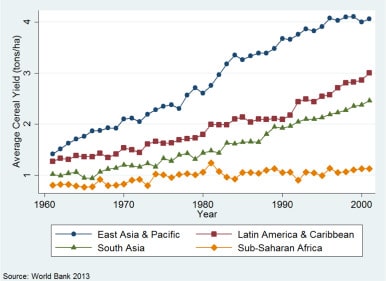
- In contrast, Sub-Saharan Africa, despite vast arable land, continues to face low productivity due to limited access to inputs like irrigation, fertilizers, and modern technology.
- From a historical perspective, agricultural productivity was largely stagnant during the pre-industrial era, being dependent on rainfall and traditional tools. The Agricultural Revolution in Europe (18th century) introduced mechanization and crop rotation, laying the foundation for modern input-intensive agriculture.
- At the global level today:
- Developed regions (North America, Western Europe, Japan) exhibit high productivity due to mechanization, capital-intensive farming, and advanced technologies.
- Developing regions (South Asia, Sub-Saharan Africa, parts of Latin America) still rely on traditional labor-intensive inputs, resulting in wide productivity gaps.
- According to FAO (2022), while only 20% of global farmland is irrigated, it contributes nearly 40% of the world’s food supply — highlighting the decisive role of irrigation input. Similarly, fertilizer consumption in Europe exceeds 300–400 kg/ha, while in Africa it is below 20 kg/ha, directly correlating with productivity differences.
- Moreover, climate change, soil degradation, and resource depletion are reshaping the input–productivity relationship. Future agricultural growth will increasingly depend on sustainable and smart inputs — such as precision farming, renewable energy-based mechanization, drought-resistant crop varieties, and climate-smart institutional frameworks.
Agricultural Inputs
- Agriculture is a system of inputs, processes, and outputs. The efficiency of agriculture largely depends upon the quality and quantity of inputs.
- These inputs range from natural factors (land, soil, water) to technological (machinery, seeds, irrigation), socio-economic (labor, capital, institutional support) and modern innovations (biotechnology, ICT, renewable energy use).
- According to FAO (2023), about 95% of global food production depends on land and soil-based inputs, but productivity is increasingly shaped by technological and institutional factors.
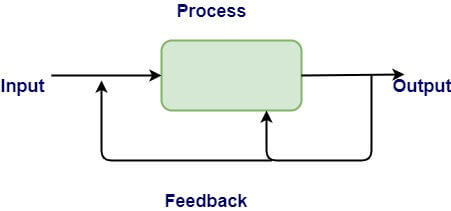
- The agriculture system has the following components: Input, output, process, and feedback.
- Input: seed, fertilizers, labor, tools, knowledge, skill, policy, are the input of the farm system.
- Output: food grains, grass, fruit, meat, milk, fish, etc, are the output of the farm system.
- Process: farming, harvesting, plowing, livestock farming, etc, are the process of the agriculture system.
- Feedback: based on the farm output, farmers get the feedback. Using this feedback or experienced knowledge farmer may change the input & process of the agricultural system.
Classification of Agricultural Inputs
- Land and Soil:
- Land is the fundamental and irreplaceable resource for agriculture; its size, fertility, and tenure system determine agricultural output.
- Soil quality (nutrients, organic matter, drainage, texture, structure, and depth) influences the choice of crops:
- Alluvial soils of the Indo-Gangetic plains → wheat, rice, sugarcane.
- Black cotton soil (Regur) of Deccan plateau → cotton.
- Loess soils of China → millet, wheat.
- Soil problems: Salinization in Pakistan’s Indus basin, soil erosion in Sub-Saharan Africa, desertification in Sahel region.
- FAO (2022) estimates 33% of global soils degraded, highlighting the urgent need for sustainable practices.
- Water and Irrigation:
- Agriculture is heavily dependent on availability of water, either through rainfall or irrigation.
- Irrigation stabilizes production and allows multiple cropping in semi-arid regions.
- Examples of irrigation systems:
- Canal irrigation in Punjab-Haryana (India).
- Tube well irrigation in northern China plains.
- Drip irrigation in Israel and parts of Gujarat, Maharashtra (India).
- Flood irrigation along the Nile valley (Egypt).
- Global scenario: Only 20% of farmland irrigated, but contributes nearly 40% of food output (FAO).
- Problems: Over-extraction of groundwater in India & Middle East, leading to aquifer depletion.
- Climate and Weather:
- Temperature, rainfall, and growing season length dictate crop selection.
- Regional associations:
- Monsoon Asia → rice cultivation due to heavy summer rainfall.
- Temperate grasslands (prairies, steppes) → wheat.
- Mediterranean climate → olives, citrus, grapes.
- Weather variability: Droughts in Horn of Africa, cyclones in Bangladesh, and shifting rainfall in Amazon basin show how climate change is reshaping input reliability.
- Labor:
- Labor availability and quality determine whether agriculture is subsistence or commercial.
- Developing countries (India, Bangladesh, Vietnam, Nigeria) → surplus labor, intensive farming, but low productivity per worker.
- Developed countries (USA, Canada, Australia) → labor scarcity, high mechanization, very high productivity per worker.
- Social dimensions:
- Feminization of agriculture in South Asia & Africa due to male out-migration.
- Aging farmers in Japan, Italy, Germany → need for automation and technology.
- Capital:
- Determines intensity of input use – mechanization, fertilizers, irrigation, and modern seeds.
- High capital regions:
- USA & Western Europe → commercial, mechanized farming.
- Japan & South Korea → intensive use of capital on small holdings.
- Low capital regions:
- Sub-Saharan Africa, South Asia → dependence on manual tools, animal power, rainfed farming.
- Credit availability through banks, cooperatives, microfinance institutions plays a crucial role in supporting small farmers.
- Seeds and Crop Varieties:
- Seeds are the genetic foundation of productivity.
- Green Revolution showed how HYVs could transform food production.
- Regional examples:
- HYV wheat in India’s Punjab & Mexico.
- GM soybean in Brazil & USA.
- Drought-resistant maize in Sub-Saharan Africa.
- Concerns: Dependence on multinational corporations (Monsanto, Bayer), loss of indigenous crop diversity, and rising seed costs.
- Fertilizers and Manures:
- Essential for replenishing soil nutrients removed by intensive cropping.
- Types:
- Organic inputs (farmyard manure, compost, green manure).
- Chemical fertilizers (NPK).
- Regional use:
- Netherlands & Japan → >500 kg/ha (highest in the world).
- Sub-Saharan Africa → <20 kg/ha (very low).
- India → ~150–160 kg/ha (FAO, 2022).
- Problems: Overuse → soil degradation, eutrophication (e.g., Baltic Sea, Gulf of Mexico “dead zone”).
- Power and Energy:
- Modern agriculture depends on mechanical and electrical power.
- Sources: Human, animal, diesel engines, electricity, and renewable energy (solar, wind).
- Regional examples:
- USA – large-scale mechanized farming (tractors, combines).
- India – irrigation pumps powered by electricity & diesel; solar pumps promoted under PM-KUSUM scheme.
- Africa – high reliance on manual & animal power.
- Technology and Mechanization:
- Introduction of modern machinery and smart technologies raises productivity.
- Examples:
- Precision farming using GPS in USA, Canada.
- Drones for pesticide spraying in China.
- Israel → drip irrigation and desert farming technologies.
- India → partial mechanization, limited by fragmented holdings.
- Future trends → Robotics, AI-driven monitoring, vertical farming, hydroponics.
- Institutional Inputs:
- These include policies, reforms, and state support systems.
- Examples:
- Land reforms (e.g., abolition of zamindari in India).
- Subsidies (EU’s Common Agricultural Policy, India’s MSP).
- Credit and insurance schemes (India’s PMFBY, USA’s Crop Insurance).
- Institutions bridge the gap between small farmers and modern technology.
- Research, Knowledge, and Information:
- Agricultural universities, extension services, and research institutions develop improved inputs.
- Examples:
- IRRI (Philippines) → HYV rice.
- CIMMYT (Mexico) → HYV wheat.
- ICT-based advisories in India (Kisan Call Centers, agri-apps).
- Global collaboration via FAO, CGIAR, World Bank projects ensures wider dissemination of innovations.
Agricultural Productivity
- Agricultural productivity refers to the measure of output obtained from agricultural activities relative to the inputs used.
- It essentially reflects the efficiency of input use in generating agricultural output.
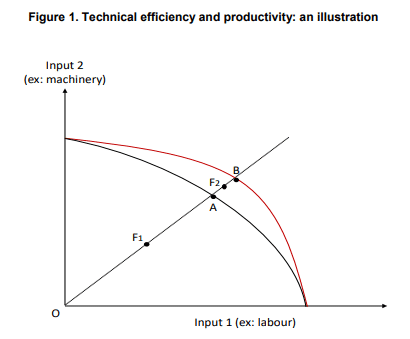
- Productivity is the ratio of farm output and farm input. Productivity is always measured with reference to an aerial unit. FAO and others use hectares as the land unit.
- Productivity is different from fertility. High fertile land need not be high productivity.
- For example, despite having high fertile agricultural land in India as compared to China & South Korea, productivity is much less than in China & South Korea.
- Productivity is different from fertility. High fertile land need not be high productivity.
- It can be expressed as:
- Land productivity → output per unit area (e.g., tonnes/hectare).
- Labor productivity → output per agricultural worker.
- Total factor productivity (TFP) → overall efficiency of all inputs (land, labor, capital, technology).
Importance of Agricultural Productivity
- Agricultural productivity is the cornerstone of food security, rural livelihoods, and economic development.
- Over 2.5 billion people depend on agriculture for subsistence (FAO, 2022), and more than 70% of rural households in developing countries rely on farming as their primary livelihood.
- Rising productivity helps nations tackle the “trinity challenge” of food security, poverty reduction, and sustainable growth.
- (A) At the Global Level
- Food Security:
- Global demand for food is projected to rise by 60% by 2050 (FAO) due to population growth. Productivity growth is critical to avoid global hunger.
- Economic Growth:
- Agricultural growth has a multiplier effect: 1% growth in agriculture leads to 2–3% growth in the rural economy (World Bank).
- Climate Change Adaptation:
- Higher yields on existing land reduce the need for deforestation and help lower greenhouse gas emissions.
- Trade Competitiveness:
- Nations with high agricultural productivity (e.g., USA, Netherlands, Brazil) dominate global food exports.
- Food Security:
- (B) At the National Level
- Food Self-Sufficiency:
- Countries like India achieved self-sufficiency in cereals post-Green Revolution by improving yields.
- Industrial Development:
- Agriculture supplies raw materials (cotton, sugarcane, oilseeds) to industries. Productivity ensures reliable industrial inputs.
- Economic Stability:
- Agriculture still contributes significantly to GDP in many developing nations (e.g., India ~18%, Sub-Saharan Africa ~25–30%). Higher productivity reduces import dependency and ensures macroeconomic stability.
- Employment & Poverty Reduction:
- Higher farm yields generate rural employment in allied activities (processing, logistics).
- Food Self-Sufficiency:
- (C) At the Household/Rural Level
- Income & Livelihoods:
- Higher crop productivity → higher farm incomes → reduced poverty.
- Nutrition Security:
- Productivity growth enhances food availability and lowers prices, improving dietary diversity.
- Social Development:
- Surplus income from agriculture allows investments in education, health, and housing, improving rural well-being.
- Income & Livelihoods:
Regional Illustrations
- India:
- Green Revolution (1960s–70s) raised wheat productivity in Punjab & Haryana from 1.2 t/ha to >4 t/ha, making India food self-sufficient.
- China:
- Rice productivity (~6.9 t/ha) transformed China into the world’s leading rice producer, ensuring domestic food security.
- Africa:
- Despite vast arable land, low productivity (<1.5 t/ha for cereals) perpetuates hunger and dependence on imports.
- Europe (Netherlands):
- Exceptionally high productivity through precision farming has made it the second-largest agricultural exporter despite small land size.
Strategic Importance in the 21st Century
- Population Pressure: With 9.7 billion people projected by 2050 (UN), productivity growth is essential.
- Sustainable Development Goals (SDGs): Directly linked to SDG-1 (No Poverty), SDG-2 (Zero Hunger), and SDG-12 (Sustainable Consumption and Production).
- Geopolitical Stability: Food shortages often trigger social unrest (e.g., Arab Spring linked to rising food prices).
- Technological Innovation: Advances in biotechnology, GM crops, and precision farming hinge on enhancing productivity.
Measurement of Agricultural Productivity
- Agricultural productivity is a key indicator of the efficiency of a farming system. It shows how effectively land, labor, and capital are used to produce food and raw materials.
- Since agriculture is a multi-input and multi-output activity, measuring productivity is not straightforward. Different methods are used depending on whether one focuses on land, labor, or overall efficiency.
- Major Approaches to Measuring Agricultural Productivity:
(A) Land Productivity
- This is the most widely used measure.
- It calculates how much output is obtained from a unit area of land, generally expressed as yield per hectare.
- For instance, rice productivity is very high in East and Southeast Asia, especially in China and Vietnam, compared to Sub-Saharan Africa.
- It is useful for understanding regional variations but ignores the role of labor and capital.
(B) Labor Productivity
- This measures output in relation to the number of people engaged in agriculture.
- It highlights efficiency of workforce utilization.
- In advanced economies such as the USA, Canada, and Western Europe, labor productivity is very high due to mechanization and modern technology, even though fewer people are engaged in farming.
- In contrast, in countries like India, Bangladesh, and Nigeria, where agriculture is labor-intensive, productivity per worker remains low.
(C) Crop-Specific Yield Measurement
- Sometimes productivity is assessed for individual crops.
- For example, wheat yields in India average around 3–4 tonnes per hectare, while in France and Germany they are above 7 tonnes per hectare.
- Such measures help policymakers identify gaps in technology and input use for specific crops.
- However, it does not provide a comprehensive picture of total agricultural performance.
(D) Total Factor Productivity (TFP)
- This method looks at agriculture in a holistic way.
- It relates total output to all inputs such as land, labor, machinery, fertilizers, irrigation, and energy.
- TFP captures the effect of technological improvements, better seed varieties, and management practices.
- For example, the steady rise in agricultural productivity in the USA and Brazil over the last few decades is largely due to TFP gains.
- However, it is a complex measure and requires detailed statistical data.
(E) Input–Output Ratio
- Here, productivity is measured by comparing the value of agricultural output with the value of inputs used.
- It shows the economic efficiency of farming.
- In highly commercialized and intensive farming regions like the Netherlands and Israel, the input–output ratio is very high, while in subsistence-oriented systems of South Asia and Africa, the ratio is much lower.
(F) Composite Index Methods
- Agricultural geographers have developed statistical techniques to measure productivity across multiple crops and regions.
- Kendall’s method ranks regions according to yields of several crops and combines them into an index.
- Shafi’s method uses standardized scores to calculate productivity at regional levels.
- These methods are useful in comparing productivity between districts, states, or countries.
(G) Value Productivity
- Instead of physical yields, this method uses the monetary value of output per unit of land or per farmer.
- It helps in understanding the commercial importance of agriculture.
- For example, cut-flower farming in the Netherlands or viticulture in France yields high value productivity compared to subsistence cereal farming in South Asia.
- The drawback is that market price fluctuations can distort actual productivity levels.
Regional Illustrations
- High Land Productivity: Japan and the Netherlands, due to intensive farming, multiple cropping, and high use of technology.
- High Labor Productivity: USA, Canada, and Australia, where mechanization allows a small workforce to manage large farms.
- Low Productivity Regions: Sub-Saharan Africa, parts of South Asia, where low input use, poor irrigation, and outdated techniques prevail.
- India: Great regional variation—Punjab and Haryana have high yields due to irrigation and HYVs, while eastern and central India show lower productivity.
Modern Approaches
- Today, productivity is also measured using remote sensing and GIS techniques to map yields across regions.
- Sustainability indicators like water-use efficiency, soil fertility, and carbon footprint are increasingly being integrated.
- International institutions such as FAO and World Bank emphasize TFP growth as the most reliable measure of long-term agricultural performance.
Determinants of Agricultural Productivity
- Agricultural productivity varies widely across space and time due to the interaction of natural, socio-economic, and technological factors.
- While fertile soils and favorable climates provide the base, human efforts—through technology, capital investment, and institutional arrangements—largely determine how efficiently resources are converted into output.
- Major Factors Influencing Agricultural Productivity:
(A) Physical/Environmental Factors
- Relief & Topography
- Plains (e.g., Indo-Gangetic Plain, North China Plain, Mississippi Valley) allow mechanized farming and higher productivity.
- Hilly and mountainous regions (e.g., Himalayas, Andes, Ethiopian Highlands) restrict large-scale agriculture.
- Climate (Temperature & Rainfall)
- Determines crop type and intensity.
- Tropical monsoon regions (India, SE Asia) favor rice cultivation; temperate regions (USA, Canada, Europe) suit wheat and maize.
- Climatic hazards like droughts (Sahel, Rajasthan) and frost (Russia, Canada) reduce productivity.
- Soils
- Alluvial soils (India’s Indo-Gangetic plain, Nile valley) and Chernozem (Ukraine, Russia) support high yields.
- Infertile laterites, podzols, and desert soils limit productivity unless improved with fertilizers and irrigation.
- Water Availability
- Irrigated regions (Punjab-Haryana, Nile Valley, Imperial Valley USA) sustain multiple cropping.
- Rain-fed areas (Sub-Saharan Africa, Deccan Plateau) show low productivity and high variability.
(B) Technological Factors
- Mechanization
- Use of tractors, harvesters, and irrigation pumps enhances efficiency (USA, Canada, Australia).
- Low mechanization in Sub-Saharan Africa and parts of South Asia results in low productivity.
- High-Yielding Varieties (HYVs)
- Adoption of HYVs during Green Revolution (India, Mexico, Philippines) raised output significantly.
- Non-adoption or failure due to ecological limits reduces gains.
- Fertilizers and Pesticides
- High use in Netherlands, Japan, South Korea leads to very high yields.
- Low and imbalanced fertilizer use in Africa and South Asia reduces soil fertility and yields.
- Irrigation & Water Management
- Modern irrigation (drip, sprinkler, canal networks) increases productivity (Israel, Punjab-Haryana).
- Poor irrigation infrastructure restricts cropping intensity in drylands.
- Research & Extension Services
- R&D institutions (CIMMYT, IRRI, ICAR) contribute to innovations.
- Countries lacking research support face stagnation.
(C) Socio-Economic Factors
- Landholding Size & Structure
- Consolidated large farms in USA, Canada allow economies of scale.
- Fragmented holdings in India, Nepal, Bangladesh hinder mechanization and reduce productivity.
- Labour Availability & Skills
- Surplus but low-skilled labor in Asia → disguised unemployment, low productivity.
- Skilled, educated farmers in advanced economies adopt innovations faster.
- Capital Investment
- High capital investment (greenhouses in Netherlands, precision farming in USA) boosts yields.
- Capital-poor economies (Africa, South Asia) remain stuck in low productivity cycles.
- Market Access & Infrastructure
- Regions with good transport, storage, and marketing (USA Midwest, EU countries) encourage commercial farming.
- Lack of infrastructure in Sub-Saharan Africa and parts of India → post-harvest losses, low profitability.
(D) Institutional & Policy Factors
- Land Reforms
- Japan and South Korea’s post-WWII land reforms increased efficiency and productivity.
- In India, uneven land reform implementation still hampers productivity.
- Government Policies
- Subsidies, MSP (India), CAP (EU), crop insurance, and credit availability directly affect farmers’ choices.
- Countries lacking supportive policies face stagnation.
- International Trade & Globalisation
- Export orientation of Latin America (soybeans in Brazil, coffee in Colombia) has encouraged modernization.
- WTO and globalization affect crop choices and profitability.
(E) Demographic & Cultural Factors
- Population Pressure
- High population pressure in South Asia leads to intensive subsistence farming → low per capita productivity.
- Low population density in advanced economies supports mechanized extensive farming.
- Food Habits & Cultural Preferences
- Rice dominance in Asia, wheat in Europe-North America shapes productivity patterns.
- Cash crops like coffee, tea, cocoa grown in Africa/Latin America are shaped by global demand.
(F) Environmental & Ecological Constraints
- Soil Degradation & Desertification
- Overuse of fertilizers (India, China) leads to soil exhaustion.
- Desertification in Sahel, Rajasthan reduces arable land.
- Climate Change
- Unpredictable rainfall, rising temperatures, floods, and droughts increasingly influence global productivity.
- For example, wheat yields in Australia are highly vulnerable to El Niño events.
- Sustainability & Resource Use
- Over-exploitation of groundwater (Punjab, North China Plain, California) threatens long-term productivity.
Regional Illustrations
- High Productivity: Netherlands (greenhouse farming), USA Midwest (mechanized grain belts), Japan (intensive rice farming with HYVs).
- Medium Productivity: India’s Punjab-Haryana (Green Revolution areas), Brazil (soybean, sugarcane).
- Low Productivity: Sub-Saharan Africa (low inputs, drought-prone), parts of Central Asia (salinization, poor infrastructure).
Classification
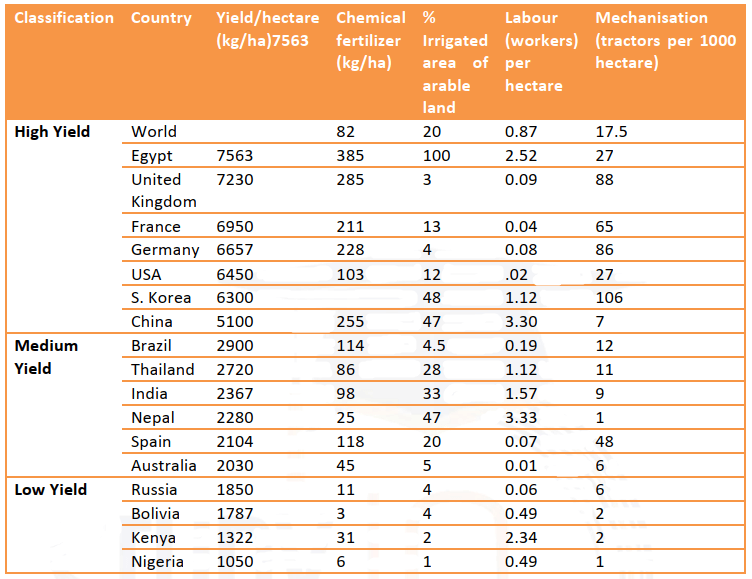
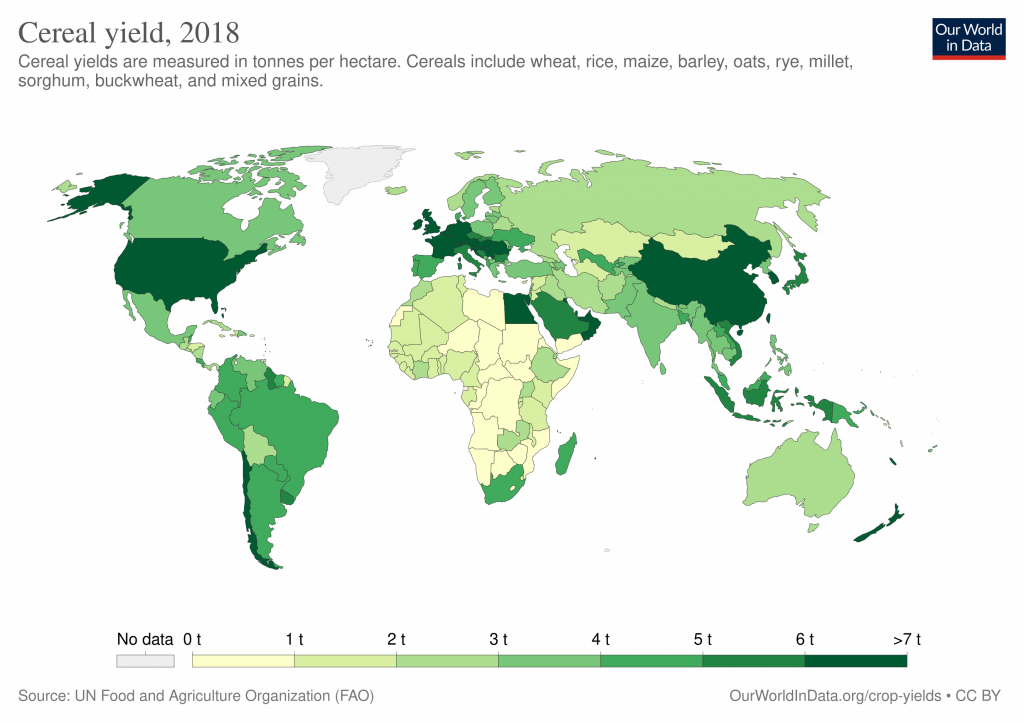
- From an agricultural point of view, we divide the countries into three categories:
- High productivity- >3000 kg/ha yield of cereals
- Medium productivity – 2000-3000 kg/ha
- Low productivity- <2000 kg/ha
- Countries of high productivity:
- These include developed countries, Egypt, China, Chile, Indonesia, and South Korea. These are countries where both environmental factors, as well as input factors, have worked.
- Some examples are:
- Egypt– Egypt has black alluvium soil with agricultural inputs which has resulted in making 95% of land arable.
- Chile– around 80% of the land is irrigated
- China– Eastern coastal plain is very fertile, Northern plains, Hwang Ho plain, Manchuria coastal area, Loess plain have got an agricultural revolution.
- Indonesia– Lava plateau are very fertile.
- France, South Korea, Germany, etc. are not endowed with fertile soil. All have podzol or podzolic soil. But due to agricultural inputs, their productivity is among the highest in the world.
- Medium productivity countries:
- These include countries which are making attempts to improve agricultural productivity, so there has been tendency to give more agricultural inputs.
- Such countries are Vietnam, Malaysia, Argentina, Myanmar, Mexico, Bangladesh, Brazil, Philippines etc.
- Low productivity countries
- Most of these countries have environmental suitability over large areas but due to lack of agricultural inputs, productivity is low.
- Secondly, natural hazards create problems in the development of inputs. These are countries where regional development has taken place. They have a very high level of intraregional variations in agricultural productivity.
- E.g. In 2005, India recorded total productivity of 2367 kg/ha, but Punjab and Haryana have yields exceeding 3000 kg/ha, while Assam had a value at 1100kg/ha.
- In Pakistan, Punjab has productivity greater than 3000 kg/ha, while productivity in Baluchistan is less than 1000 kg/ha.
- In Nigerian, the Niger river’s command area has high productivity, while the northern plateau has Agricultural Productivity between 500 and 700 kg/ha
- Most of the sub-Saharan countries have black alluvium content but unfavorable climate and lack of irrigation are principally responsible for low and very low productivity.
- Although there have been inter-regional and intra-regional variations in agricultural productivity but there has been growing attempts by developing countries to increase agricultural productivity, primarily using agricultural inputs. This is obvious from the increase in productivity seen in some countries.
- When we consider general agricultural productivity, including all crops, it is found that countries using agricultural inputs have developed profitable agricultural economies.
- Commercial grain farming of the USA, Canada, France, Norway, Sweden, Australia, and New Zealand are good examples. They have also provided inputs to other crops and the yield is phenomenal in wheat, maize, and rice in the USA and wheat, potato in Western European countries.
- Developing countries are still dependent to a greater extent on natural conditions. Whatever inputs are given they are given to food crops, so industrial and commercial crops are almost ignored. Developing countries have failed to develop new seeds and new agricultural technology and whatever is developed in western countries are not much suitable for developing countries.
- So whenever they use imported HYV seeds and imported modern agricultural technology, they are unable to get the required productivity.
- Thus, poor and developing countries have to take major steps first for developing indigenous inputs and secondly more technological interactions with the developed countries.
- Present emphasis has changed. Presently there is a need to develop sustainable seeds and only those infrastructures which may have environmental suitability. So developing countries also have challenges to develop new inputs- drought-resistant seeds, flood-resistant seeds, and different systems of irrigation in drought areas.
- They also need to change crop priority and suitable needs to be encouraged. By taking such measures, developing countries may also improve their agricultural productivity.
Methods to increase productivity
- Agricultural productivity is central to food security, poverty reduction, and rural development. With limited scope for land expansion, increasing productivity per unit of land and labor is the only sustainable solution.
- The methods involve technological, institutional, infrastructural, ecological, and policy interventions, varying across developed and developing regions.
- Major Methods:
(A) Technological Methods
- Improved Seeds & Biotechnology
- Use of HYVs (High-Yielding Varieties) of wheat, rice, and maize (Green Revolution).
- Hybrid crops, transgenic varieties, and gene editing (CRISPR) improving resistance to drought, pests, and salinity.
- Example: IR-64 rice in Southeast Asia, BT cotton in India.
- Fertilizers & Soil Management
- Balanced application of NPK, micronutrients, and bio-fertilizers.
- Soil testing & nutrient management programs (e.g., Soil Health Card Scheme in India).
- Organic farming and vermicomposting for long-term fertility.
- Irrigation Development
- Expansion of canals, tube wells, and minor irrigation.
- Modern systems like drip and sprinkler irrigation (used widely in Israel, Rajasthan).
- Watershed development programs in semi-arid regions.
- Mechanization
- Use of tractors, threshers, harvesters, and precision farming tools.
- Increases labor efficiency and reduces time.
- Prominent in USA, Canada, Australia; spreading gradually in Punjab, Haryana, Brazil.
- Crop Diversification & Multiple Cropping
- Shifting from subsistence to high-value crops (horticulture, floriculture, medicinal plants).
- Adoption of intercropping, mixed farming, relay cropping to utilize land and water resources better.
- Example: Punjab’s shift from wheat-rice cycle to maize, pulses, and vegetables.
(B) Institutional Measures
- Land Reforms
- Abolition of intermediaries, tenancy reforms, ceiling on holdings, and consolidation of land.
- Japan, South Korea saw a productivity boost post-WWII due to land reforms.
- Cooperative & Collective Farming
- Pooling resources, joint use of machinery, and input sharing.
- Successful in Israel (Kibbutz system) and Denmark (dairy cooperatives).
- Agricultural Credit & Insurance
- Easy access to credit for small farmers via NABARD (India), Grameen Bank (Bangladesh).
- Crop insurance (e.g., PMFBY in India) encourages investment in productivity-enhancing practices.
(C) Infrastructural Development
- Transport & Market Facilities
- Rural roads, cold storage, warehouses reduce post-harvest losses.
- Better market access ensures remunerative prices.
- Agro-based Industries
- Processing industries (sugar mills, oil mills, rice mills) near production centers encourage higher output.
- Digital Agriculture
- ICT-based services for weather forecasting, crop advisory, and market price information.
- Precision agriculture using GIS, remote sensing, drones (USA, EU, India’s Digital Agriculture Mission).
(D) Ecological & Sustainable Methods
- Soil and Water Conservation
- Contour ploughing, terracing, afforestation in hilly areas.
- Rainwater harvesting and check dams in drought-prone regions.
- Climate-Resilient Agriculture
- Drought-resistant and flood-tolerant crops.
- Diversified farming systems to reduce climate risk.
- Sustainable Practices
- Integrated pest management (IPM).
- Conservation tillage to preserve soil health.
- Agroforestry for productivity + sustainability.
(E) Policy Measures
- Price & Subsidy Policies
- Minimum Support Price (MSP) and subsidies for fertilizers, electricity, and irrigation encourage productivity-enhancing inputs.
- EU’s Common Agricultural Policy (CAP) stabilizes farmers’ incomes.
- Research & Extension Services
- Strengthening agricultural universities and research institutes (IRRI, CIMMYT, ICAR).
- Krishi Vigyan Kendras (KVKs) and extension agents for technology dissemination.
- Global Trade & Integration
- Access to global markets encourages modernization of agriculture (soybean in Brazil, palm oil in Indonesia-Malaysia).
Regional Examples
- High Productivity: Netherlands (greenhouse farming, high-tech irrigation), USA (mechanized grain belts).
- Moderate Productivity: Punjab-Haryana (Green Revolution), Brazil (soybean revolution).
- Low Productivity: Sub-Saharan Africa (due to poor technology, capital scarcity, and climatic constraints).
Global Patterns of Agricultural Productivity
(A) High Agricultural Productivity Regions
- North America
- USA & Canada:
- Mechanized, commercial grain farming in the Prairies & Great Plains (wheat, maize, soybeans).
- High yields due to fertile soils, advanced machinery, biotechnology (GM crops), precision farming.
- Example: Corn Belt (Iowa, Illinois), Wheat Belt (Kansas, Dakotas).
- Productivity supported by infrastructure, subsidies, and export-oriented farming.
- USA & Canada:
- Western Europe
- UK, France, Germany, Netherlands, Denmark:
- Mixed farming and dairy farming highly productive.
- Intensive agriculture with high fertilizer use, crop rotation, greenhouse farming.
- Netherlands: World leader in greenhouse horticulture, high yield of vegetables and flowers despite small area.
- Backed by EU’s Common Agricultural Policy (CAP) and advanced R&D.
- UK, France, Germany, Netherlands, Denmark:
- Australia & New Zealand
- Australia: Mechanized wheat farming in Murray-Darling basin, large-scale sheep and cattle ranching.
- New Zealand: High dairy and pastoral productivity due to scientific methods and export-oriented agriculture.
(B) Moderate Agricultural Productivity Regions
- South America
- Brazil, Argentina:
- Brazil: Soybean revolution in Mato Grosso, sugarcane in São Paulo, mechanized agriculture in Cerrado.
- Argentina: Pampas region highly productive for wheat, maize, and livestock.
- High productivity in export-oriented cash crops, but inequalities in land ownership persist.
- Brazil, Argentina:
- Eastern Europe & Russia
- Ukraine (“Breadbasket of Europe”): Fertile black soils (Chernozem) with high wheat and maize yields.
- Russia: Large land resources but lower productivity in Siberia due to climatic constraints.
- East & Southeast Asia
- China:
- High rice productivity in Yangtze delta and Sichuan basin (intensive labor use, irrigation).
- Leading producer of rice, wheat, and vegetables, but per-capita land availability is low.
- Southeast Asia: Rice bowl of the world (Thailand, Vietnam, Myanmar, Philippines). Productivity rising due to irrigation and Green Revolution technology.
- China:
(C) Low Agricultural Productivity Regions
- Sub-Saharan Africa
- Subsistence farming dominant, with low mechanization and dependence on rainfall.
- Productivity is among the lowest in the world due to poor infrastructure, land degradation, and limited access to technology.
- Example: Sahel region faces frequent droughts and famines.
- South Asia (excluding certain high-productivity pockets)
- India:
- High productivity in Punjab, Haryana, Western UP (Green Revolution regions).
- Eastern India (Bihar, Odisha) and rainfed Deccan Plateau show low yields.
- Pakistan, Bangladesh: Productivity constrained by small landholdings, but improving in irrigated Indus-Ganga plains.
- India:
- Middle East & North Africa
- Harsh climate, water scarcity limit productivity.
- Dependent on irrigation (Nile valley in Egypt, Jordan valley in Israel).
- Countries like Saudi Arabia rely heavily on food imports despite investments in modern irrigation.
Determinants Behind Global Patterns
- Physical factors: Fertile soils (Chernozem in Ukraine, alluvial in Ganga plain), climate, water availability.
- Technological factors: Mechanization in USA, biotechnology in Brazil, greenhouse farming in Netherlands.
- Socio-economic factors: Land reforms in Japan vs. unequal land ownership in Latin America.
- Institutional support: EU’s CAP, US farm subsidies, Green Revolution in Asia.
- Global trade linkages: Export-oriented farming in Latin America, Australia, New Zealand.
Key Observations
- Developed World → high productivity due to technology, capital, and institutional support.
- Developing World → moderate to low productivity due to dependence on monsoons, poor infrastructure, and subsistence farming.
- Regional contrasts within countries → High disparities (e.g., Punjab vs. Bihar in India; Pampas vs. Amazon in Brazil).
- Changing trends → Biotechnology, GM crops, climate-smart agriculture, and digital farming are altering productivity landscapes.





There is some mismatch in the classification. Kindly rectify them. For eg- as per table india’s productivity is more than 2000 but in explanation it has been put under low productivity category.
India comes under the medium yield category, but to elaborate the regional disparities of productivity in different regions in India, I have used that examples.
very helpful and to the point …thank u very much …
It would have been better if you have added case studies
Updated!