

Q. ‘Wolbachia method’ is sometimes talked about with reference to which one of the following?
- Controlling the viral diseases spread by mosquitoes
- Converting crop residues into packing materia
- Producing biodegradable plastics
- Producing biochar from. thennochemiceil conversion of biomass
Answer: (a) Controlling the viral diseases spread by mosquitoes
Wolbachia Method
- The “Wolbachia method” is a technique used to control the spread of viral diseases transmitted by mosquitoes, such as dengue, Zika, and chikungunya.
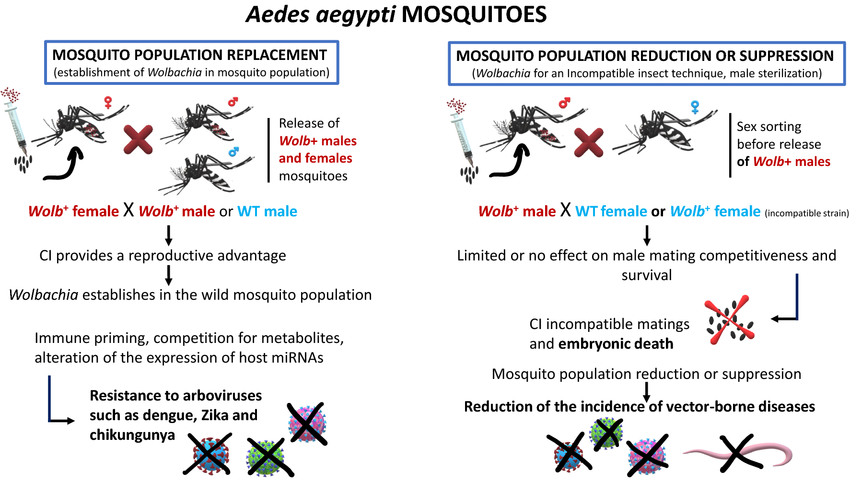
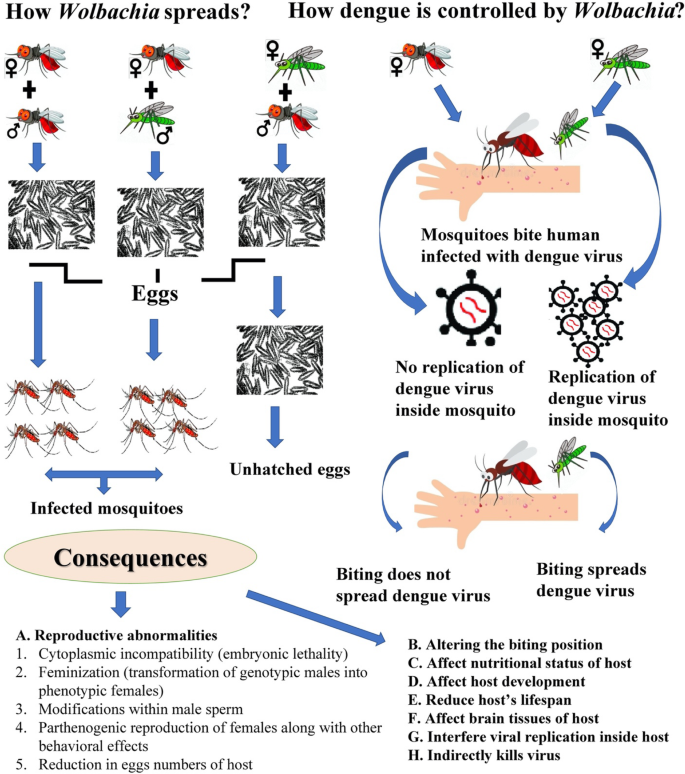
- Wolbachia is a type of bacterium that can be introduced into mosquitoes to reduce their ability to transmit these diseases. When mosquitoes carrying Wolbachia mate with mosquitoes without Wolbachia, the resulting eggs do not hatch or produce offspring, thus reducing the population of disease-carrying mosquitoes.
- In the Wolbachia method, Aedes aegypti mosquitoes are introduced with the bacterium in the lab and then researchers release them into the wild. Now, the Wolbachia-infected mosquitoes breed with their wild counterparts which result in a growing percentage of the bacterium in those mosquitoes. This is known as the Population Replacement Strategy.
Dengue disease
- According to World Health Organisation (WHO), dengue is a viral infection transmitted to humans through the bite of infected mosquitoes.
- It is a tropical and sub-tropical (climate) disease caused by the dengue virus (Genus Flavivirus) and prime vectors transmitting the disease are Aedes aegypti mosquitoes and, to a lesser extent, Ae. albopictus.
- The mosquito is also responsible for transmitting chikungunya, yellow fever and Zika infection. There is four dengue virus (DENV) serotypes that cause dengue (DEN-1, DEN-2, DEN-3 and DEN-4). Simply put, serotypes means separate groups within a species of microorganisms having a similar characteristic.