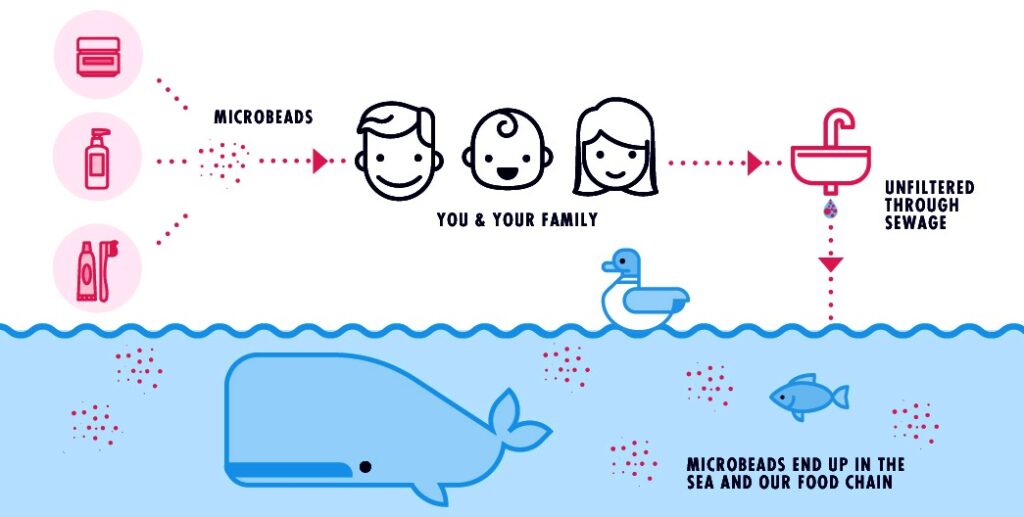
Q. Why is there a great concern about the ‘microbeads’ that are released into environment?
- They are considered harmful to marine ecosystems.
- They are considered to cause skin cancer in children.
- They are small enough to be absorbed by crop plants in irrigated fields.
- They are often found to be used as food adulterants.
Answer: (a) They are considered harmful to marine ecosystems.
Notes:
- Microbeads are manufactured solid plastic particles of less than one millimeter in their largest dimension.
- They are most frequently made of polyethylene but can be of other petrochemical plastics such as polypropylene and polystyrene.
- They are used in exfoliating personal care products, toothpastes and in biomedical and health-science research.
- Microbeads can cause plastic particle water pollution and pose an environmental hazard for aquatic animals in freshwater and ocean water.
- In the US, the Microbead-Free Waters Act of 2015 phases out microbeads in rinse off cosmetics by July 2017. The Netherlands was the first country to ban cosmetic microbeads in 2014.
- Microbeads are washed down the drain, can pass unfiltered through the sewage treatment plants and make their way into rivers and canals, resulting in plastic particle water pollution.
- A variety of wildlife, from small fish, amphibians and turtles to birds and larger mammals, mistake microbeads for their food source.
- This ingestion of plastics introduces the potential for toxicity not only to these animals but to other species higher in the food chain.
- Greenpeace refers to it as a “toxic time bomb”. Once in the marine environment microplastics can both release and absorb toxins, which can then move throughout the foodchain.