
Q. Which one of the following is associated with the issue of control and phasing out of the use of ozone-depleting substances?
- Bretton Woods Conference
- Montreal Protocol
- Kyoto Protocol
- Nagoya Protocol
Answer: (b) Montreal Protocol
Montreal Protocol
- Montreal Protocol is an essential Multilateral agreement that is introduced concerning the Depleting ozone layer. There are many man-made substances and chemicals that are known as ozone-depleting substances (ODS).
- The Montreal Protocol agreement regulates the production, consumption, and emission of such substances that are responsible for ozone depletion in the stratosphere.
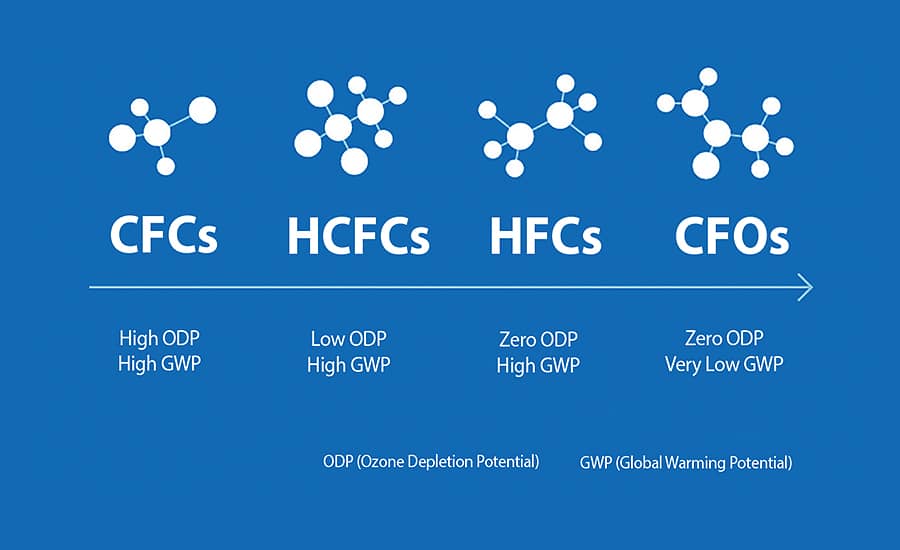
- The Montreal Protocol’s control of ODSs stimulated the development of replacement substances, firstly hydrochlorofluorocarbons (HCFCs) and then HFCs, in a number of industrial sectors. While HFCs have only a minor effect on stratospheric ozone, some HFCs are powerful greenhouse gases (GHGs).
- ODSs include chlorofluorocarbons (CFCs), bromine containing halons and methyl bromide, HCFCs, carbon tetrachloride (CCl4), and methyl chloroform.
- These ODSs are long-lived (e.g., CFC-12 has a lifetime greater than 100 years) and are also powerful GHGs.
- The adoption of the 2016 Kigali Amendment to the Montreal Protocol will phase down the production and consumption of some HFCs and avoid much of the projected global increase and associated climate change.