
Q. Which of the following organisms perform waggle dance for others of their kin to indicate the direction and the distance to a source of their food?
- Butterflies
- Dragonflies
- Honeybees
- Wasps
Answer: (c) Honeybees
Honeybees
- A honey bee is a eusocial flying insect within the genus Apis of the bee clade, all native to mainland Afro-Eurasia.
- Honey bees are known for their construction of perennial colonial nests from wax, the large size of their colonies, and surplus production and storage of honey, distinguishing their hives as a prized foraging target of many animals, including honey badgers, bears and human hunter-gatherers.
- The best known honey bee is the western honey bee, (Apis mellifera), which was domesticated for honey production and crop pollination.
- Honeybees are important pollinators for flowers, fruits, and vegetables. They live on stored honey and pollen all winter and cluster into a ball to conserve warmth.
- All honeybees are social and cooperative insects. Members of the hive are divided into three types.
- Workers forage for food (pollen and nectar from flowers), build and protect the hive, clean, and circulate air by beating their wings. The queen’s job is simple—she lays the eggs that will spawn the hive’s next generation of bees. There is usually only a single queen in a hive. If the queen dies, workers will create a new queen by feeding one of the worker females a special food called “royal jelly.” This elixir enables the worker to develop into a fertile queen.
- Queens regulate the hive’s activities by producing chemicals that guide the behavior of the other bees. Male bees are called drones—the third class of honeybee. Several hundred drones live in each hive during the spring and summer, but they are expelled for the winter months when the hive goes into a lean survival mode.
- There are 2 types of dances performed by bees:
- The Round Dance and
- The Tail-wagging or Waggle Dance
- For food sources 25 to 100 metres from the hive or closer, the round dance is used. The round dance provides no directional cues.
- The waggle dance takes the place of the round dance as the distance to the food source increases. The waggle dance tells the direction and amount of energyneeded to reach the food source.
- The amount of energy spent (or distance) is represented by the time required to complete one circuit.
- For a food source which is 200 metres away, a bee might dance 8–9 circuits in 15 seconds, 4-5 in 15 seconds for a source that is 1000 metres away, and 3 circuits in 15 seconds for a source that is 2000 metres away.
Wasps
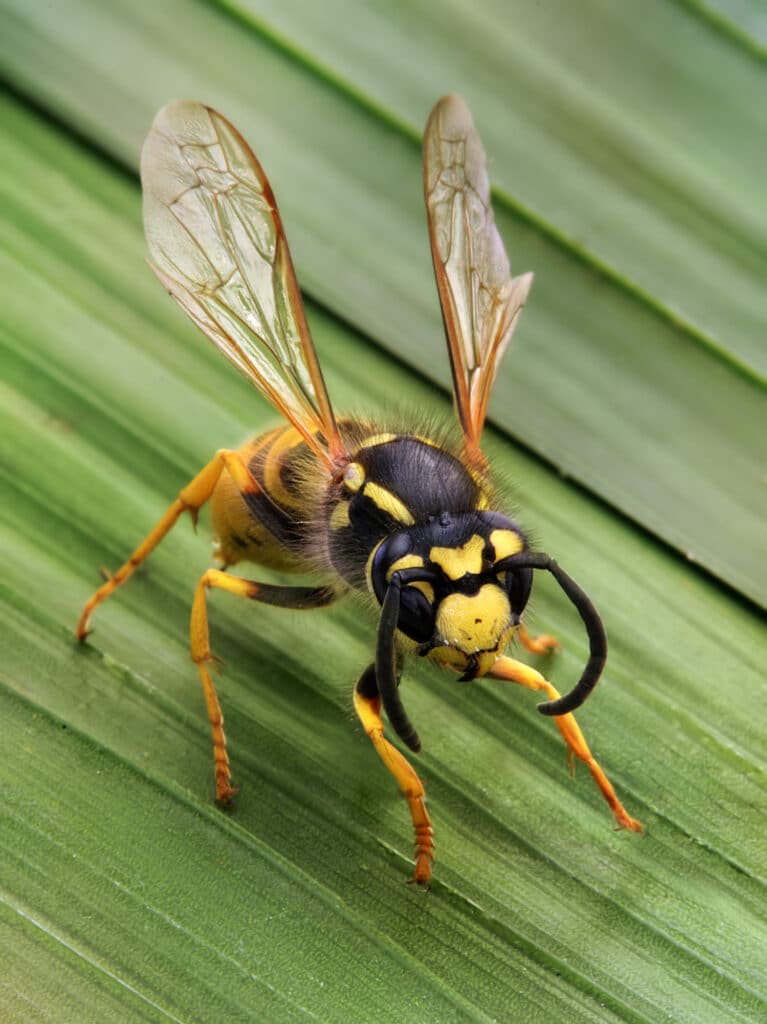
- A wasp is any insect of the narrow-waisted suborder Apocrita of the order Hymenoptera which is neither a bee nor an ant; this excludes the broad-waisted sawflies (Symphyta), which look somewhat like wasps, but are in a separate suborder.
- The wasps do not constitute a clade, a complete natural group with a single ancestor, as bees and ants are deeply nested within the wasps, having evolved from wasp ancestors. Wasps that are members of the clade Aculeata can sting their prey.
- Wasps are distinguishable from bees by their pointed lower abdomens and the narrow “waist,” called a petiole, that separates the abdomen from the thorax.
- The most commonly known wasps, such as yellowjackets and hornets, are in the family Vespidae and are eusocial, living together in a nest with an egg-laying queen and non-reproducing workers.
- Most wasps are actually solitary, non-stinging varieties. And all do far more good for humans by controlling pest insect populations than harm.
- Wasps live all over the world on every continent except Antarctica.
- Their venom contains a pheromone that makes other wasps more aggressive when they smell it.
- Wasps can repeatedly attack because their stinger is not barbed like those of bees.
- In later summer, young fertilized queens will burrow into an old log or inside other structures where they hibernate as all other wasps die off. In the spring, these queens start new colonies.
- The largest wasp in the world is the tarantula hawk, which can reach 2.7 inches in length. Tarantula hawks deliver a painful sting and have wingspans that can reach 4.5 inches.
Dragonflies
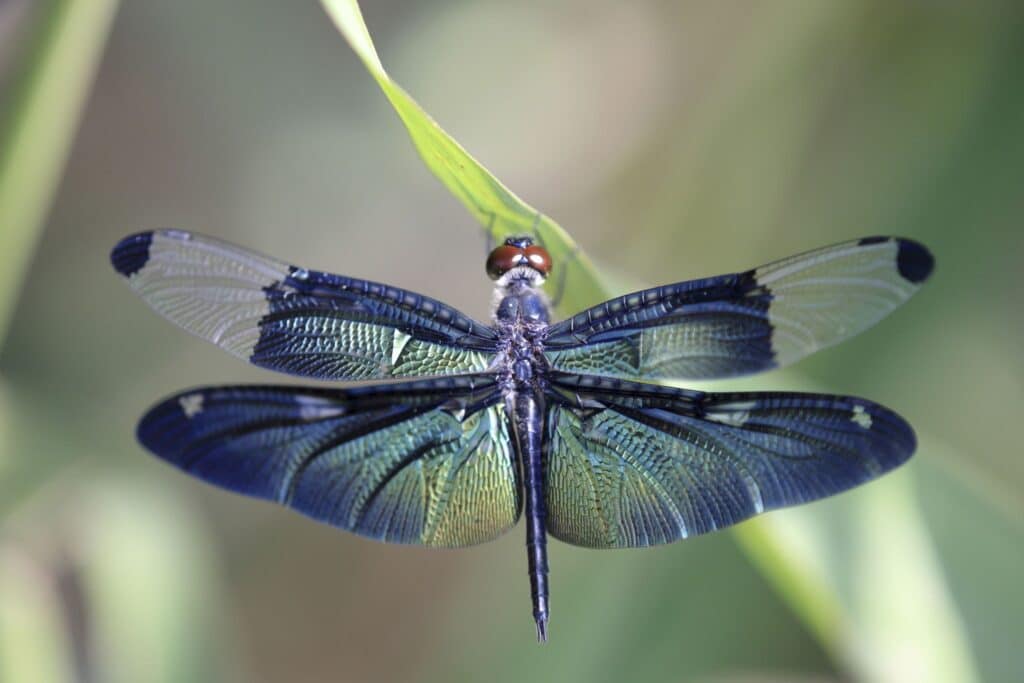
- A dragonfly is a flying insect belonging to the infraorder Anisoptera below the order Odonata. About 3,000 extant species of true dragonflies are known.
- Arriving on the scene around 300 million years ago, dragonflies were one of the first insects to inhabit this planet.
- Dragonflies are flat-out terrifying. They don’t simply chase down their prey; they snag them from the air with calculated aerial ambushes. Dragonflies can judge the speed and trajectory of a prey target and adjust their flight to intercept prey.
- The area of an odonate’s head is composed primarily of its enormous compound eyes, which contain 30,000 facets, each bringing in information about the insect’s surroundings. Dragonflies have nearly 360-degree vision, with just one blind spot directly behind them. This extraordinary vision is one reason why they’re able to keep a watch on a single insect within a swarm and go after it while avoiding midair collisions with other insects in the swarm.
- Dragonflies lay their eggs in water, and when the larvae hatch, they live underwater for up to two years. Some Lay Eggs in Saltwater.
- Dragonflies help humans by controlling populations of pest insects, especially those that threaten us most, such as mosquitoes and biting flies. A single dragonfly can eat anywhere between 30 and hundreds of mosquitoes per day.
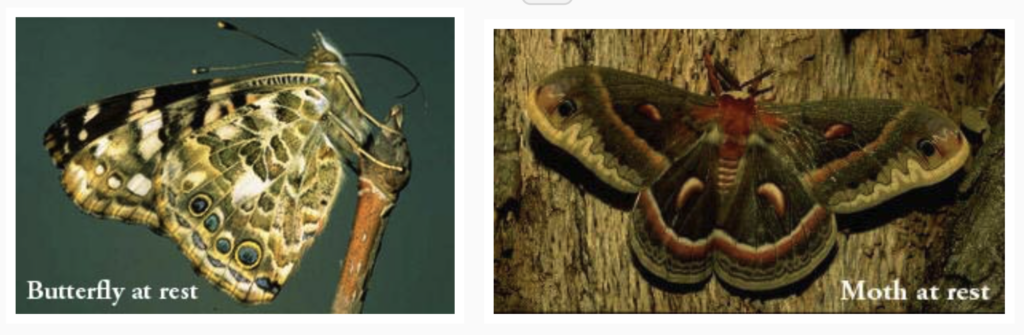
Butterflies
- Butterflies are the adult flying stage of certain insects belonging to an order or group called Lepidoptera. Moths also belong to this group.
- Butterflies (and moths) are the only group of insects that have scales covering their wings, although some butterflies have reduced scales. They differ from other insects also by their ability to coil up their proboscis.
- A butterfly undergoes a process called complete metamorphosis during its life cycle. This means that the butterfly changes completely from its early larval stage, when it is a caterpillar, until the final stage, when it becomes a beautiful and graceful adult butterfly. The butterfly life cycle has four stages: egg, larva, pupa, and adult.
- Butterflies are cold-blooded, meaning they cannot regulate their own body temperature. As a result, their body temperature changes with the temperature of their surroundings.
- Mating
- A male butterfly has several methods of determining whether he has found a female of his own species. One way is by sight. The male will look for butterflies with wings that are the correct color and pattern. When a male sights a potential mate it will fly closer, often behind or above the female. Once closer, the male will release special chemicals, called pheromones, while it flutters its wings a bit more than usual.
- The male may also do a special “courtship dance” to attract the female. These “dances” consist of flight patterns that are peculiar to that species of butterfly. If the female is interested she may join the male’s dance. They will then mate by joining together end to end at their abdomens. During the mating process, when their bodies are joined, the male passes sperm to the female. As the eggs later pass through the female’s egg-laying tube, they are fertilized by the sperm. The male butterfly often dies soon after mating.