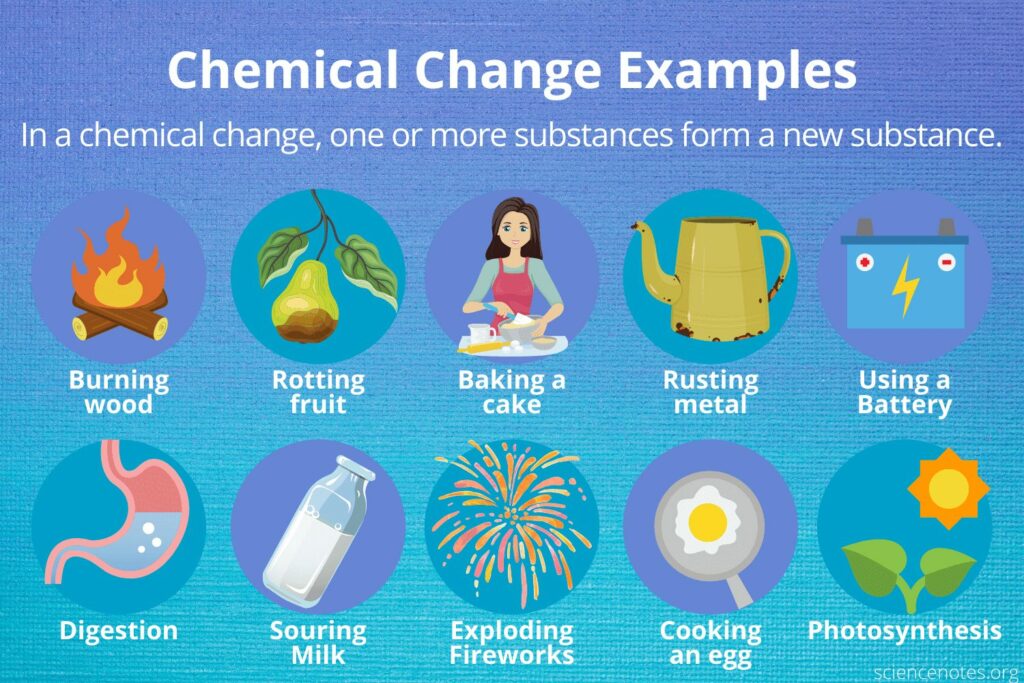
Q. Which of the following is/are the example/examples of chemical change?
- Crystallization of sodium chloride
- Melting of ice
- Souring of milk
Select the correct answer using the code given below.
- 1 and 2 only
- 3 only
- 1, 2 and 3
- None
Answer: (b) 3 only
Chemical Change
- When one chemical substance is transformed into one or more different substances, it is called a chemical change. The most common example is when iron transforms into rust.
- Crystallization of sodium chloride
- When the solubility limit of NaCl exceeds, the crystallization of NaCl takes place.
- It is a physical change since sodium chloride does not transform into some other chemical element after crystallization.
- Melting of ice
- Ice is the solid form that liquid water takes when it is cooled below 0 degrees celsius.
- When the temperature rises, solid ice changes into liquid water.
- It is not a chemical change since the composition of water molecules stays the same before and after melting.
- Souring of milk
- Lactic acid bacteria ferment lactose at room temperature and turn it into lactic acid.
- As a result, the acidity of the milk increases, which in its turn causes the protein to fold and liquid to separate into whey and a viscous mass.
- The soured milk has new elements and it cannot be reversed. Hence, it is a chemical change.