

Q. In the context of recent advances of human reproductive technology, “Pronuclear Transfer” is used for
- fertilization of egg in vitro by the donor sperm
- genetic modification of sperm producing cells
- development of stem cells into functional embryos
- prevention of mitochondrial diseases in offspring
Answer: (d) prevention of mitochondrial diseases in offspring
Pronuclear Transfer
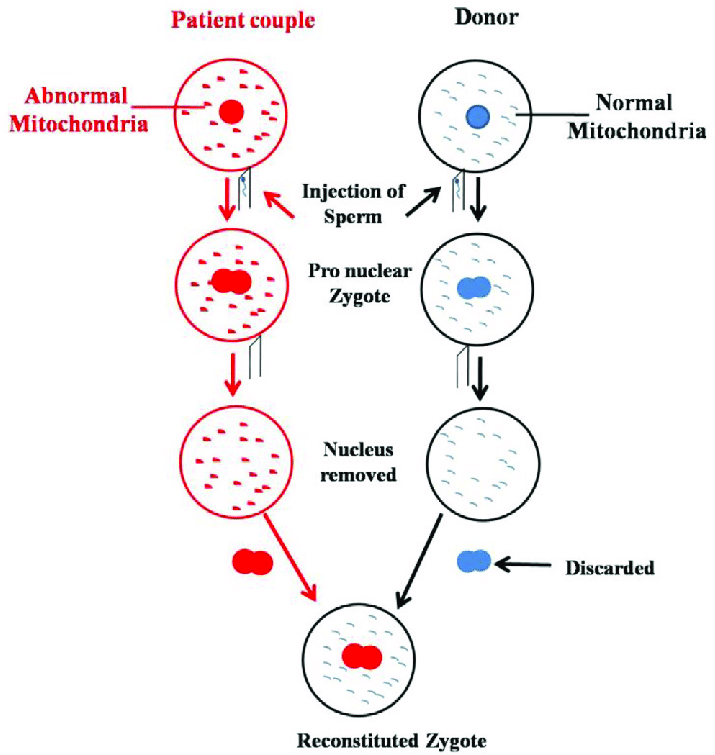
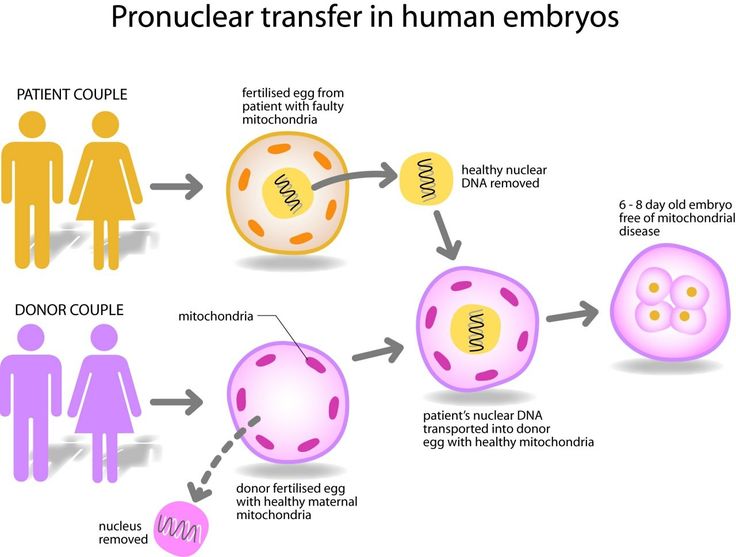
- In pronuclear transfer, the mother’s egg is first fertilized with the father’s sperm, producing a zygote. The pronuclei of the egg and sperm are then removed from the zygote and inserted into a donor egg that has been fertilized and has had its own nucleus removed.
- Pronuclear Transfer
- It involves the transfer of pronuclei from one zygote to another.
- This technique first requires fertilisation of healthy donated egg/eggs provided by the mitochondrial donor with the intending male parent sperm.
- The intending mother’s affected oocytes are fertilised with the intending father’s sperm.
- Thereafter, both sets of fertilised oocytes are allowed to develop to the early zygote stage where the pronuclei are visible.
- The pronuclei of zygotes formed from donated oocytes are removed within a karyoplast using micromanipulation equipment, and then it is discarded.
- The resulting zygotes contain nuclear DNA from each of the intending parents and a donor’s mtDNA.
- The zygote is then implanted into the mother’s uterus.
- This offspring produced from the genetic material of one man and two women are also referred to as Three-parent baby.
- There are various approaches that could help women to overcome infertility and could prevent the transmission to their offspring of potentially debilitating mitochondrial diseases.
- Pronuclear transfer reduces the effects of mutations that occur in the DNA of cellular organelles known as mitochondria. Hence, this technology is used for the prevention of mitochondrial diseases in offspring.
Assisted Reproductive Technology
- Assisted Reproductive Technology (ART) refers to medical procedures used to help individuals or couples conceive a child.
- It involves various techniques, such as in vitro fertilization (IVF), intracytoplasmic sperm injection (ICSI), Gamete Donation, Intrauterine Insemination, Pre-implantation Genetic Testing, Surrogacy, Altruistic Surrogacy.
- ART is often used by individuals or couples facing fertility challenges, including infertility, genetic disorders, or reproductive system abnormalities.
- ART procedures typically involve the manipulation of sperm, eggs, or embryos in a laboratory setting before transferring them to the woman’s uterus.
- Legal Provisions:
- The ART (Assisted Reproductive Technology Act) Regulation 2021 provides a system for the implementation of the law on surrogacy by setting up of the National Assisted Reproductive Technology and Surrogacy Board.
- The Act aims at the regulation and supervision of ART clinics and assisted reproductive technology banks, prevention of misuse, and safe and ethical practice of ART services.
Surrogacy
- Surrogacy is an arrangement in which a woman (the surrogate) agrees to carry and give birth to a child on behalf of another person or couple (the intended parent/s).
- A surrogate, sometimes also called a gestational carrier, is a woman who conceives, carries and gives birth to a child for another person or couple (intended parent/s).
- Altruistic surrogacy:
- It involves no monetary compensation to the surrogate mother other than the medical expenses and insurance coverage during the pregnancy.
- Commercial surrogacy:
- It includes surrogacy or its related procedures undertaken for a monetary benefit or reward (in cash or kind) exceeding the basic medical expenses and insurance coverage.
- Surrogacy (Regulation) Act, 2021:
- Under the Surrogacy (Regulation) Act, 2021, a woman who is a widow or a divorcee between the age of 35 to 45 years or a couple, defined as a legally married woman and man, can avail of surrogacy if they have a medical condition necessitating this option.
- It also bans commercial surrogacy, which is punishable with a jail term of 10 years and a fine of up to Rs 10 lakhs.
- The law allows only altruistic surrogacy where no money exchanges hands and where a surrogate mother is genetically related to those seeking a child.