Q. Consider the following statements: DNA Barcoding can be a tool to:
- assess the age of a plant or animal.
- distinguish among species that look alike.
- identify undesirable animal or plant materials in processed foods.
Which of the statements given above is/are correct?
- 1 only
- 3 only
- 1 and 2
- 2 and 3
Answer: (d) 2 and 3
DNA Barcoding
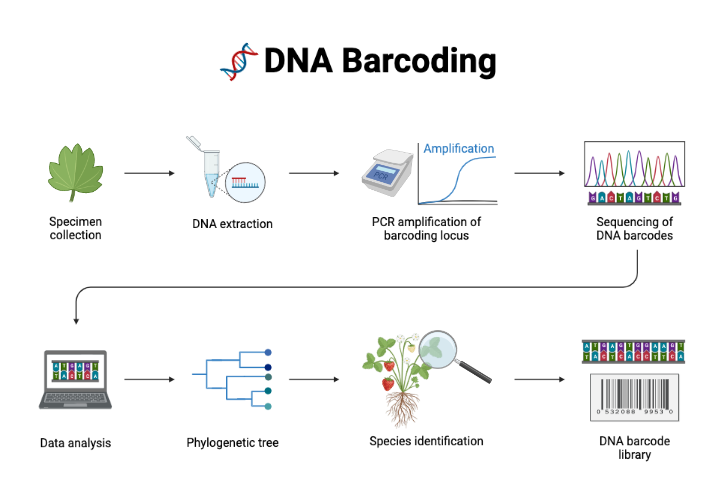
- DNA barcoding is a molecular technology that allows the identification of any biological species by amplifying, sequencing and querying the information from genic and/or intergenic standardized target regions belonging to the extranuclear genomes.
- DNA barcoding is a method of specimen identification using short, standardized segments of DNA. Every species has its own barcode, just as every person has their own fingerprint. These DNA barcodes can be compared to a reference library to provide an ID.
- DNA barcodes allow non-experts to objectively identify species – even from small, damaged, or industrially processed material. Just as the unique pattern of bars in a universal product code (UPC) identifies each consumer product, a “DNA barcode” is a unique pattern of DNA sequence that can potentially identify each living thing.
- cpDNA and mtDNA barcoding protocols are being used more and more in the food industry and food supply chains for food labeling, not only to support food safety but also to uncover food piracy in freshly commercialized and technologically processed products. DNA barcoding helps to identify undesirable animal or plant materials in processed foods.
Radiocarbon dating
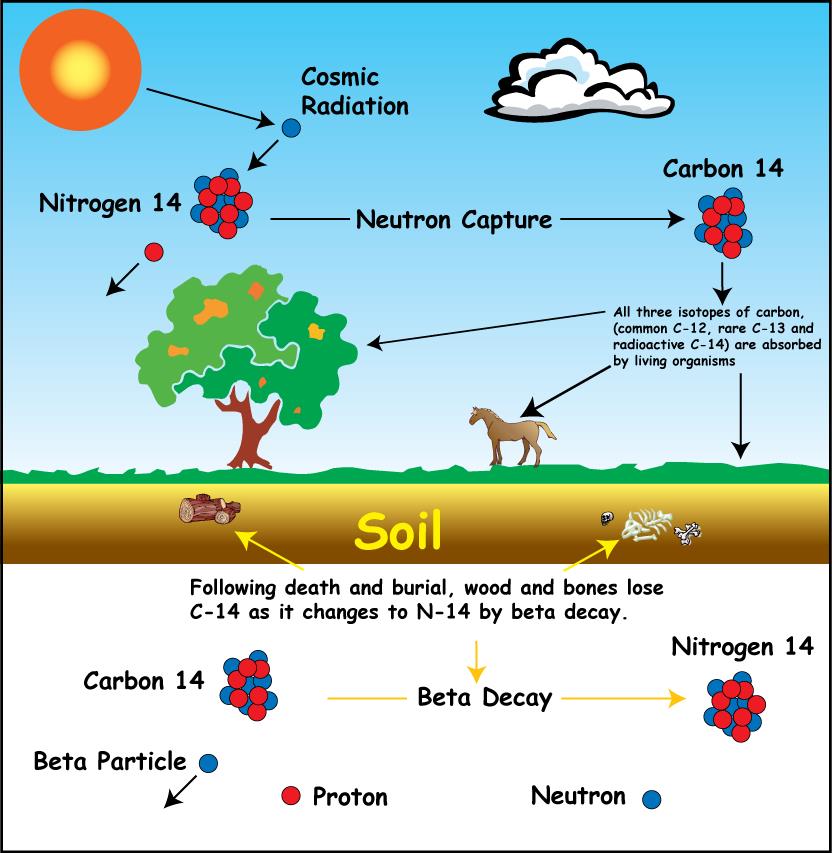
- Radiocarbon dating is a method for determining the age of an object containing organic material by using the properties of radiocarbon, a radioactive isotope of carbon.
- Geologists use the radiometric dating of uranium and the isotopes of other radioactive elements, combined with observations of fossils and sediment layers, to chart the course of Earth’s natural history and the evolution of life. To measure the age of plant and animal remains from the more recent past, scientists use a radioactive isotope of carbon, called carbon-14, as their clock. As carbon-14 decays, with a half-life of about 5,730 years, it becomes nitrogen-14. Using this clock, they have dated bones, campfires and other objects as old as 60,000 years, and in some cases even older.
DNA Mitochondrial Profiling
- Mitochondrial DNA
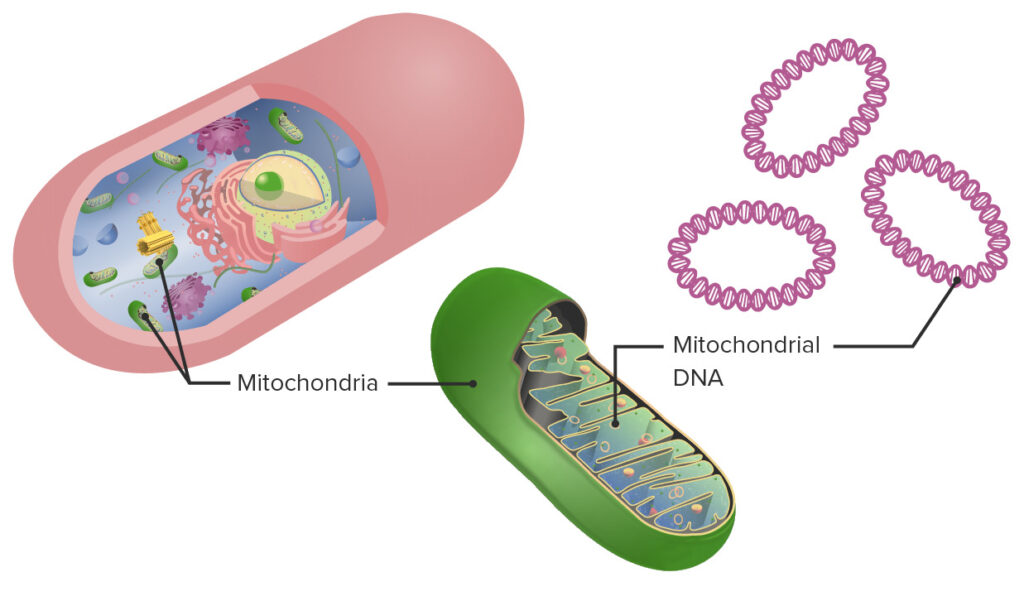
- Mitochondrial DNA is the circular chromosome found inside the cellular organelles called mitochondria. Located in the cytoplasm, mitochondria are the site of the cell’s energy production and other metabolic functions.
- Offspring inherit mitochondria – and as a result mitochondrial DNA – from their mother.
- DNA mitochondrial profiling:
- It examines biological evidence when nuclear DNA is present in very low quantities or when bones and hair are degraded.
- It determines the mitochondrial DNA (mtDNA) sequence from samples such as hair, bones, and teeth.
- It can be done where DNA extraction is difficult.
- Mitochondria is extracted from the cell and genome sequence is then matched with the family.
- Maternal inheritance of mitochondria allows scientists to compare it with maternally related individuals of a missing person.
- Unique identifications are not possible using this analysis.
Whole Genome Sequencing
- All organisms have a unique genetic code, or genome, that is composed of nucleotide bases- Adenine (A), Thymine (T), Cytosine (C) and Guanine (G).
- The unique Deoxyribonucleic Acid (DNA)fingerprint, or pattern can be identified by knowing the sequence of the bases in an organism.
- Determining the order of bases is called sequencing.
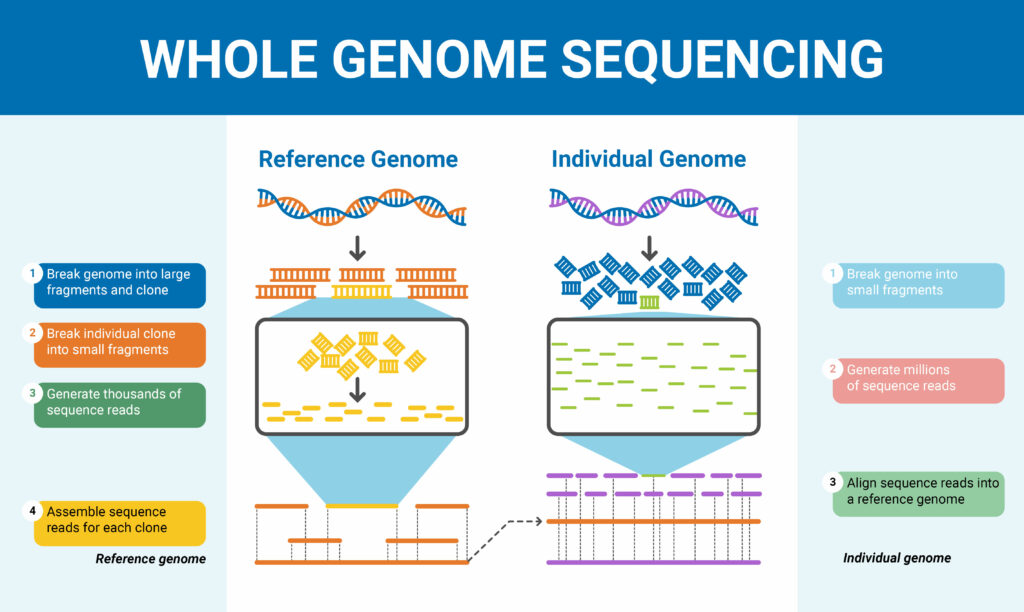
- Whole genome sequencing is a laboratory procedure that determines the order of bases in the genome of an organism in one process.
- Methodology:
- DNA Shearing:
- Scientists begin by using molecular scissors to cut the DNA, which is composed of millions of bases (A’s, C’s, T’s and G’s), into pieces that are small enough for the sequencing machine to read.
- DNA Bar Coding:
- Scientists add small pieces of DNA tags, or bar codes, to identify which piece of sheared DNA belongs to which bacteria.
- This is similar to how a bar code identifies a product at a grocery store.
- Scientists add small pieces of DNA tags, or bar codes, to identify which piece of sheared DNA belongs to which bacteria.
- DNA Sequencing:
- The bar-coded DNA from multiple bacteria is combined and put in a DNA sequencer.
- The sequencer identifies the A’s, C’s, T’s, and G’s, or bases, that make up each bacterial sequence.
- The sequencer uses the bar code to keep track of which bases belong to which bacteria.
- Data Analysis:
- Scientists use computer analysis tools to compare sequences from multiple bacteria and identify differences.
- The number of differences can tell the scientists how closely related the bacteria are, and how likely it is that they are part of the same outbreak.
- DNA Shearing:
- Advantages:
- Provides a high-resolution, base-by-base view of the genome
- Captures both large and small variants that might be missed with targeted approaches
- Identifies potential causative variants for further follow-up studies of gene expression and regulation mechanisms
- Delivers large volumes of data in a short amount of time to support assembly of novel genomes
- Significance:
- Genomic information has been instrumental in identifying inherited disorders, characterizing the mutations that drive cancer progression, and tracking disease outbreaks.
- It is beneficial for sequencing agriculturally important livestock, plants, or disease-related microbes.