
Q. Consider the following countries:
- Denmark
- Japan
- Russian Federation
- United Kingdom
- United States of America
Which of the above are the members of the ‘Arctic Council ‘?
- 1, 2 and 3
- 2, 3 and 4
- 1, 4 and 5
- 1, 3 and 5
Answer: (d) 1, 3 and 5
Notes:
- The Arctic Council is the leading intergovernmental forum promoting cooperation, coordination and interaction among the Arctic States, Arctic indigenous communities and other Arctic inhabitants on common Arctic issues, in particular on issues of sustainable development and environmental protection in the Arctic.
- The Arctic Council works as a consensus-based body to deal with issues such as the change in biodiversity, melting sea ice, plastic pollution and black carbon.
- The first step towards the formation of the Council occurred in 1991 when the eight Arctic countries signed the Arctic Environmental Protection Strategy (AEPS).
- The 1996 Ottawa Declaration Established the Arctic Council as a forum for promoting cooperation, coordination, and interaction among the Arctic states, with the involvement of the Arctic Indigenous communities and other Arctic inhabitants on issues such as sustainable development and environmental protection.
- The Arctic Council has conducted studies on climate change, oil and gas, and Arctic shipping.
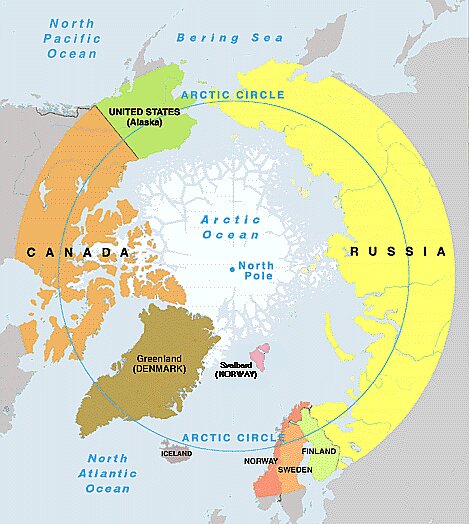
- Members: The eight countries with sovereignty over the lands within the Arctic Circle constitute the members of the council: Canada, Denmark, Finland, Iceland, Norway, Russia, Sweden, and the United States.
- Observer Status: Observer status in the Arctic Council is open to non-Arctic states, along with inter-governmental, inter-parliamentary, global, regional and non-governmental organizations that the Council determines can contribute to its work. Arctic Council Observers primarily contribute through their engagement in the Council at the level of Working Groups.
- Permanent Participants: In 1998, the number of Permanent Participants doubled to make up the present six, as,the Aleut International Association (AIA),and then, in 2000, the Arctic Athabaskan Council (AAC) and the Gwich’in Council International (GGI) were appointed Permanent Participants.