
Q. Consider the following:
- Star tortoise
- Monitor lizard
- Pygmy hog
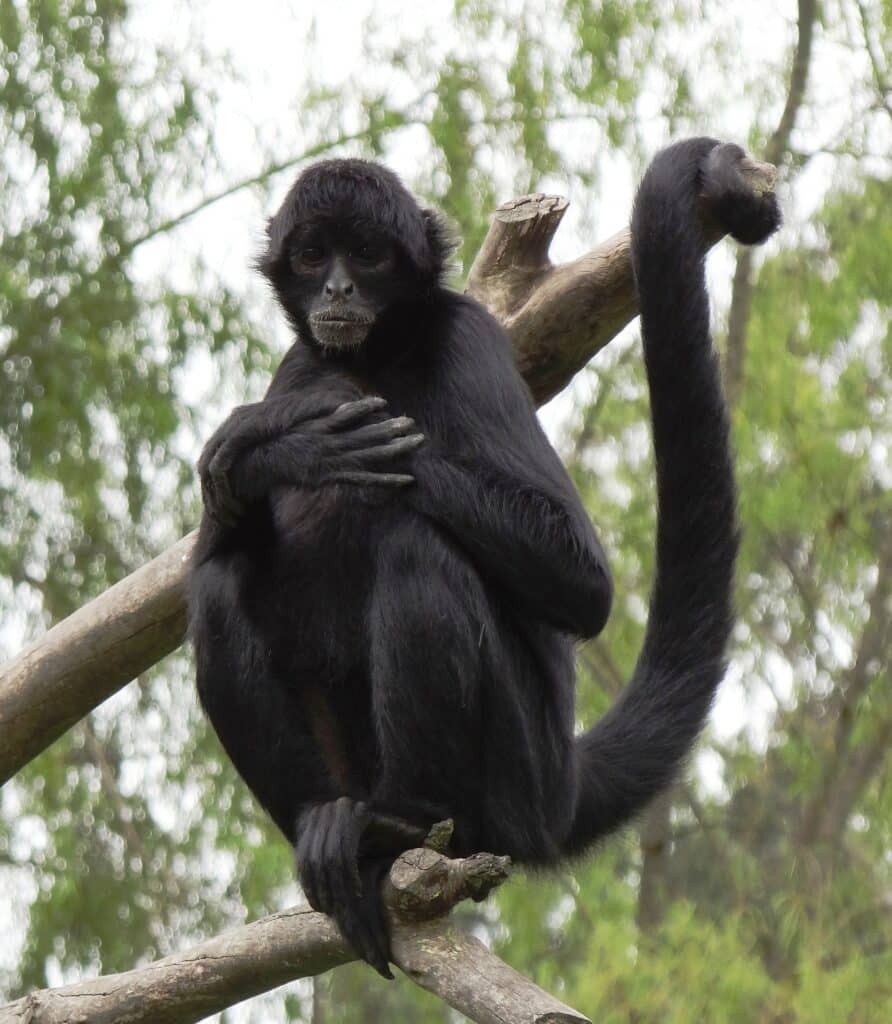
- Spider monkey
Which of the above are naturally found in India?
- 1, 2 and 3 only
- 2 and 3 only
- 1 and 4 only
- 1, 2, 3 and 4
Answer: (a) 1, 2 and 3 only
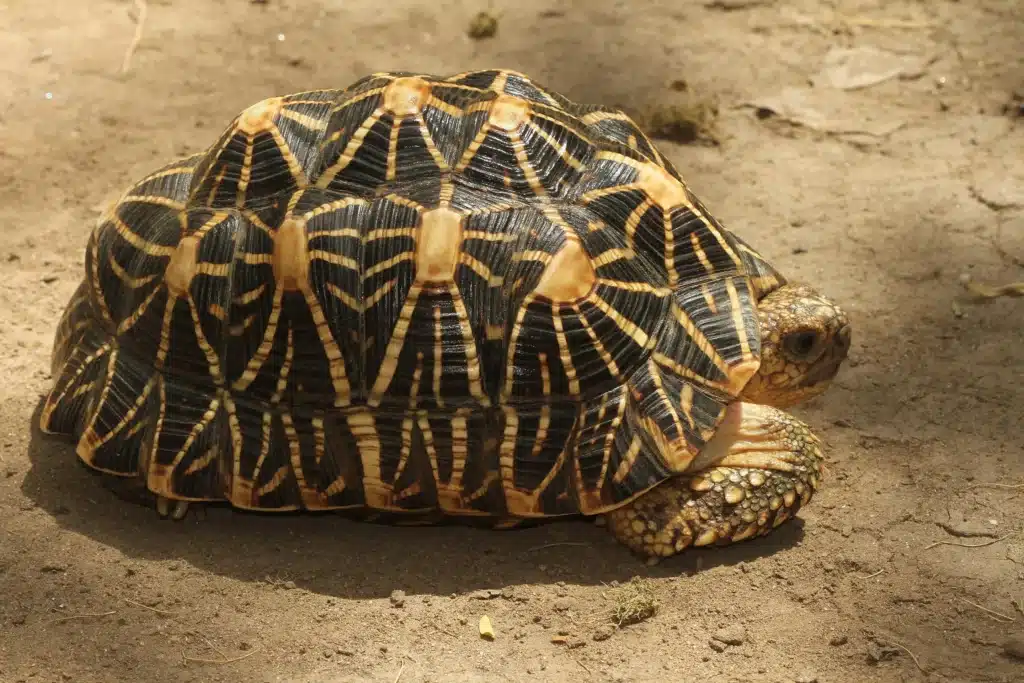
Star tortoise
- The Indian Star Tortoise (Geochelone elegans) is a threatened tortoise species native to India, Pakistan and Sri Lanka where it inhabits dry areas and scrub forest.
- It is kept as pets, across homes in South East Asia, Europe and North America. Indian Star Tortoises are smuggled to countries like Japan and China as it is believed to bring good luck if it is kept as pets at home.
- It is also perceived to have medicinal values.
- Habitat:
- Indian star tortoise is found across the Indian sub-continent, more specifically, in the Central and Southern parts of India, in West Pakistan and in Sri Lanka.
- In India, they are found in the states of Odisha, Kerala, Tamil Nadu, Karnataka, Gujarat, Punjab.
- Protection Status:
- Wild Life Protection Act 1972: Schedule IV
- Schedule IV: This list is for species that are not endangered. It includes protected species but the penalty for any violation is less compared to the Schedules I and II.
- Convention on International Trade in Endangered Species (CITES): Appendix I
- IUCN Status: Vulnerable
- Wild Life Protection Act 1972: Schedule IV
- Threat: The species faces two threats- loss of habitat to agriculture and illegal harvesting for the pet trade.
- Due to the extremely high demand for Indian star tortoises, they continue to be smuggled from India to South-East Asian countries for a long time, despite many measures being taken by Customs Authorities of India and international regulations to stop the smuggling.
- According to the Wildlife Crime Control Bureau, 90% of the trade of Star Tortoise occurs as part of the International pet market.
- If their exploitation had continued at a similar pace or had expanded, a decline of greater than 30% was predicted by 2025.
- Conservation Efforts:
- Recently India’s proposal to upgrade the protection status of Star Tortoise from Appendix II to Appendix I was approved by the Convention on International Trade in Endangered Species of Wild Fauna and Flora (CITES).
- Characteristics:
- Indian star tortoise has medium-sized head, hooked beak, and short, thick legs covered with tubercles of various sizes and shapes. Males have a long tail, while females have short and stubby tails.
- Indian star tortoise is a diurnal animal that is mostly active in the morning and late in the afternoon.
- Behaviour and Temperament: Indian star tortoises do not like being handled. They can get stressed out and get ill if handled frequently.
- Food Habits: Star tortoises are herbivores. They need plenty of fresh and dark leafy greens and grasses.
Monitor lizard
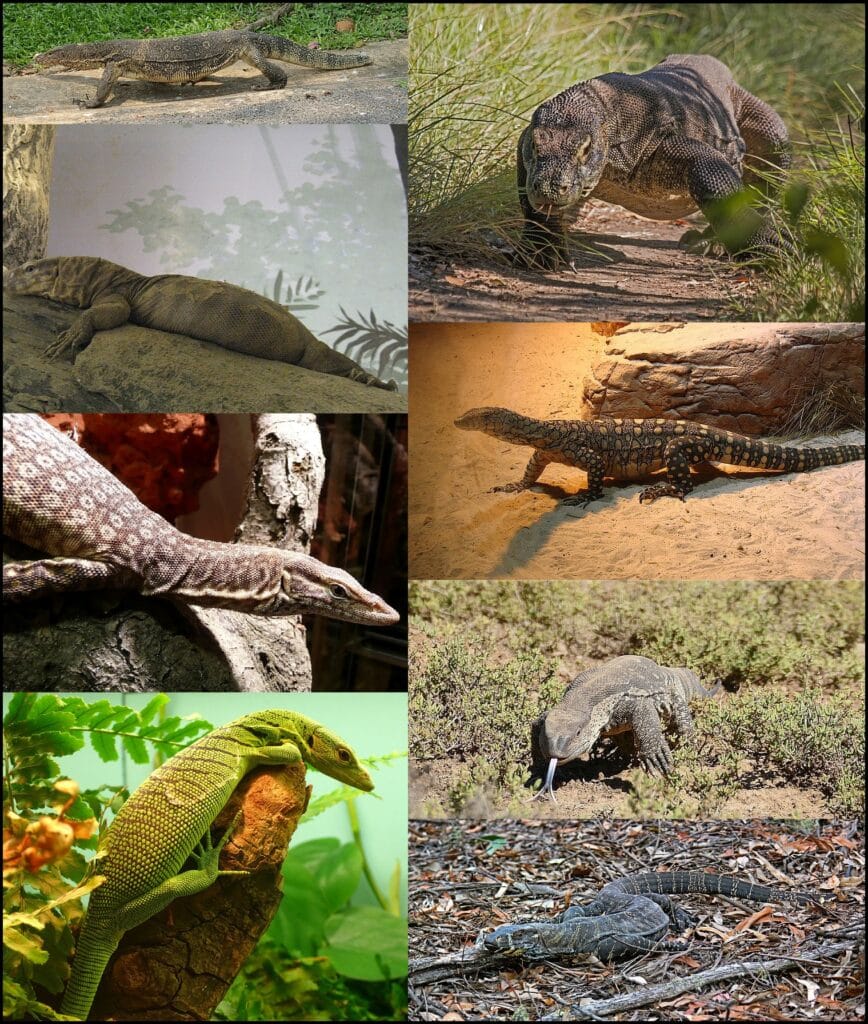
- The scientific name of Bengal Monitor or Common Indian Monitor is Varanus bengalensis.
- They are native to Africa, Asia, and Oceania, and one species is also found in the Americas as an invasive species.
- The reptile is found in Afghanistan, Bangladesh, Burma, India, Iran, Nepal, Pakistan, and Sri Lanka.
- The Bengal Monitor Lizard is a part of CITES Appendix I and Schedule I of the Wildlife Protection Act, 1972.
- The species is hunted for medicinal purposes and also for consumption.
Pygmy hog
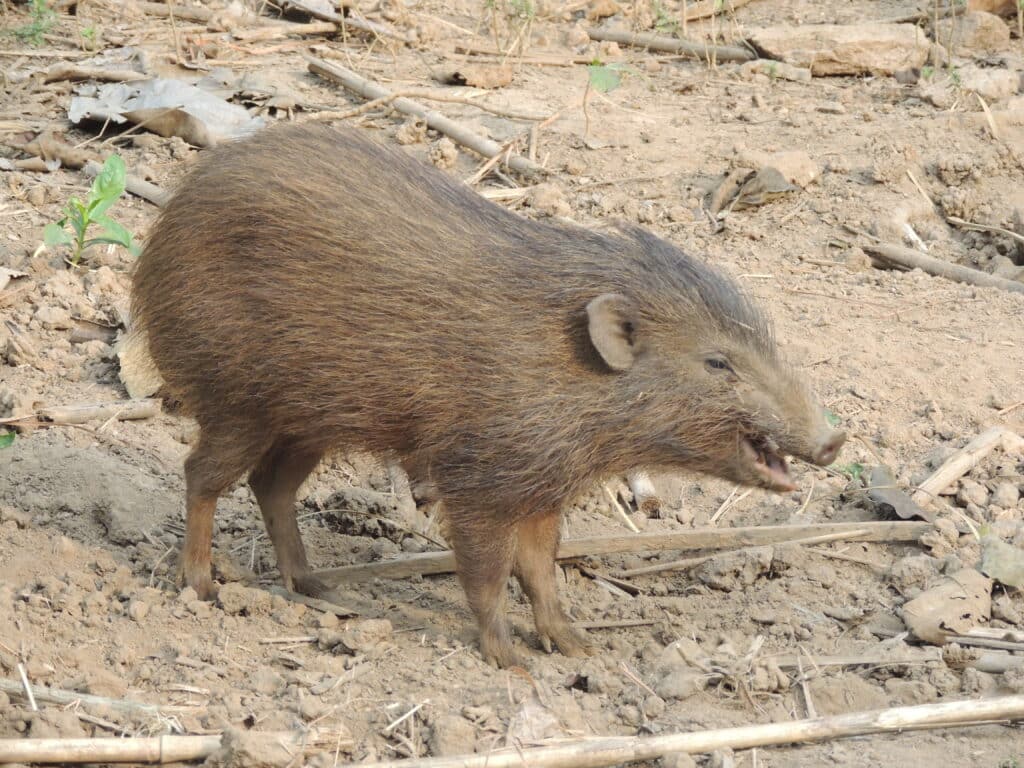
- The scientific name of Pygmy Hog is Porcula salvania and is a mammal.
- It is listed as endangered on the IUCN Red List and is also listed in Schedule I of the Wildlife Protection Act, 1972.
- It thrives in wet grassland.
- Since it is the sole member of its genus, its conservation becomes even more important and is thus protected in the Manas National Park of Assam.
- It is also an indicator species. Its presence reflects the health of its primary habitat, the tall, wet grasslands of the region.
- Pygmy Hog Conservation Programme (PHCP):
- The PHCP is a collaboration among Durrell Wildlife Conservation Trust of UK, Assam Forest Department, Wild Pig Specialist Group of International Union for Conservation of Nature (IUCN) and Ministry of Environment, Forest and Climate Change.
- It is currently being implemented by NGOs – Aaranyak and EcoSystems India.
- Conservation of pygmy hog was initiated by noted naturalist Gerald Durrell and his trust in 1971.
- The pygmy hog was brought back from near-extinction by the partnership effort, and now moving towards the establishment of a population across the entire range.
- Six hogs were captured from the Bansbari range of the Manas National Park in 1996 for starting the breeding programme.
- The reintroduction programme began in 2008 with the Sonai-Rupai Wildlife Sanctuary, Orang National Park and Bornadi Wildlife Sanctuary, all of them are in Assam.
- By 2025, the PHCP plans to release 60 pygmy hogs in Manas.
Spider monkey
- The primate belongs to the genus Ateles and is found in the tropical forests of Central and South America.
- The genus Ateles includes seven species out of which one is vulnerable, five are endangered and one (brown spider monkey) is critically endangered as per the IUCN Red List.