
Q. Acid rain is caused by the pollution of environment by
- Carbon dioxide and nitrogen
- Carbon monoxide and carbon dioxide
- Ozone and carbon dioxide
- Nitrous oxide and sulphur dioxide
Answer: (d) Nitrous oxide and sulphur dioxide
Acid Rain
- The term Acid Rain was first coined by Scottish chemist Robert Angus Smith in the year 1852.
- Normal rainwater is weakly acidic due to the presence of carbonic acid, which is formed due to the absorption of carbon dioxide from the atmosphere.
- Definition of Acid Rain – Rain or any other form of precipitation that has a higher level of hydrogen ions (i.e. low pH < 5.6), is termed as Acid Rain.
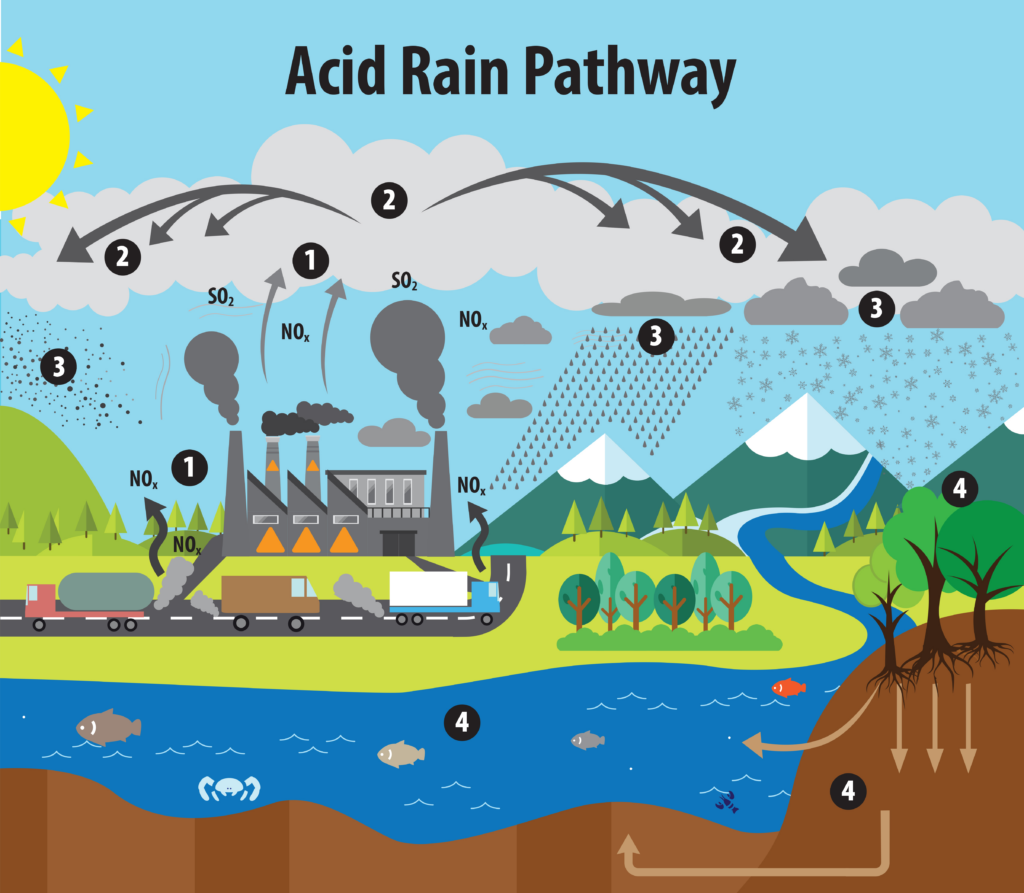
- Oxides of sulphur and nitrogen which are acidic in nature are responsible for causing Acid Rain.
- Human activities like the burning of fossil fuels, volcanic activities, etc. result in the formation of sulphur dioxide and nitrogen oxides.
- These oxides after oxidation and reaction with water are the major contributors to Acid Rain.
- Following chemical reactions occur:
- 2SO2 (g) + O2 (g) + 2H2O (l) → 2H2SO4 (aq)
- 4NO2 (g) + O2 (g) + 2H2O (l) → 4HNO3 (aq)
Aftermaths of Acid Rain:
- Deteriorates plant and animal life in the aquatic ecosystem.
- It corrodes water pipes resulting in the leaching of heavy metals (iron, lead, copper) into drinking water.
- It damages buildings and other structures made of metal or stone (eg. Taj Mahal)
- Chemical reaction occurring at the surface of Taj Mahal: CaCO3 + H2SO4 → CaSO4 + H2O + CO2