
Q. Consider the following ‘fauna :
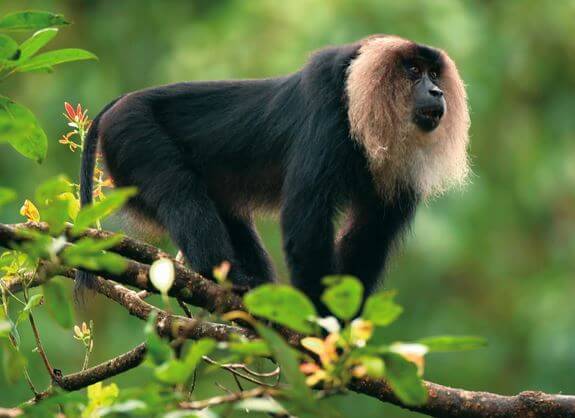
- Lion-tailed Macaque
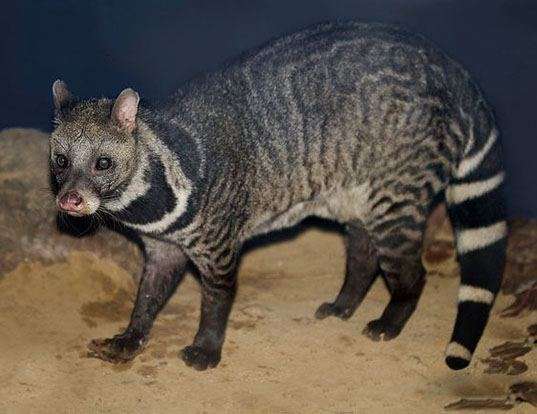
- Malabar Civet
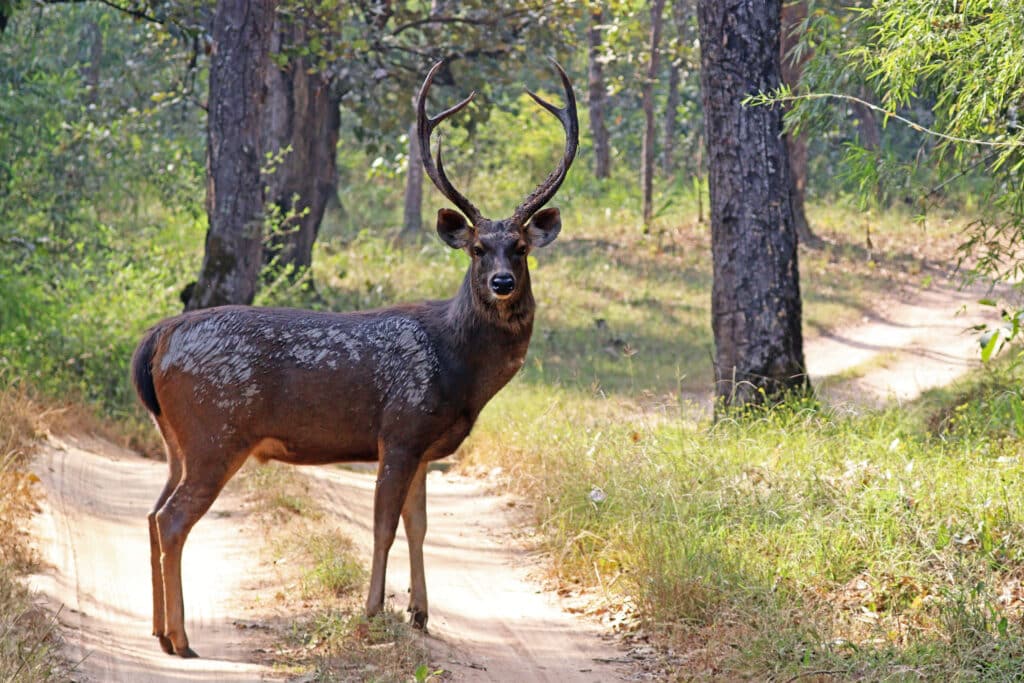
- Sambar Deer
How many of the above are generally nocturnal or most active after sunset?
- Only one
- Only two
- All three
- None
Answer: (b) Only two
Lion-tailed Macaque
- The Lion Tailed Macaque (Macaca silenus) is an old world monkey native to the western ghats of Southern India.
- The life expectancy for a wild lion-tailed macaque is 20 years while it is 30 years in captivity.
- The lion-tailed macaque is diurnal in nature, as in being active solely during daylight hours.
- Preferring rainforest environments it is a good climber, spending most of its time in the upper reaches of a tropical rainforest.
- Its habitats consist of rainforest regions of Karnataka, Kerala and Tamil Nadu.
- Unlike other macaques, lion-tails avoid humans as much as possible.
- They form hierarchical groups of about 20 members. These groups fiercely defend their territories with loud cries and if necessary, brawling aggressively.
- The diet of the lion-tailed macaque consists of fruits, leaves, buds, and insects. However, they diversify their diets in the event of environmental change or scarcity. They are also known to feed on fruits seeds, shoos, flowers and other parts of non indegenous plants.
- As per the assessment carried out by the International Unit for Conservation of Nature (IUCN) it was reported that 3000-3500 of the lion-tailed macaque population was dispersed in Kerala, Tamil Nadu and Karnataka. Its red list categories it as ‘endangered ‘.
- Silent Valley has the largest number of lion tailed macaque in South India.
- Founds in the Kudremukh and Sharavathi Wildlife Sanctuary in Karnataka, the Anamalai Tiger Reserve and Megamalai Wildlife Sanctuary in Tamil Nadu and the Parambikulam Wildlife Sanctuary and Silent Valley National Park in Kerala.
- Their population range is becoming significantly limited due to spread of agriculture and commercial farming for tea, coffee. Construction of new dams and irrigational facilities are also a factor in their decline.
Malabar Civet
- The Malabar large spotted civet is one of the world’s rarest mammals.
- Malabar Civet is a nocturnal and elusive animal.
- It is endemic to Western Ghats of India.
- Civetone extract from the scent gland used in medicine, and in perfumes.
- Habitat
- Wooded plains and hill slopes of evergreen rainforests
- Lowland forests, lowland swamp and riparian forests in the coastal plain districts of the Western Ghats
- Major Threats
- Habitat destruction and Hunting.
- Deforestation.
- Commercial Plantations .
- Conservation Status
- IUCN Red List: Critically Endangered.
- Wildlife (Protection) Act,1972: Schedule I
- CITES: Appendix III
Sambar Deer
- Sambar, a large deer species native to Indian subcontinent and Southeast Asia, is listed as vulnerable due to hunting, insurgency, and habitat exploitation.
- It is known for its large antlers, shaggy coat and small mane, and is found in a variety of habitats near water sources.
- It inhabits a variety of habitats including tropical dry forests, tropical seasonal forests, subtropical mixed forests, montane grasslands, and tropical rainforests. The sambar prefers the dense cover of deciduous shrubs and grasses, and is often found near water sources.
- Sambar are nocturnal or crepuscular animals, and the males live alone for much of the year, while the females live in small herds of up to 16 individuals.
- They often congregate near water and are good swimmers. They are generally quiet animals, but can make short, high-pitched sounds when alarmed. They communicate by scent marking and foot stamping, which is an unusual pattern for deer.
- The sambar is an important prey species for large carnivores such as the tiger, dhole, and crocodiles.