
Q. Which of the following is not a bird?
- Golden Mahseer
- Indian Nightjar
- Spoonbill
- White Ibis
Answer: (a) Golden Mahseer
Notes:
Golden Mahseer
- Golden Mahseer goes by many names, such as the Himalayan mahseer, Putitor mahseer, king mahseer, and mighty mahseer. Its scientific name is Tor putitora.
- Mahseer is the union of Mahi (meaning fish) and sher (meaning tiger). That’s why it is also referred to as the tiger of the water or the tiger among fish.
- Characteristics of the Golden Mahseer
- The Golden Mahseer is a striking fish with attractive golden colour and elusive nature.
- It is characterised by reddish-golden fins, thick lips, and large shiny scales. This cyprinid can grow up to 9 feet in length and about 54 kg in weight. It counts among the most powerful freshwater fish.
- This species is a column feeder in freshwater. It follows omnivorous feeding habits during the adult stage.
- The fish migrate upstream twice a year under monsoon conditions to breed. The spawning season extends from May to September.
- It can swim over small to mid-size rocky boulders and against gravity. The sexual productivity of this fish is low and ranges from 6,000 to 10,000 eggs per kg.
- It is a bioindicator species. Its large size, agility, sustenance, and liveliness make it a highly popular and fascinating game fish.
- Habitat and Distribution of the Golden Mahseer
- Golden Mahseer mainly inhabits fast-moving rivers, rapid streams, and riverine pools in the Himalayan region. It has been introduced in large reservoirs and lakes.
- The basins of the Gange, Indus, and Brahmaputra rivers are its native range. It is also found down south in the Tambraparini, Cauvery, Balamore, and Kosi Rivers.
- This fish is found in Himachal Pradesh, the union territory of Jammu & Kashmir, Uttarakhand, Arunachal Pradesh, Assam, Mizoram, Meghalaya, Tripura, Manipur, and Sikkim.
- IUCN: Endangered

Indian nightjar
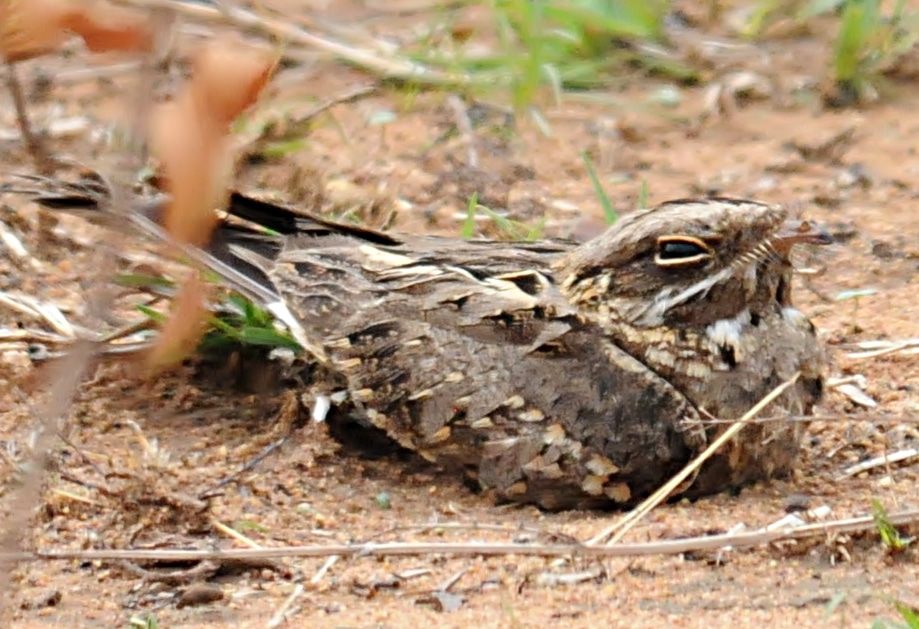
- The Indian nightjar is a small nightjar (medium-sized nocturnal or crepuscular birds) which is a resident breeder in open lands across South Asia and Southeast Asia.
- Like most nightjars it is crepuscular and is best detected from its characteristic calls at dawn and dusk that have been likened to a stone skipping on a frozen lake – a series of clicks that become shorter and more rapid.
- This nightjar is small and short-tailed with white corners to the tail, a golden nape and collar, dark cheeks and white patches on the sides of the throat. The crown is grey and the breast is finely barred in brown.
- IUCN: Least Concern
Spoonbills
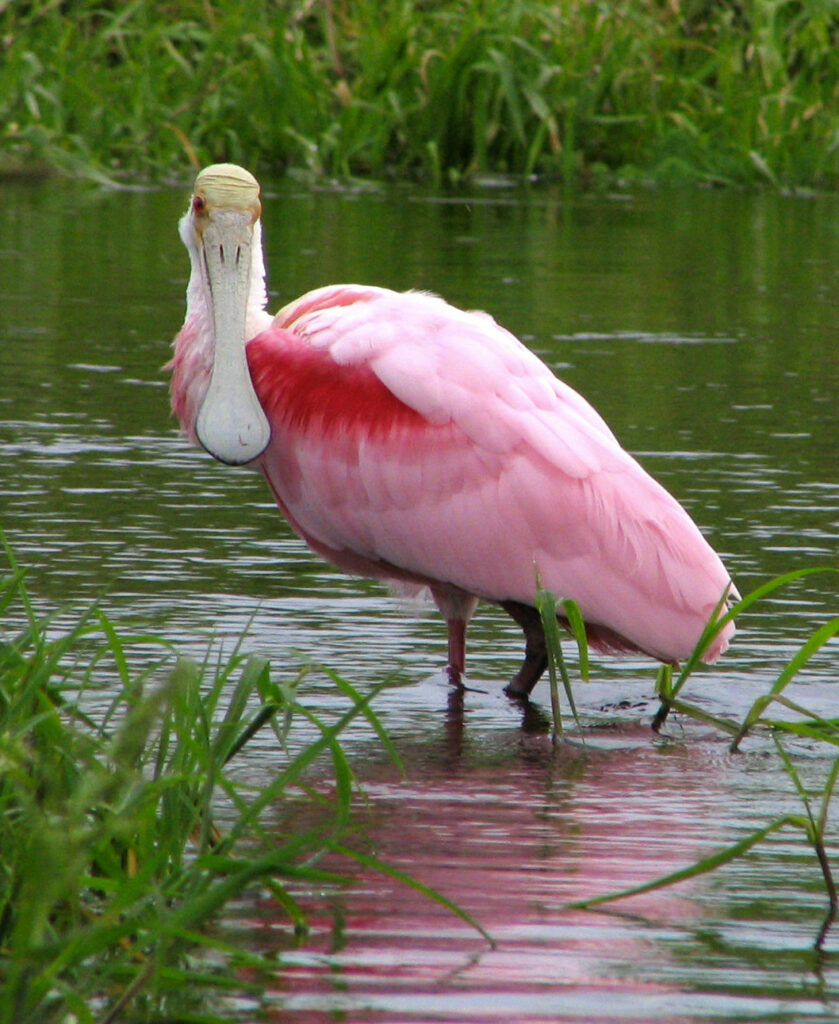
- Spoonbills are a genus, Platalea, of large, long-legged wading birds.
- The spoonbills have a global distribution, being found on every continent except Antarctica.
- All spoonbills have large, flat, spatulate bills and feed by wading through shallow water, sweeping the partly opened bill from side to side.
- The moment any small aquatic creature touches the inside of the bill—an insect, crustacean, or tiny fish—it is snapped shut.
- Spoonbills generally prefer fresh water to salt but are found in both environments. They need to feed many hours each day.
White Ibis
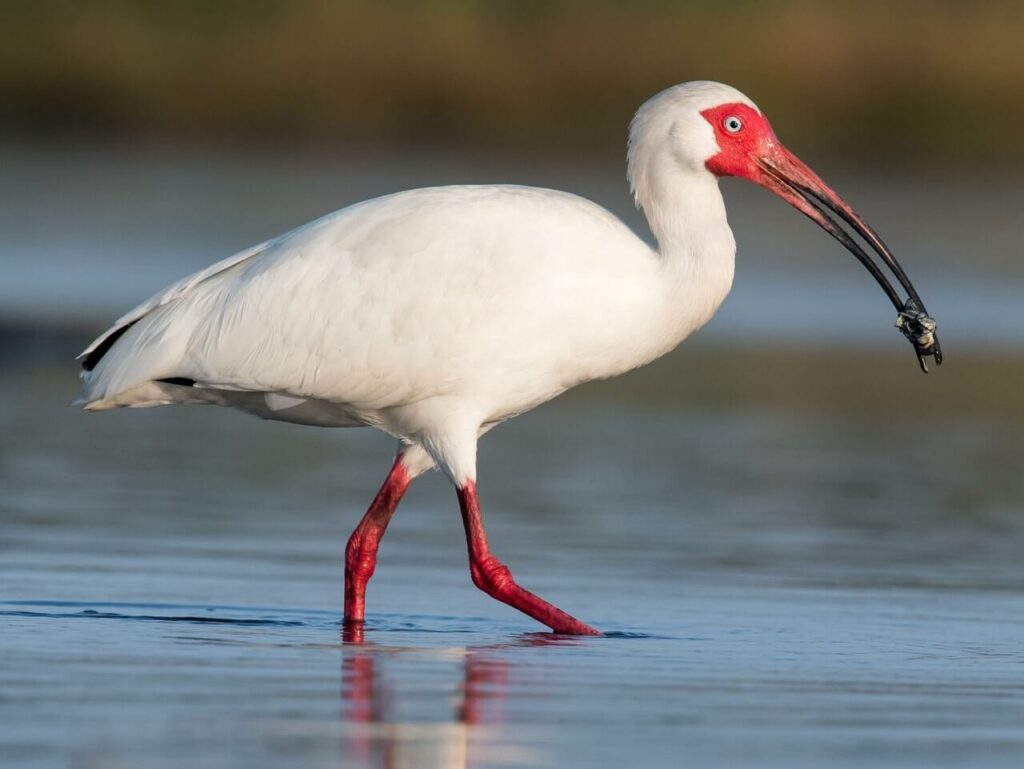
- White Ibises are large wading birds with football-shaped bodies.
- They have long legs and a long neck that they hold out straight in flight. Their bill is long and curved.
- This ibis is almost entirely white, save for the black-tipped wings and brilliant reddish pink legs and bill. The bare skin around their blue eyes is also reddish pink.