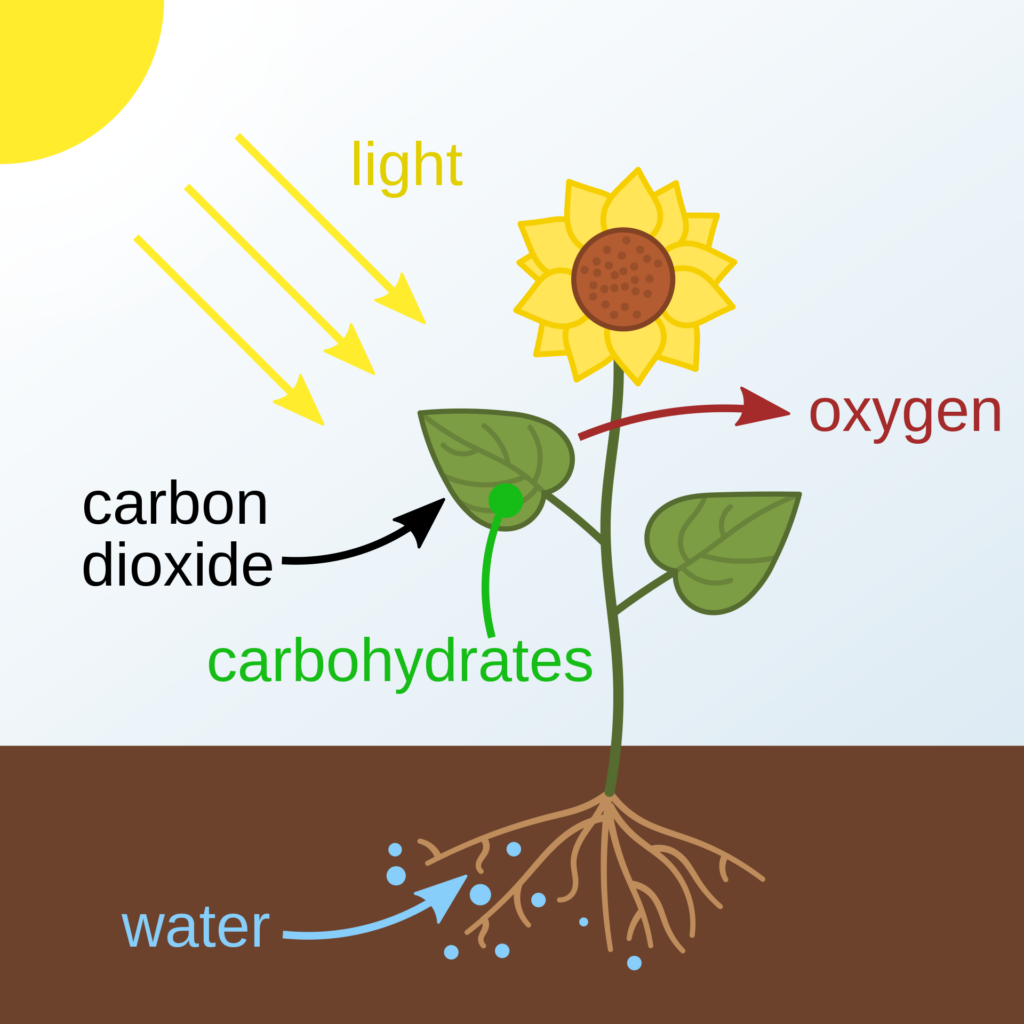

Q. Which one of the following is the process involved in photosynthesis?
- Potential energy is released to form free energy
- Free energy is converted into potential energy and stored
- Food is oxidized to release carbon dioxide and water
- Oxygen is taken, and carbon dioxide and water vapour are given out.
Answer: (b) Free energy is converted into potential energy and stored
Photosynthesis
- Photosynthesis is a biological process used by many cellular organisms to convert light energy into chemical energy, which is stored in organic compounds that can later be metabolized through cellular respiration to fuel the organism’s activities.
- During photosynthesis in green plants, light energy is captured and used to convert water, carbon dioxide, and minerals into oxygen and energy-rich organic compounds.
- Most plants, algae and cyanobacteria perform photosynthesis; such organisms are called photoautotrophs.
- Photosynthesis is largely responsible for producing and maintaining the oxygen content of the Earth’s atmosphere, and supplies most of the biological energy necessary for complex life on Earth.