

Q. H1N1 virus is sometimes mentioned in the news with reference to which one of the following diseases?
- AIDS
- Bird flu
- (Dengue
- Swine flu
Answer: (d) Swine flu
Influenza A virus subtype H1N1
- In virology, influenza A virus subtype H1N1 (A/H1N1) is a subtype of influenza A virus.
- Swine flu (H1N1) is an infection that a type of flu (influenza) virus. It’s called swine flu because it’s similar to a flu virus that affects pigs (swine).
- The virus leads to a lung (respiratory) disease in pigs. Swine flu (H1N1) is a respiratory infection in humans.
- Major outbreaks of H1N1 strains in humans include the 1918 Spanish flu pandemic, the 1977 Russian flu pandemic and the 2009 swine flu pandemic.
- It is an orthomyxovirus that contains the glycoproteins hemagglutinin (H) and neuraminidase (N), antigens whose subtypes are used to classify the strains of the virus as H1N1, H1N2 etc.
- Hemagglutinin causes red blood cells to clump together and binds the virus to the infected cell.
- Neuraminidase is a type of glycoside hydrolase enzyme which helps to move the virus particles through the infected cell and assist in budding from the host cells.
- Some strains of H1N1 are endemic in humans and cause a small fraction of all influenza-like illness and a small fraction of all seasonal influenza, for instance in 2004–2005.
- Other strains of H1N1 are endemic in pigs (swine influenza) and in birds (avian influenza).
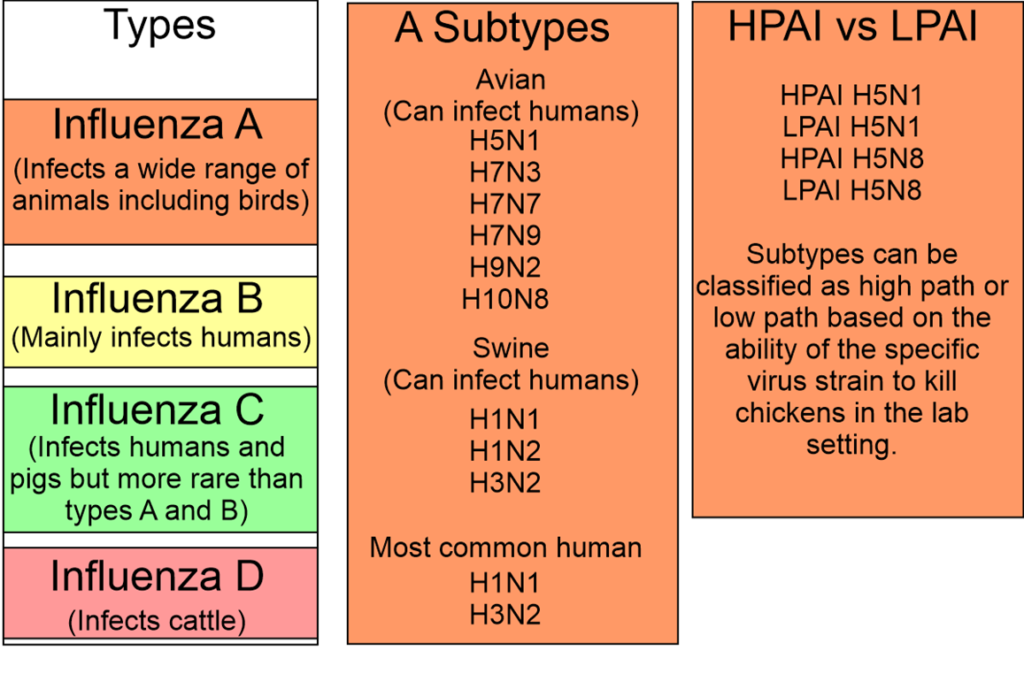
Bird flu
- Avian influenza, often referred to as bird flu, is a highly contagious viral infection that primarily affects birds, particularly wild birds and domestic poultry.
- In 1996, highly pathogenic avian influenza H5N1 virus was first identified in domestic waterfowl in Southern China. The virus is named A/goose/Guangdong/1/1996.
- Transmission to Humans and Related Symptoms:
- Human cases of H5N1 avian influenza occur occasionally, but it is difficult to transmit the infection from person to person.
- As per World Health Organisation(WHO), when people do become infected, the mortality rate is about 60%.
- Avian Influenza and India:
- Initial Outbreak:
- The initial outbreak of Highly Pathogenic Avian Influenza (HPAI) H5N1 in India occurred in 2006 in Navapur, Maharashtra, and was followed by annual outbreaks.
- H5N8 was first observed in India in November 2016, mainly affecting wild birds across five states, with Kerala reporting the most cases.
- The disease has been reported in 24 states and union territories, resulting in the culling of over 9 million birds to control its spread.
- Related Initiative:
- India’s approach to controlling Highly Pathogenic Avian Influenza (HPAI) follows a “detect and cull” policy as outlined in the National Action Plan for Prevention, Control, and Containment of Avian Influenza (revised – 2021)
- Initial Outbreak:
- Treatment:
- Antivirals have demonstrated effectiveness in the treatment of avian influenza virus infections in humans, lowering severity and the risk of death.
HIV
- Acquired immunodeficiency syndrome (AIDS) is caused by the human immunodeficiency virus (HIV).
- HIV stands for Human Immunodeficiency Virus, which is a virus that attacks the immune system in the human body.
- It primarily targets and damages CD4 immune cells, which are essential for the body’s ability to fight infections and diseases.
- Over time, HIV weakens the immune system, leaving the body vulnerable to opportunistic infections and cancers.
- Transmission:
- HIV is primarily spread through the exchange of certain bodily fluids such as blood, semen, vaginal fluids, and breast milk.
- Severity:
- If left untreated, the virus destroys a person’s immune system and they are said to be in the Acquired Immunodeficiency Syndrome stage (AIDS) where they get several opportunistic infections that may result in death.
- Cure:
- Although there are no cures for the infection at present, the disease can be managed using antiretroviral therapy.
- These medicines suppress the replication of the virus within the body, allowing the number of CD4 immune cells to bounce back.
- Although there are no cures for the infection at present, the disease can be managed using antiretroviral therapy.
Dengue
- Dengue is a self-limiting febrile illness with symptoms ranging from asymptomatic to severe.
- Dengue is a mosquito-borne tropical disease caused by the dengue virus (Genus Flavivirus), transmitted by several species of female mosquito within the genus Aedes, principally Aedes aegypti.
- This mosquito also transmits chikungunya and Zika infection.
- Serotypes of Dengue:
- There are 4 distinct, but closely related, serotypes (separate groups within a species of microorganisms that all share a similar characteristic) of the virus that cause dengue (DEN-1, DEN-2, DEN-3 and DEN-4).
- Symptoms:
- Sudden high fever, severe headaches, pain behind the eyes, severe bone, joint, and muscle pain, etc.
- Dengue Vaccine:
- The dengue vaccine CYD-TDV or Dengvaxia was approved by the US Food & Drug Administration in 2019, the first dengue vaccine to get the regulatory nod in the US.
- Dengvaxia is basically a live, attenuated dengue virus which has to be administered in people of ages 9 to 16 who have laboratory-confirmed previous dengue infection and who live in endemic areas.
- Researchers at India’s National Centre for Biological Sciences, in collaboration with nine other institutions in India, Africa, and the US, have developed India’s first and only DNA vaccine candidate for dengue fever.
- In preliminary trials on mice, the candidate generated a robust immune response and improved survival rates after exposure to the disease.
- The dengue vaccine CYD-TDV or Dengvaxia was approved by the US Food & Drug Administration in 2019, the first dengue vaccine to get the regulatory nod in the US.
- Controlling Dengue Using Bacteria:
- Researchers from the World Mosquito Program have used mosquitoes infected with Wolbachia bacteria to successfully control dengue, leading to a 77% reduction in incidence in Indonesia.