

Q. Which one of the following statements is not correct?
- Hepatitis B virus is transmitted much like HIV.
- Hepatitis B, unlike Hepatitis C, does not have a vaccine.
- Globally, the number of people infected with Hepatitis B and C viruses arc several times more than those infected with HIV.
- Some of those infected with Hepatitis B and C viruses do not show the symptoms for many years.
Answer: (b) Hepatitis B, unlike Hepatitis C, does not have a vaccine.
Hepatitis B
- It is an infectious disease caused by an infection with the Hepatitis B virus. It is contracted through flat tired wounds, contact with blood, saliva, fluids of an infectious body.
- Sharing personal belongings such as razors or toothbrush of an infected person can also cause Hepatitis B.
- Hepatitis B symptoms include abdominal pain, fatigue, and jaundice. Symptoms do not come to the limelight until one to six months. It could be diagnosed through a common blood test.
- Hepatitis B Vaccine could be done for both adults and children. It comprises three intramuscular vaccines. Second and third vaccines are provided after one and six months of the first vaccine.
Hepatitis C
- It is an infection that is caused by the Hepatitis C virus in the liver. This can be transferred from needles that have been infected, at the time of birth (i.e. transmitted from infected mother to child), through body fluids of an infected person, having sex with multiple partners specifically with HIV-infected persons. It is also rarely found in semen (cum) and vaginal fluids.
- Hepatitis C is mainly passed on through using contaminated needles and syringes or sharing other items with infected blood on them. It’s also a sexually transmitted infection (STI) that can be passed on through unprotected sex, especially when blood is present.
- It does not spread through food or water.
- Symptoms include loss of appetite, tiredness, frequently occurring fever, yellowing of your skin or eyes, joint pain, abnormalities in urine, and abdominal pain. These signs occur after six or seven weeks of exposure to a virus. Signs might take even several years to appear in rare cases.
- However, unlike hepatitis B, it is not sexually transmitted and there is no known vaccine for hepatitis C.
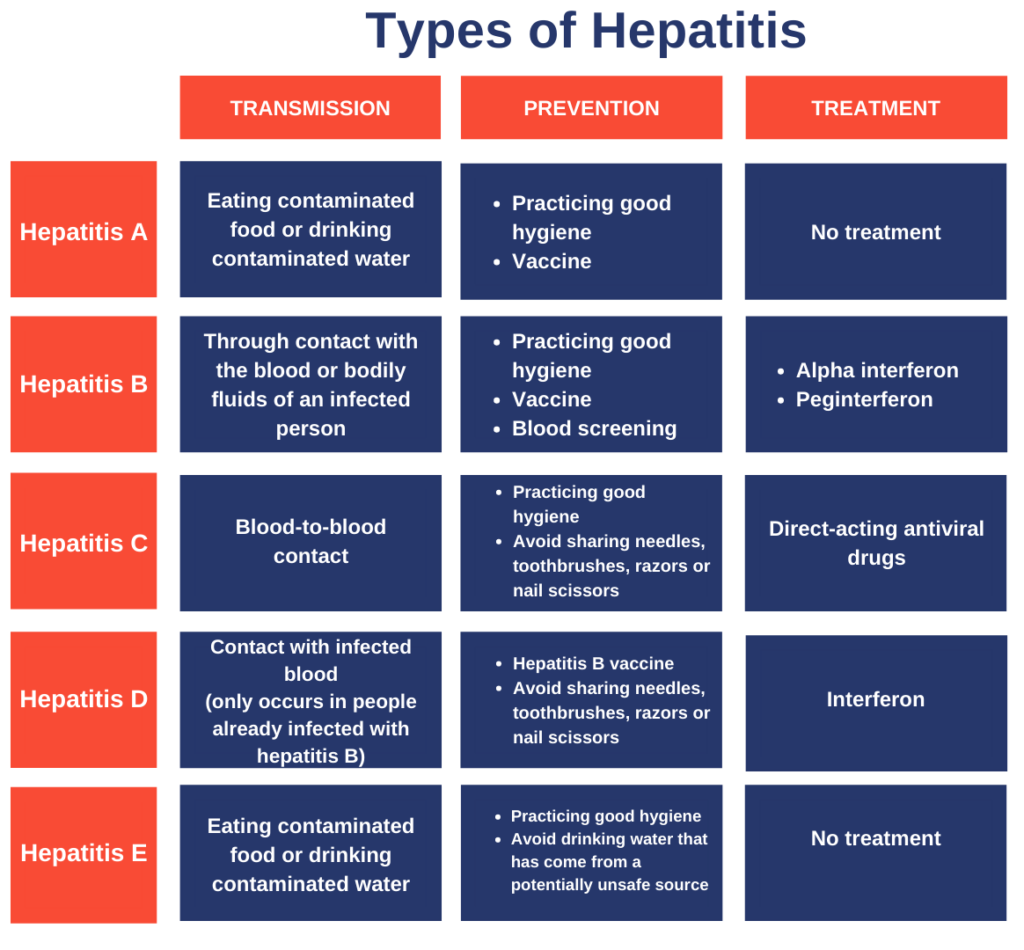
Read here: Hepatitis – Causes, Treatment & Types