

Q. With reference to Web 3.0, consider the following statements:
- Web 3.0 technology enables people to control their own data.
- In Web 3.0 world, there can be blockchain based social networks.
- Web 3.0 is operated by users collectively rather than a corporation
Which of the following given above are correct?
- 1 and 2 only
- 2 and 3 only
- 1 and 3 only
- 1, 2 and 3
Answer: (d) 1, 2 and 3
Web 3.0
- Over-centralisation of the web in a few hands like Google created issues of data privacy and data security. There is a need for decentralization of data on the internet to assure fair use of those data. Web 3.0 comes with a possible solution to it.
- Web 3.0 is simply the third generation internet that evolved from World Wide Web. Web 3.0 is powered by artificial intelligence (AI) and big data.
- Web 3.0 is a decentralized internet to be run on blockchain technology, which would be different from the versions in use, Web 1.0 and Web 2.0.
- In Web3, users will have ownership stakes in platforms and applications unlike now where tech giants control the platforms.
- Significance of Web 3.0:
- Decentralized and Fair Internet: Web3 will deliver a decentralized and fair internet where users control their own data.
- Based on blockchain: It prevents user personal data from being used or controlled by tech giants. By using blockchain technology, user data is encrypted and protected.
- Eliminates Intermediaries: With block chain, the time and place of the transaction are recorded permanently.
- Thus, Web3 enables peer to peer (seller to buyer) transactions by eliminating the role of the intermediary. This concept can be extended to
- Decentralization and Transparency: The spirit of Web3 is Decentralized Autonomous Organization (DAO).
- DAO is all about the business rules and governing rules in any transaction are transparently available for anyone to see and software will be written conforming to these rules.
- With DAO, there is no need for a central authority to authenticate or validate.
- Semantic web: It involves a semantic web that can generate or share content by understanding the meaning of words searched. In web 2.0 content is generated by using any keywords or numbers.
- Increased connectivity of information due to the involvement of the semantic web. Here users can leverage all available information.
- Another important feature is its extensive usage of three-dimensional designs in its websites and services.
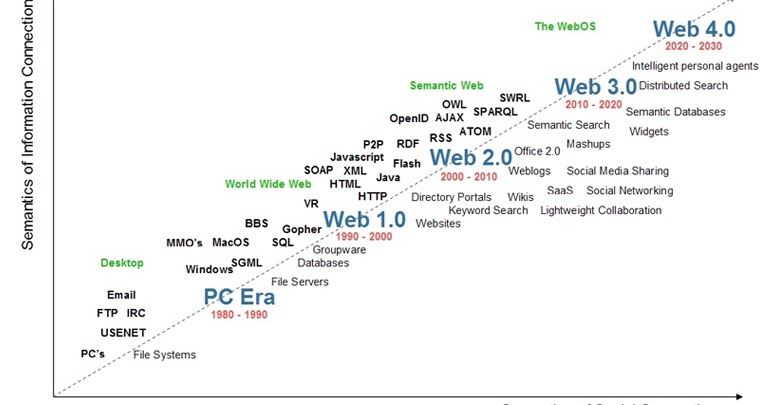
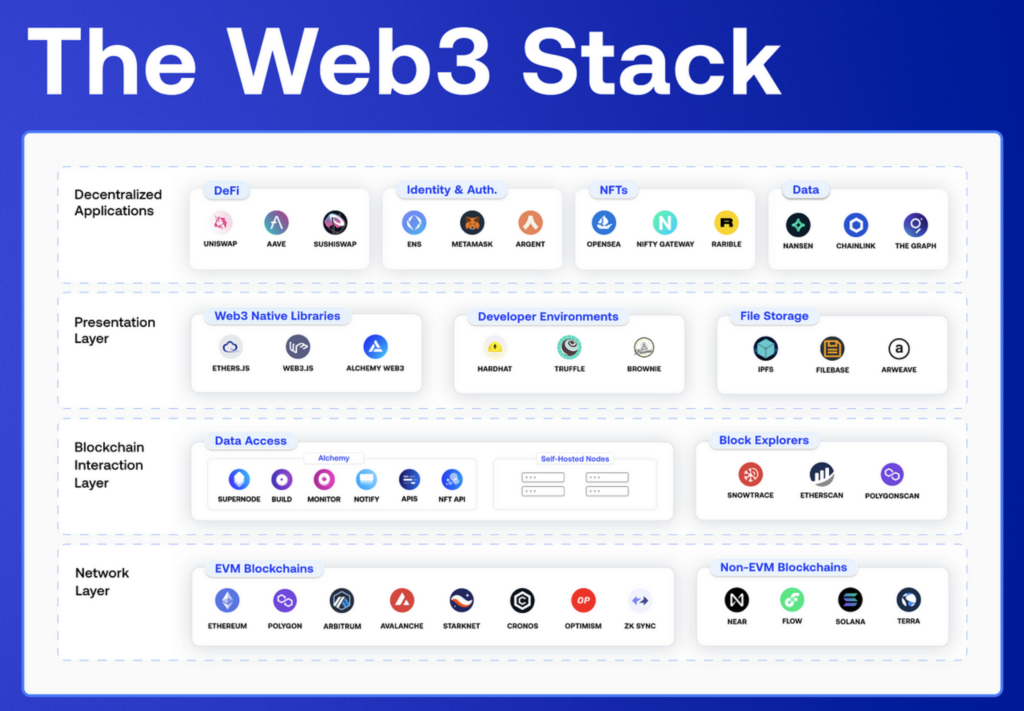
Web 4.0
- Web 4.0 is the fourth generation of the World Wide Web, and it is characterized by a more collaborative and interactive approach to web development.
- Web 4.0 is a network that is completely based on web 3 that eliminates the boundaries between humans and machines.
- This fourth-generation web is also known as the Symbiotic web. With this, humans and machines can interact with each other.
- With Web 4.0 the internet becomes more transparent and traceable. The Internet will use artificial intelligence, which improves the quality of the work.
- Some of the most popular Web 4.0 applications include social networking sites, blogs, wikis, and video-sharing sites.
- One of the goals of Web 4.0 is to make the web more accessible to everyone. This includes people with disabilities, who will be able to use assistive technologies to access web content more easily.
- Brain-Computer Interfaces (BCIs)
- Brain-Computer Interfaces (BCIs) allow humans to interact with computers using their thoughts.
- BCIs work by measuring brain activity and translating it into commands that can be understood by computers.
- BCIs are still in the early stages of development, but they have the potential to revolutionize the way we interact with technology.
- BCIs could be used for a wide range of applications, including communication, control of prosthetic devices, and even entertainment.
- BCIs hold great promise for helping people with disabilities and for enhancing human-computer interaction in general.
- The Metaverse
- The metaverse is a virtual world that is created by the interaction of multiple online communities and users. It is a 3D environment that can be accessed by anyone with an internet connection. The metaverse is constantly evolving and expanding as more people join and create new content.
- The metaverse can be used for a variety of purposes, such as social networking, gaming, education, and business. It provides a unique way for people to interact with each other and with computer-generated characters and objects. The metaverse has the potential to revolutionize the way we interact with each other and with the world around us.
- Artificial Intelligence
- Artificial intelligence (AI) is a branch of computer science that deals with creating intelligent machines that can think and work on their own.
- AI research deals with the question of how to create computers that are capable of intelligent behavior.
- AI applications can be used to perform tasks that are difficult or impossible for humans to do, such as understanding natural language or recognizing objects.
- AI technology is already being used in several different fields, including healthcare, finance, and manufacturing.
- In the future, AI is likely to have an even bigger impact on our society, as it increasingly becomes incorporated into more and more aspects of our lives.
- The Internet Of Things
- The Internet of Things, sometimes called the IoT, is a network of physical devices, vehicles, home appliances, and other items that are embedded with electronics, software, sensors, and connectivity tools that enable these objects to connect and exchange data. The Internet of Things is a transformational force that is reshaping how we live, work, and play.

Web 5.0
- Web 5.0 is the next step in the evolution of the internet, which aims to provide a decentralized platform to users while also incorporating human emotions through the use of artificial intelligence.
- The limitations of previous versions of the internet include a lack of control over data and a lack of emotional intelligence.
- Web 5.0 combines the best of Web 2.0 and Web 3.0 while taking semantic Web to the next level and supporting global media connection.
- This version of the Web will work through the implementation of emotional intelligence into the internet, with the help of blockchain, AI, and deep learning.
- Web 5.0’s features include control over identity, a decentralized platform for storing data, and a free-flowing environment for creators to develop decentralized applications.
- Compared to previous versions of the internet, Web 5.0 promotes complete decentralization and transparency, while ensuring complete control of user data remains with the user.